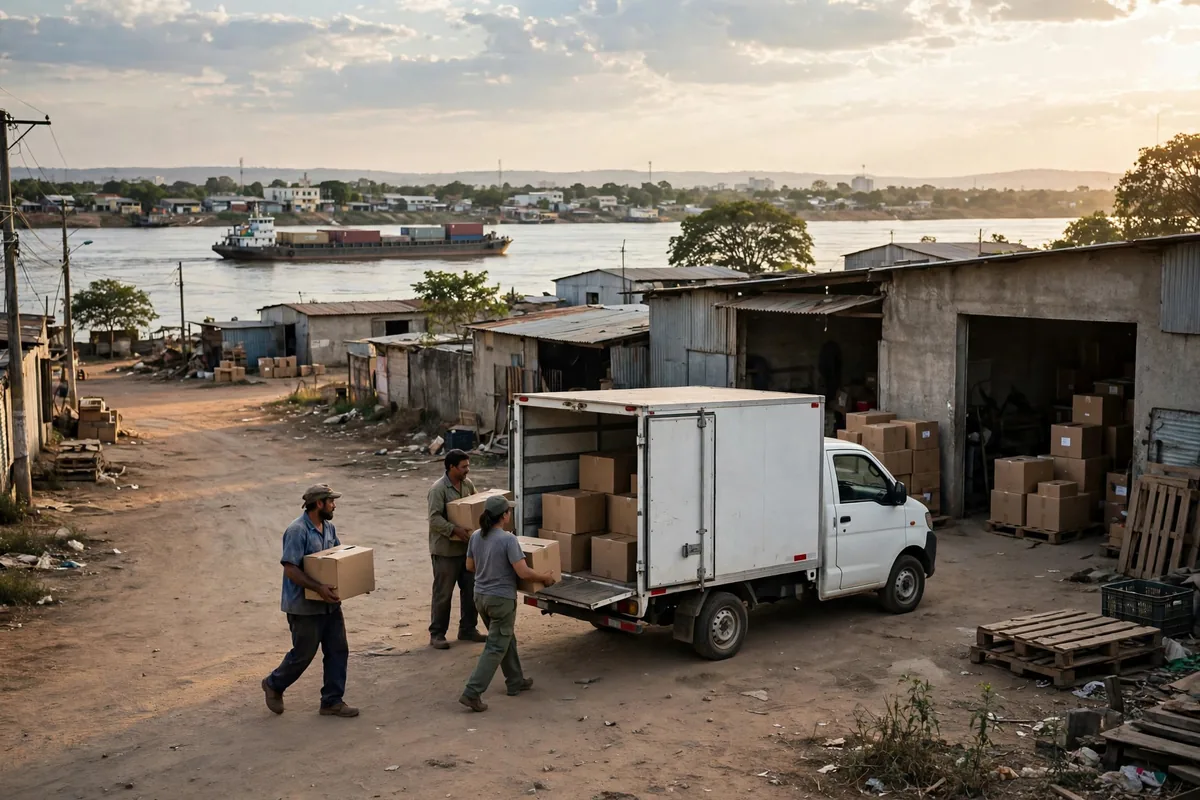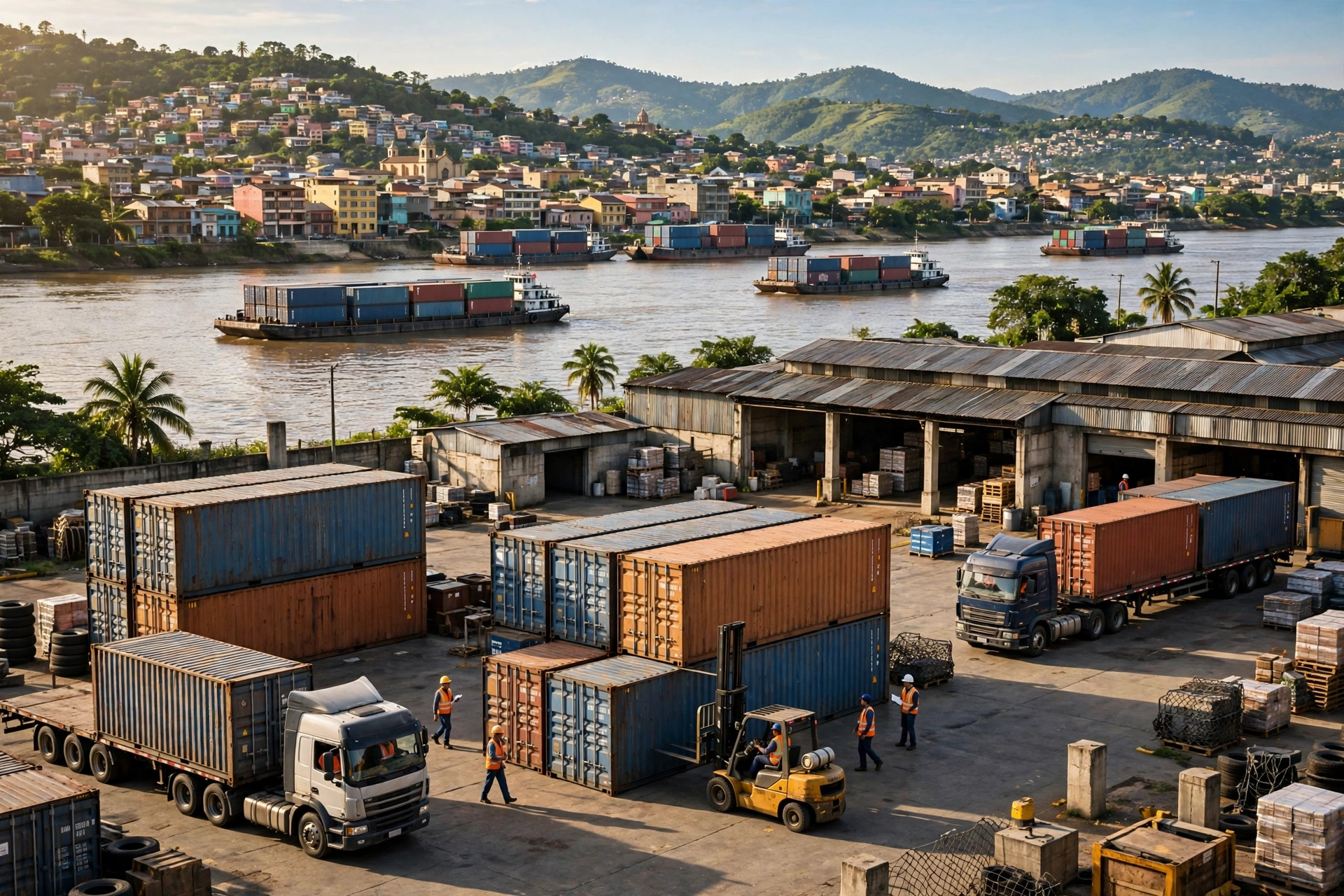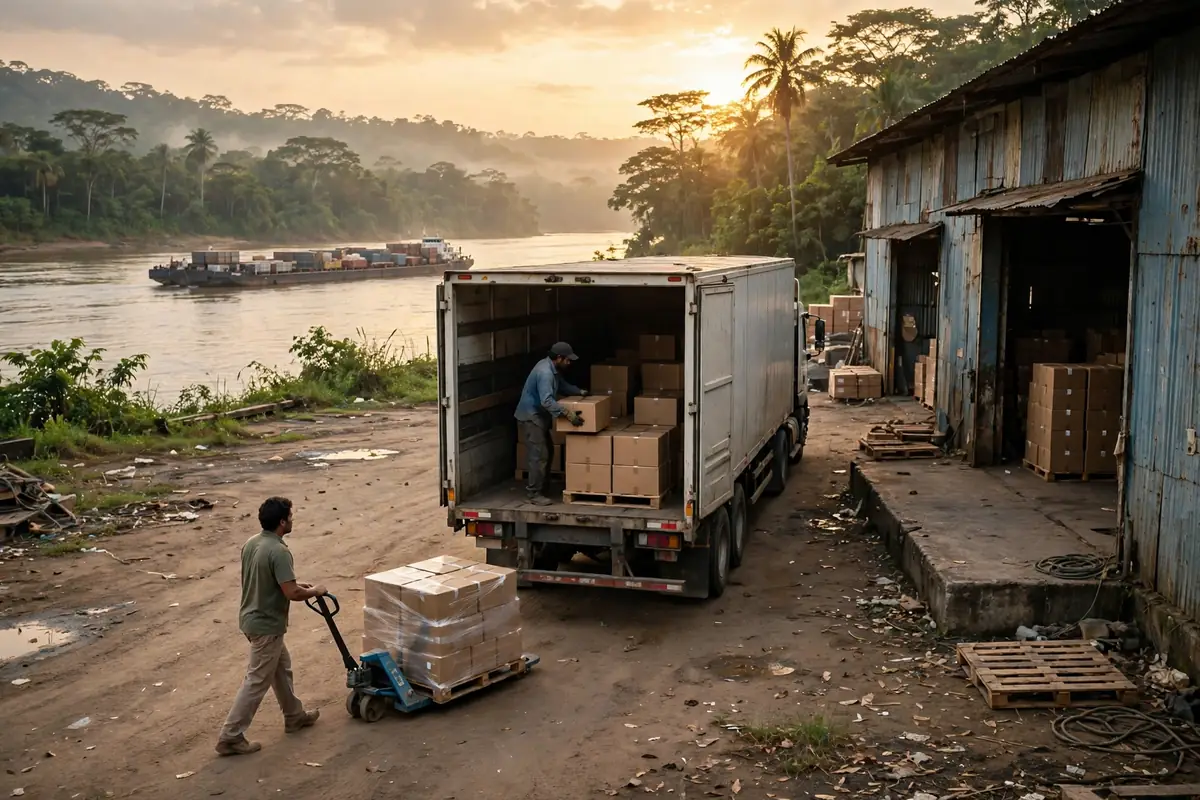
Let me tell you something I learned on my first run into Asuncion: paraguay asuncion warehouse logistics looks simple on a map and behaves very differently on the road. Cargo comes up the river, trucks wait on the bank, the heat sits on everything, and the warehouse may look close to the port — until the last stretch of road eats half your day. After fifteen years behind the wheel, I trust one rule in that part of the world: never judge a warehouse by rent alone. Judge it by the road first.
There are two main ways freight gets into Asuncion. The river route comes up the Parana and then the Paraguay River. Bulky, heavy cargo moves well by water. A barge is slow, but one barge replaces a whole line of trucks. The land route comes through border crossings from the Argentine and Brazilian sides, and it suits urgent freight and smaller lots. The two routes have completely different tempers. The river depends on water levels. In the dry season, shallow water means lighter loads and drifting schedules. The land route depends on the crossing. Queues, inspections, and paperwork — if one document does not line up, you sit at the border and wait. I have seen a truck spend more time at a crossing and a dock than it spent actually driving. That is why I never promise a shipper a fixed arrival day down there. I give a range, with slack built in. Anyone who guarantees you an exact day has not really run that road.
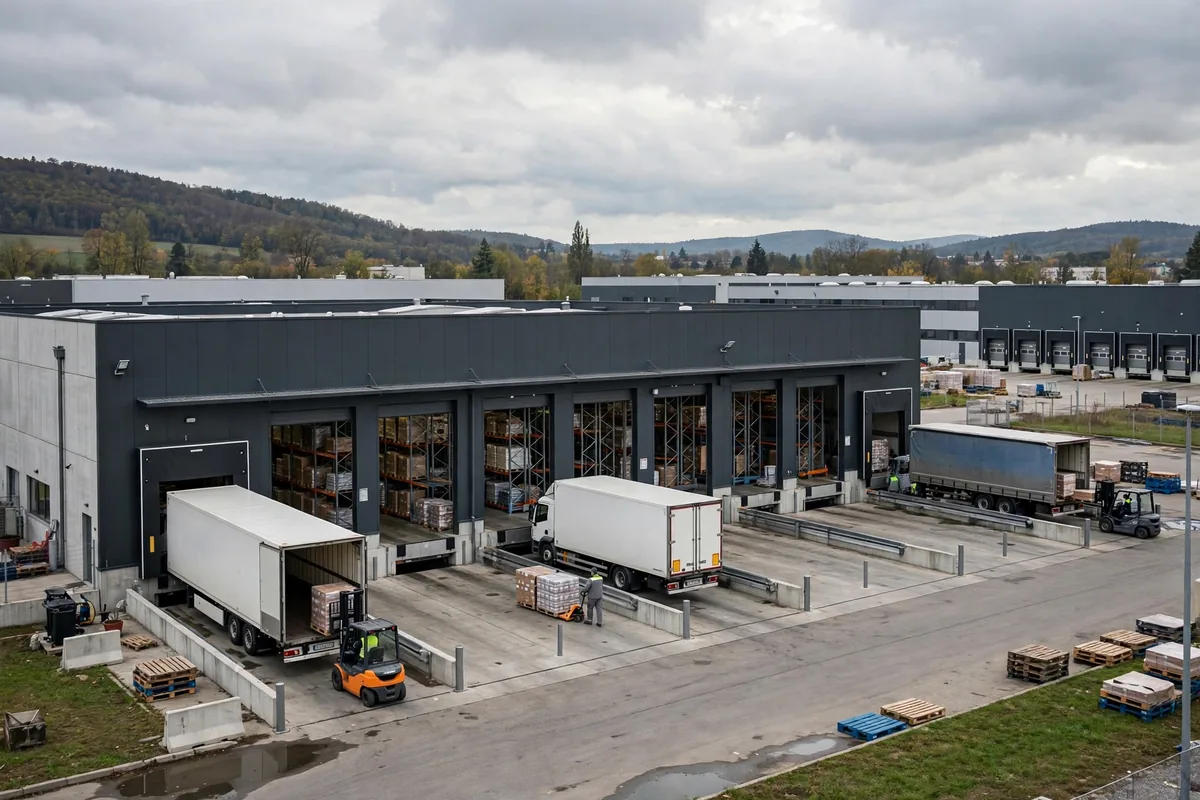
In the rainy season of 2022, I went with a shipper of farm machinery parts to look at warehouses around Asuncion. He had his eye on a big, cheap building. Rent was attractive, leaving the city was easy, but delivering into the city meant threading an old district with narrow streets and restricted hours. We sat near the gate for most of a day counting trucks. Big rigs waited for small cars to clear, and turning around in front of the dock was a job by itself. I told him straight: fine for storage, wrong for distribution. In peak season, with dozens of deliveries a day, his trucks would queue at his own gate and the rent he saved would come back as late deliveries. He moved to a park on the east side near the main arterial road instead. Rent was a bit higher, but trucks rolled in and out cleanly, drivers were willing to take the runs, and the real math worked out better. That is the warehouse lesson: drive the route before you sign anything. Run it in the morning peak and the evening peak. Your feet and your steering wheel will tell you what the brochure will not.
paraguay asuncion warehouse logistics: road first, building second
Warehouses around Asuncion fall into three rough groups. Match your freight to the group before you talk price:
| Location type | Best for | Strength | Watch out for |
|---|---|---|---|
| Near the river port | Bulky, heavy, waterborne freight | Short haul from unloading point | Congestion near the port in busy periods, dock queues |
| East-side parks on main roads | Fast-moving consumer goods, frequent delivery | Smooth routes in and out of the city, easy for big trucks | Higher rent, good space goes fast |
| Outer sites toward the border corridors | Transshipment and cross-border distribution | Close to outbound routes, plenty of open ground | Long runs into the city, poor fit for small frequent drops |
Here is the part that surprises people: closer to the city center does not mean faster delivery. The old districts have narrow, one-way streets. A big truck gets in easily enough and then cannot get out. I would rather take a site a little further out, right on a main road, and trade distance for flow. Drivers have a saying: better ten kilometers of good road than one kilometer of jam. There is a second trade-off to think through honestly. Your own leased warehouse feels safe, but when volume swings, empty space bills you every single month. Starting in a shared local warehouse, proving the volume, and only then talking about a long lease is the lower-risk road. On taxes, duties, and clearance rules, I will not quote you numbers here — follow the latest local policy and sit down with a reputable local customs broker. One honest conversation there beats ten articles, including this one.
The transshipment side of paraguay asuncion warehouse logistics
Asuncion's position is interesting. It does not only serve Paraguay itself. It also feeds border trade toward Brazil and Argentina. Plenty of freight lands in an Asuncion warehouse and splits from there, because the city sits on both the water route and the land routes. I hauled that kind of work for a while. Freight does not sit long. In, sort, out, onto another truck. That game is about turning, not storing. For that kind of warehouse, dock space and sorting room matter more than raw storage volume. Freight that piles up without moving is dead money with a roof over it.
One run in 2023 taught me that the hard way. A load of small home appliances came in by water, went into an Asuncion warehouse for splitting — part stayed local, part went on by road toward the border. The plan looked beautiful on paper. It jammed at the splitting step. The warehouse stored full pallets the local way, but the cross-border portion had to be broken down and rebuilt, there were not enough hands on the floor, and my truck waited outside the dock for most of a day. After that, the warehouse changed its rule: transshipment freight gets its own zone and its own labels from the moment it enters, never mixed with local stock, and the loading order gets planned a day ahead. The point is simple. For transshipment, the flow inside the building is everything. How freight enters, how it splits, how it leaves — draw that map before the first truck arrives, not while it is idling at your dock.
Two more pieces of road truth. First, rain changes everything on some southern stretches. Heavy rain turns sections muddy, big trucks get stuck, and schedules built on dry-weather days fall apart. Build weather into your timing. Second, relationships are not decoration down there — they are efficiency. Call the warehouse a day ahead with your arrival time, documents, and unloading needs settled, and your truck unloads on arrival. Show up unannounced and you can queue until dark with nobody to blame. In my years on the road, half of good timing is driving. The other half is the phone call you made yesterday.
My last word to any shipper thinking about setting up in Asuncion: do not rush into a long lease. Send a few real shipments first. Run the river route once and the land route once. Touch the whole chain with your own hands — inbound, storage, splitting, city delivery, onward border movement — and only then decide where the warehouse goes, how big it should be, and how long to sign for. The tempers that never show on a map or a quote sheet will all show themselves in one honest trip. Get the road math right, and the warehouse decision is more than half made.
By Shifu Zhao, Trucking Veteran (15 yrs)