Here is the verdict up front: for a paperless picking rollout, do not cut over the whole warehouse on day one. Pilot one line, prove the handheld workflow on real orders, fix the exceptions, and only then copy it line by line. I have watched this mistake three times, and every time the full cutover turned go-live week into firefighting.
In September 2024 I worked with a small-appliance warehouse in Ningbo. The owner wanted all six picking lines switched before a major sales peak. Paper was stopped, handhelds were handed out, and by mid-morning the floor was stuck. Some scanners would not read location labels. Cancelled orders were still sitting in task queues. The supervisor was on the phone while handwriting replacement slips. By lunch, half the team was waiting for work and the other half was hunting through cartons. We rolled two lines back to paper that night just to keep shipping, and the other four took two more weeks to settle. The owner later told me that one stable pilot line would have been worth more than six shaky ones.
A warehouse-wide switch bets everything on a single day. A pilot confines problems to one line and produces evidence instead of opinions.
The verdict: run paperless picking on one line first
Choosing the pilot line matters. Do not pick your busiest line, and do not pick your quietest one. The busiest line turns any glitch into a peak-season incident. The quietest line never generates enough pressure to expose real problems. My criteria are fourfold: medium daily volume, enough orders to produce several hundred picks a day; a representative product mix, with bulky items, small items, full cases, and split picks; a mix of experienced and new pickers; and a supervisor who reports problems instead of hiding them.
I usually run the pilot for two weeks. Week one has a single goal: make the flow work end to end. Orders arrive, scans confirm, tasks close, handover happens. Speed does not matter yet. Week two is for friction and exceptions: where scanning fails, where the wrong item gets picked, where a second confirmation is needed. After two weeks you should hold a proven line, a real problem list, and a trained team.
For a fuller discussion of what paperless picking can actually change, that companion piece covers the upside in more depth. This article is about the rollout itself: how to get from paper to scanners without breaking shipping.
Equipment, orders, and exceptions: the three steps
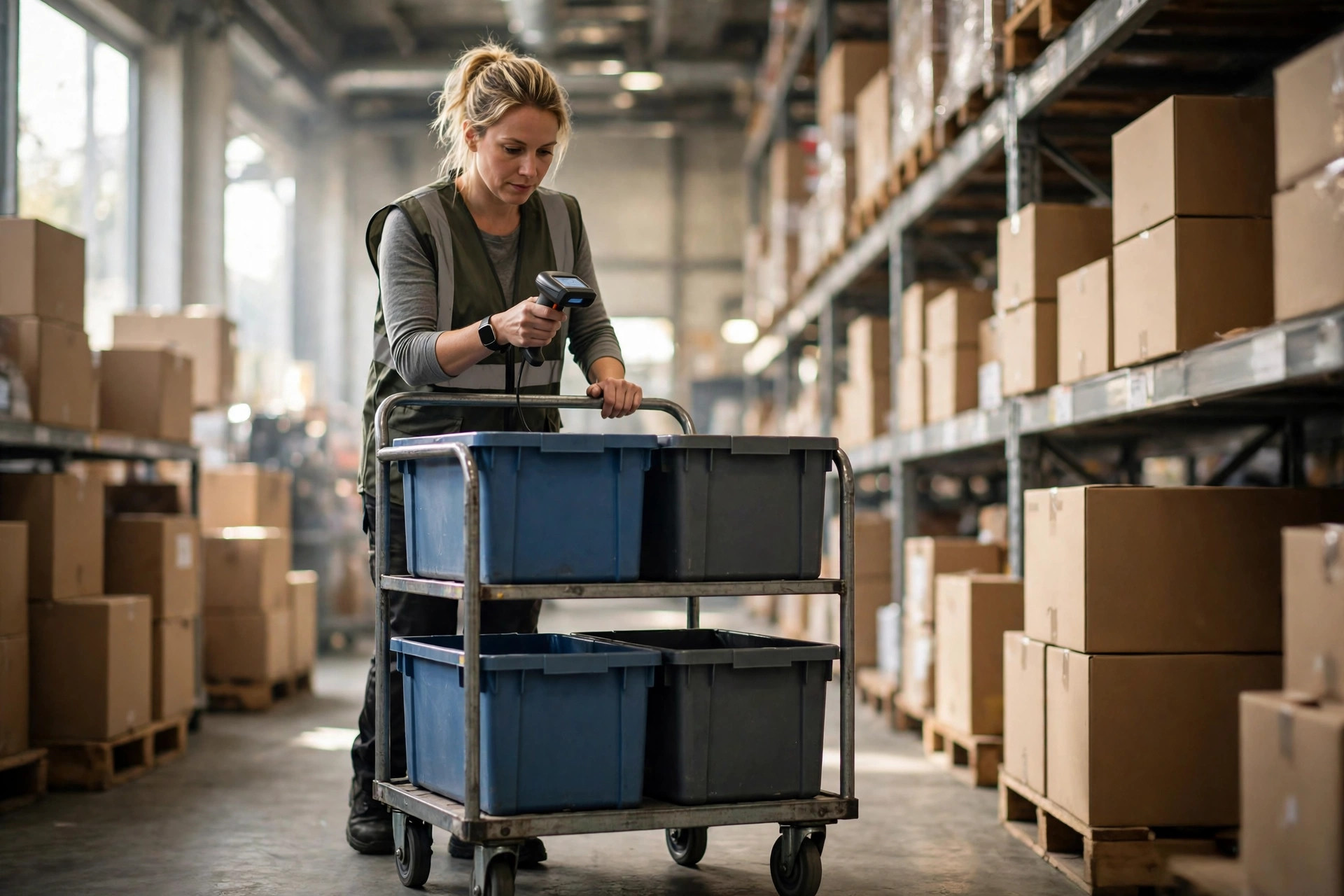
Step one is equipment, and it has to be ready before the pilot starts. Handhelds, chargers, spare batteries, and backup scanners should be counted against real headcount, not a spreadsheet estimate. On a twelve-person pilot line I deploy fourteen handhelds: twelve in use, two for rotation and spares. Wireless coverage gets tested the same way a picker walks it: both ends of the aisle, the cold-room doorway, and the lift lobby.
Step two is order logic. On paper, pickers use their eyes and experience to skip a cancelled line or work around a shortage. On a handheld, the system has to make those calls explicitly. Before go-live night, I walk through every order type with the warehouse supervisor: how cancelled orders are blocked, how short picks are suspended, how a mixed full-case and split-pick order is prompted, and how waves are split into tasks. Every type gets a real test order, not demo data. In early 2025, a household-goods warehouse in Guangzhou learned this the hard way. Test orders were all clean. On day one, an order arrived with one short item out of three, and the handheld froze the whole order. The picker stood at the shelf unsure whether to continue or put everything down. We added a rule that suspends only the short line and lets the rest of the order move. The frozen orders disappeared.
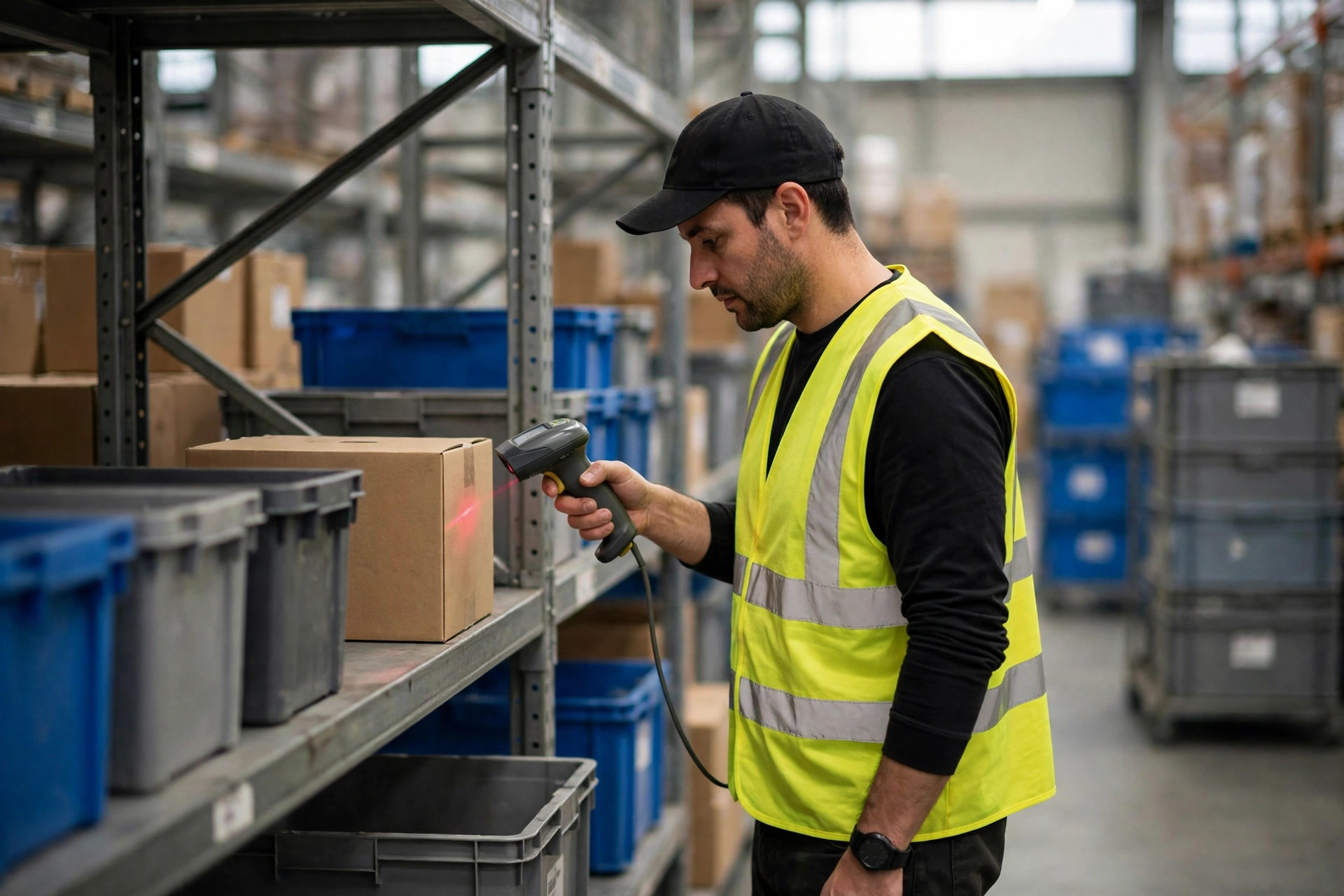
Step three is exception handling, and it must be an action a picker can take without asking permission. Barcode will not scan: key in the last four digits, try the backup code, and if both fail, call the supervisor and set the item aside. Never pick from memory. Wrong item scanned: the device alarms, the item goes back to its exact location, and the picker scans again. Never carry on and fix it later. Quantity mismatch: count once, ask a second person to verify, and suspend the order if it still does not match. Print this list at both ends of the pilot line, and put the same wording on the handheld screen.
A simple comparison keeps the pilot honest. It compares the pilot line against the old paper routine, without inventing a productivity claim before the process is proven:
| Area | Paper routine | Pilot line routine |
|---|---|---|
| Task assignment | Supervisor hands out printed slips | System pushes wave tasks to handhelds |
| Pick confirmation | Eyes check order and item numbers | Scan validation, alarm on mismatch |
| Exception handling | Verbal report, written up later | Suspended on the device, visible to supervisor |
| Shift handover | Paper slips change hands, slips get lost | Task status visible on the device |
The pilot is not the stage for boasting about speed. It is the stage for proving the flow holds and exceptions are contained. Speed comes after the process is copied, not before.
Paperless picking go-live night checklist
The go-live night checklist is the last gate on every project I run. It is short, and every item needs a named owner and a signature. Verbal assurance does not count.
First, equipment check: every handheld powered on and scan-tested, spare batteries counted, charging docks working, faulty units swapped that night, not next morning. Second, order freeze: order types, wave rules, and blocking rules locked for the pilot line. Nobody changes a rule on go-live day, because changing a rule mid-flight is changing the exam halfway through. Third, staffing: the full pilot team on site, the supervisor on the floor, and system support standing beside the line rather than waiting for phone calls in an office. Fourth, rollback plan: paper templates printed and placed on the supervisor's desk, with three sentences stating when to roll back, who decides, and how paper picks get entered afterward. Fifth, a five-minute morning briefing: before work starts, the supervisor repeats the exception actions, not theory, just what to do when a scan fails, when the wrong item appears, and when a quantity does not match.
A rollout without a rollback plan is a vehicle without brakes.
Three failures I have seen
The first failure is treating the pilot as a demo. Some warehouses staff the pilot with their two best pickers, their cleanest orders, and their easiest shelves. The numbers look beautiful and the rollout collapses on contact with real people and real orders. A pilot must use real orders, real pickers, and real shelves. Ugly pilot data is good data. A beautiful pilot report is a debt you repay during rollout.
The second failure is buying the equipment and skipping the order logic. Devices, scanners, and wireless all work, but cancellation, shortage, and split-pick logic still think in paper terms. The screen shows words the picker understands, yet the sequence makes no sense. In my experience, order logic deserves at least half the project effort. Less than that, and you are planting problems for go-live week.
The third failure is copying without a review. The first line works, so the second line copies it directly, with no review meeting. But product mix, staffing, and shelf layout differ line by line. Copying an answer onto a different test paper does not work. My rule is a thirty-minute review before each new line: what is different here, which checklist items change, and which open items from the last line are still unresolved. Skip the review, and problems get copied along with the process.
Here is the counterintuitive part: the slowest pilot usually produces the fastest warehouse-wide rollout. Two weeks spent proving one line looks slower than a single-day switch, until the single-day switch needs rework. Rework costs time, lost orders, and team confidence, and that total is almost always larger than the pilot ever was. In this kind of project, slow is the fastest path available.
If you are about to start, follow this order: choose one pilot line, work through equipment, orders, and exceptions, sign off the go-live night checklist item by item, and review before copying to each new line. Prove it on one line, then copy the proof. Do not bet the whole warehouse on a single day.
By Lin Xiao, WMS Implementation Consultant