Here's my verdict on AI agents in warehouse exception handling: over the next few years, the real value isn't "auto-resolution" — it's "auto-watch." Let the machine take the night shift; let humans make the call. That division of labor isn't changing in the next five years.
Thanksgiving peak, 2021. I was consulting for a 3PL warehouse in Ontario, California, when the night-shift supervisor called me at 1:40 AM: a wave had been released in the WMS, but pick tasks for 300-plus orders never generated, and the conveyor had been running empty for twenty minutes. I drove forty minutes to the site, and with two people we went through interface logs line by line. The culprit: the upstream order system had dropped an entire batch of data. Nothing ever arrived, so the WMS had done nothing wrong. Two-plus hours to pin down the root cause; 2,000-plus orders didn't ship until daylight. Next day, the customer sent a claim email and docked a point off that month's service fee.
An AI agent would have done our two hours of work in ten minutes: automatically reconciling "orders received at the interface versus tasks created in the wave," flagging the gap and pointing at the suspect batch. That's the value of the watch — detection and diagnosis, where machines beat humans by an order of magnitude.
But the "act first" part? Slow down. There are two sides to this.
AI Agent Exception Handling: How Far Can Automation Go Today
Costs first. I've seen too many "auto-resolution" disasters. Back in 2019, another warehouse switched on an auto-adjust rule: any cycle-count variance within tolerance got written off automatically, no human sign-off. Sounds beautiful, right? For three straight months, the system diligently "smoothed away" a systemic receiving shortfall — the supplier was shorting every shipment by around two percent, and the agent papered over it every single time. At the quarterly wall-to-wall count, book versus physical was off by hundreds of thousands of dollars, and nobody could reconstruct which link had lost the goods. Worse was the accountability mess: IT said operations defined the rule, operations said the system ran itself, and the supplier's claim window had long closed. Nobody could carry that loss. The owner ate it.
Here's the blunt truth: the biggest cost in exception handling isn't slowness — it's being wrong. Humans are slow, but when they're wrong they stop. A machine ten times faster is also wrong ten times faster, and quietly. The biggest risk of an AI agent isn't that it's dumb; it's that it's diligent — diligently turning a small exception into an un-auditable catastrophe.
So I draw the line clearly: information aggregation, root-cause diagnosis, recommended actions — hand those to the agent. Anything touching the books, the money, or a customer promise stays with a human.
Before Handing Exception Handling to an AI Agent, Do This Math
Do the math. A warehouse around 100,000 square feet gets three to five exception calls a night — stuck waves, interface outages, AMR line stops, inventory variance alarms. Every exception costs the on-duty supervisor thirty to forty minutes from wake-up to "do I need to go in," and a real site visit burns two hours round trip. Over a peak month, the idle time spent "waiting for a human to deal with it" adds up to half a night-shift supervisor's pay.
The agent's value isn't replacing that person — it's compressing forty minutes into about five. Within thirty seconds of an exception, the agent has pulled the WMS logs, interface status, and equipment telemetry, and served up "likely cause, recommended action, blast radius." The human does exactly one thing: make the call. For a mid-size warehouse, a year of avoided late-shipment penalties and overtime covers the agent project with room to spare — but only if you keep it away from write-offs and releases.
Here's the division-of-labor table I draw for clients — the boundary between agent and human at a glance:
| Exception type | Agent owns (look, don't touch) | Human owns (decide and act) |
|---|---|---|
| Stuck wave / dropped interface batch | Auto-reconcile, flag suspect batch, notify per playbook | Decide whether to switch to manual flow |
| Inventory variance | Pull 30 days of movement history, draft variance analysis | Adjust the books or chase the supplier |
| AMR / equipment line stop | Low-risk auto-restart or reroute | Stop the whole line, call maintenance |
| Pick shortage | Suggest substitutes, re-plan the wave | Short-ship, and what to tell the customer |
My pilot shortlist for clients has three items, all safe to start now:
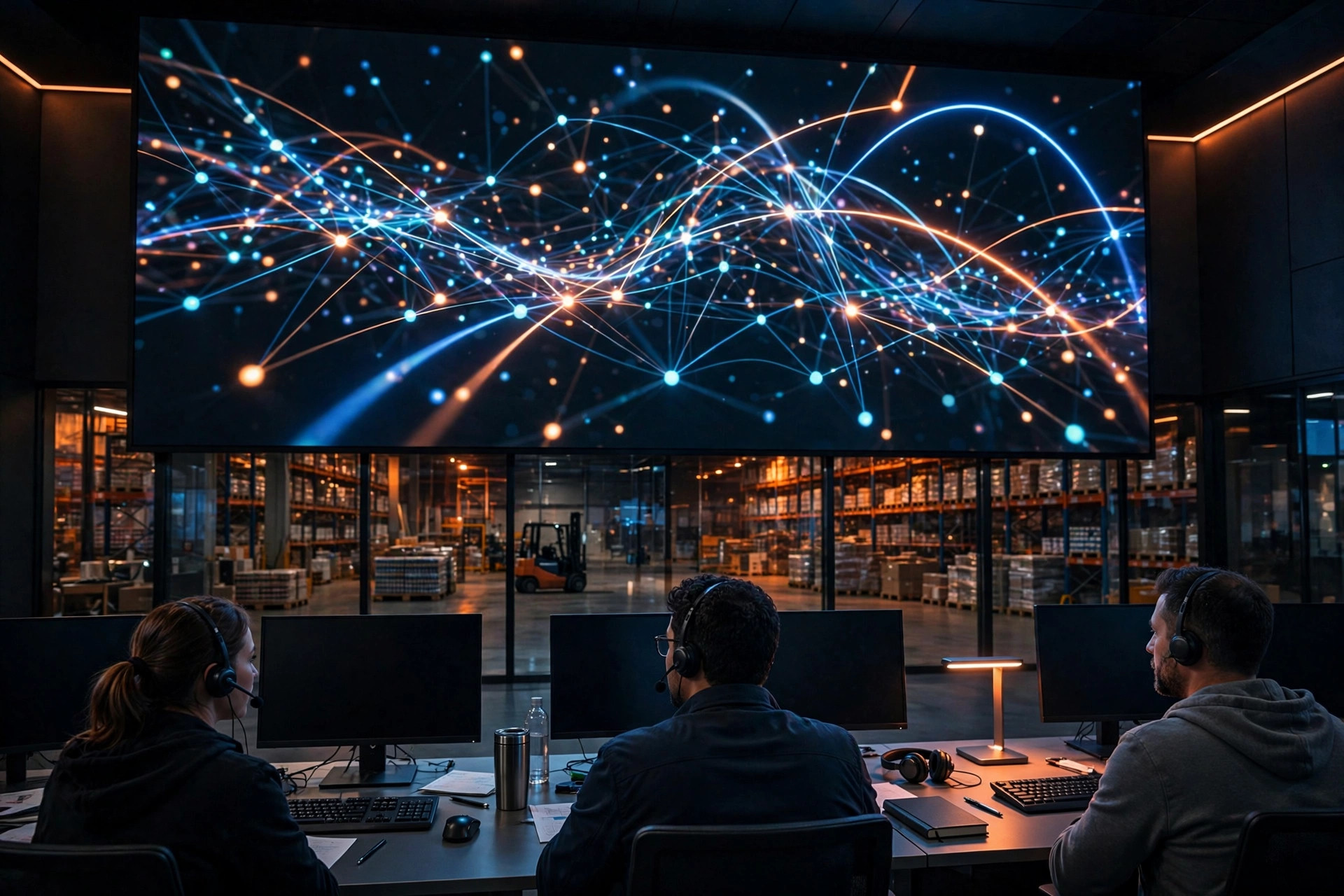
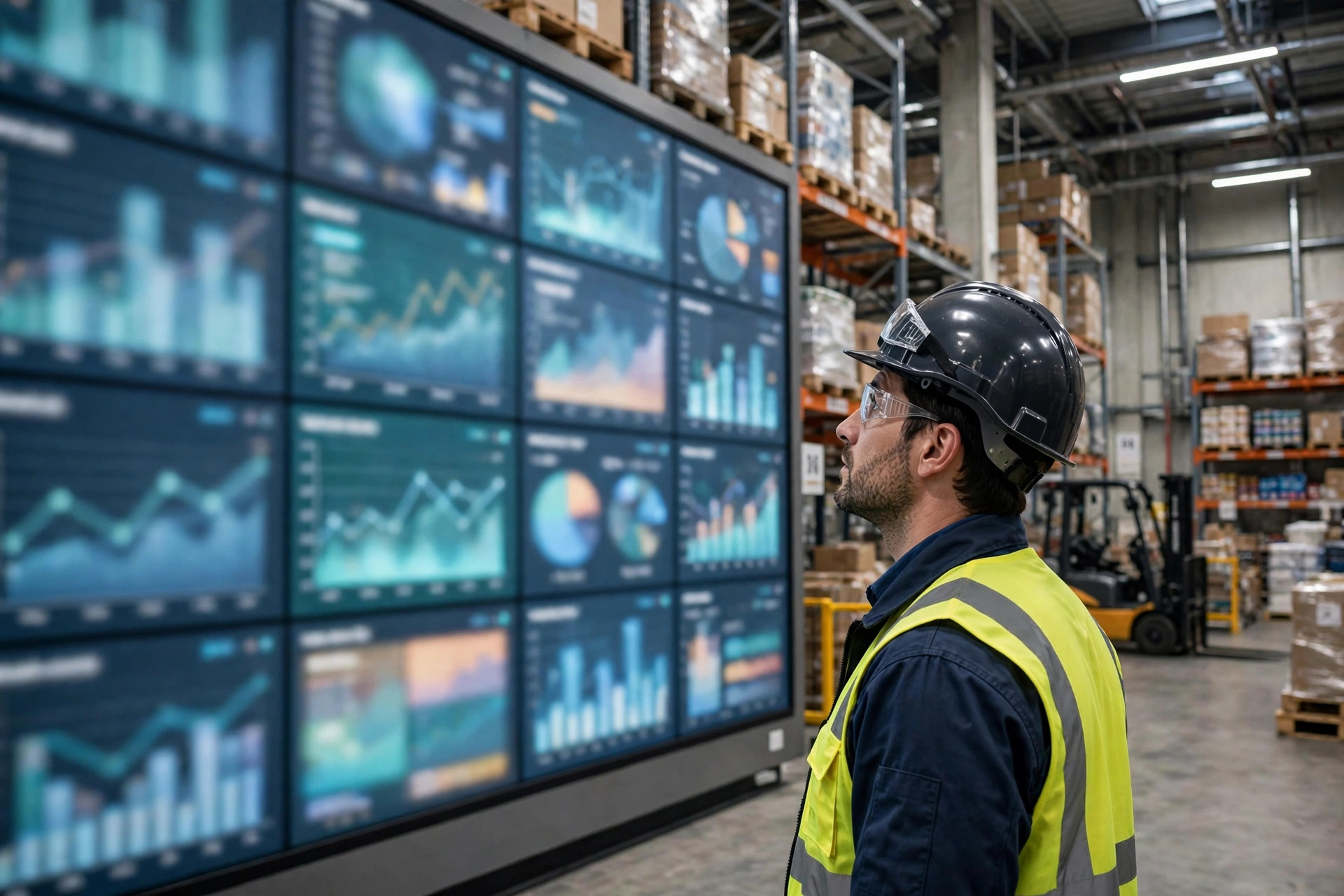
First, night-shift exception aggregation. The agent watches the alarm streams from the WMS, order interfaces, and equipment around the clock — deduplicating, prioritizing, diagnosing root cause. Humans get one message: conclusion plus recommendation. Best ROI of any pilot, near-zero risk.
Second, pre-wave health checks. Fifteen minutes before each wave release, the agent reconciles four things — order volume, available inventory, labor roster, equipment status — and blocks the wave with an explanation if anything is short. That single check would have prevented half of those 1:40 AM phone calls.
Third, variance triage. When an inventory variance alarm fires, the agent first pulls thirty days of movement history, count records, and adjacent-bin transfers for that SKU, and drafts the variance analysis. Then a human decides whether to adjust. Remember: the machine can write the report; the hand that posts the adjustment must be human.
Three Red Lines: What Not to Touch
Red line one: auto-adjusting inventory. The story above is the lesson. The moment the books move on their own, the chain of accountability breaks — and three months later you can't even find where the goods went.
Red line two: auto-committing to customers. Letting an agent promise a customer "ships tomorrow, guaranteed" or auto-accept a rush order — it doesn't know three of your people called in sick tomorrow. Machines advise on customer commitments; they don't make them.
Red line three: auto-execution across systems. Moving a slot in the WMS, switching a carrier in the TMS, posting an entry in the ERP — small moves inside one system are negotiable. One-click execution across three systems means when something breaks, you can't even assemble the rollback team.
So there are the two sides. AI agents doing warehouse exception handling — I buy the direction. The era of humans staring at screens should end; nobody wants the 3 AM phone call. But "machine acts first" can't be rushed: let it be the night shift's eyes for three years, earn the trust, then talk about making it the supervisor.
One piece of advice before you deploy an agent: ask yourself — if it auto-handles an exception wrong at 3 AM, can you explain in ten minutes the next morning what it did and why? If not, don't let it act. The day you can, that's the day you forward the phone to it.
By Lao Mi, Supply Chain Veteran (20 yrs)