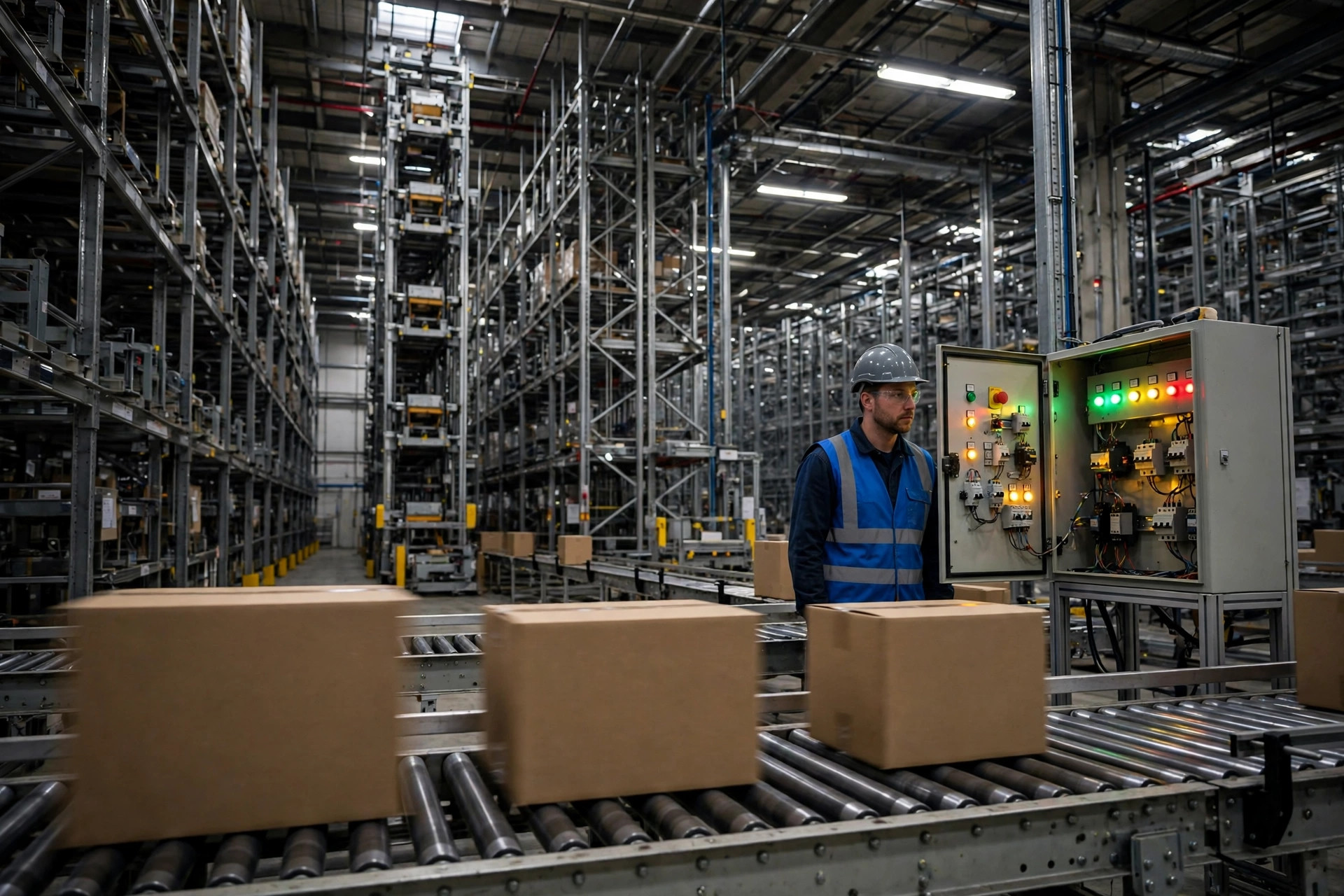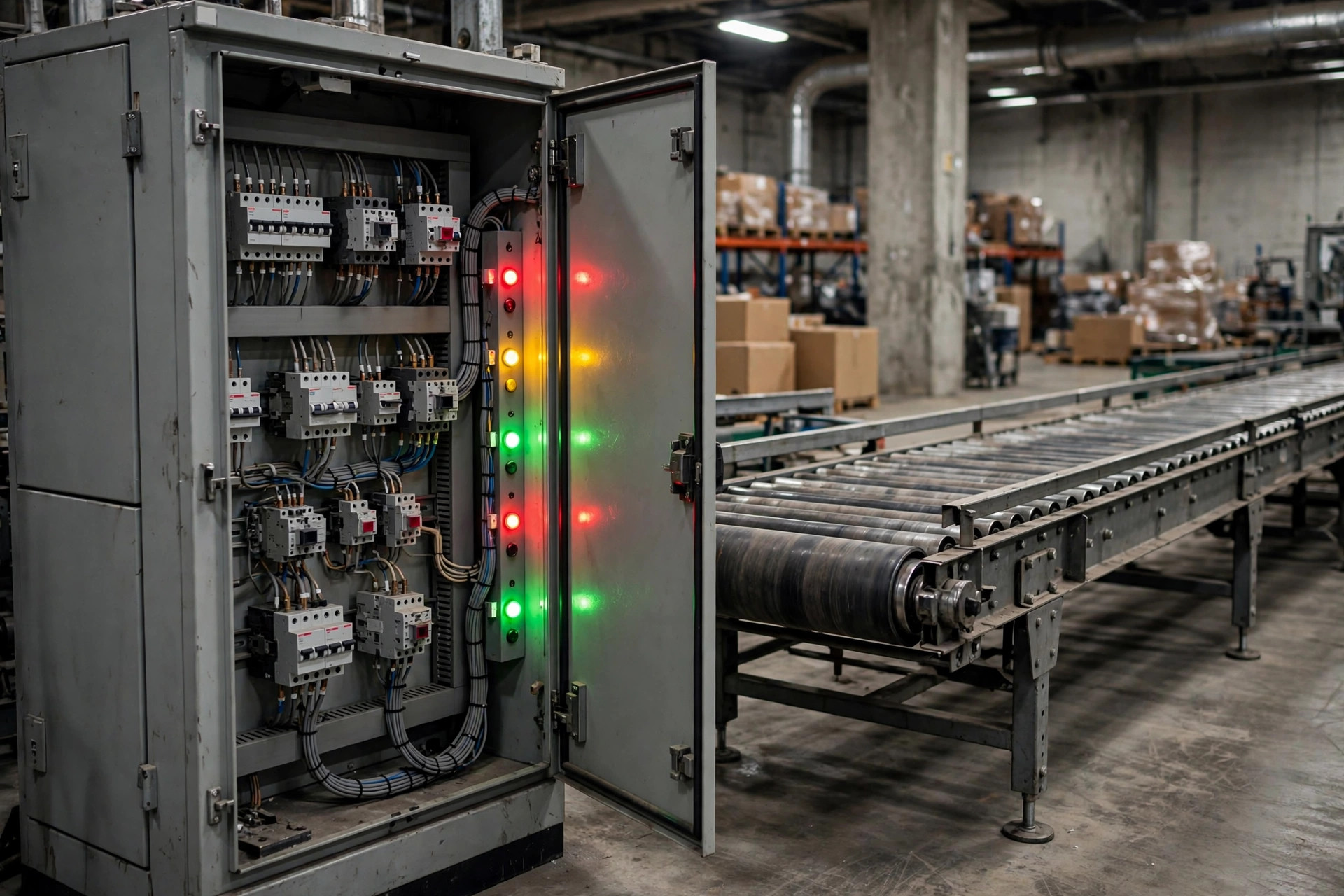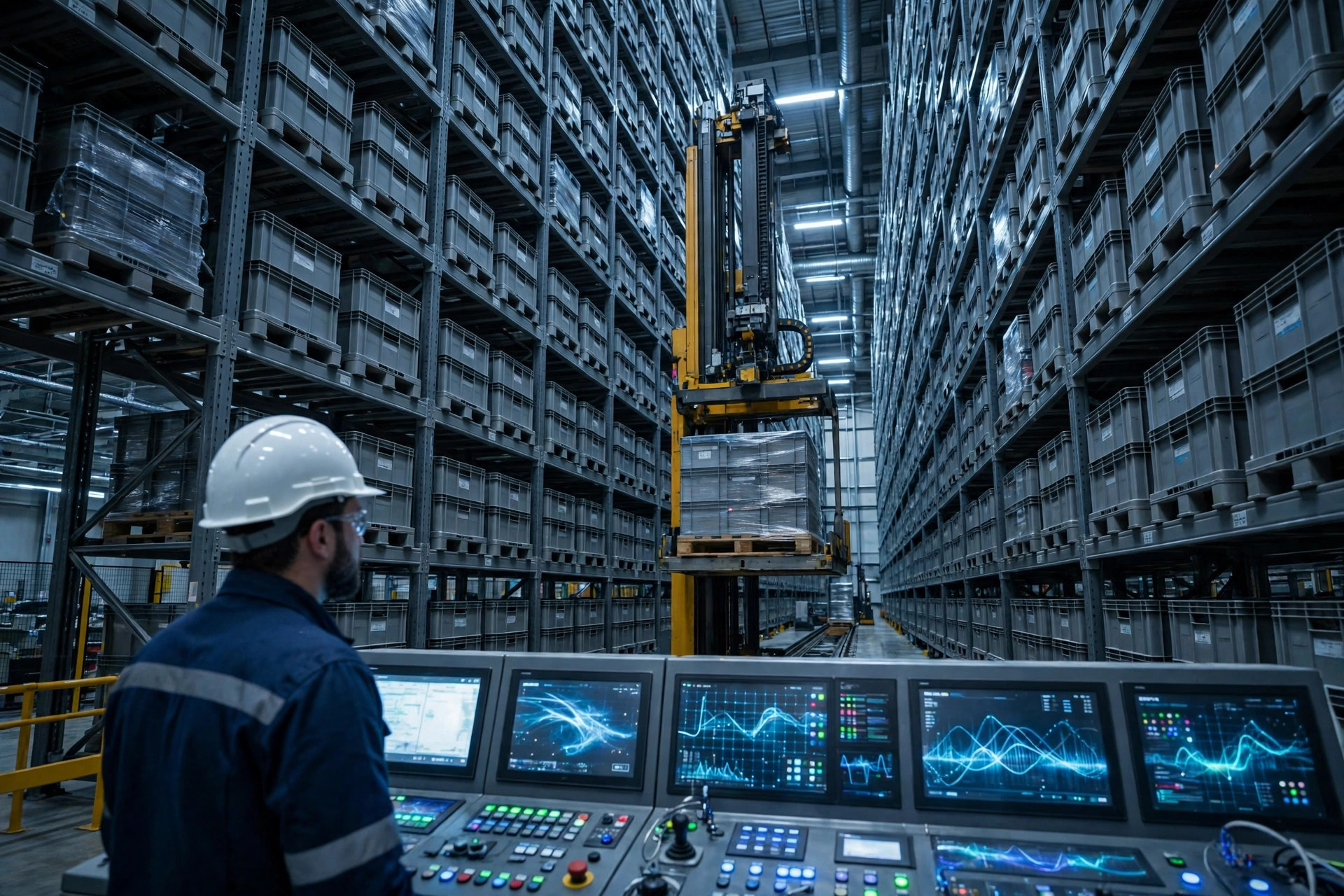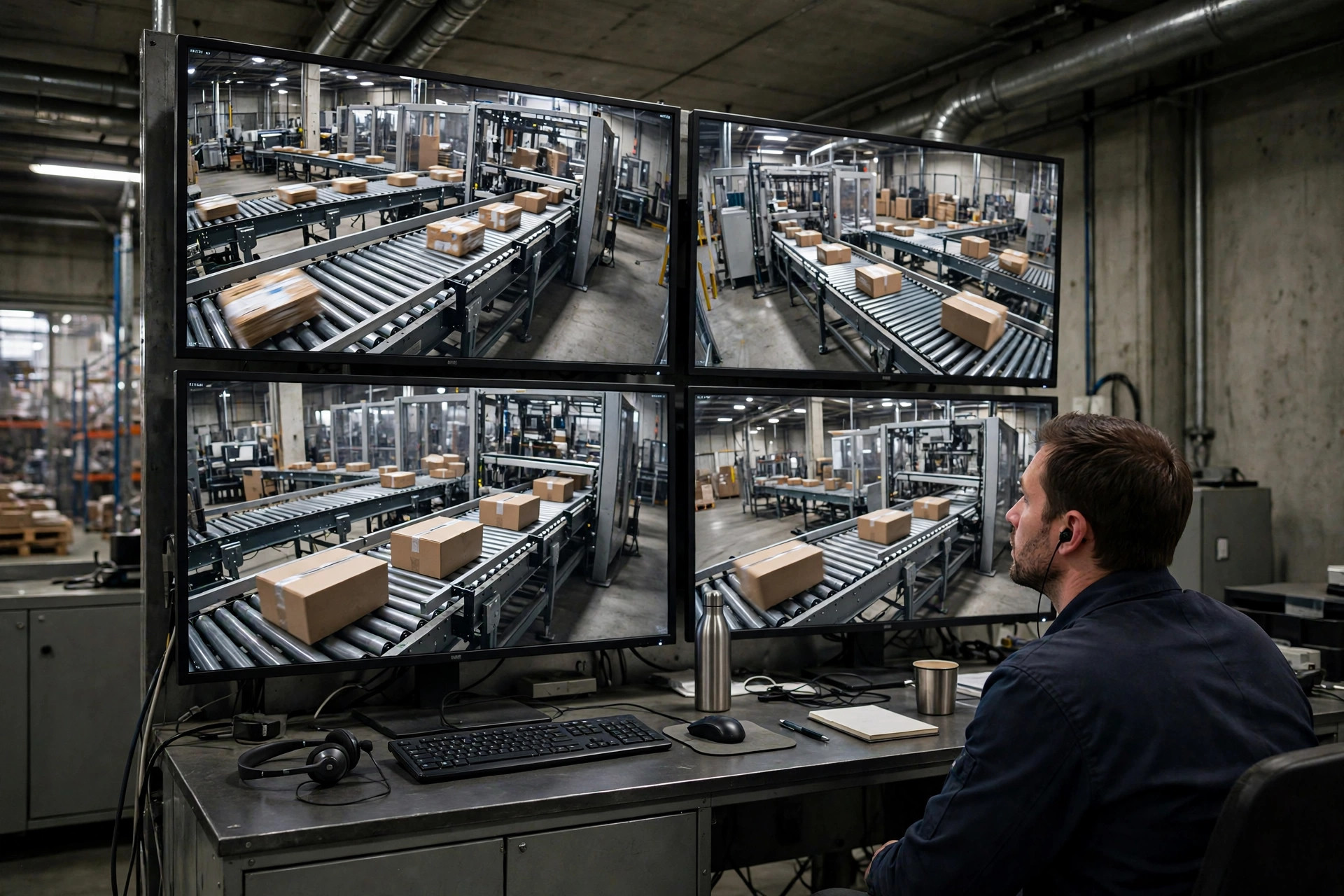
A WCS task timeout with no acknowledgement played out on a night shift in March 2025, when a third-party logistics warehouse in eastern China watched a pallet reach a divert point on a conveyor and then stop making sense to the system. The move task still showed as dispatched. Eighteen seconds passed with no acknowledgement, no error, and no movement. The next pallet could not enter the lane. A supervisor finally walked to the line and saw that the pallet had in fact arrived; only the completion signal had failed to come back. The lesson from that night was not that a device had broken. It was that the system had treated silence as if it meant nothing had happened, when silence can mean several very different things at once.
WCS Task Timeout: Three States Hiding Behind the Same Silence
A WCS task timeout with no acknowledgement looks uniform on screen, yet it hides at least three distinct states. In the first, the device has already executed the move and the acknowledgement was lost on the way back. In the second, the task never reached the device, so the execution layer is still waiting for an instruction it will never receive. In the third, the communication channel itself has failed, so each side assumes the other side is still working. The operator sees the same display in all three cases: dispatched, no acknowledgement, timed out. Any action taken before those states are separated risks solving the wrong problem.
A second case, from an automotive parts warehouse in northern China in September 2024, shows the second state in its quietest form. After a routine controller restart, seven tasks remained marked as dispatched even though the controller had never received them. They sat for almost forty minutes until a shift handover exposed them, because no explicit timeout threshold had forced the system to move from waiting to checking. A threshold sounds like a technical detail, but in practice it marks the boundary of management responsibility: after a defined interval without acknowledgement, the system must investigate rather than keep waiting.
Longer observation of automated warehouse execution points to a pattern worth noting. Timeout incidents rarely arrive alone. They tend to coincide with rising task volume, mixed device fleets, and interface changes. Higher volume congests the channel. A mixed fleet increases the chance that one device type returns a status code another layer misreads. An interface change can turn a previously understood status into an unknown value that is quietly dropped. Treating a timeout as a network problem alone therefore narrows the investigation before it has properly begun, and it leaves the structural causes untouched.
WCS Task Timeout Retry: Ask Whether a Retry Is Safe Before Asking How Many Times
The first question for any WCS task timeout retry is not how many times to resend, but whether a resend is safe at all. That judgement can rest on three checks: whether the device may already have executed the task, whether the task carries a globally unique task number, and whether the result can be verified after the fact. If any of those checks cannot be answered, the correct step is manual verification, not an immediate resend.
| Timeout situation | Likely true state | Recommended action |
|---|---|---|
| Device executed, acknowledgement lost | Goods have moved, system does not know | Check the floor or device state first, then correct the status without resending |
| Task never reached the device | Device idle, goods unmoved | After checking the channel, resend once under the same task number |
| Channel failed, both sides disconnected | State unknown | Restore the channel and reconcile before deciding to resend or take manual control |
Behind that table sits a counterintuitive judgement: the most dangerous retry is not the one that comes too late, but the one that is sent when the device has already acted. A duplicate instruction can move the same pallet twice or send two tasks competing for the same location. Much of the visible chaos after a timeout is not caused by the timeout itself, but by a hurried retry issued into an unknown state. Waiting a little longer and checking the floor may look slow, yet it often prevents a second incident from being created on top of the first.
Idempotency is the design principle that makes safe retry possible. The same task number must be executable only once on the device side, so a repeated instruction is recognised as a duplicate and returns the original result rather than executing again. Timeout thresholds should also be layered rather than uniform. Ordinary transport moves can carry a shorter threshold, while irreversible actions such as stacker crane putaway, retrieval, or lift level changes deserve a wider threshold and a manual confirmation before any resend. A threshold set too short creates its own problem: normal device latency is misread as failure, and the system intervenes while the device is still working.
Manual Fallback and Escalation: When a Timeout Should Change Hands
Manual fallback should not be an instruction to go and look. It should be a fixed checklist, followed in the same order every time: confirm whether the goods are still at the origin, read the device status display, check the device-side record for that task number, and only then decide whether to correct the status, resend, or move the goods by hand. A fixed order matters most under pressure, because it prevents a tired operator from skipping the verification step that would have revealed a duplicate move. Every check should leave a record with the task number, the time, the checker, and the floor conclusion. That record is not primarily for blame. It is the evidence the next timeout investigation will need, and it is how a recurring pattern on one lane or one device becomes visible before it becomes a crisis.
Escalation needs an equally clear line. A single task that remains unconfirmed after one verification should go to the shift lead. Three consecutive tasks without acknowledgement from the same device, or simultaneous timeouts across several devices, should be treated as a channel-level incident: pause new dispatches to the affected equipment, reconcile the outstanding tasks, and only then resume. Pausing new work can feel like stopping production, but it stops an unknown state from spreading. Continuing to dispatch into an unreconciled queue does not preserve throughput; it multiplies the number of tasks whose true state will later have to be reconstructed.
There is also a trade-off that deserves explicit attention. The higher the share of timeouts handled automatically, the less often people verify what actually happened on the floor, and the later the system notices a drift in device behaviour. Full automation of retry decisions hands judgement to the layer with the least knowledge of the physical situation. A more durable pattern is to automate the timeouts whose state is clear and verifiable, and to reserve unclear states for people, with every human intervention recorded. Automation and manual cover are not substitutes here. Each gives the other a point of verification.
Returning to that pallet at the divert point, the core failure was never the missing acknowledgement itself. It was the absence of a prepared next step for silence: a threshold, a unique task number, device-side deduplication, a fixed verification checklist, and an escalation line. If any one of those is missing, a timeout stops being a wait and starts becoming a disruption. That raises a question that may matter more than simply lengthening the timeout: if the acknowledgement channel itself cannot be trusted, should the priority be repairing the channel, or giving every task a state that can be verified after the fact, regardless of what comes back?
By Dr. Chen, Supply Chain Researcher