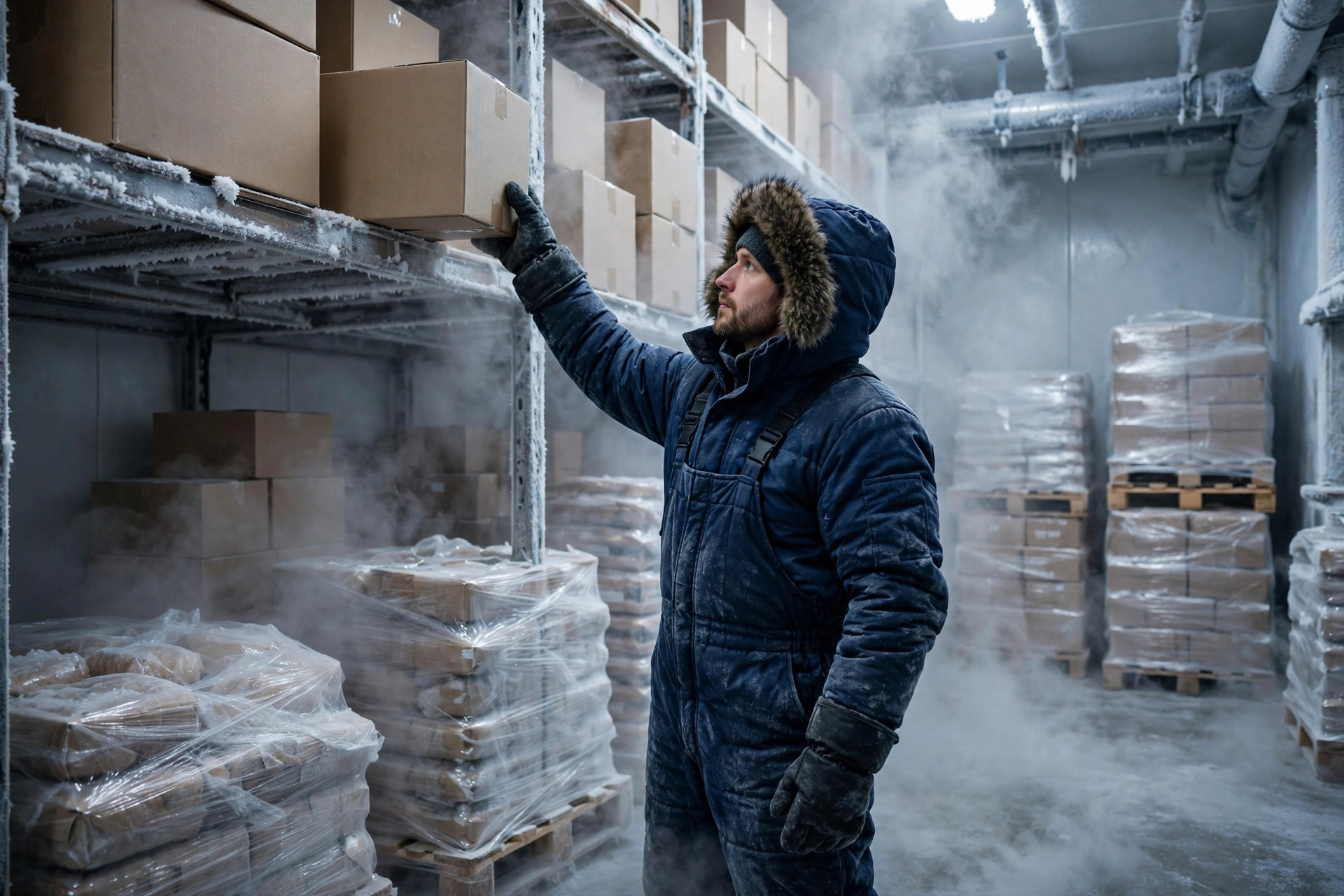
Our small warehouse cannot afford the big-company version of anything, so cold storage was never going to be a copy-and-paste job for us.
We run a 3,000-square-meter warehouse with only six pickers, and the cold room is just one small part of it. In the coldest stretch last winter, one young picker stayed inside the freezer for more than an hour straight. When he came out, his hands were shaking so badly he could barely hold the order sheet. That day taught me the order of operations for cold storage: take care of people first, then talk about speed. Get that order wrong and you pay for it in people, not just in minutes.
Cold Storage Order Picking Rotation: The Fake Efficiency of Frozen Hands
The big-company playbook does not fit us. We do not have the budget for a full rotation system with sensors everywhere. Our low-cost fix is simple: pair people up, one inside and one outside. The person inside picks. The person outside checks and packs. When the rotation time comes, they swap. No drama, no debate.
We set a clear limit on continuous time inside the cold room. When the time is up, the picker must come out, warm up, and drink something hot before the next round. Nobody gets praised for pushing through one more order with numb fingers, because the orders finished that way usually come back for rechecking. The rotation sheet hangs on the cold room door, showing who goes in and who comes out, so the team leader does not have to shout the plan all day.
The results were plain enough to report. Before the new rotation, we had three small cold-related incidents in one month where stiff hands led to picking mistakes. After the change, we went two straight months with zero such incidents, and the picking error rate did not climb. That sounds boring. For a small warehouse, boring is profitable. No incident means no lost shift, no rework, and no awkward apology to a customer.
Here is the counterintuitive part: letting people spend less time in the cold room made picking faster, not slower. A frozen hand needs two or three tries to confirm one item. A warm hand gets it right the first time. Treating people like machines sounds efficient until the person breaks down before the machine does, and then the bill is always higher than the time you thought you saved.
Cold Storage Order Picking Equipment: Freeze Protection Before the Scanner Quits
In a cold room, equipment often quits before people do.
We learned this twice, the hard way. Once, a handheld terminal stayed in the cold too long and its screen slowed down, so every barcode needed two or three scans. Another time, a picking cart picked up frost on its wheels, started squeaking, and nearly hit a rack. After that, we made three plain rules: check battery level before equipment goes in, rotate equipment out with the people, and dry it before charging. Never plug in a frosty device straight from the cold room.
Gloves deserve a special note, because cheap gloves are a false saving. The thinnest gloves do not keep hands warm enough, so fingers go stiff and scanning slows down. The thickest gloves make the touch screen hard to use, so workers fight the device instead of doing the job. We tested three types and settled on a middle option that works on touch screens and still keeps hands warm. It cost a little more per pair, but rework fell, and that math is easy to defend.
Here is how I frame the freeze-protection bill for a small warehouse:
| Spending area | Low-cost fix | Cost of doing nothing |
|---|---|---|
| Handheld terminals | Rotate out with staff, dry before charging | Slow scans, rework, early device failure |
| Touch-screen cold gloves | Pay a little more per pair | Stiff hands, more picking errors |
| Cart frost checks | A few minutes each day | Hitting racks, damaged goods, safety risk |
A large warehouse can survive equipment trouble by having spare devices everywhere. A small warehouse survives by having a process. Process costs almost nothing. Missing process costs real money, every single time.
Cold Storage Order Picking Errors: Checking Is Not Wasted Labor
The worst cold storage error is not being off by one or two units. It is shipping a frozen product in the wrong temperature group or the wrong batch, so the customer receives thawed or spoiled goods and the whole order comes back. That return costs freight, product loss, and a long customer conversation.
Our checking method is also low-tech. The outside checker goes through the order line by line, and frozen orders sit in a separate pile until they are checked and sealed. Some people called this step a waste of time and said sealing straight away would be faster. I did the math: checking adds a few minutes per order by one person. One missed error costs return freight plus product loss plus support time, enough to pay for many days of checking labor.
We had a real save last year. A frozen order almost went out with a room-temperature item mixed in, and the checker caught it just before sealing. If that order had shipped, the customer would have rejected it, we would have paid the freight, and the product would likely have been wasted. Since then, nobody in our warehouse calls checking a waste of time.
Here is one more practical scene worth copying. Early this year we took a small frozen order with many mixed items, the kind that gets messy when people rush between the cold room and the packing table. That day we stuck to the rotation sheet: the inside picker only picked, the outside checker only checked and packed, and neither person tried to do both jobs. The order shipped with zero errors, and the customer placed a follow-up order the next day. Speed did not come from rushing. It came from everyone doing one clear job.
My advice to other small warehouses is just three lines. Put the rotation sheet on the wall and enforce it, no exceptions for one more order. Rotate equipment with people, and never let a device spend the night freezing in the cold room. Keep the checking step, because cutting checking is just setting aside a budget for returns. For exact temperature and time limits, follow current regulations and your equipment manuals, not random numbers from the internet.
Small warehouses have their own way of surviving. We cannot copy the big-company cold storage setup, but if we manage people, equipment, and checking with simple methods that actually work, a small cold room can run steadily, safely, and without burning money on avoidable mistakes.
By Xiao Ma, Small Warehouse Owner