Summer 2023, an 80,000-square-foot 3PL warehouse in Fontana. On a Friday afternoon, a 53-foot dry van pulled up to a big-box retailer's distribution center. The driver swung the doors open to find two pallets leaning like the Tower of Pisa, cartons of seasoning jars spilled off the top layer and shattered across the floor. Receiving wouldn't even send a forklift in: the entire trailer was rejected. Twenty-six pallets rode back, got torn down and restacked, and burned another freight bill. Between the damage claim and the rework, more than $20,000 went up in smoke. The shipper called me and asked, can't your warehouse just stack a pallet properly? I looked at the photos — column stacking, every layer perfectly aligned, two lazy loops of stretch film around the middle. The answer was simple: the pattern was wrong from the very first layer, and no amount of wrap fixes that.
Why Does a Perfectly Aligned Stack Fall Over First?
Column stacking looks the best: square corners, clean lines, easy to count. The problem is exactly that alignment. Every carton sits dead-center on the one below it, with zero interlock between layers. The whole pallet is a stack of plates. One hard brake from the truck, and the lateral force hits every layer at once — each layer held by nothing but the friction underneath it. They slide like a deck of cards, one layer dragging the next.
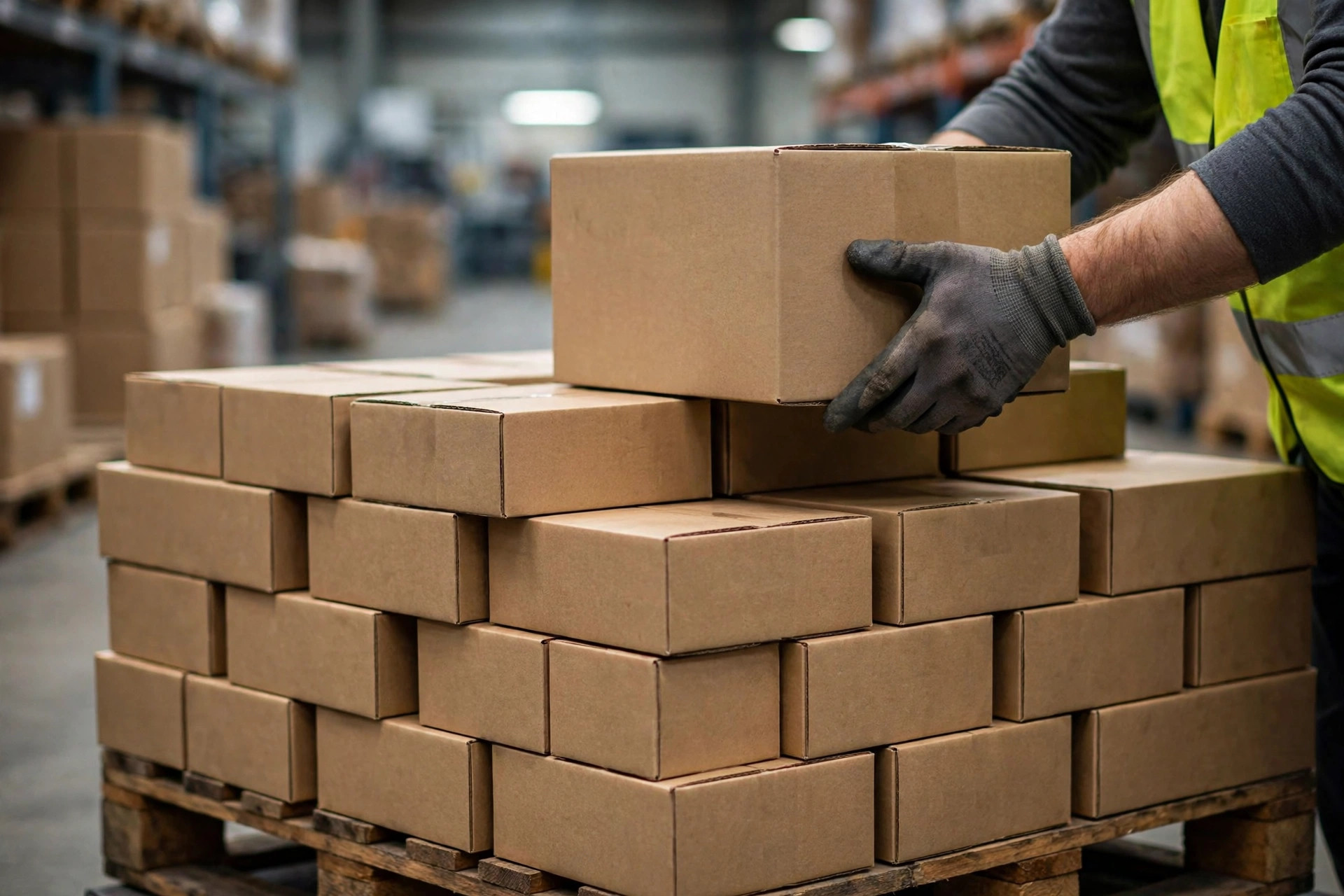
The interlocked brick pattern does the opposite: every carton straddles the seam between two cartons below, each layer offset from the last. Weight spreads across multiple support points, and when a sideways force hits, gravity locks the seams shut. Same principle as a brick wall — uglier, but you can't push it over.
One detail a lot of crews miss: heavy cartons always go on the bottom, light ones on top. It sounds obvious, but I've watched too many people stack whatever's closest to hand, sending the center of gravity climbing. A top-heavy pallet is a tipping pallet with a head start.
Don't let "neat" fool you. In palletizing, good-looking and sturdy are often opposites.
Three Patterns — Which One Fits Your Freight?
Column stacking has exactly one advantage: it saves space and goes up fast. It has exactly one valid use case: light freight, low stacks, short moves inside your own four walls. My rule is blunt — if that pallet is getting on a truck, column stacking is out. Don't bet the load on the driver's braking.
The interlocked brick pattern is my default answer. Offset every layer and it handles just about anything. The trade-offs are real: when carton dimensions don't divide evenly into a 48-by-40-inch pallet face, you get gaps at the edges that need edge boards or air pillows to fill, and it stacks slower than column. But trading that speed for a shot at losing the whole trailer is a bad bet.
The pinwheel is the square-carton savior: rotate each layer 90 degrees and the cartons bite into each other like a windmill. You get decent space utilization plus genuine interlock. The downsides: it's hard to keep aligned as the layers climb, it looks messy, and some automated receiving lines won't accept it. Worth considering when your cartons are square and you want the pallet face fully used.
Mixed pallets are the daily reality at any 3PL: several shippers' cartons on one pallet, all different sizes. The principle doesn't change — build the base layer out of the biggest, heaviest cartons, get a flat "second deck" established, then run brick pattern upward from there. Never leave big voids in the bottom layer; whatever sits above a void eventually caves into it.
One line: default to brick, use pinwheel for square cartons when space matters, and keep column stacking inside the warehouse.
Can Stretch Wrap Save a Bad Pattern?
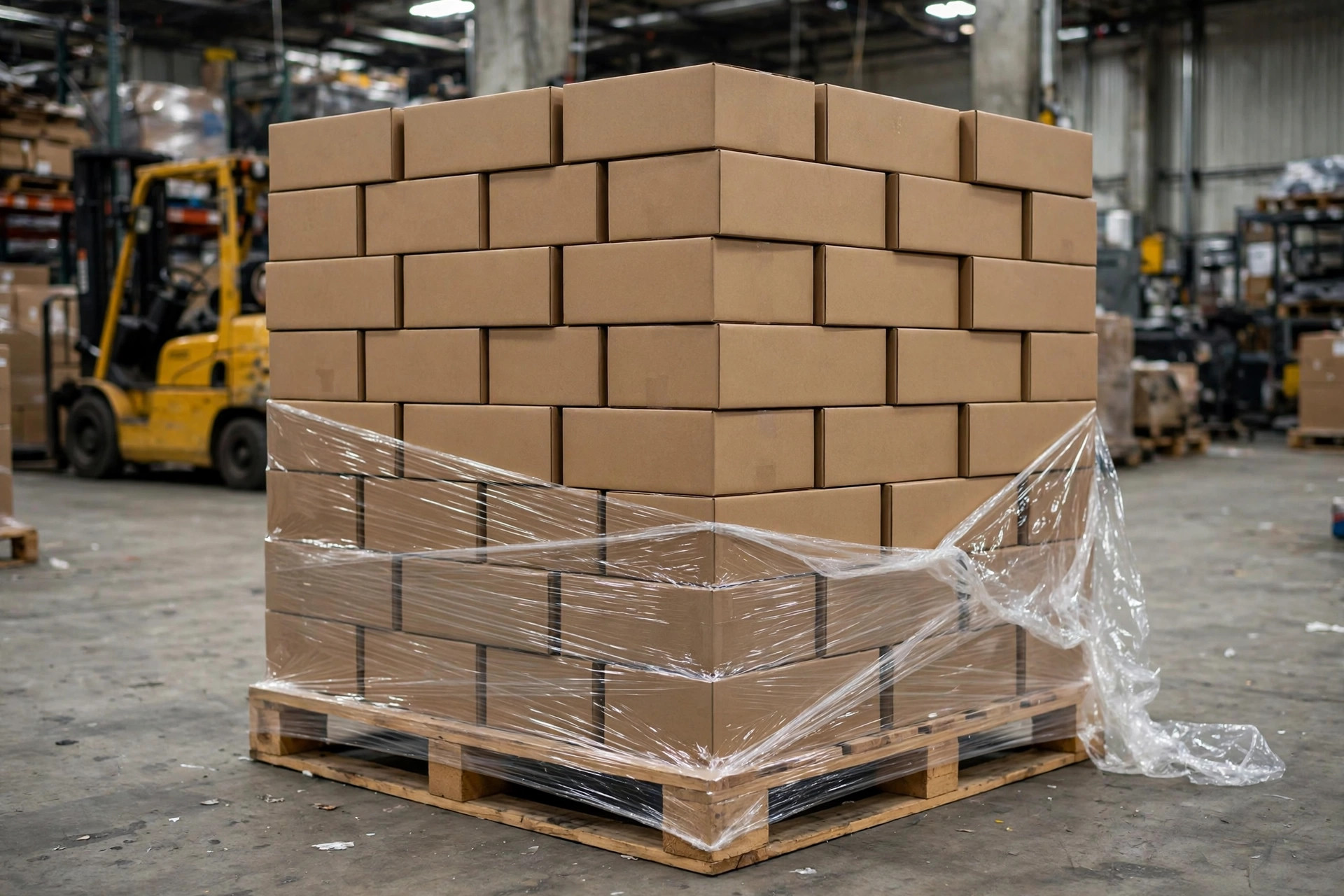
No. The pattern decides whether the inside holds together; the wrap decides whether the outside stays put. Two different jobs. Stack it loose and wrap it pretty, and all you've done is put a tight jacket on a pile of shifting cartons — it still rattles around in transit, and the moment receiving cuts the film, it collapses.
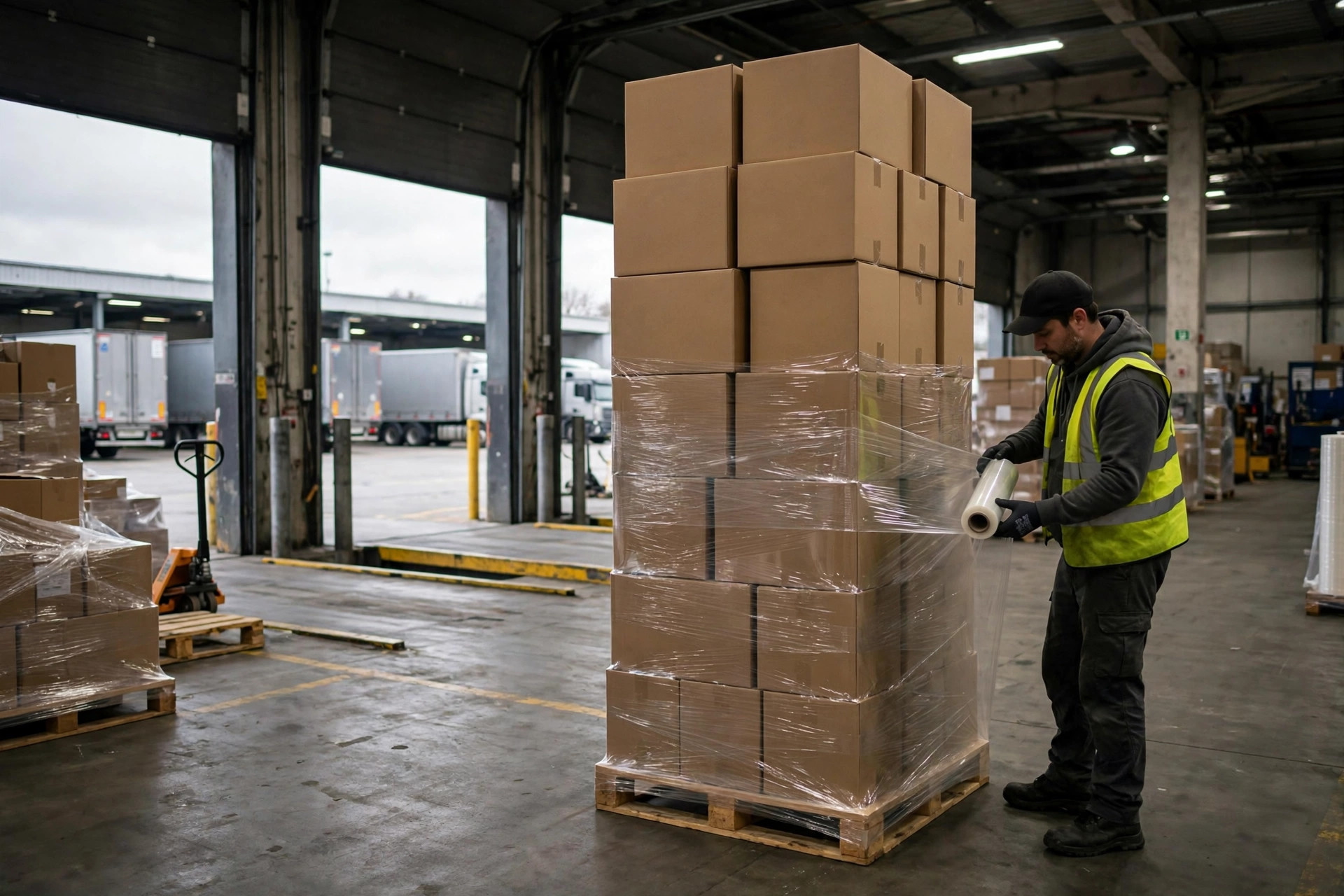
The wrap mistakes I see, I could recite in my sleep. The worst is wrapping the middle and skipping the base: if the bottom loops don't lock the load to the pallet, the whole stack slides on the pallet deck and the wrap is theater. Then there's the open top — the top layer is free, and one sharp turn sends it flying. And film pulled too loose: hand-wrapping to save effort, film you can slide a finger under, is decoration.
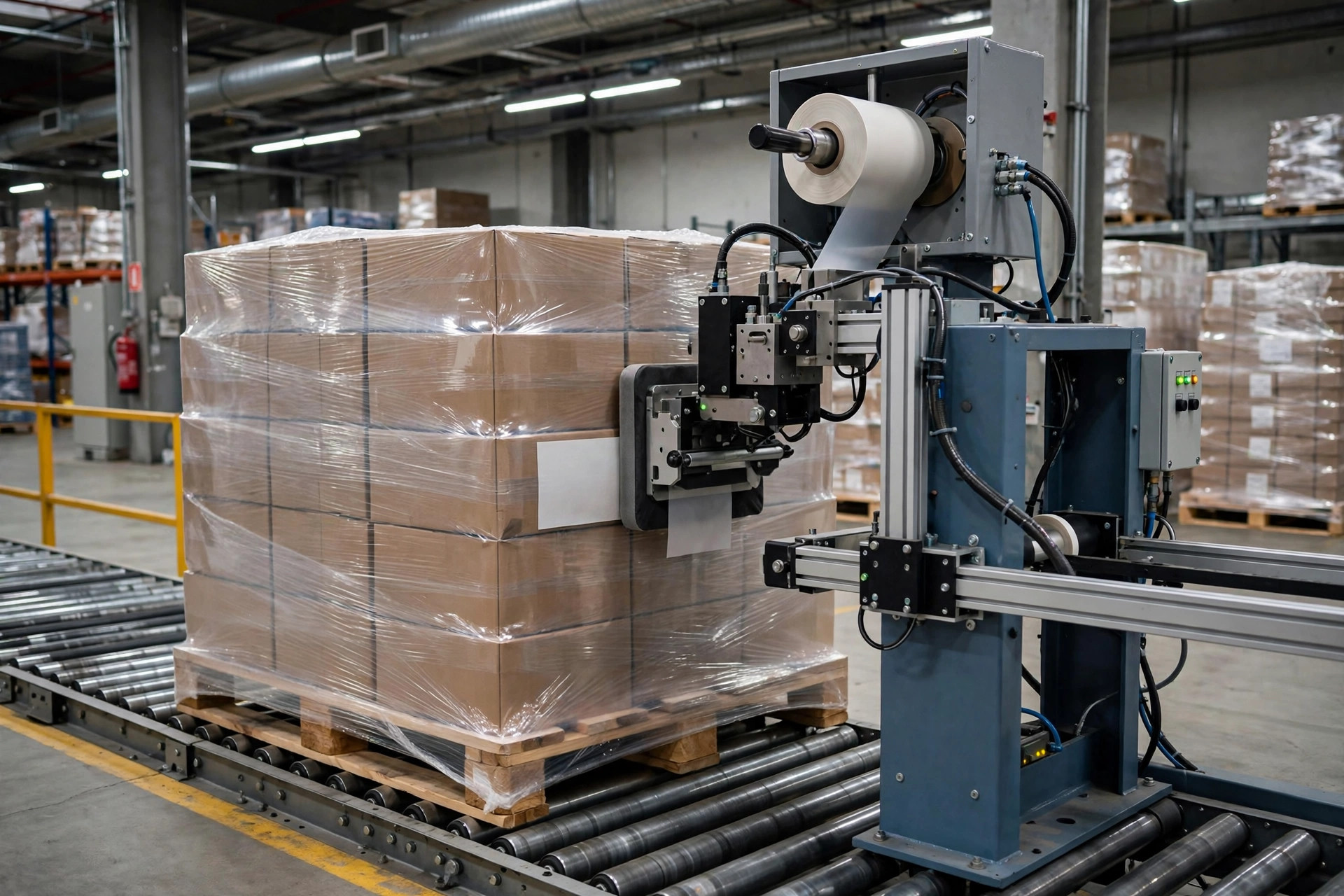
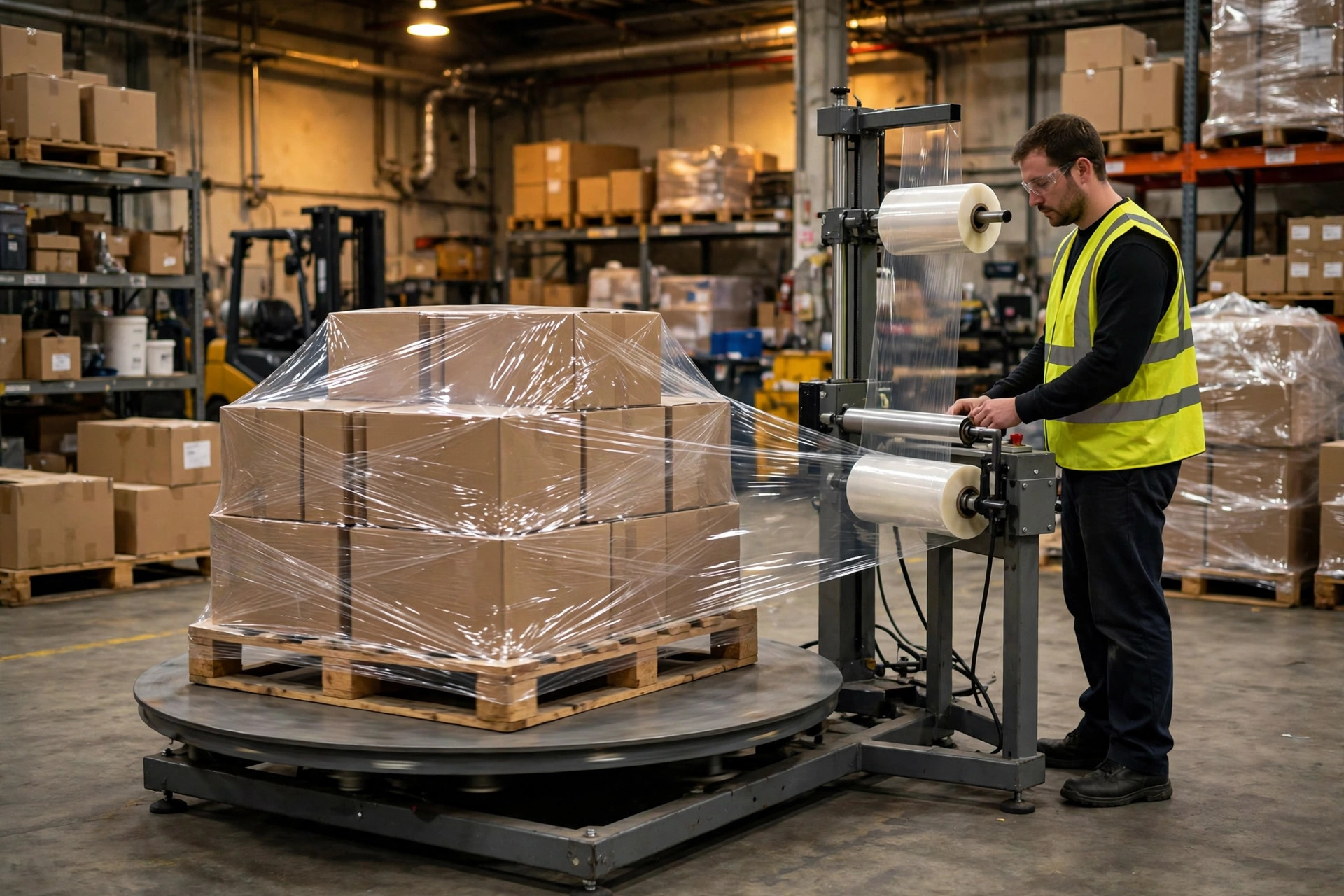
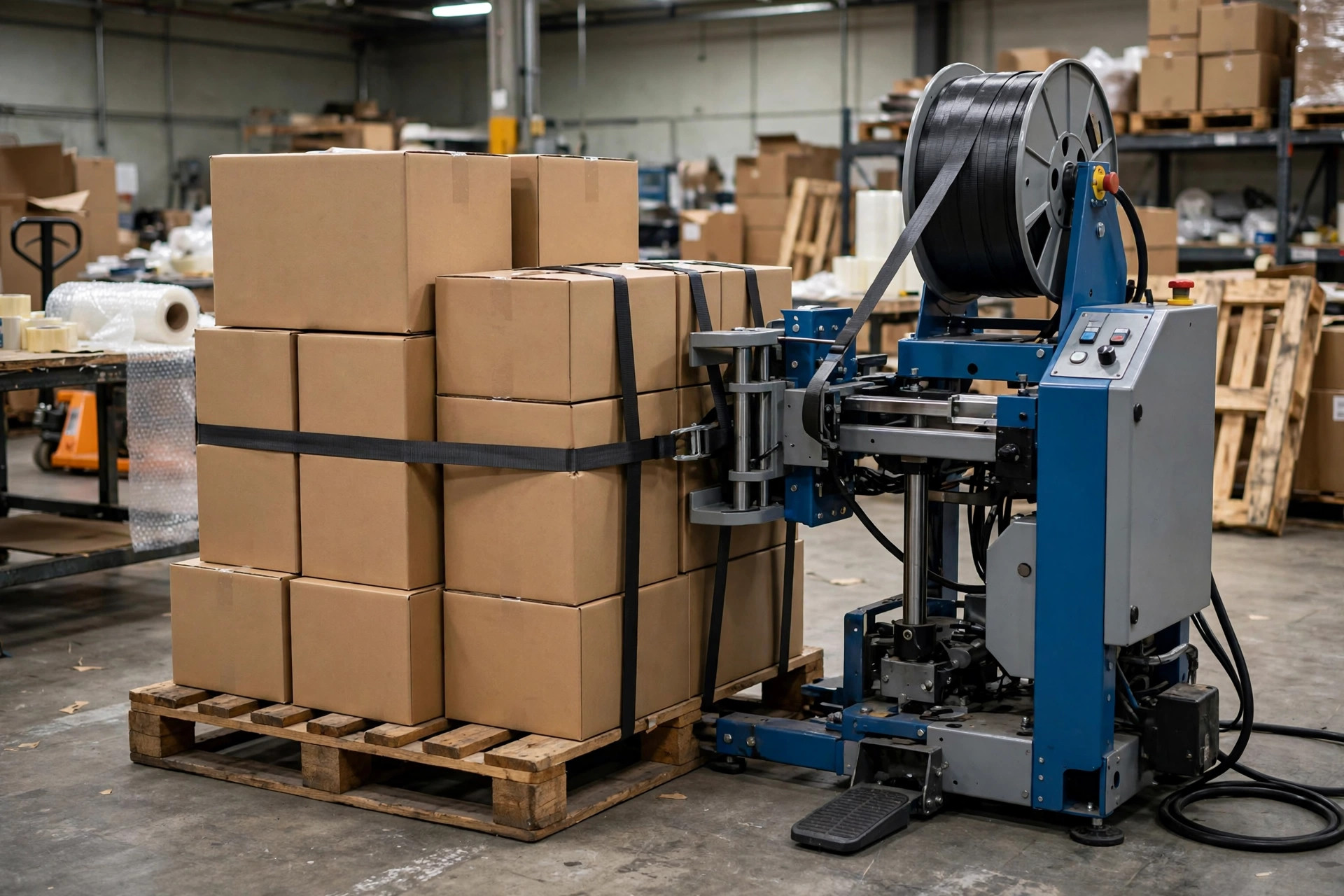
Those bottom loops are the foundation. Start the wrap with a couple of turns that capture both the pallet and the bottom cartons, bonding them into a single unit. If you ship real volume, get a semi-automatic wrapper — hand wrap quality depends on who's holding the roll and what kind of day they're having; a machine wraps every pallet the same. Saving money on film to lose money on freight is the worst trade in this business.
What to Check Before the Truck Leaves?
Receivers reject pallets for the same handful of reasons. Leaning is the most common — a pallet that won't stand straight is one the forklift driver won't touch, and nobody wants it falling on someone, so it's refused on sight. Overhang is just as deadly: anything hanging past the pallet edge gets crushed in transit, and automated racking is sized to the pallet footprint, so an overhanging pallet physically won't go in. Too tall is a problem too — DC clearance heights and rack beam levels are fixed, and an over-height pallet has nowhere to live. Then the pallet itself: broken boards, collapsed edges, exposed nails. To a receiver, a bad pallet means bad freight.
Big-box DCs publish written pallet specs, and violations don't just get rejected — they get hit with restacking fees that sting worse than the freight did. So spend thirty seconds per pallet before it ships: no carton hanging past the pallet edge; every layer offset, no seam running straight through; heavy on the bottom, flat top with nothing sticking up; height within the safe line — defer to your product's packaging spec on the exact number; bottom wraps bonding load and pallet into one unit, top closed off; pallet sound, no broken boards or exposed nails. And photograph every pallet before loading — when a claim turns into an argument, that photo saves the day.
Tomorrow morning, walk your staging area and push the outer cartons on every pallet. If it moves, restack it — don't gamble. There's no black magic in palletizing: get the first layer right and everything after follows; get it wrong and everything after is decoration.