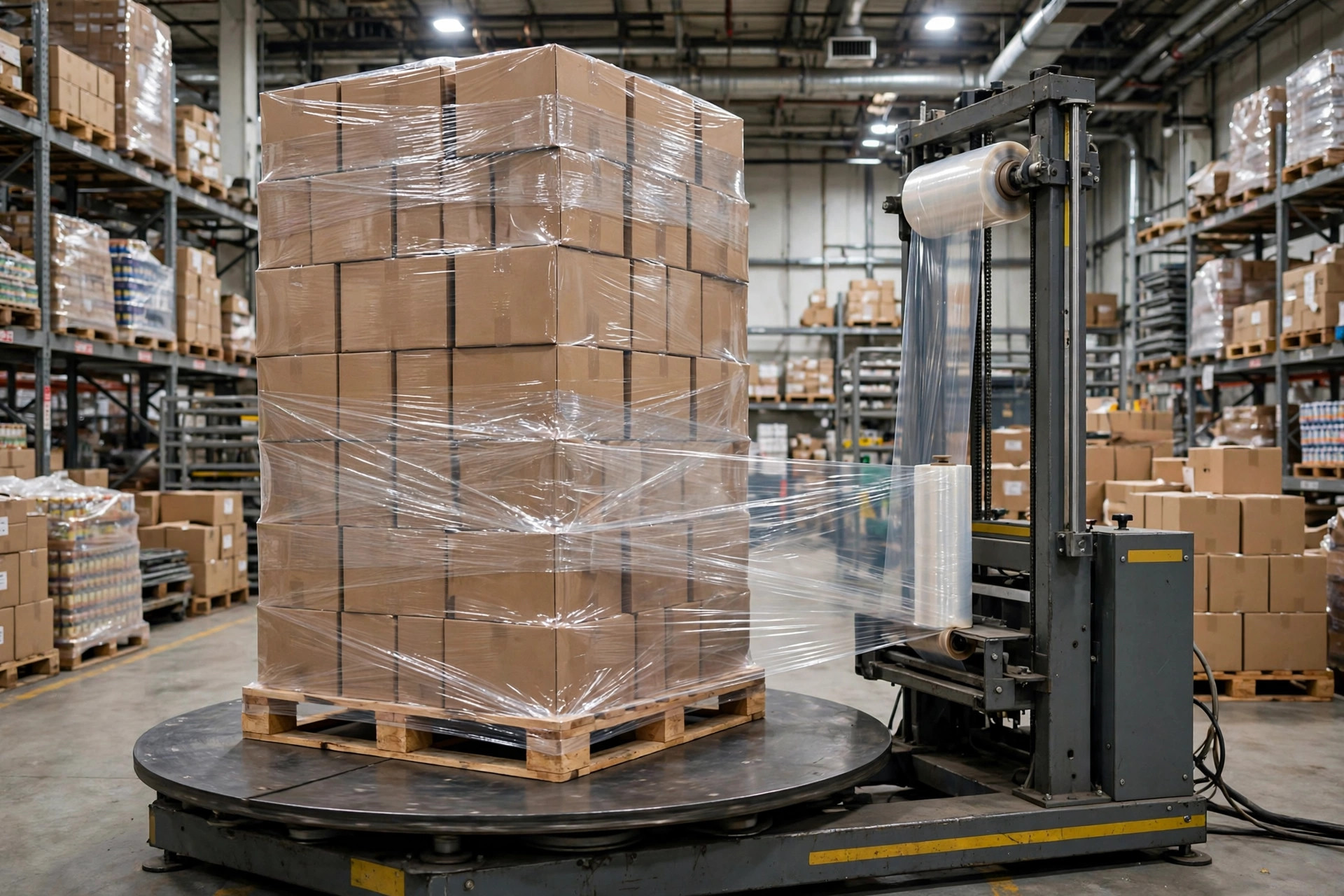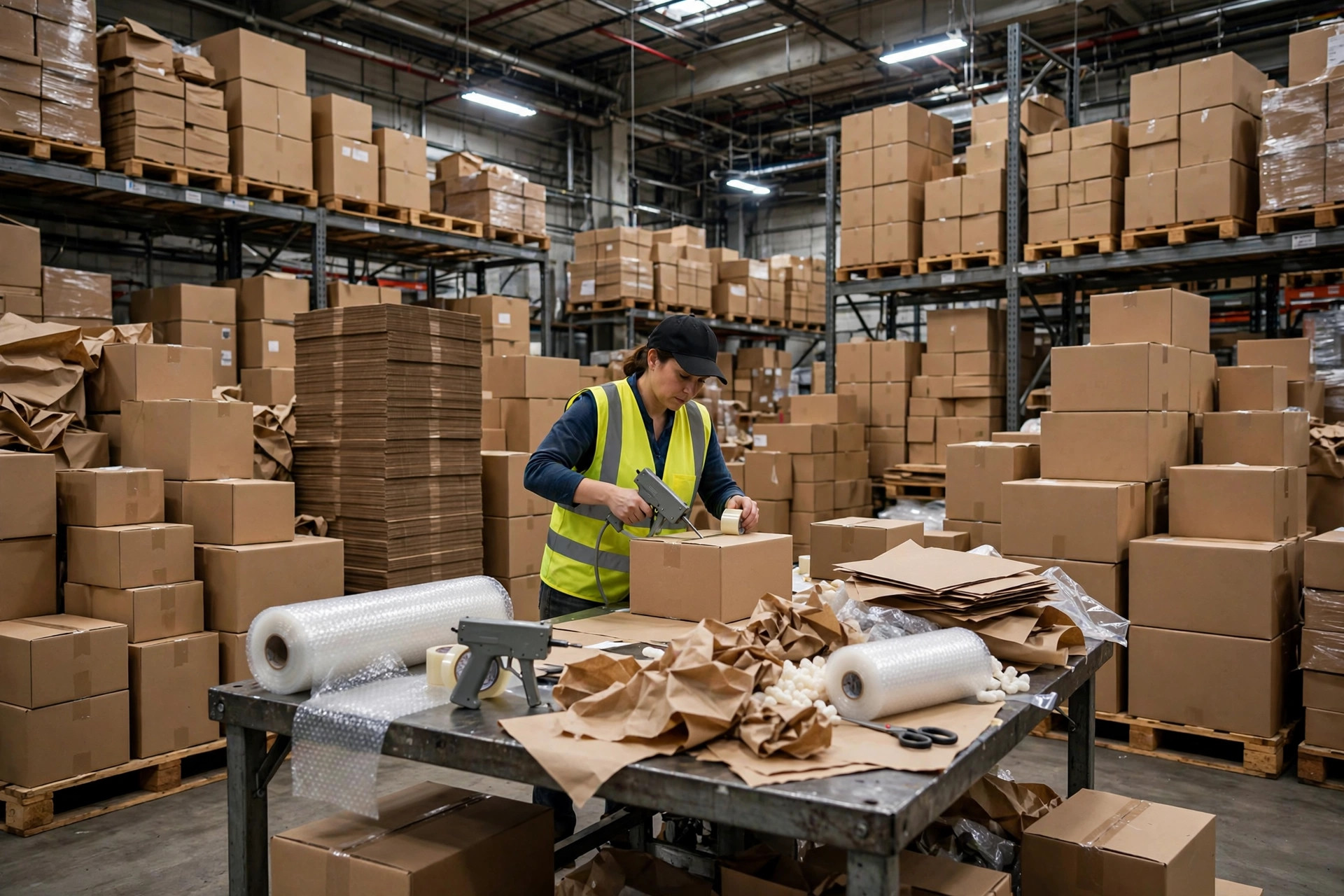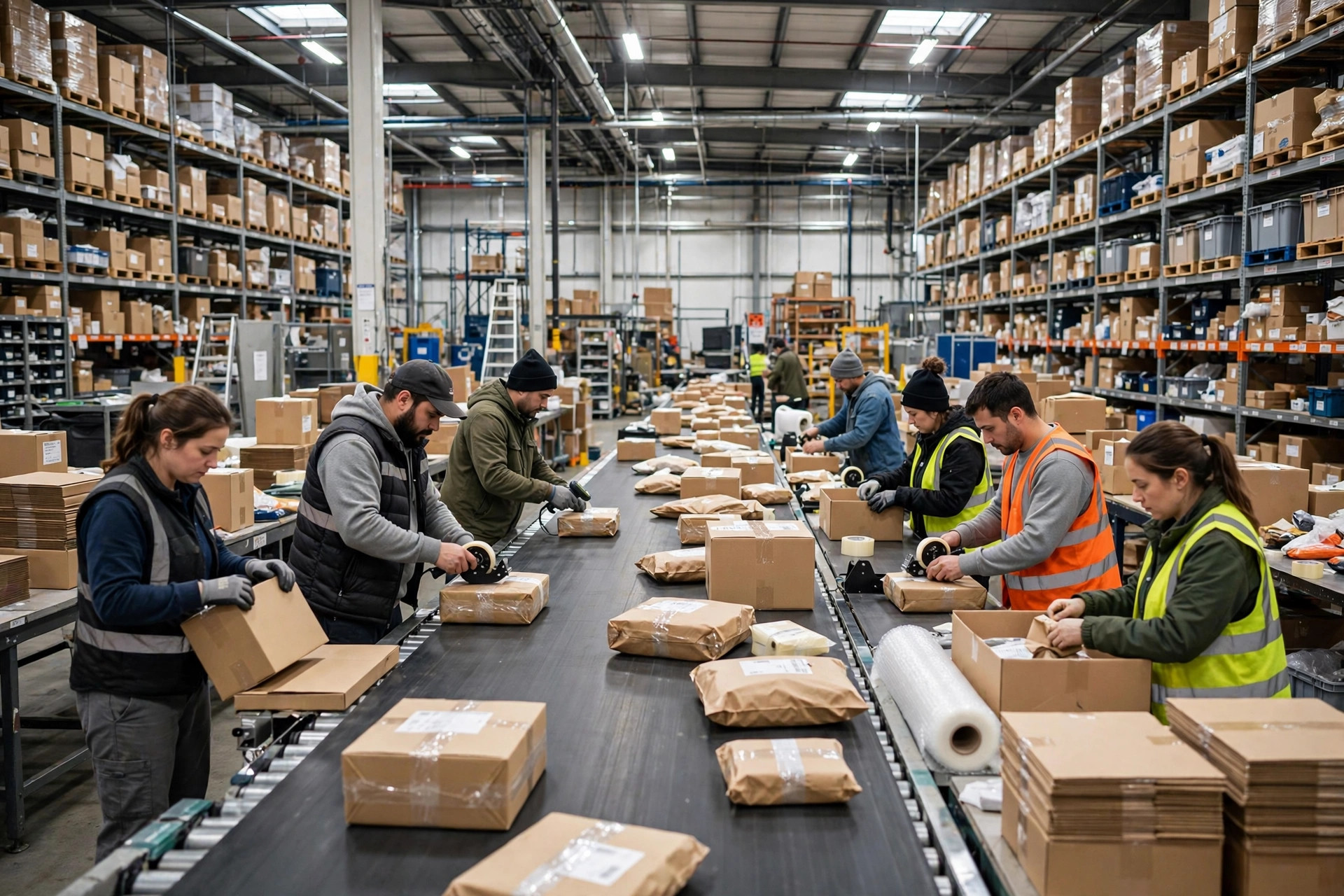
It was 3 AM during last year's peak season. I stood next to our packing line for a full hour. Twelve lines running, lights blazing, everybody looked busy. But the conveyor kept stuttering. At the carton-sealing station, boxes were piling up in front of one woman — thirty, forty deep, getting taller. Down at the end of the line, the guy doing final verification was scrolling his phone.
Real talk: I see this scene every single peak season. The busier the line, the slower it gets. And it's not a headcount problem. Something is choking the line, and nobody's looking at it.
Line UPH Is Decided by the Slowest Station, Not the Fastest
Most people calculate UPH — units per hour — like this: count everything the line put out, divide by people, divide by hours. Nice clean number. Looks great in a report. But when peak hits, that number falls off a cliff, and nobody knows why.
Here's real data from our own floor. Before last peak, I had a shift lead stand there with a stopwatch for a whole morning. One six-person line, every station timed per unit:
| Station | Task | Avg. seconds per unit |
|---|---|---|
| Boxing | Load picked items into carton | 22 |
| Void fill | Bubble wrap, kraft paper | 9 |
| Sealing | Tape the carton shut | 31 |
| Labeling | Scan and apply shipping label | 12 |
| Verification | Weigh and check | 8 |
| Stacking | Onto pallet / onto conveyor | 14 |
See it? The fastest station is verification at 8 seconds. The slowest is sealing at 31 seconds. And the whole line's UPH is set by that 31 seconds. Max output per hour: 3,600 divided by 31 — about 116 units. The boxing guy cranking at 22 seconds per unit? Doesn't matter. Every box he finishes just queues up in front of sealing.
That's the definition of a bottleneck: a line produces exactly as fast as its slowest station. Throw two more people at the end of the line and the pile in front of sealing only grows taller. UPH doesn't move a point.
Two Times We Learned the Hard Way on the Packing Line: Adding People Made It Slower
First story. Summer 2023, a beauty brand's promo exploded. Daily volume jumped from 8,000 to 21,000 orders. My first instinct — same as everyone's — was to add people. The packing line went from 6 to 9 workers. Result? UPH per person dropped from 95 to 78 units per hour. More people, slower line.
Why? I figured it out afterward. The three extra people had no fixed station; they floated to wherever it looked busy. But the bottleneck was sealing, and the sealing station is only so wide. Two people squeezed in there kept bumping elbows and knocked the tape dispenser over twice. The extra headcount produced zero effective output and just made the bottleneck worse.
Second story. This year's 618 peak. Lesson learned — no extra people this time. Instead, I did one thing: I broke apart the sealing station, using the ECRS four-step method I'll walk through below. Same six-person line. UPH went from 104 to 147 — up forty percent. Not one person added.
So here's the counterintuitive take: when a packing line needs to go faster, your first move shouldn't be adding people — it should be finding the bottleneck. Adding people is pouring more water into the tank. The bottleneck is the drain. Widen the drain first, or all that water just overflows.
ECRS, Step by Step: How We Unclogged the Packing Line
ECRS is an industrial engineering method: Eliminate, Combine, Rearrange, Simplify — in that order, and the order matters. Every shift lead in our warehouse carries the card now. Any packing line improvement goes through these four questions in sequence.
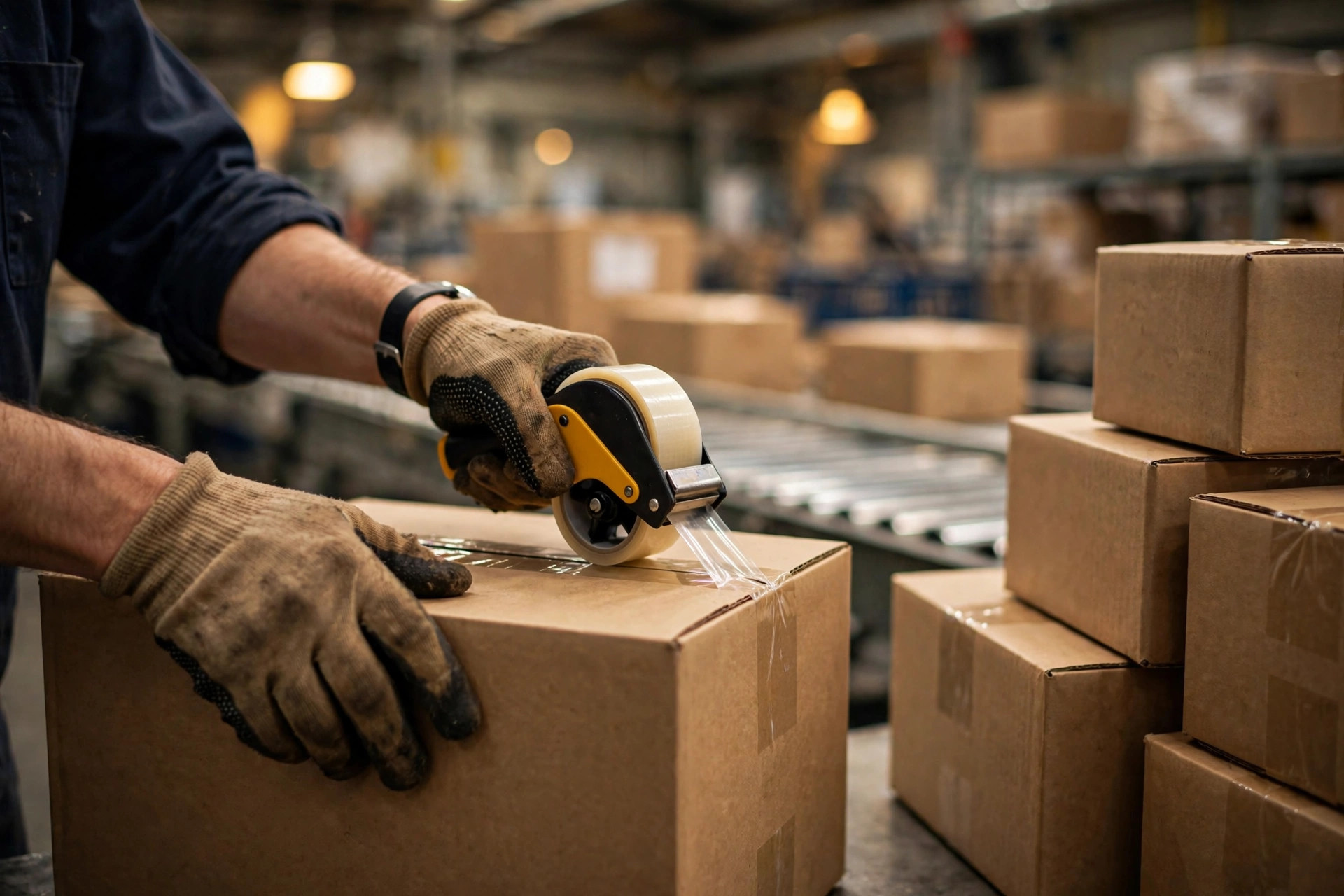
Take our sealing station during 618 as the example:
Step 1 — Eliminate: ask whether the task needs to exist at all. Sealing used to take two tape passes: one down the center seam, one on each side. Why the side passes? Because five years ago a customer complained about a box popping open. Five years, no complaints since — but the tape passes stayed. We killed the side passes. Sealing went from 31 to 24 seconds per unit. That one cut hurt the most and helped the most.
Step 2 — Combine: can one person do what two are doing? Labeling and verification were two stations: label the box, push it to verification for weighing. Turns out the person applying the label can weigh at the same time — put a scale next to the label printer, scan, stick the label, set the box on the scale, data flows into the system automatically. Two stations became one. The freed-up person went to support the bottleneck.
Step 3 — Rearrange: change the sequence, shorten the motion. Void fill used to sit behind the boxing station. Every box meant a full body turn to grab fill — thousands of turns a day. We moved the fill rack to the side, within arm's reach. Looks trivial on its own, but dead motion dropped at every station, and line UPH ticked up again.
Step 4 — Simplify: only now do you make the motion itself faster. After the first three steps, sealing was down to 24 seconds — still the bottleneck. Now simplification earns its keep: wider tape (switched from 48mm to 72mm, one pass does the work of two), a tape gun with a built-in cutter, cartons pre-scored so they fold fast. Sealing dropped to 17 seconds, and the bottleneck moved to boxing at 22 seconds. Line capacity went from 116 to 164 units per hour.
Notice the sequence: fix the process first, then the motion. Most teams start at step 4 — faster tape guns, skill contests, bonuses and penalties. But if the bottleneck station's process is redundant, you're just getting really efficient at doing useless work.
Three Reminders for Fellow Operators
First, bottlenecks move. You squeeze sealing from 31 to 17 seconds, the bottleneck jumps to boxing. One stopwatch session before peak isn't enough — during peak, somebody needs to be timing stations every week. When the bottleneck moves, the improvement plan moves with it.
Second, don't manage a packing line by average UPH. Averages hide bottlenecks. I track two numbers now: the bottleneck station's seconds-per-unit, and the line's actual boxes out. And the bottleneck station gets its own higher performance multiplier — those folks do the hardest job on the line.
Third, the slow season is when you fix the line. Every ECRS improvement gets done and dialed in during the quiet months. Peak season is for collecting the result, not rebuilding the line. Changing the layout mid-peak is like swapping an engine mid-flight — nobody dares.
Packing lines aren't high tech. You just watch every station, one by one, and cut every wasted motion, one by one. Our standing practice now: one stopwatch day a month, and the bottleneck station gets a red tag so everyone in the building knows where that line's lifeline is.
Go stand by your line with a stopwatch for a morning. You'll be surprised, I promise.
By Chen Feng, Warehouse Operations Manager