November 19, 2024. Night shift. 1:40 a.m.
I'd been asleep in the office for twenty minutes when my phone rang. It was about wrapping again. Zhao, one of our linehaul drivers on the Dallas lane — three years with us. His first sentence: "Chen, your pallets aren't holding. I stopped at a rest area to check, and the second pallet tipped over. Seven, eight cases crushed."
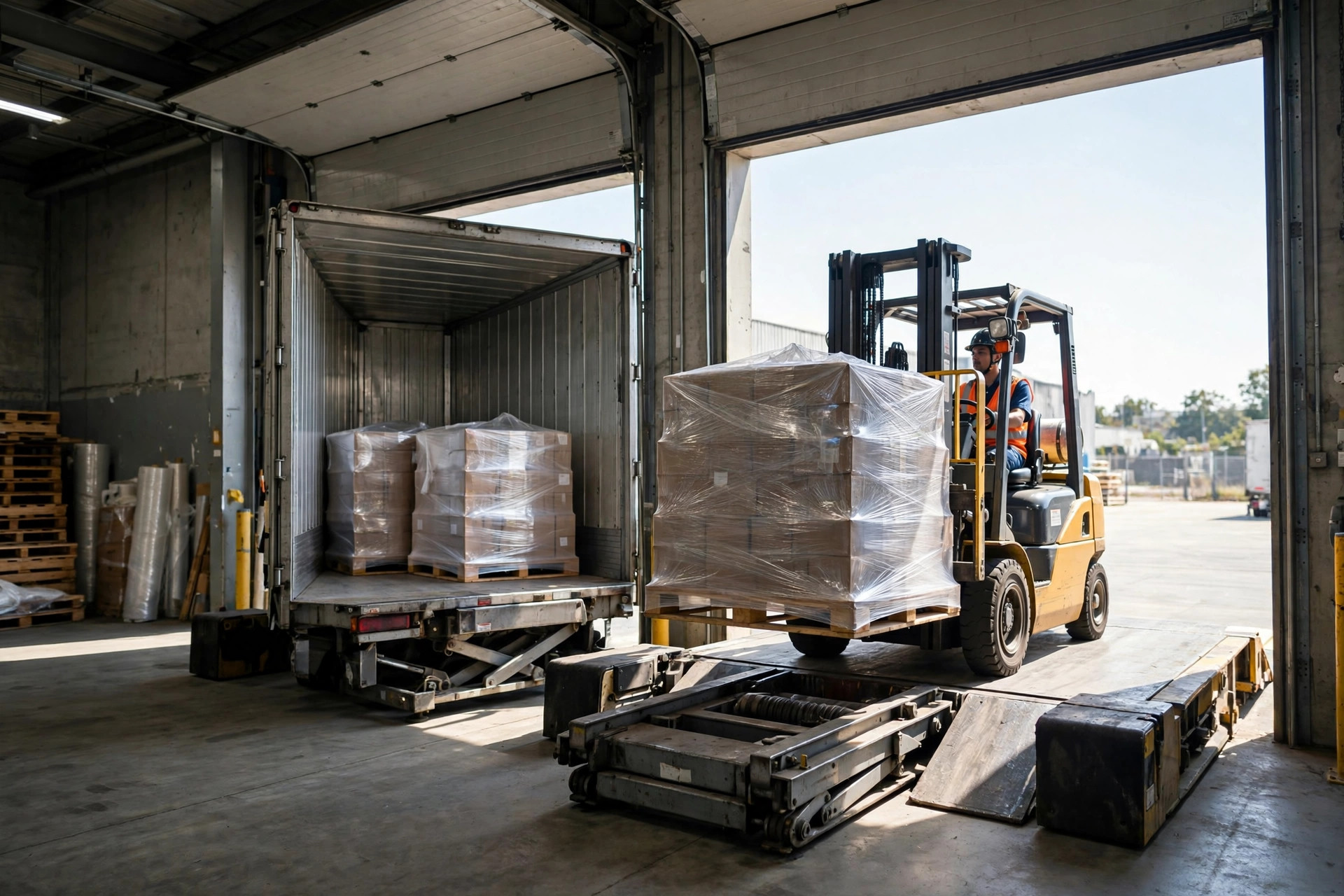
I was wide awake. That load went out at 5 p.m. — 48 pallets of personal care products headed to a distributor in Texas. The fallen pallet sat mid-trailer, which meant the whole truck had to be unloaded and restacked. Zhao didn't yell. He didn't have to. The message was clear: this one's on the warehouse.
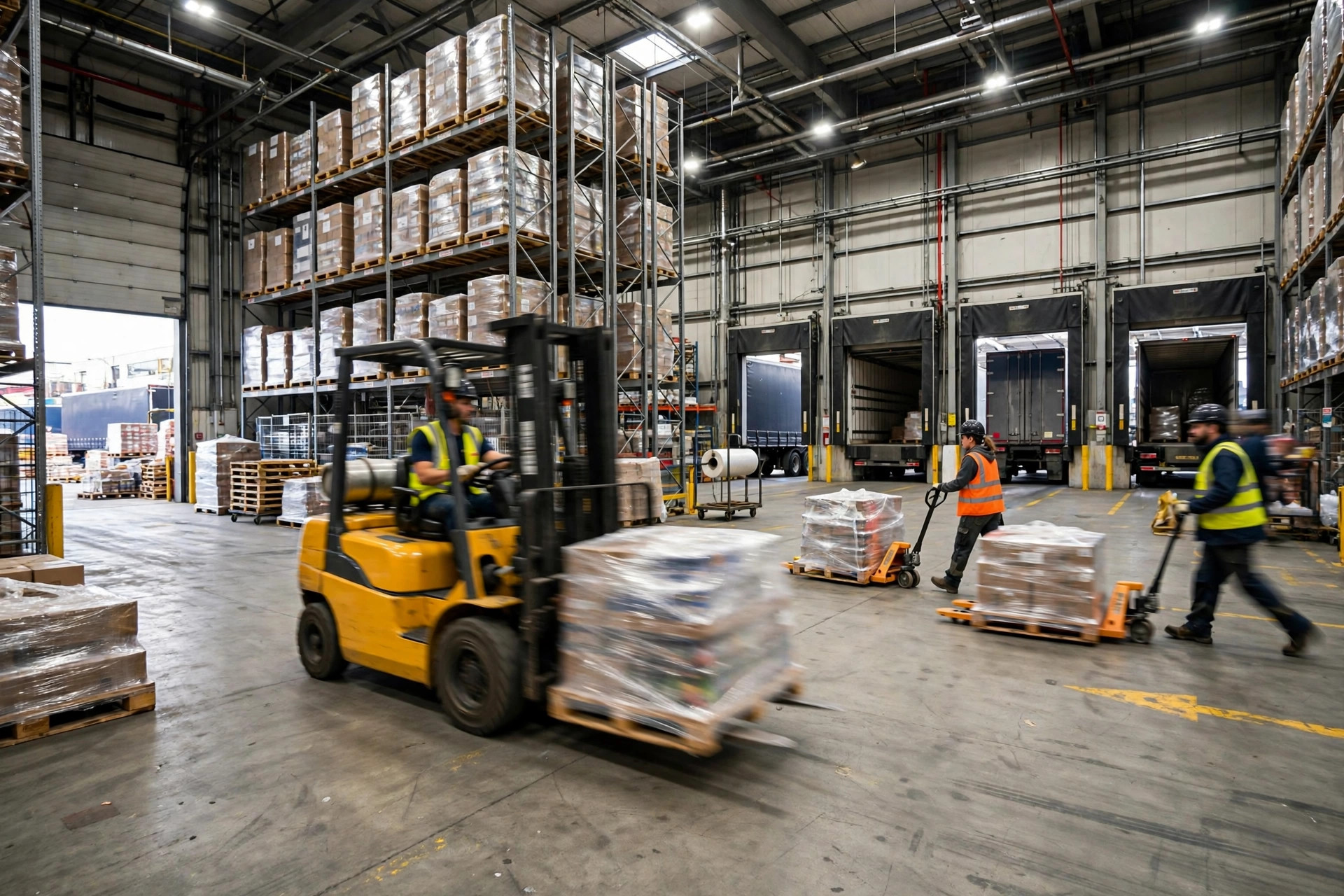
Let me be straight with you, folks. Pallet wrapping is the job nobody in the warehouse wants. Picking has a system and performance metrics. Wrapping has nothing. Wrap it right and nobody notices. Wrap it wrong and the whole building hears about it. Peak season hits, the new kid gets thrown on the wrap station, two lazy turns of film, top left open — one speed bump, one hard brake, and the pallet comes apart on the highway.
So today we're talking about this small thing. How my warehouse wraps pallets now, what our standard work card looks like, and who pays when a pallet tips over. I've argued this one with drivers, customers, and insurance adjusters. I've got some experience.
After That Call: Why Pallets Tip Over
Next morning I pulled every photo of that load. We photograph every trailer before the doors close — three shots: rear, middle, door. We started that habit three years ago after a fight with a carrier, and it has saved us more than once.
The photos told the whole story. The fallen pallet had maybe two and a half wraps of film. One at the base, one around the middle, nothing on top. The cases held hand soap, twelve bottles each, soft corrugated, stacked five high — and every layer lined up perfectly straight. Eight cases a layer, seams aligned top to bottom, like a brick wall with no stagger.
Three things went wrong.
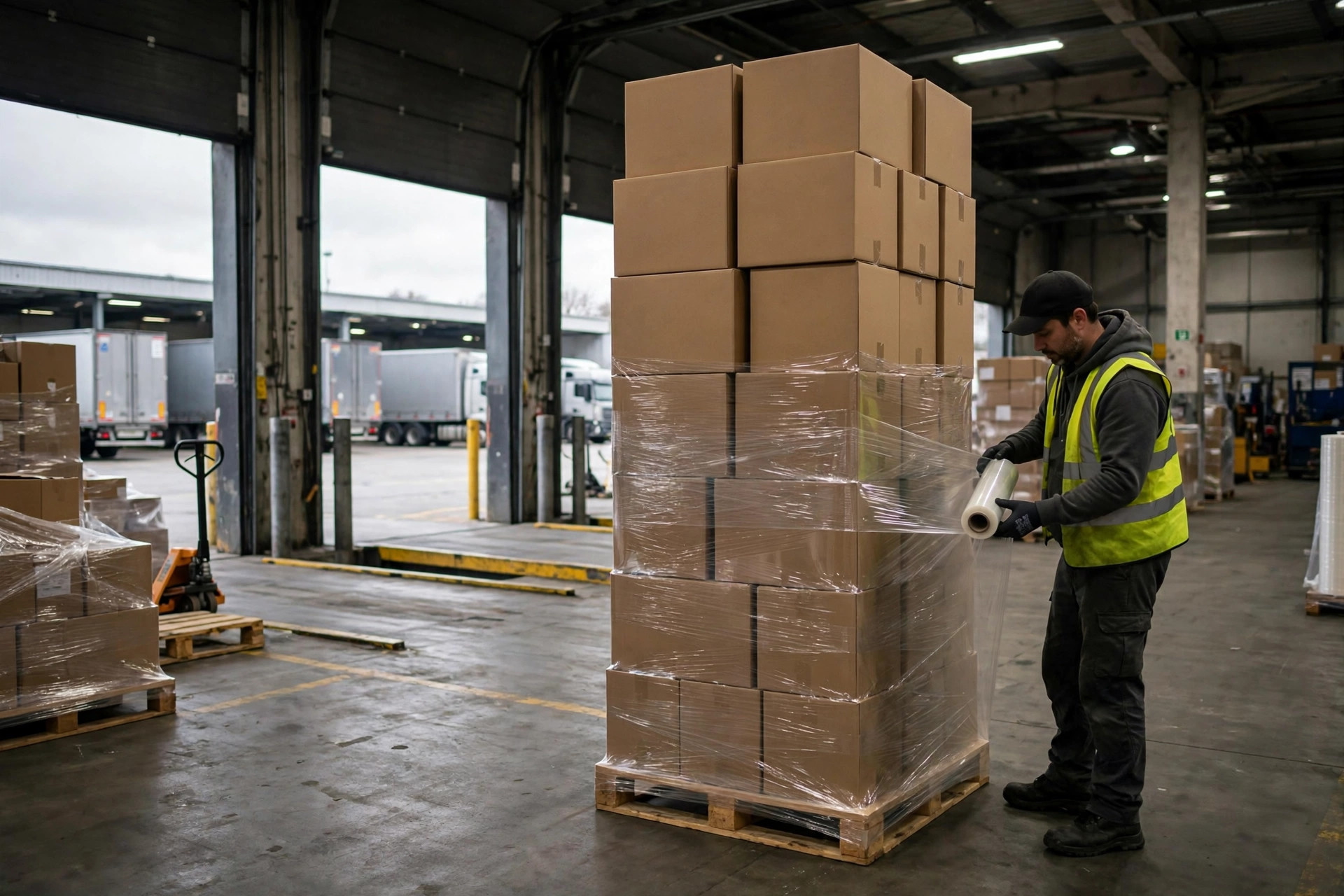
First, not enough film. Our standard is three wraps at the base, two in the middle, two at the top with the edge folded down. That pallet got less than three total. Second, no top seal. The film's top edge has to fold down over the top layer — we call it "capping." Skip the cap and the top two layers are the first to fly under hard braking. Third, the stack pattern. Soft cases, heavy load, column-stacked with every seam lined up. Line up the seams and the whole pallet moves as one block. Interlock the layers — brick pattern — and each layer bites into the next. Way more stable.
Who wrapped it? I checked the schedule. Li, a new hire on nights, day nine on the job. The veteran who was training him had called in sick, so Li ran the wrap station solo. Volume that night ran 1.6 times normal. He wrapped 40-plus pallets by himself, and by the end he was cutting corners.
I can't put it all on Li. The standard card was on the wall in the wrap area, but nobody ever told him why. He thought the film was just to keep dust off. He didn't know the film is what holds the load together.
We Tested for a Month. This Card Is What Survived
After that, I pulled one person from days and one from nights, and we spent a month testing. Testing what? How many wraps is enough. How much difference the stack pattern really makes.
We built three identical pallets — same hand-soap cases, 40 cases each, about 800 pounds — wrapped three different ways, and had Lao Wang, our forklift driver, run the same route with each one: from staging to the dock, over the speed bumps. That stretch is the real test.
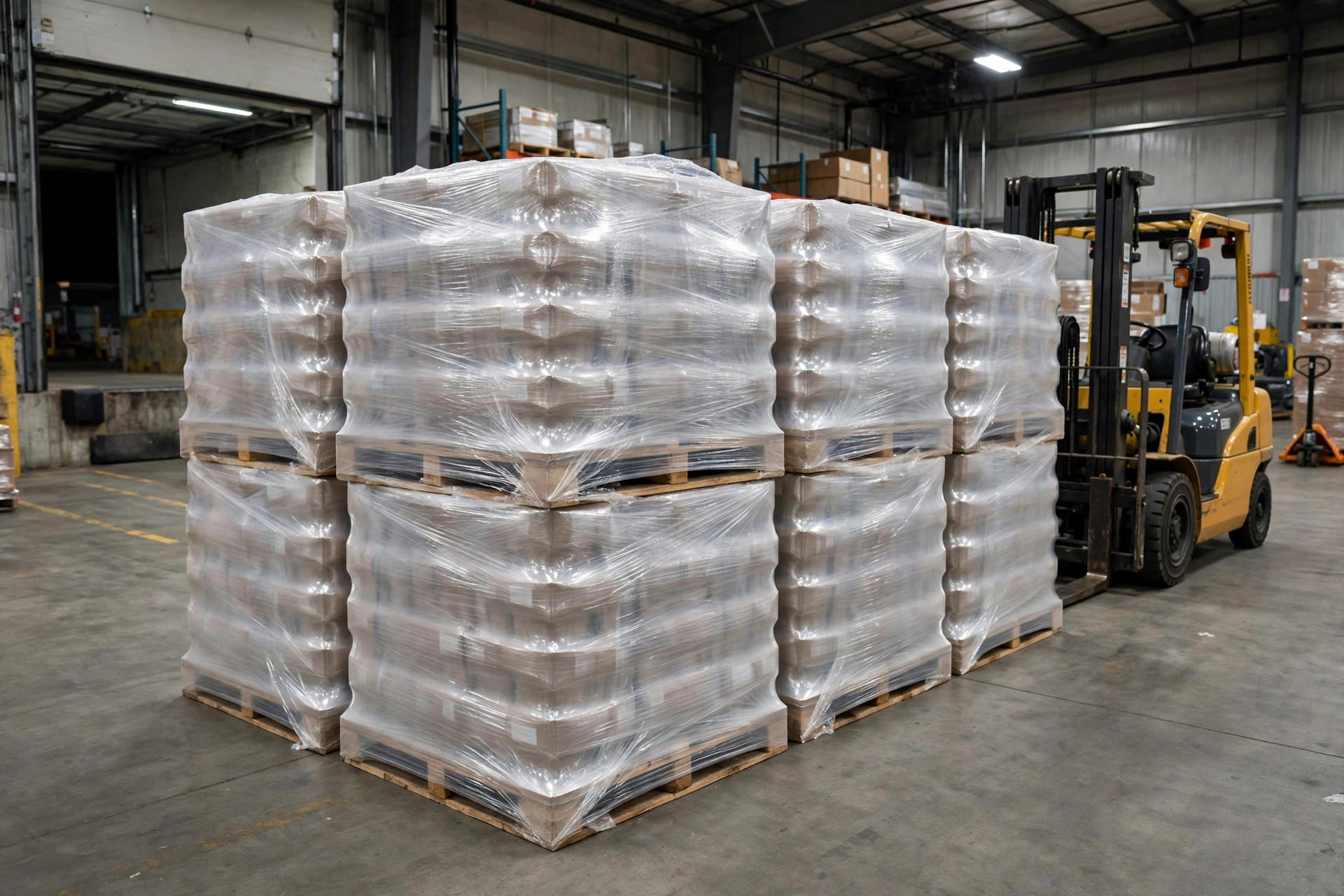
The result was obvious. The two-and-a-half-wrap, uncapped pallet visibly shifted its top layer over the bumps. The standard-wrap pallet didn't move at all. And the interlocked pallet stayed solid even with one fewer wrap. So here's the card we run now:
| Item | Standard | Why |
|---|---|---|
| Base | 3 wraps | Takes the most abuse; forklift bounce hits the base first |
| Middle | 2 wraps | Even tension, don't gouge the cases |
| Top | 2 wraps + cap | Fold the film edge down over the top layer |
| Stack pattern | Interlocked (brick) | Mandatory for soft cases and heavy loads; column stacking only for rigid, light cases |
| Heavy-to-light | Heavy cases on bottom two layers | Sort by weight when a pallet mixes SKUs |
| Cap | Required | Any open-top pallet gets rewrapped |
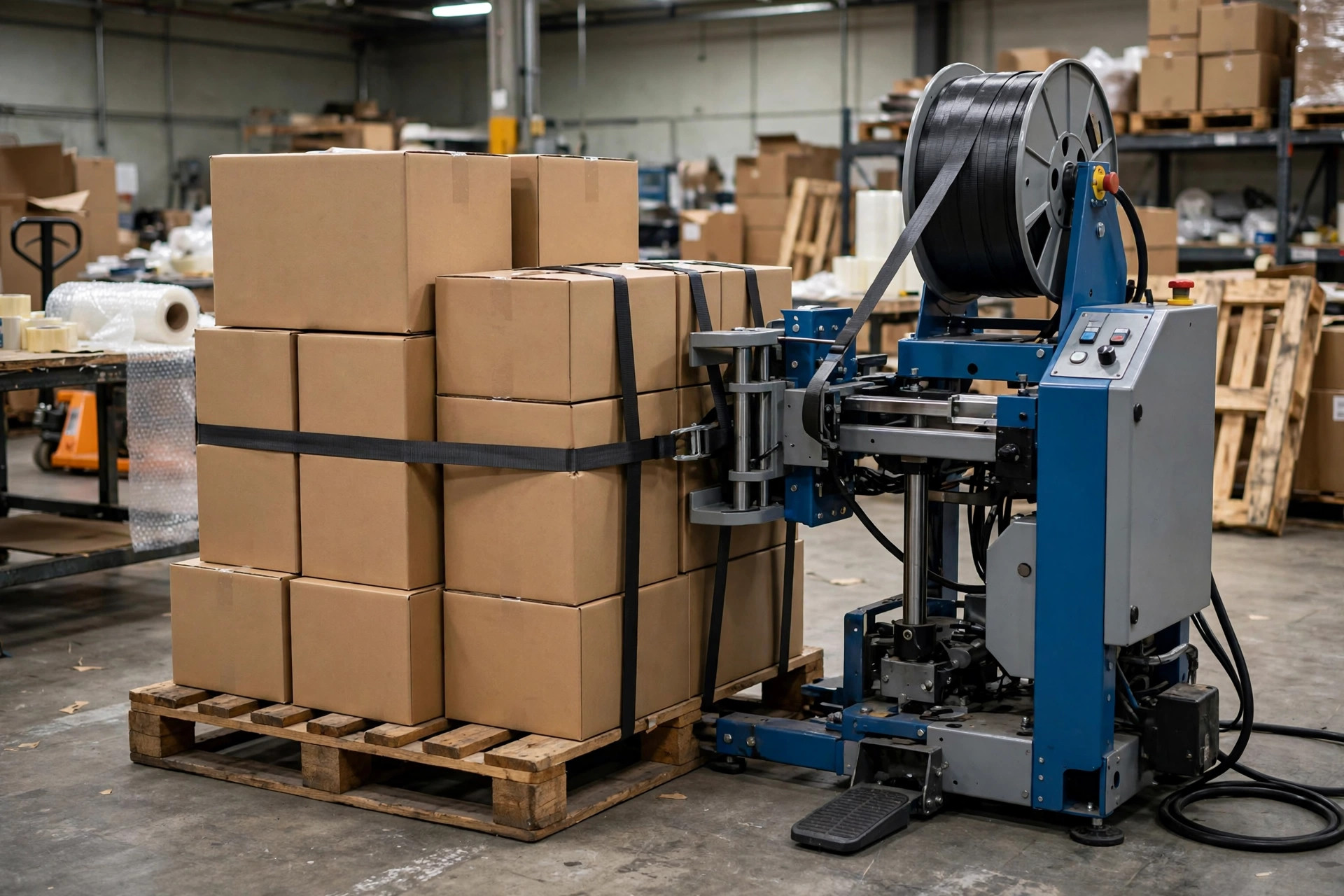
Two more non-negotiables. First, 80-gauge hand film, 20 inches wide — the standard stuff everywhere. Don't buy the cheap thin film to save a few bucks; three extra wraps of thin film won't save you. Second, nights: a veteran has to be on the floor when pallets are being wrapped. New hires shadow for two full weeks before they wrap solo. Both rules were paid for in damage claims.
Now the money. A lot of people treat film as a consumable to economize on. We did the math. At our current purchasing price, a roll of hand film runs in the low teens of dollars. One pallet wrapped to standard uses less than a dollar's worth of film. Two extra wraps cost you pocket change.
That Dallas load? Seven crushed cases, customer refused them, we re-shipped and ate the freight. Total damage: north of $2,300. That doesn't count the half day Zhao sat at the rest area waiting on our plan, or that the customer nearly pulled next month's orders.
The math is simple. A few dimes of extra film per pallet buys down a multi-thousand-dollar claim risk. Film is the cheapest insurance in the building.
Here's the counterintuitive one, folks: tighter is not better. Crank the film too tight and you crush the corners of the bottom cases, which destroys the boxes' stacking strength. We had a strong new kid who pulled the film drum-tight — all four bottom corners caved in, and the pallet wobbled worse than an unwrapped one. The standard is "snug, not deformed." You can't write that on a card. Somebody has to show you by hand.
When a Pallet Tips, Who Pays
This is the question I get most. Here's how we call it now. Three situations.
One: the pallet arrives fine, the customer signs, and it tips afterward. Not our problem. The signed delivery receipt is the line.
Two: it tips in transit, the driver says we wrapped it badly, we say the road did it. What then? The loading photos. We shoot every trailer, photos timestamped. Pallet looks solid in the photos, film intact — that's the carrier's problem. Film already loose in the photos, top layer shifted — that's on us. Photos beat arguing every time.
Three: the customer opens it up and finds broken product inside, but the pallet looks fine outside. This is the messy one — usually a stacking problem. Weight not loaded heavy-to-light, or cases that can't take the stacking. With long-term customers we usually split it. With one-shot customers, it's whatever the contract says.
The driver fight I'll never forget: March 2025. A driver stood at our dock rushing us — "At this pace, is my truck leaving today or not?" Our guy hurried, skipped two wraps, let the truck roll. Two pallets went over on the way to Chicago. The driver blamed the roads. We pulled the loading photos — the top layer was already leaning in the picture. We ate 60 percent, he took 40. Since then we have a rule: no matter how hard the driver pushes, the wrap standard doesn't move one inch. Ten minutes slower beats a few thousand dollars in claims. The driver doesn't do that math. We have to.
One more tip: add a line to the outbound paperwork — "Pallets secured with stretch film, condition confirmed by carrier at loading." Get the driver to sign it. One extra step, half the arguments later. I stole that one from a 3PL we work with. They live in claims all day. They know more than we do.
Folks, wrapping comes down to this: don't save pennies on film and buy yourself a thousand-dollar problem. A card on the wall means nothing without someone watching, someone teaching, someone checking. We pull two pallets a month for a bump test now — same speed-bump route, and if the top layer shifts more than half an inch, whoever wrapped it comes back for retraining. Dumb method. But we haven't lost a pallet since early 2025.
If your building has a better trick, I'm all ears. In this business, the pitfalls are all the same.
By Chen Feng, Warehouse Operations Manager