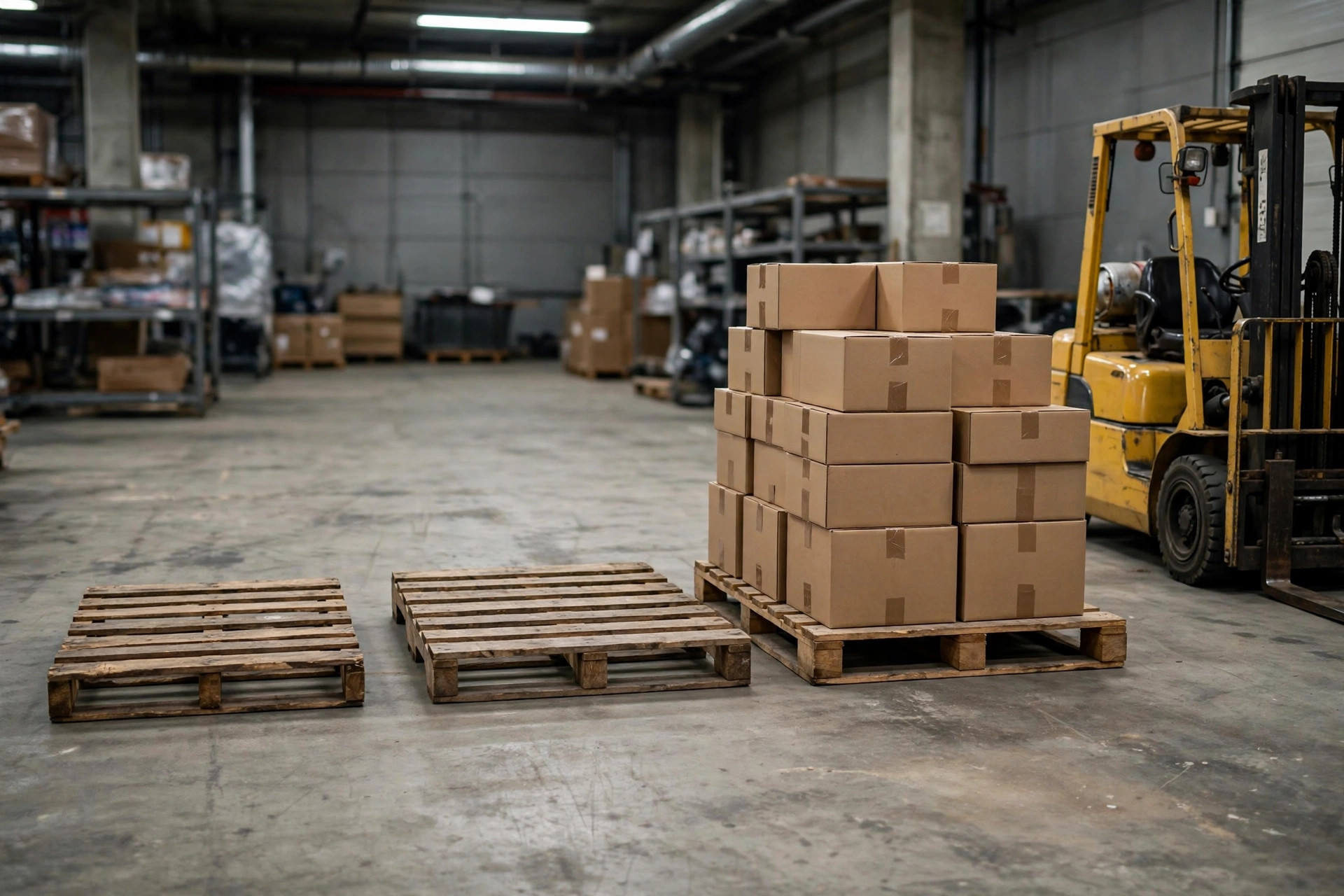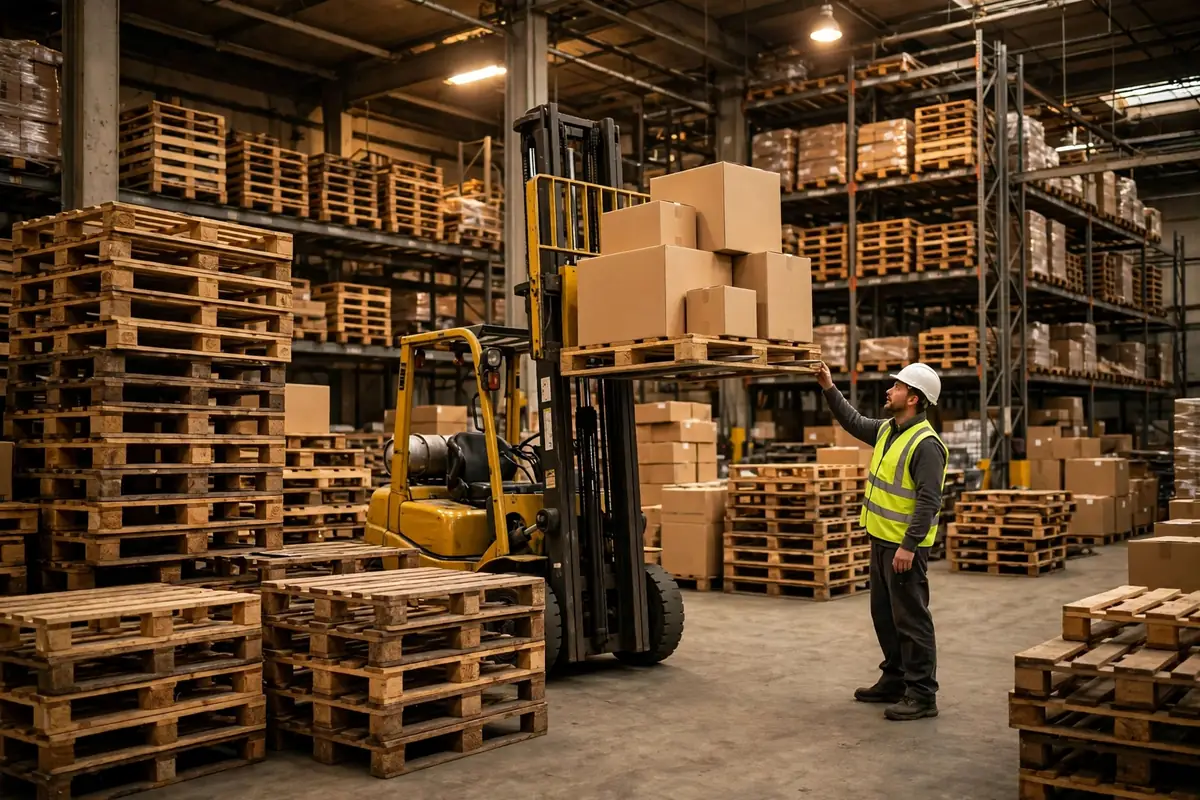
Start with the principle, because the principle is the whole story. Think of pallet size standards as the module your warehouse is built on. Get the module wrong and everything stacked on top of it leans. ISO 6780 recognises six pallet footprints. In practice a warehouse meets two: 1200×1000 mm, the industrial pallet used across Europe and Asia, and 48×40 inches — 1219×1016 mm — the GMA standard that runs North America. The long sides differ by 19 mm. The short sides by 16 mm. You can't see it with the naked eye. But that 19 mm is the reason mixed-size warehouses have problems every single day.
In 2024 I visited a cross-border e-commerce warehouse outside Los Angeles. Half its inbound came from China on 1200×1000 pallets; half came from US domestic suppliers on 48×40. The warehouse manager complained that rack beams were deflecting beyond tolerance and forklift drivers kept saying pallets "wouldn't sit right." One look at the racking told the story: the beams were designed for 48×40, and a 1200×1000 pallet leaves about a centimetre less bearing surface on each side. A centimetre sounds like nothing — until there is more than a tonne sitting on it. Give it time and you get bent beams and cracked pallets, all from 19 mm.
Second case. In 2023 an auto-parts warehouse commissioned an automated high-bay system designed around 1200×1000 pallets — conveyors, stacker-crane slots, the lot. Then suppliers started delivering, and around 30% of the pallets were 48×40. The stacker crane's forks went in, the pallet was 19 mm too long, and the line jammed for 40 minutes. Forty minutes sounds short. Twice a day in peak season, and you have lost a tenth of your daily throughput. Their fix was to force every pallet entering the automated zone onto 1200×1000 — the labour and time for re-palletising went straight into the suppliers' receiving cost. For the first three months, that automation project was mostly a pallet-size project.
Pallet size standards: the comparison table
| Item | 1200×1000 | 48×40 (1219×1016) |
|---|---|---|
| Standard | ISO 6780 | ISO 6780 (GMA) |
| Main regions | Europe, Asia | USA, Canada |
| Manufacturing tolerance | +3/−6 mm | +3/−6 mm |
| Typical empty weight | About 35 kg (industrial EPAL type) | About 14–22 kg (wood) |
| Typical use | Export, cross-border, Europe–Asia trade | North American grocery, retail, LTL |
One warning on load ratings: every manufacturer labels them differently. The safe working load commonly quoted for an industrial 1200×1000 pallet is around 1,250 kg; GMA ratings are split into racked, dynamic, and static loads. Don't compare a single number — ask which load case it refers to and read the supplier's specification sheet.
And a fact most people miss: ISO 6780 lists six sizes, not two. Besides these, there is the 1200×800 Euro pallet, 1067×1067, 1100×1100 (the square pallet common in Japan and parts of Asia), and 1140×1140. If you trade with Japan or Korea, the 1100×1100 will find you sooner or later.
What mixing breaks: racking, forklifts, automation
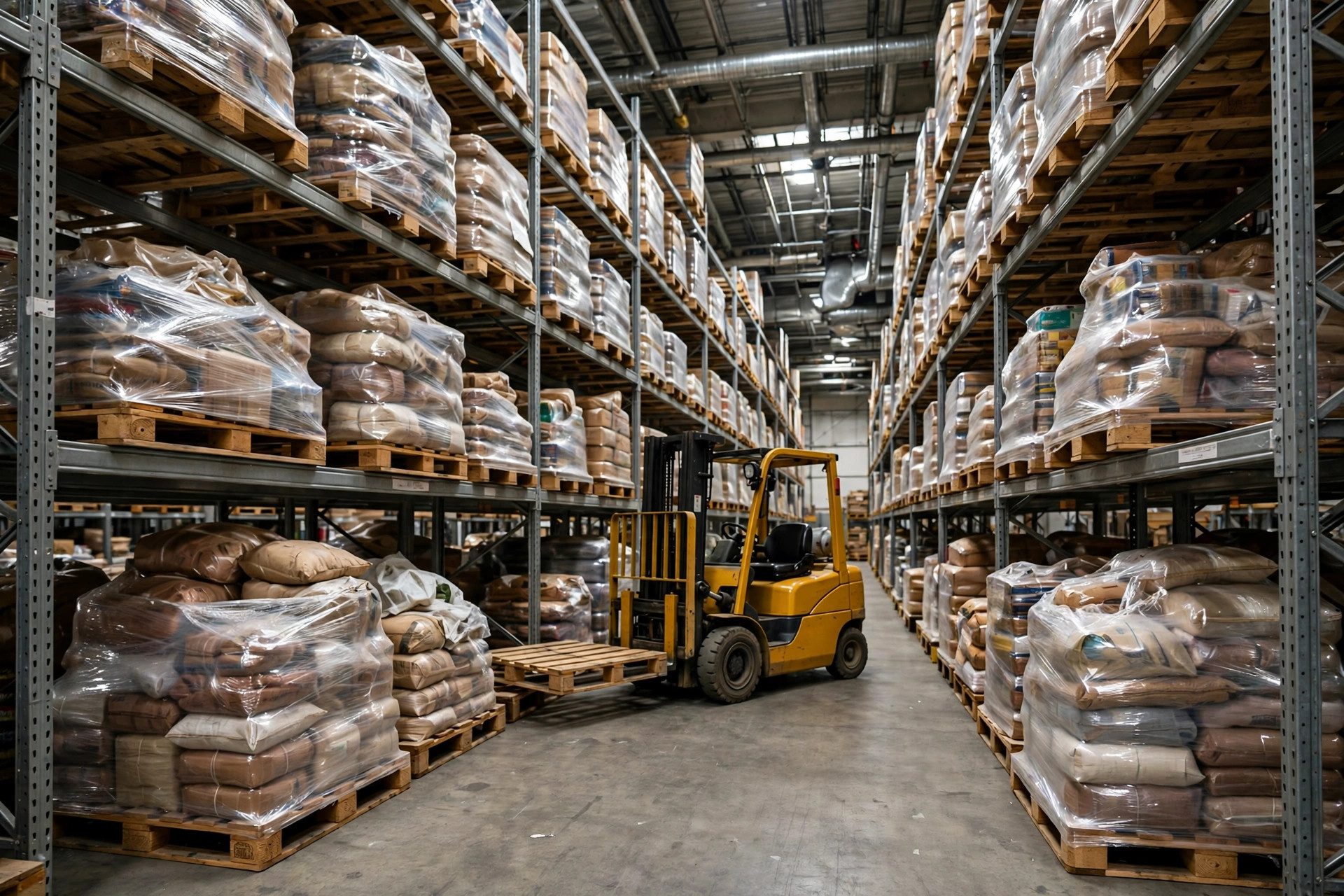
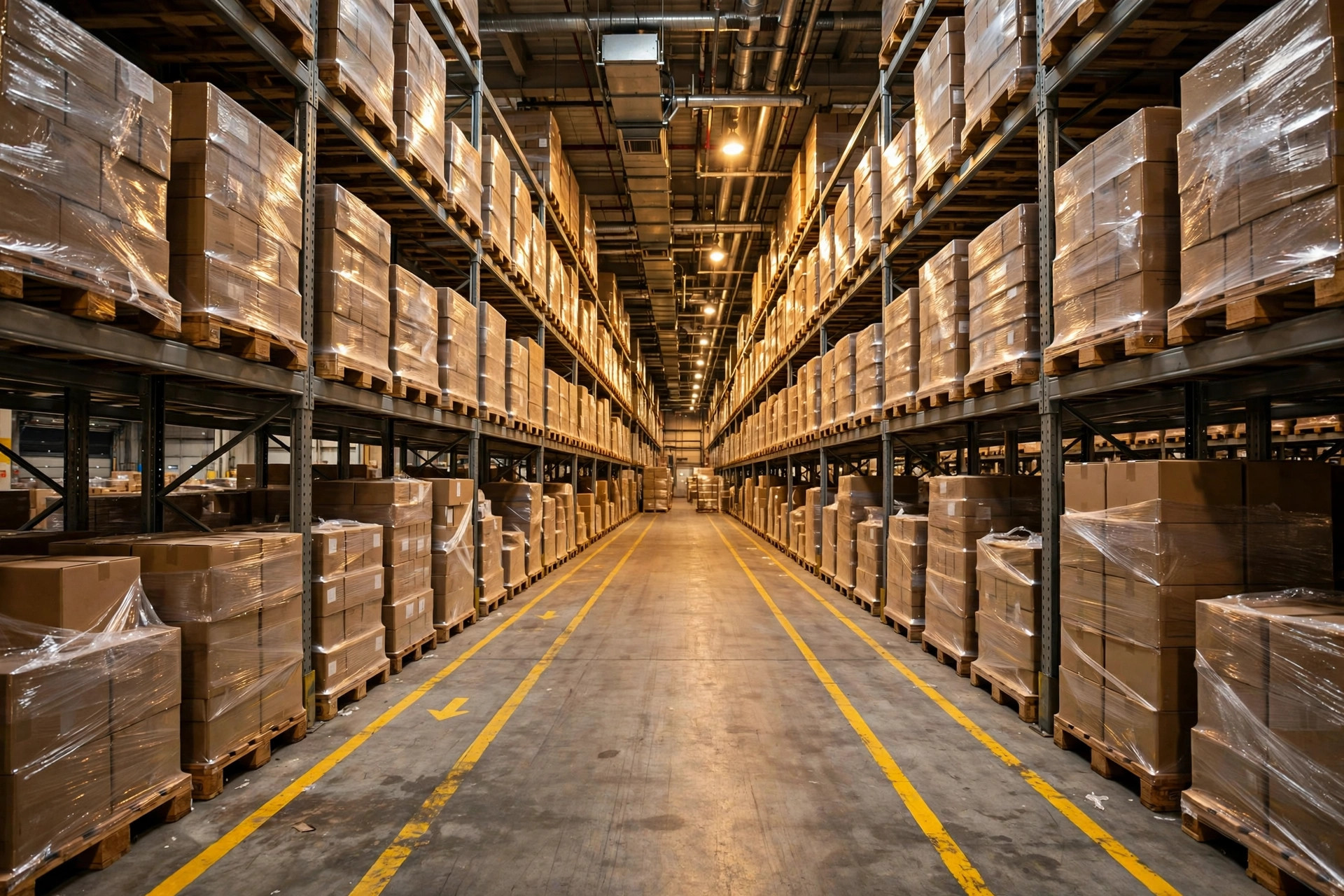
Racking breaks first. Beam spacing, deck support, and the bearing length of the pallet on the beam are all calculated for one size. Mix sizes and you get pallets hanging off the beam, off-centre loading, and — worst case — a pallet slipping off altogether. I have seen a 1200×1000 pallet in drive-in racking built for 48×40: the deck boards missed the rails, the forklift pushed, and the pallet wedged itself in the lane.
Forklift attachments come second. Fork length, fork spacing, clamp width — all sized to the pallet. Short forks under a 1200×1000 pallet leave the front end floating and wobbling. And attachments like carton clamps and push-pulls need re-adjusting every time the size changes; each adjustment costs half a day.
Automation is the most sensitive of all. Conveyors, stacker cranes, shuttles, automatic palletisers are designed to millimetre precision. A pallet 19 mm too long and the conveyor's positioning stop misses; 16 mm too short and the crane forks don't seat. Automation isn't afraid of cost — it's afraid of non-standard input. Mixed pallet sizes are a building on an unstable foundation. Pallet size standards are the spec the automation was designed around; change the spec and the line stops.
Pallet size standards: which one to keep
| Your situation | Keep | Why |
|---|---|---|
| Mainly North American grocery / retail | 48×40 | Your customers' warehouses, trucks, and retail DCs all run this size |
| Mainly Europe / Asia export | 1200×1000 | Containers, European warehouses, Europe–Asia trade |
| Both sources, high automation | One size only, force re-palletising | Automation hates mixing; re-palletising costs less than line stops |
| Both sources, manual warehouse | Separate zones, clear marking | People can adapt — the key is never mixing them in one location |
| Using a pallet pool (e.g. CHEP) | Follow the pool's specification | The pool has its own standard; don't invent one |
Here is the counterintuitive judgement: most people think keeping both sizes is the flexible option. It is the opposite. Two sizes means racking that must accommodate both, forklifts that must accommodate both, a system that must track both, and staff who must tell them apart — management cost doubles. Flexibility doesn't come from keeping two sizes. It comes from a clean re-palletising process and disciplined zoning.
On pallet-pool costs I won't quote numbers here: rental, deposit, and loss-compensation terms differ by provider, so check the latest policy on the provider's official site. When you run the comparison, don't compare unit prices — compare totals: purchase, repair, loss, and the space your own pallets occupy, against the pool's annual fee. My experience: steady volume with fast turnaround favours the pool; volatile volume with pallets that keep getting stranded at customer sites favours owning your own.
Time to shoot down a fake requirement
One last thing: "we want racking and automation compatible with all pallet sizes." It sounds wonderful. In practice it pushes the entire cost of non-standard pallets onto equipment and software. All-size racking needs wider beams and bigger spacing, and slot utilisation drops. All-size automation needs looser positioning and extra sensors, and the fault rate climbs while the cycle rate falls. Is that money well spent? Look at one number: how many times did pallet size stop your line last year. More than three times, and the all-size budget is better spent on a re-palletising process.
Pallet size standards are not a detail. They are the module of the warehouse. Set the module, and racking, forklifts, automation, and systems all follow. Leave it unset, and everything built on top leans. Pick one size first. Then talk about the rest.
By Da Liu, Automation Engineer