Let me tell you something. Fifteen years behind the wheel, and the thing I dread most isn't traffic. It's arguing about pallets on a receiving dock.
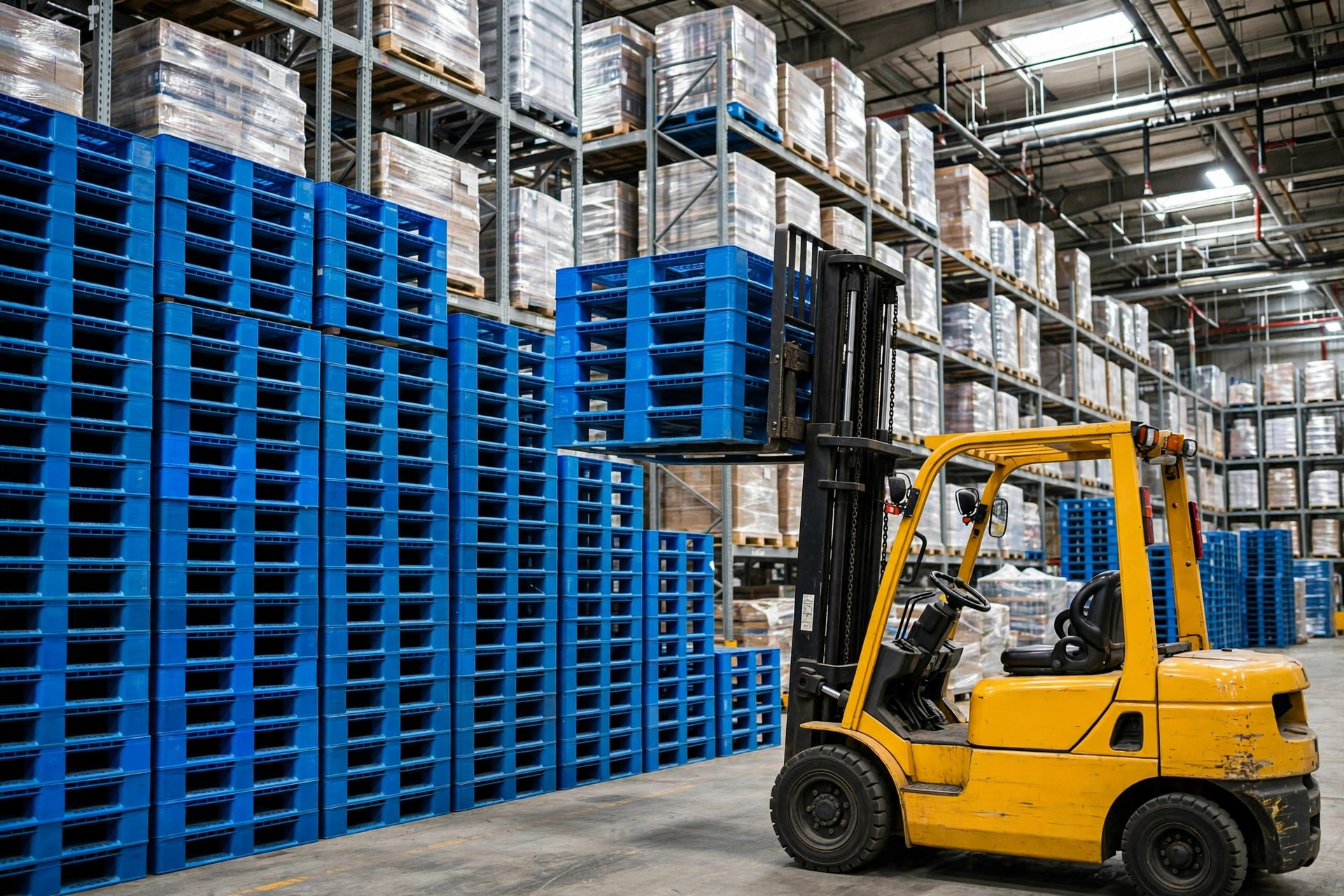
Last fall I hauled a load of beverages down to a food distribution center in Ontario, California. The freight was stacked on blue pallets — CHEP blues, every trucker in America knows them on sight. After I got unloaded, the receiving clerk walked the dock with his clipboard, counted the pallets, and came up three short. Three blue pallets.
He slapped the clipboard and said, "You're three short. Either you pay for them, or you re-stack the whole load onto our pallets before you leave."
I about lost it. The shipper loaded those pallets, not me. But the man had a point — my name was on the pallet transfer slip. So I called dispatch, dispatch called the shipper, and we burned two and a half hours going in circles. My whole afternoon schedule went up in smoke.
You want to know what three blue pallets are worth? Lose one and the charge is around fifty-some dollars. Three of them, plus two and a half hours of my day. That afternoon taught me something: pallets look like nothing, but the money hiding inside them is real.
How Pallet Rental Math Actually Works
After that day I started asking around — talked to a few warehouse buddies, looked up what the market says — and here's roughly how the math breaks down.
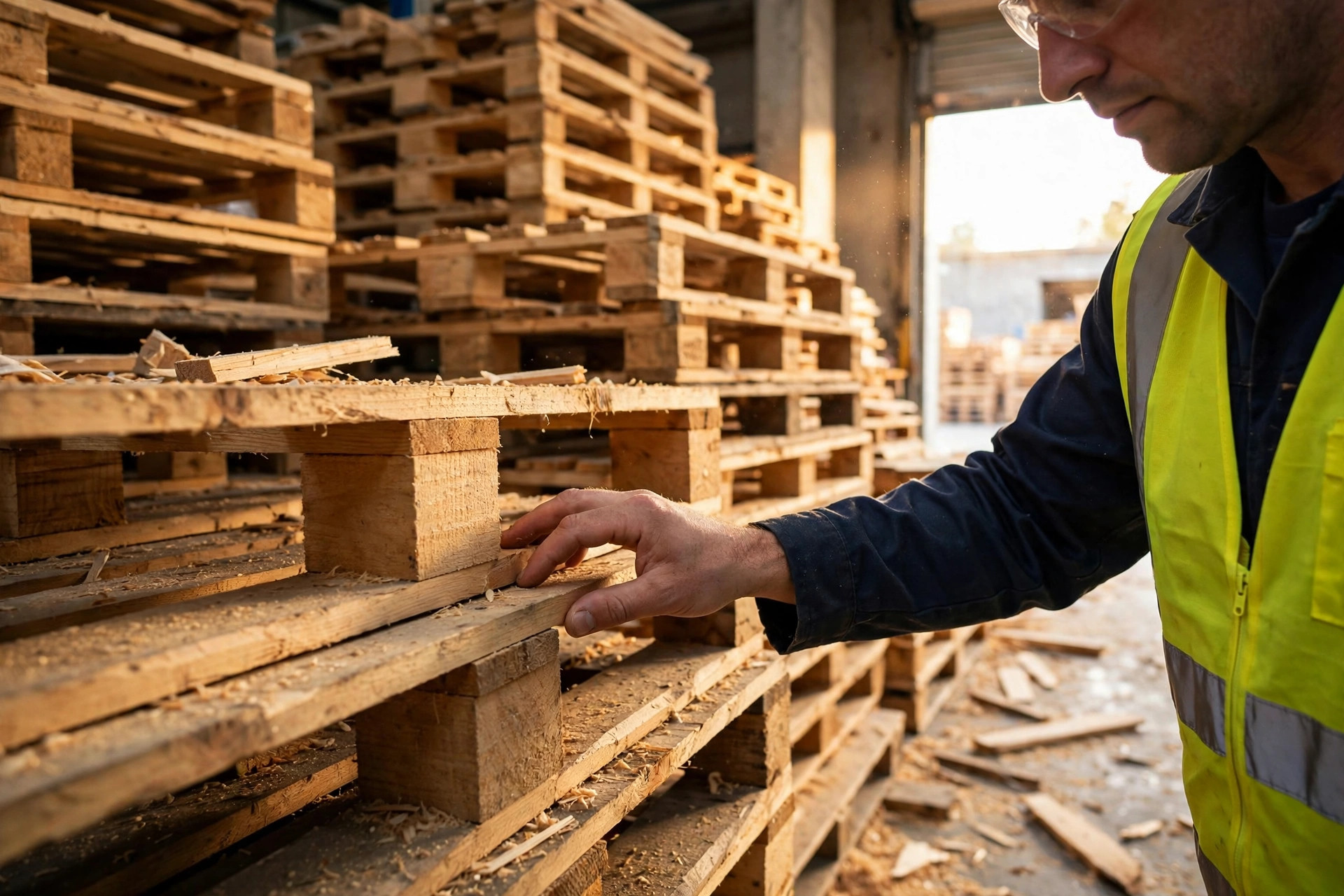
Buying first. A brand-new 48×40 wooden pallet runs about $11 to $19 these days — the October 2026 market price index pegged new pallets at $18.81 on average, with volume buyers landing closer to $11 and change. Used is cheaper: Grade A around $7–8, Grade B around $6. Doesn't sound like much, right?
Now renting. Pallet pooling — the CHEP model, and PECO runs the same game with red pallets — charges you three ways: an issue fee of a few dollars per pallet when it goes out, a daily hire charge of a few cents for every day the pallet sits in your account, and a transfer fee when the pallet ships onward. CHEP's own number is roughly $4.75 to $6 per pallet per trip. Industry folks who add up every fee land somewhere between $4.70 and $12.50 a trip, depending on how many days you hold the pallet.
Here's the whole picture in one table:
| Where the money goes | Buy new | Buy used | CHEP/PECO pooling |
|---|---|---|---|
| Cost per unit | ~$11–19 | ~$6–8 | ~$4.70–12.50 per trip |
| Lost or broken | Your problem — toss it | Your problem — toss it | ~$50–55 per lost pallet |
| Repairs | You fix it or scrap it | You fix it or scrap it | Pool operator handles it |
| Pallet quality | Depends what you buy | Hit or miss | Uniform spec, hardwood, 4-way entry |
| Best for | See below | See below | See below |
See that "lost pallet" row? That's the part that stings. Blue pallets are CHEP's property — lost, held by a receiver, or grabbed by somebody's crew to shore up a rack, it all lands on your account. In fifteen years I've seen more blue pallets rotting in warehouse corners, used as scrap dunnage, than I can count. Every one of them was money walking out the door.
But don't think buying your own pallets means no headaches.
Buy or Rent Pallets? Depends on What Kind of Freight You Run
I know a guy, Chen, runs a beverage wholesale outfit — ships out thousands of pallets a year. He started out buying used pallets because they were cheap. Here's what happened: the pallet rides out with the freight, the customer unloads, and the pallet stays at the customer's dock. Are you really going to call up a customer and ask for your pallets back? A year in, he was spending more and more on pallets while his total count never grew. He was basically giving them away.
Then he got smart. Anything going to the big retail chains goes out on CHEP blues. Why? The big retailers are all pool members — the blue pallet rolls in, they recognize it, it goes straight into their system. No re-stacking, fast receiving. The small customers and one-off orders still get his own used pallets. Lose one, no tears.
He walked me through his numbers once: freight to big retail turns fast — quick receiving, quick turnaround — so a rental trip costs him just a few dollars per pallet. A brand-new pallet he'd bought for fifteen-odd bucks would ride out and never come back. The math wasn't close.
So here's how I'd break it down, three questions:
First: who are you shipping to? Big retail and chain stores that belong to the pool — rent. They take the blue pallet, no re-stacking, no dock arguments. Small customers, one-off deals — buy used, and don't cry when they disappear.
Second: do your pallets come back? If pallets cycle back to you — fixed routes, repeat customers — buying wins easy. One pallet turning fifteen, twenty times beats rental cost per trip by a mile. If pallets ride out and never return, renting is cheaper — a $15 pallet you use exactly once costs you $15 a trip, which is more than renting.
Third: how long do pallets sit in your hands? Rental charges you for every day a pallet sits on your account. Freight stuck in your warehouse, pallets napping in the corner — the meter keeps running. Fast turners come out ahead on pooling. Slow turners are just donating money.
Fifteen Years On, Here's What I Really Want To Tell You
Shippers do their pallet math staring at "dollars per pallet." We drivers do a different math: the time math.
A junk pallet falls apart on the road or collapses at the dock, and re-stacking costs you an hour or two. One argument over blue pallets costs you half a day. You know what drivers hate most? Not heavy freight — freight on rotten pallets. A good pallet, bought or rented, sits square, holds together, takes the forks from all four sides. The forklift driver slides in, twenty minutes, gone.
So don't just stare at the price per pallet. Buy or rent comes down to three things: where your freight is going, whether your pallets come home, and how many days they sit in your hands. Get those three straight and the answer writes itself.
There's an old saying where I come from: a good horse deserves a good saddle, and good freight deserves a good pallet. The few dollars you save on the pallet will come back to collect at the dock, with interest.
By Shifu Zhao, Trucking Veteran (15 yrs)