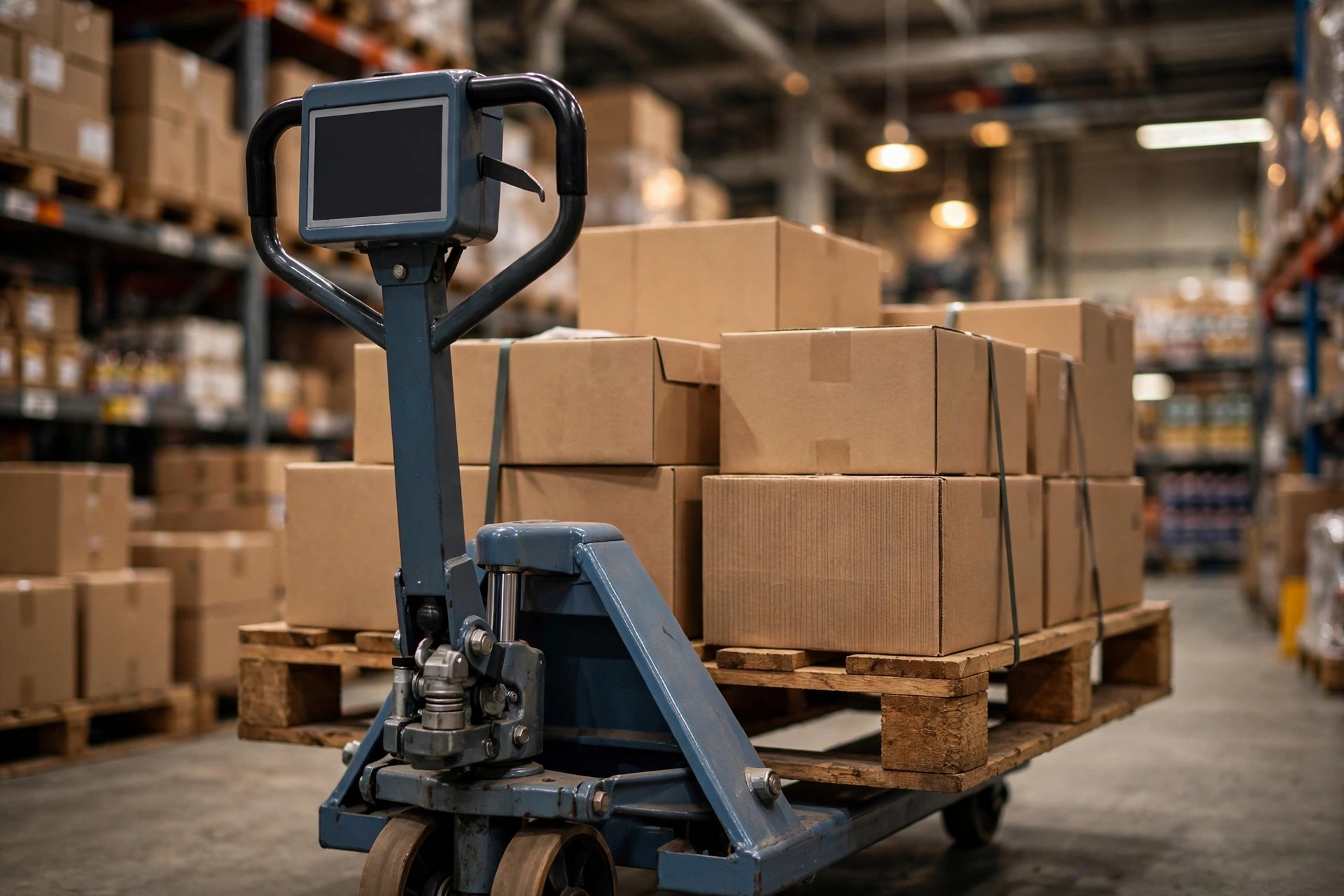
Let me tell you something. After fifteen years behind the wheel, the thing I dread most isn't traffic or waiting in line at the gate — it's the scale. Two trucks, two different numbers, and half your day is gone while everyone insists they're right. And nine times out of ten, the whole fight comes down to one question: has that pallet jack scale been calibrated lately? Winter of 2019, I delivered a load of paper products to a warehouse near Fontana. The bill of lading said 18,400 pounds net. The receiving clerk slid a pallet jack scale under the pallet, glanced at the readout, and announced: 18,720. Three hundred twenty pounds off. His face went cold. Either I offload half the trailer or he settles the bill by his number.
I know my truck. Empty weight is something you carry in your bones after this many years — I'd rolled over a public scale that morning and it matched the BOL to the pound. So I told him: when's the last time that scale was calibrated? He got defensive. Said it was barely a year old. We went back and forth for forty minutes until the warehouse manager rolled the truck onto their floor scale: 18,430. BOL said 18,400, floor scale said 18,430, pallet jack said 18,720. That jack scale was drifting almost 300 pounds high. One load, one uncalibrated scale, nearly turned into a deduction fight.
A Scale Never Tells You It's Drifting
After that I started asking questions at every dock. Turns out pallet jack scales drift silently. A broken thermometer shows you it's broken. A drifting scale still lights up, still gives you a number — just the wrong number.
A bulk-goods warehouse I know had it worse. They weighed incoming bulk material on pallet jack scales and booked inventory by weight. The scale drifted slowly — a few pounds per pallet, nobody noticed. Three months later the physical count didn't match the books. Thousands of pounds off. They chased their tails for two days and nights before someone thought to send the scale out for calibration. It was off by more than two percent. Three months of records, all garbage. The problem was never the people counting — it was the scale.
Think about what a pallet jack goes through. Bouncing across concrete all day, forks slamming into dock doors and pallets, the occasional overload when somebody gets impatient. Every shock rattles the load cells a little more. A scale doesn't complain when it's tired. It just quietly gets more wrong.
How Often to Calibrate a Pallet Jack Scale
Talking to a few metrology folks and reading manufacturer manuals, the answer actually breaks into three simple tiers:
Use it occasionally — a few pallets a week — and once a year is fine. Use it daily, dozens of pallets as a matter of routine, and calibrate every six months. Use the weight as your basis for settlement — charging customers by weight, or booking inventory by weight like that bulk warehouse — and run your own spot check every quarter, plus a formal third-party calibration once a year.
One warehouse I heard about calibrates right before peak season, every time. "Twice a year, no exceptions." Crude way to put it, but the logic is sound: the scale has to be most trustworthy exactly when you're using it hardest.
One more thing: if the scale is used for trade — meaning money changes hands based on what it says — most jurisdictions have weights-and-measures regulations covering calibration intervals and certification. Check your local requirements rather than deciding on your own.
Spotting Pallet Jack Scale Drift Yourself, Before the Calibration Guy Shows Up
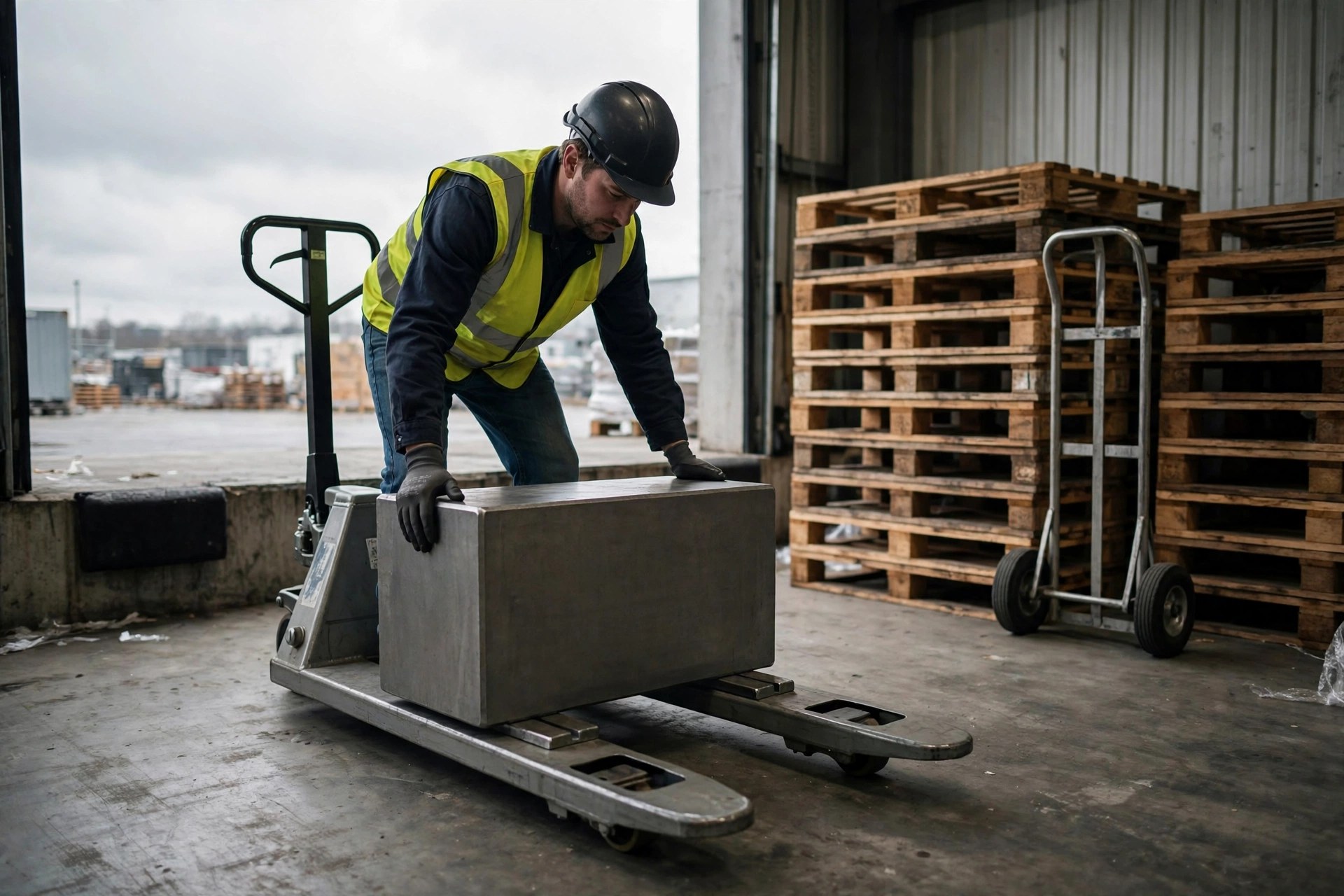
Calibration costs money and downtime, so you can't do it every week. But a self-check takes five minutes: pick something of fixed, known weight — a certified test weight is best, but a pallet of stable goods weighed and recorded works too — and weigh it on the same day every week.
How do you know it's off? Check your scale's division size in the manual — commonly a kilogram or two pounds per step. Weigh your known weight: if the error exceeds one division, that's your signal to send it out. If the error keeps creeping the same direction — two pounds high this week, three next week — that's drift. Don't wait. Schedule the calibration.
There's also a low-tech trick: weigh the same pallet on a different scale. If two scales disagree by a lot, at least one of them is lying. That's exactly how my Fontana argument got settled — one trip to the floor scale and the truth came out.
The Math Nobody Does: What "A Few Pounds Off" Costs in a Year
Most people shrug: what's a few pounds? Let me run the numbers.
Say the scale reads 5 pounds high per pallet. Two hundred pallets a day, three hundred working days a year: 5 × 200 × 300 = 300,000 pounds of phantom weight flowing into your inventory books every year. At a few dozen cents a pound for paper products, that's tens of thousands of dollars of inventory that exists on paper and nowhere else. When the count comes up short, you blame the pickers, the system, the thieves — everyone except the scale.
Here's the counterintuitive part: a small drift is more dangerous than a big one. A scale that's 300 pounds off starts a shouting match at the dock and gets caught. A scale that's 5 pounds off never starts an argument — it just quietly compounds for a year until you can't trace which pallet it started with.
Calibration isn't about preventing big mistakes. It's about stopping small ones from becoming a year's worth of bad books.
Three Practical Recommendations for Warehouses
First, put a sticker on the scale: last calibration date, next due date. Visible to everyone, no wiggle room. Keep the calibration certificate with the equipment file — auditors will ask for it.
Second, make the weekly self-check somebody's actual job. Same known weight, same day, written in a logbook. Five minutes of work that can save you a full physical inventory.
Third, don't cheap out on calibration. A third-party visit costs a few hundred dollars — less than one disputed load, less than one full recount. The scale is the cheapest accountant in your warehouse. You wouldn't let your accountant cook the books for a year and never check, would you?
There's an old saying: miss by an inch, miss by a mile. A few pounds off on the scale can mean a few truckloads off in the books. Fifteen years on the road taught me one rule: the next time someone waves a scale reading in your face, ask them one question — when was that thing last calibrated?
By Shifu Zhao, Trucking Veteran (15 yrs)