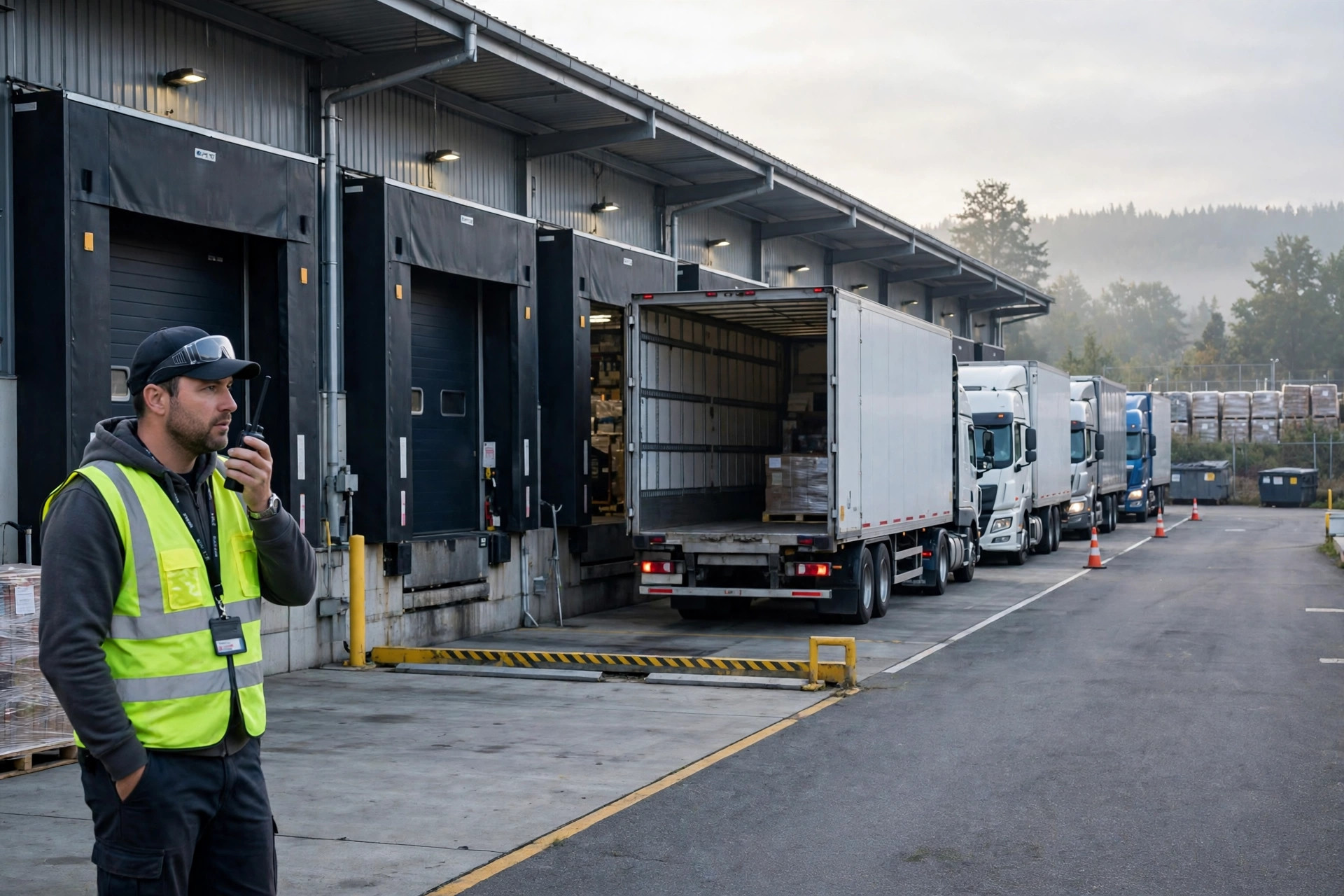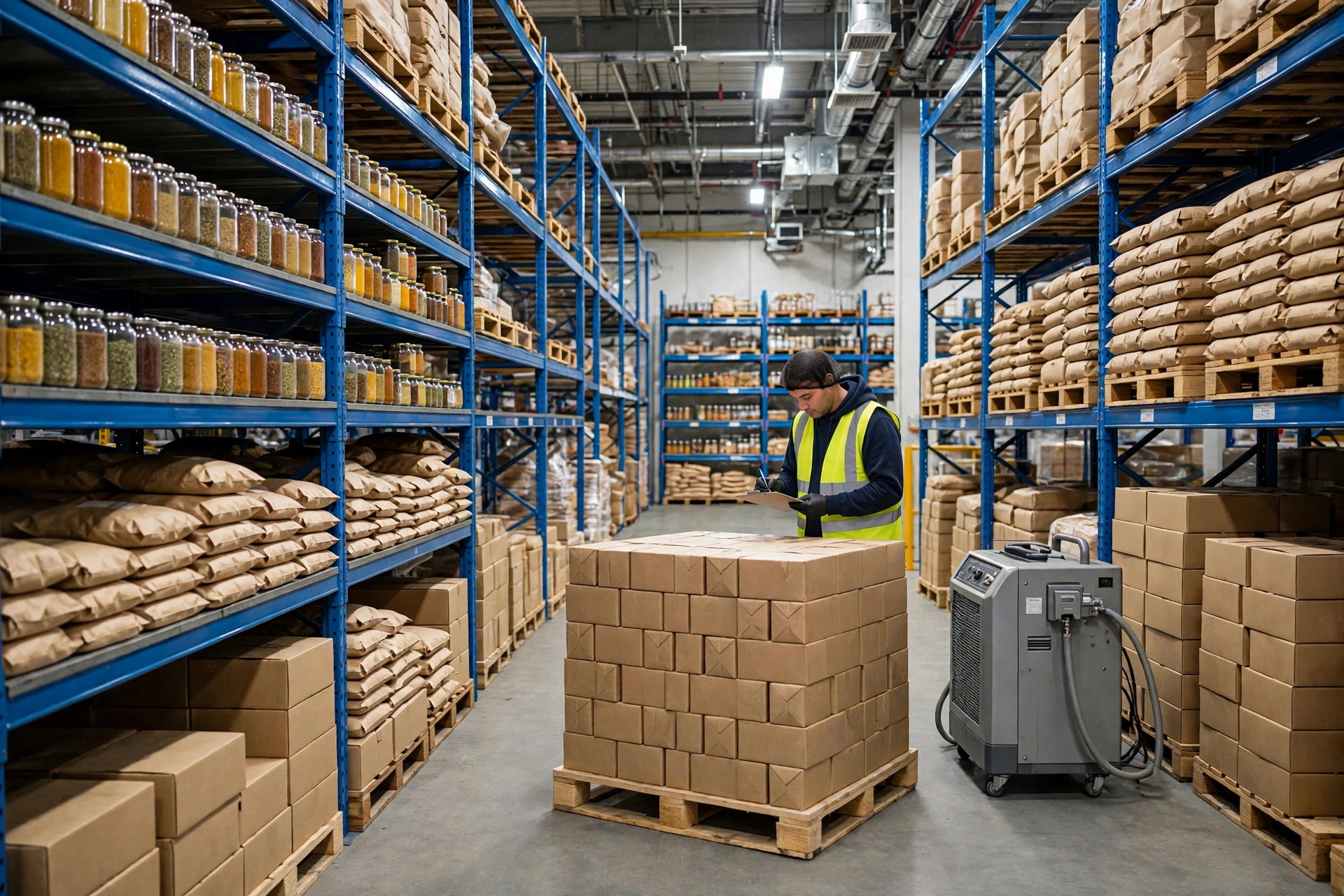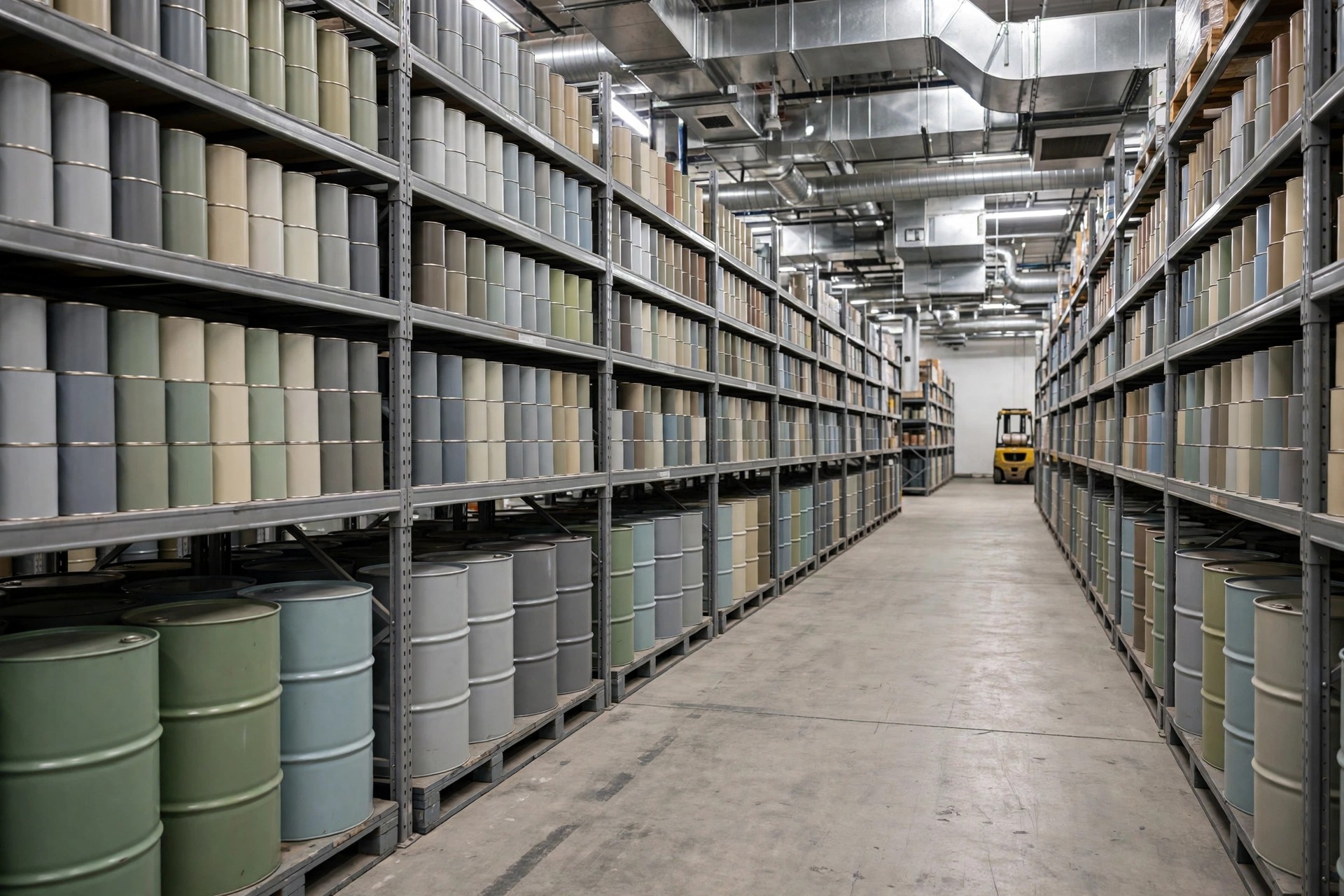
Let me start with a paint coating warehouse storage case I still remember. A paint distributor's warehouse had water-based paint, oil-based paint, thinners, and hardeners all sitting side by side on the same racks. The tinting area sat at the end of the rack row, and workers tossed leftover tinted cans back onto the nearest shelf when they finished. When I asked, the answer was that they had stored things this way for years and nothing had ever happened. I did not argue. I just pointed up: half a ventilation outlet was blocked by cardboard boxes, and rags soaked in thinner were piled in a corner. Paint coating warehouse storage is most dangerous in exactly that situation. Nothing happening does not mean safe. It means the luck has not run out yet.
Think of it like this: you can understand paint storage as managing not the paint itself, but the air, the temperature, and the ignition sources around it. Even a well-sealed can gives off some vapor. A rag soaked in solvent, a half-used can left open, a dented lid — each one is dinner for a spark. Running a paint coating warehouse storage operation means holding three lines: segregation, ventilation, and shelf life. When one line goes soft, the other two have to carry it.
Paint Coating Warehouse Storage Line One: Flammable Segregation
Segregation sounds simple: put flammables in their own room and be done. It is not that simple. Oil-based paints, thinners, and hardeners do belong apart from general goods and water-based paint, but inside the flammable zone there is more sorting to do. Thinners and hardeners should not sit next to each other, and tinting colorants should be kept apart from finished paint. The logic is not brand or sales volume. It is whether one product would help the other burn. Products that feed each other's fire belong far apart, even if the racks look close.
Another common trap: hiding the flammable zone at the very back of the warehouse, out of sight. That is like hiding a powder keg in the back room — if something happens, people are the ones who cannot get out. A flammable zone should sit near an exit, away from electrical panels and charging areas, with aisles wide enough for a forklift and fire equipment within arm's reach. Zone signs should be plain and big enough for a new hire to understand on day one. Write "oil-based paint and thinners only, nothing else goes here" instead of a code number nobody remembers. Which products count as flammable and how they are classified should follow the latest official guidance — check the official source for the current rules rather than letting the warehouse invent its own standard.
Here is a counter-intuitive observation: warehouses with finer segregation make fewer mistakes, not more. People assume fine-grained zones burden workers who cannot remember them. In practice the opposite holds. Coarse zones leave everything to gut feeling, while fine zones give every location a name, so a misplaced can is visible at a glance. Make zones fine enough that a mistake can be seen, not so fine that only the supervisor understands them.
Paint Coating Warehouse Storage Line Two: Ventilation and Temperature Trade-offs
Ventilation is the line most often reduced to an electricity bill. Exhaust fans cost money to run, so some warehouses switch them on only while people are working and off at night. That math is wrong. Coating vapors do not stop accumulating because nobody is on shift. With ventilation off overnight, the air is at its worst the moment the doors open in the morning. Think of it this way: ventilation does not serve people, it serves the air, and the air keeps accumulating whether or not anyone is present.
Temperature works the same way. In a hot summer warehouse, someone's instinct is to shut the coatings area tight against sun and dust. Once sealed, the temperature climbs, vapors build faster, and the whole zone becomes a sealed pressure cooker. The right move is the opposite: shade the area, keep air moving, and never push racks flush against the wall — leave gaps for airflow. The tinting area deserves special attention, because tinting means the longest open-can time and the heaviest vapor load. Put the tinting bench where ventilation is best, not tucked in a quiet corner.
This is the trade-off table I carry on every coatings warehouse walkthrough. Every row is a real choice with no perfect answer, only a price you choose to pay on one side or the other:
| On-site choice | The easy option | The price you pay | My recommendation | | How long ventilation runs | Only during work hours | Vapors build overnight, worst at morning opening | Run it continuously by shift; power costs far less than an incident | | How fine segregation goes | One room for everything flammable | Misplacement goes unnoticed, fires feed each other | Fine enough to spot mistakes, signs in plain language | | How leftovers are handled | Open leftover cans back on the rack | Vapor sources spread everywhere | Separate leftover zone, logged daily, cleared on schedule | | Where tinting sits | Quiet corner out of the way | Heaviest vapor load in the worst-ventilated spot | Best-ventilated position, even if it means a longer walk |
I walk the floor with this table and tick it off line by line. Most warehouses do not lack knowledge. They lack someone checking every day, and checking is exactly what slips.
Paint Coating Warehouse Storage Line Three: Shelf Life and First-In, First-Out
Shelf life looks like the least technical line, and it is the one that most quietly loses money. Paint does not sit forever. It settles, skins over, thickens, and tints off-color. When a customer returns a spoiled can, you lose more than the product cost — you lose trust. First-in, first-out is painted on every warehouse wall, but few warehouses truly practice it. The reason is simple: new stock gets shoved in front, old stock gets buried behind, and the buried stock gets older.
My method is crude but it works: each rack has a new-stock end and an old-stock end, new goods enter only from one end, old goods leave only from the other, and nobody cuts the line in the middle. Every pallet gets a handwritten card with the receipt date and batch, written big enough to read from three meters away. During stock counts, check the batch nearest expiry first, not the quantities. Move near-expiry stock early — a promotion or internal transfer beats waiting until it expires, because disposal cost and compliance hassle for expired coatings far exceed the discount you give up early. Exact shelf life and expired-product disposal should follow the product documentation and the latest official guidance, not a rule of thumb.
One more pseudo-demand to puncture: the idea that a coatings warehouse needs full automation — automatic picking, automatic tinting, nobody on the floor. Bluntly, most paint distributors do not have the volume to justify that investment. The automation that actually pays in a coatings warehouse is not picking speed. It is two things: can you trace a batch in one click, and can temperature or humidity alarms wake someone at night? Everything flashier can wait. Spend money where it bites, and where it bites is knowing exactly which batch is where the moment something goes wrong.
So here is the final accounting. Whether paint coating warehouse storage spending is worth it comes down to one number: how many batches in your warehouse can you not account for — when they arrived, where they sit, how much shelf life is left. If that number is not zero, at least one of the three lines — segregation, ventilation, first-in first-out — is hollow. Getting that number to zero comes before buying any equipment.
By Da Liu, Automation Engineer