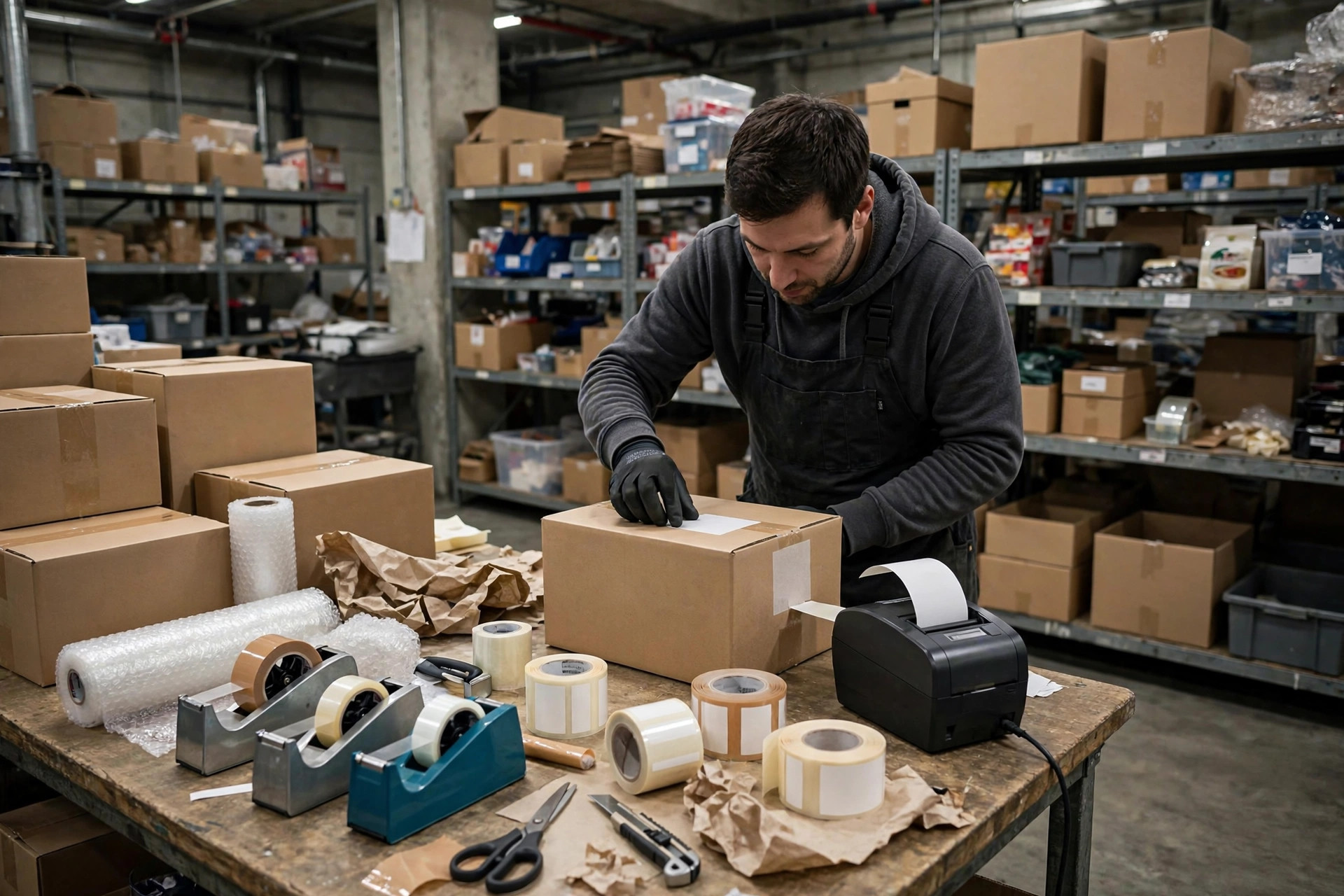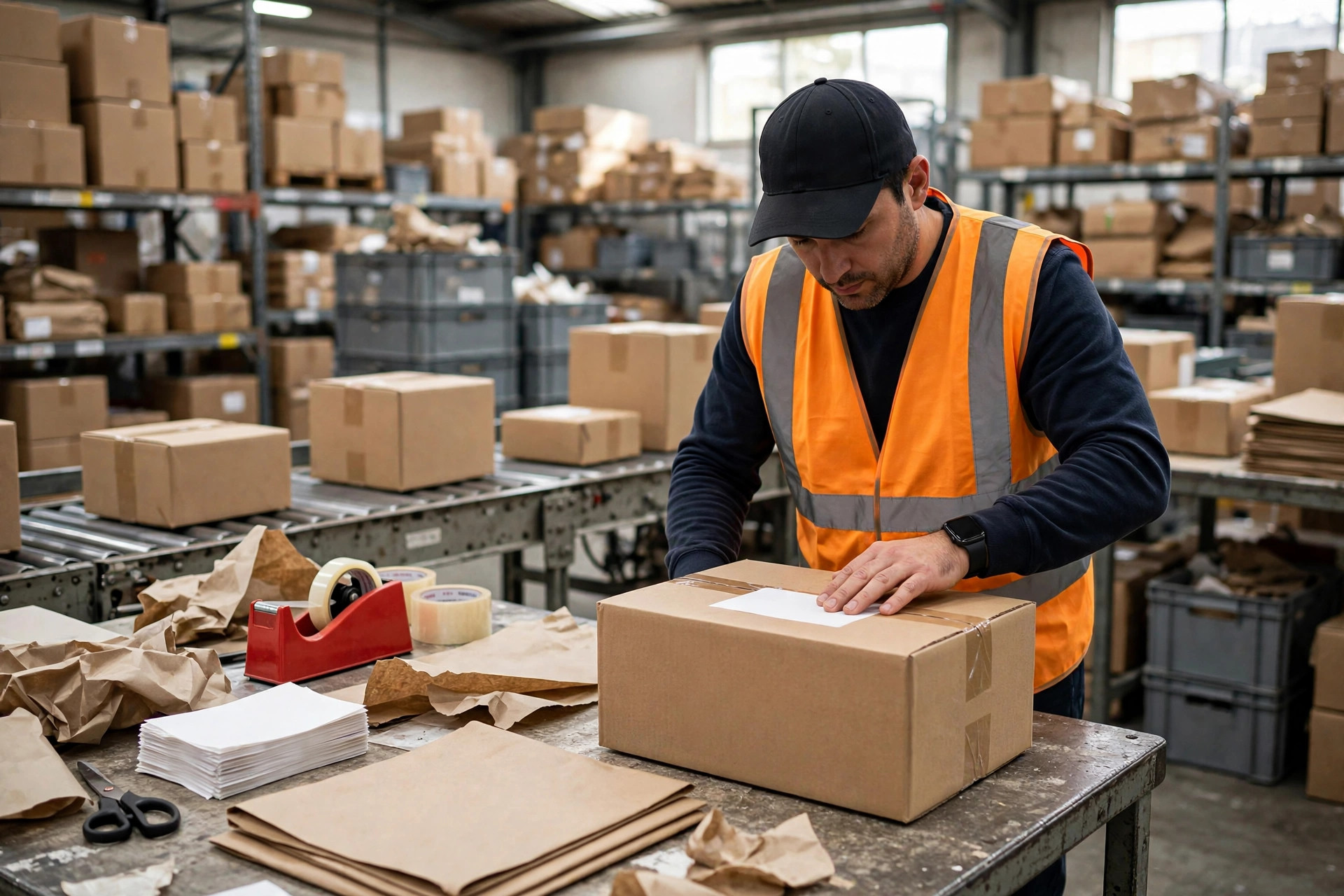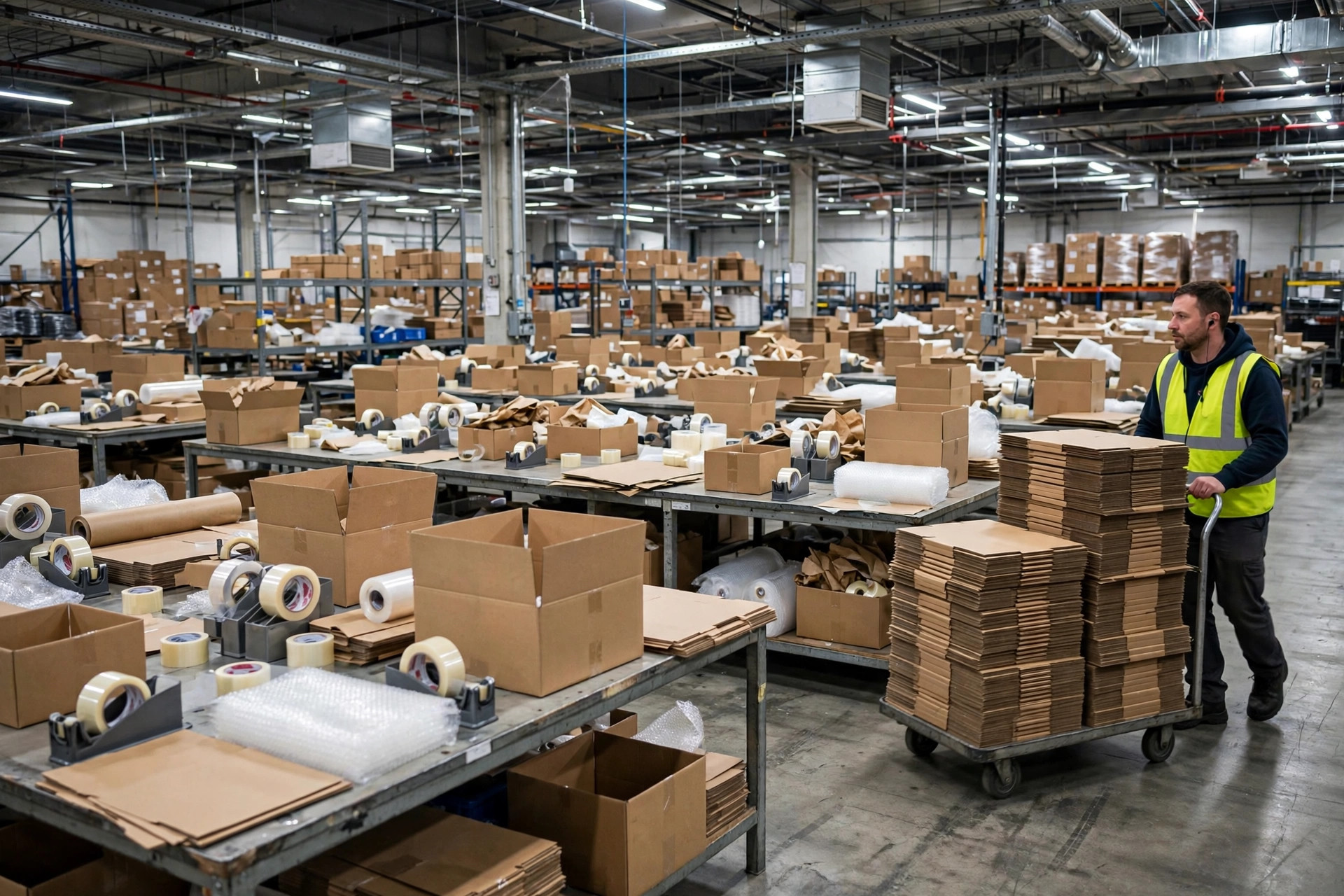
Here's the bottom line: when a packing station runs out of cartons or tape and the line stops for ten minutes, a 20-person packing line loses more than 80 orders that day. The math is simple — at 25 orders per packer per hour, 20 people push 500 orders an hour, so ten dead minutes is 83 orders gone. And that's just the visible part. What you don't see is the half hour after restart: the rhythm is broken, mistakes creep in under pressure, and the rework, reships, and customer complaints that follow are the real invisible invoice.
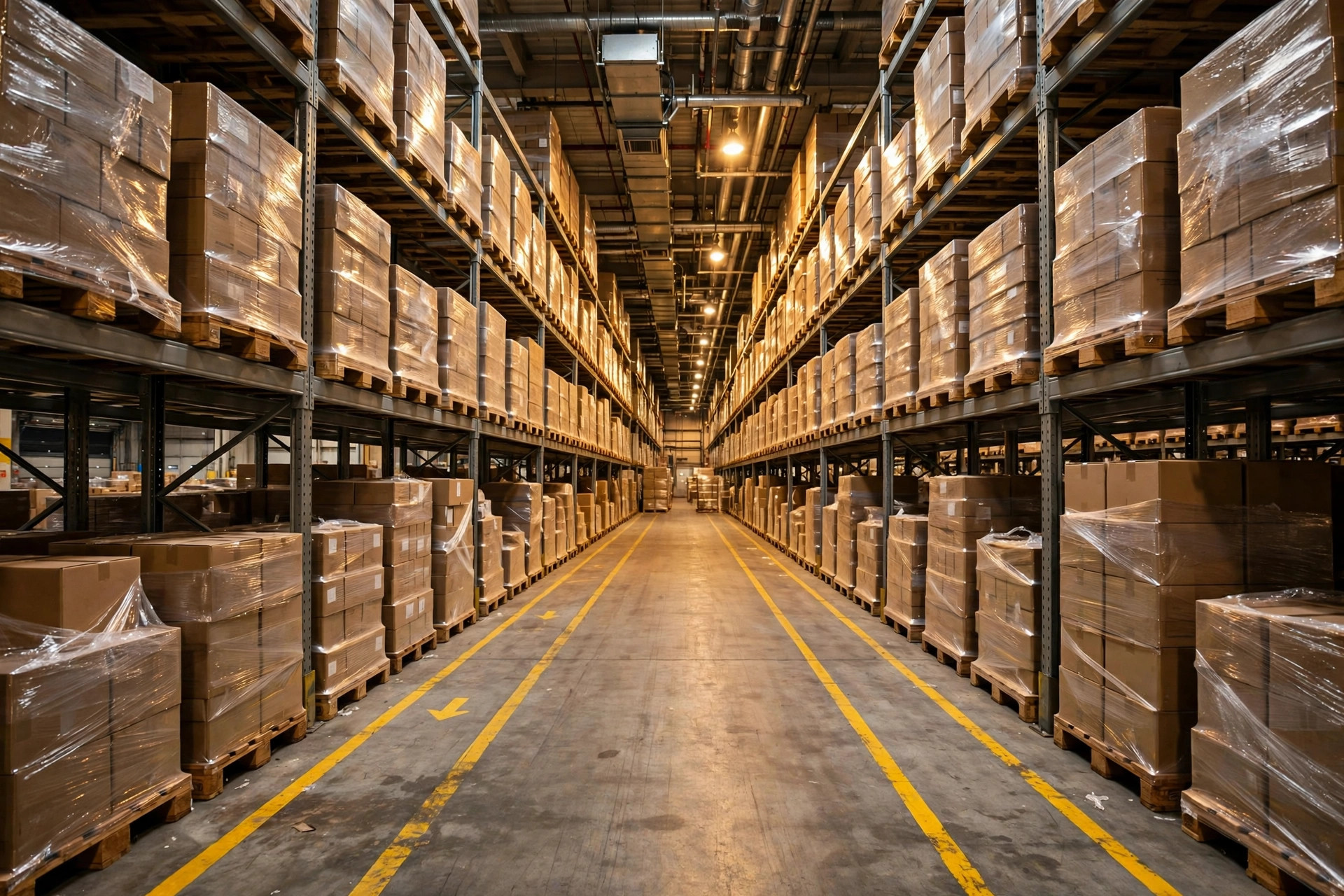
The worst case I ever saw was late 2024, at a 3PL warehouse in Ontario, California — about 80,000 square feet, pushing over ten thousand orders a day in peak season. The carton supply sat stacked against a wall more than 40 meters from the packing stations. When tape ran out, packers had to leave their stations and fetch it themselves. I timed it: four to five minutes round trip, and by end of day every packer had spent over half an hour just walking to get supplies. Nobody in that building counted it as a loss, because the line never officially stopped — but that was the most expensive invisible cost of all. They were paying for 20 packers, and the equivalent of one full headcount was being spent playing courier.
Here's the thing: when stockouts happen, 99% of warehouses blame the wrong thing. Supervisors yell about not stocking enough, and packers get chewed out for not speaking up sooner. But the truth is nobody ever designed the replenishment in the first place. Where the cartons live, how low the tape gets before someone refills it, who does the refilling, what time it happens — all of it runs on one veteran's memory and whoever shouts loudest. The day that veteran calls in sick, the line stops.
It's Not a Supply Problem — It's a Flow Problem
My verdict up front: for packing station consumables, flow design matters ten times more than how much you stock. You can have a mountain of cartons, but if they're far away and refills are slow, you might as well have nothing.
When I lay out a replenishment flow for a client, I look at exactly three things.
First, how far is the consumables staging point from the packing stations? The pass line is under 10 meters; ideally it's within arm's reach behind the station — the golden zone. A home-goods e-commerce warehouse in Riverside, about 30,000 square feet, used to keep its carton pallets next to receiving, which meant a 30-meter walk every time a packer needed a box. During the redesign they freed up two flow racks behind the packing area as a consumables supermarket — cartons, tape, void fill, and label stock all staged by station, refilled by a runner on a cart every two hours. That one change lifted packing throughput per person by 12%. Note: they didn't add headcount. They just gave the walking time back to packing.
Second, does the replenishment cart's route fight with the pickers' routes? This is the trap almost everyone misses. Replenishment happens during the day, pickers are running carts all over the floor, and the runner is running a cart all over the floor too — two streams colliding head-on in the main aisle, neither able to yield. The fix I see working is unglamorous but effective: route replenishment through the secondary aisle behind the packing area, or simply stagger the timing. If picking peaks from 10 AM to 3 PM, schedule refills at 9:30 and 3:30. The aisles are fixed; the people are schedulable. Don't make two crews fight over the same road.
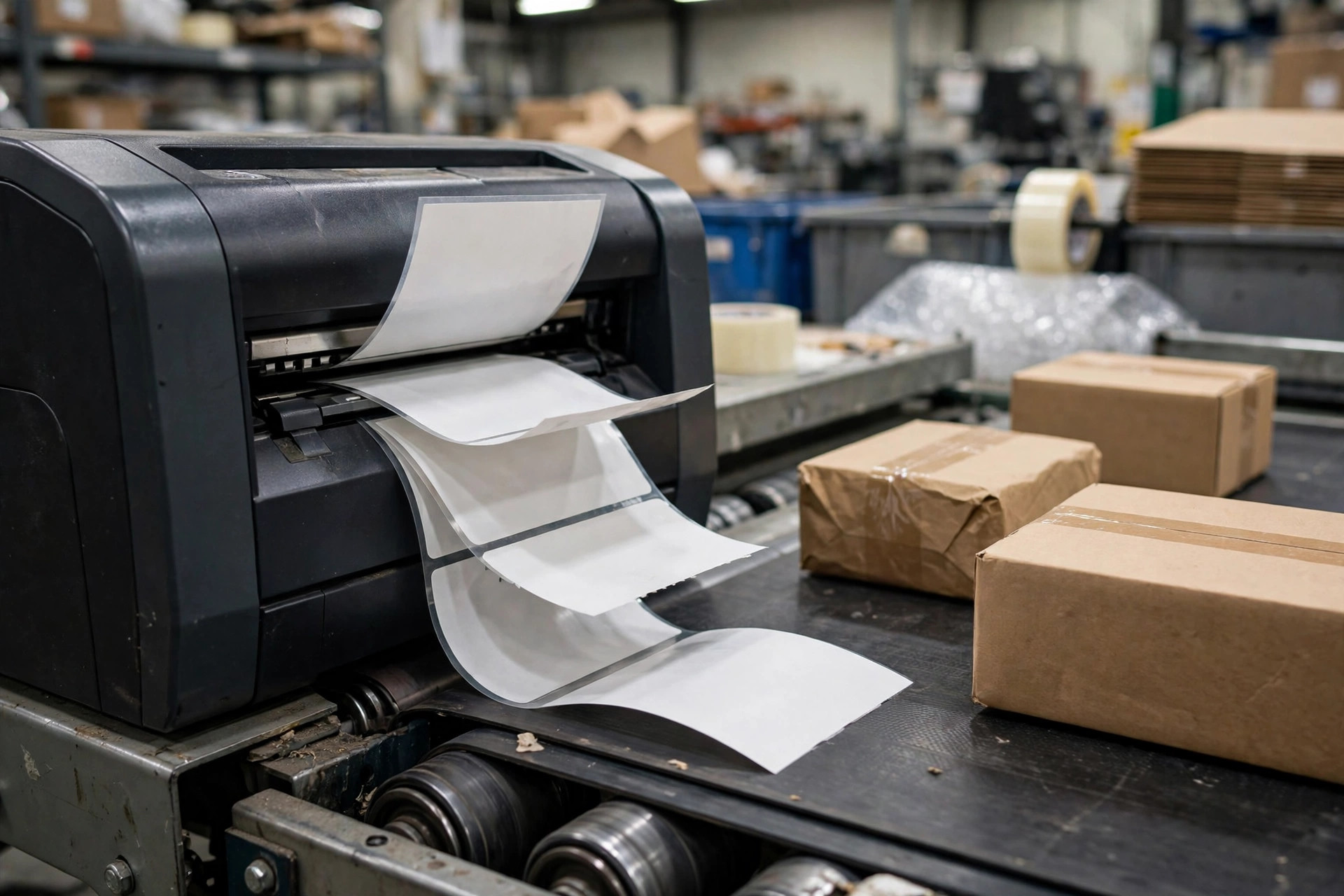
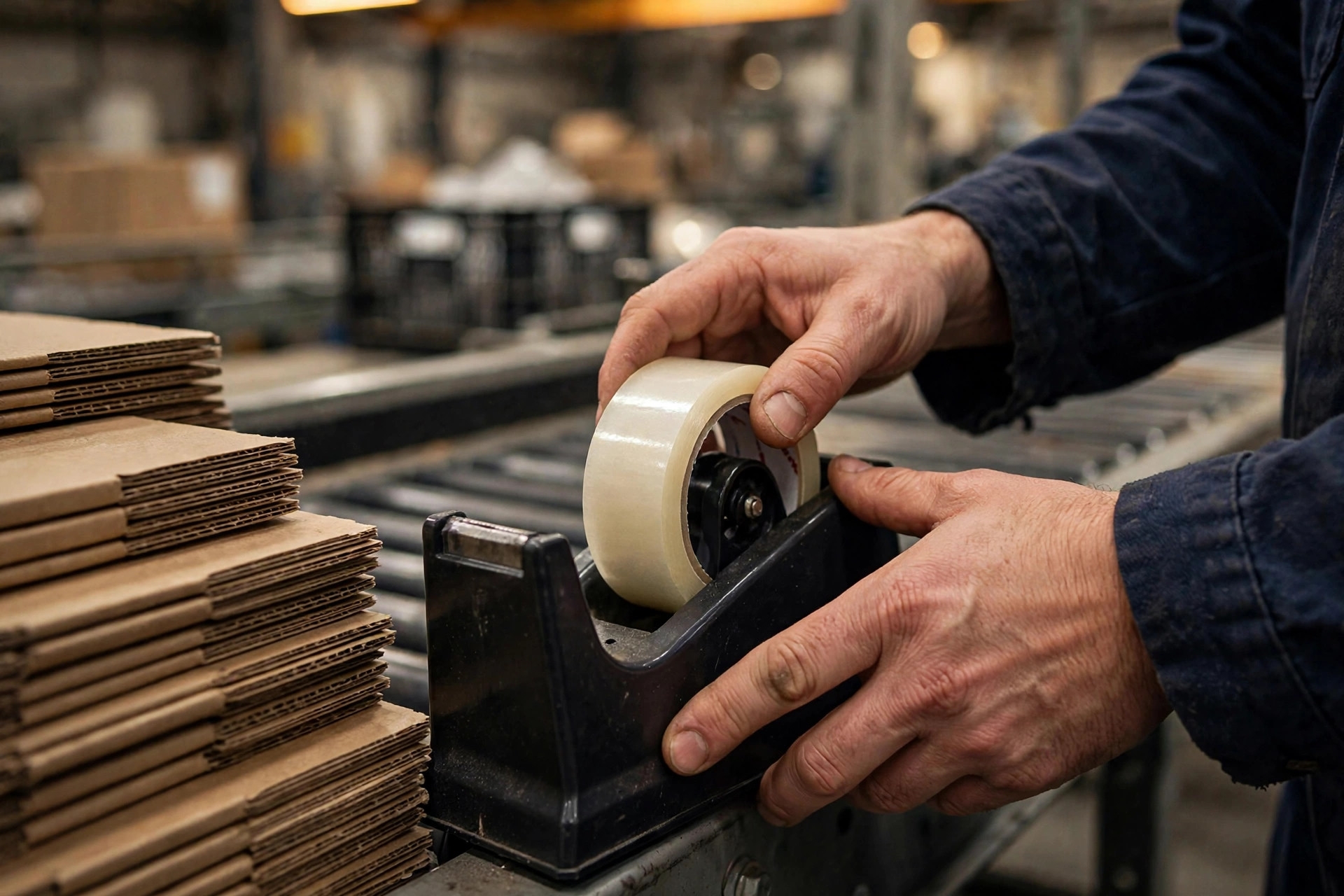
Third, what actually triggers a refill? In a lot of warehouses the answer is "a packer yells." A yell means you're already dry. A reliable trigger has to be quantified: swap in a fresh tape roll when the one in the dispenser is down to its last two wraps; trigger a carton refill when the pallet drops to two layers; keep one spare roll of thermal label stock next to every printer, because a roll of four or five hundred labels can get chewed through several times over on a peak day. These numbers don't need to be exact to the unit — but they need to be written on the wall, not stored in somebody's head.
Kanban or Fixed Schedule? Both Work — in the Wrong Setting, Neither Does
There are really only two replenishment modes: kanban (refill when something runs empty) and fixed schedule (walk the stations on the clock and top everything up). My take is blunt: if you run few SKUs, big volumes, and steady consumable burn, go fixed schedule. If you run messy SKUs, many waves, and a wide mix of consumables, go kanban. Pick the wrong one and either becomes theater.
Fixed schedule is worry-free. The runner does a loop at 9, 11, 2, and 4, fifteen minutes a round, no thinking required. The trade-off is obvious: you spend a little labor redundancy to buy zero stockouts. The cost is waste — in slow season the cartons barely move and the cart still rolls four times a day. It fits the e-commerce warehouse doing a few thousand orders a day with three or four main carton sizes.
Kanban saves labor but eats management. Every consumable slot gets a kanban card; when stock hits the alert line, you flip the card, and the runner checks the board once an hour — only the flagged slots get a trip. Beautiful on paper. The biggest real-world failure is discipline: when it gets busy nobody flips the card, cards go missing and nobody replaces them, and within a month you're back to yelling. So before going kanban, ask yourself one honest question: can your floor keep tools where they belong? If not, don't touch kanban. Run the boring fixed schedule.
There's also a hybrid I recommend a lot: fixed schedule as the backbone, kanban as the backup. Three scheduled patrols a day guarantee the line never starves, and the line-stopping-critical consumables — tape, label stock — get kanban cards on top as a double safety net. The cost is a few printed cards and ten minutes of training.
One last thing, and it's the most underrated: the person doing replenishment cannot be the packer. The moment refill work eats packer time, the flow design has failed. Replenishment should be a dedicated role, or folded into a line runner's rounds — even if that "dedicated person" is just someone pulled off other duties for two hours a day. A packer's hours are paid for by the order. Having them haul cartons is buying moving labor at packing rates. That's a terrible deal.
At tomorrow's morning huddle, ask your packing lead one question: "How many times did we stop for missing supplies last week, and how long each time?" If they can't answer, don't get mad — hand them a sheet of paper and tell them to start counting today. Without the numbers, all this flow design talk is just talk.