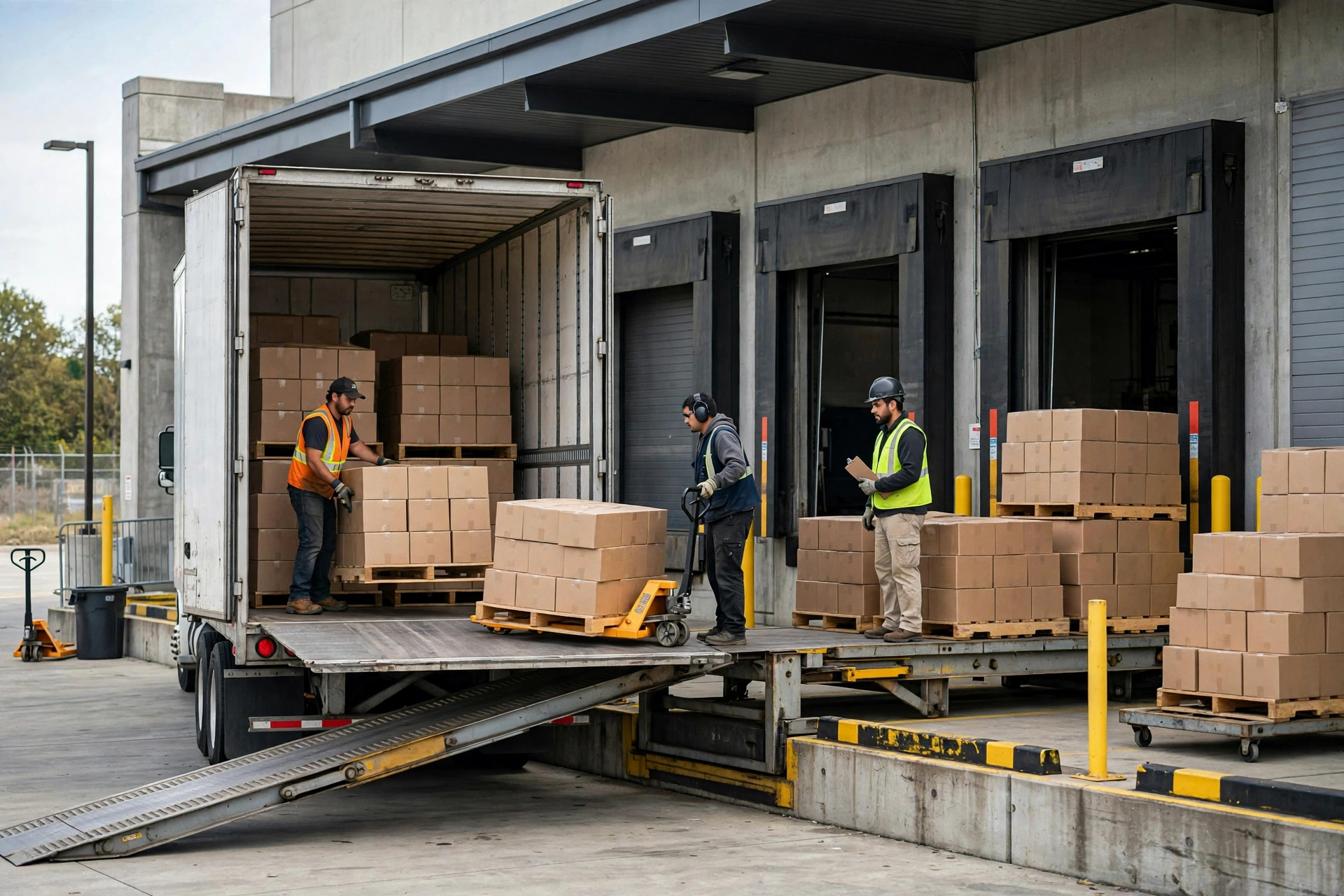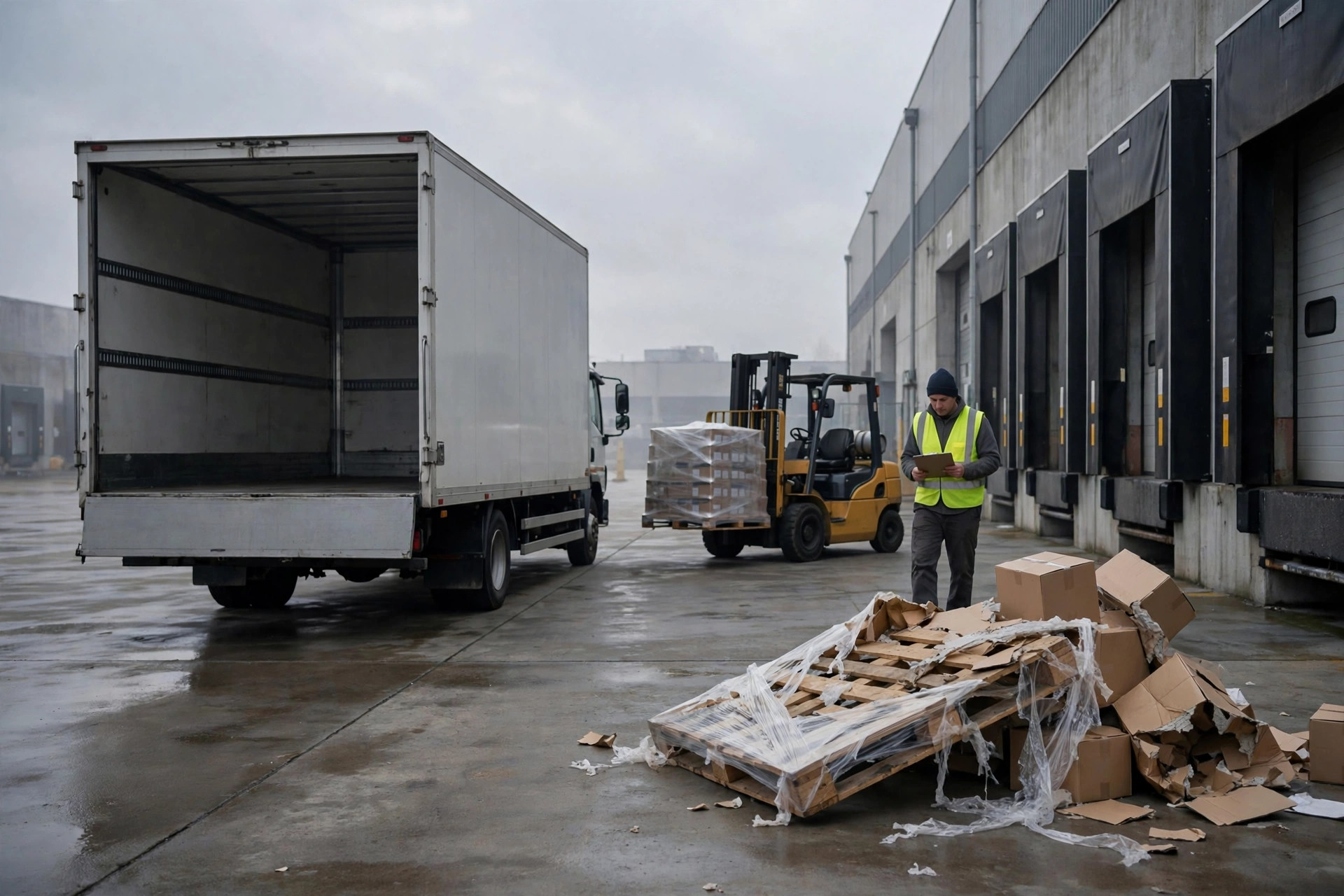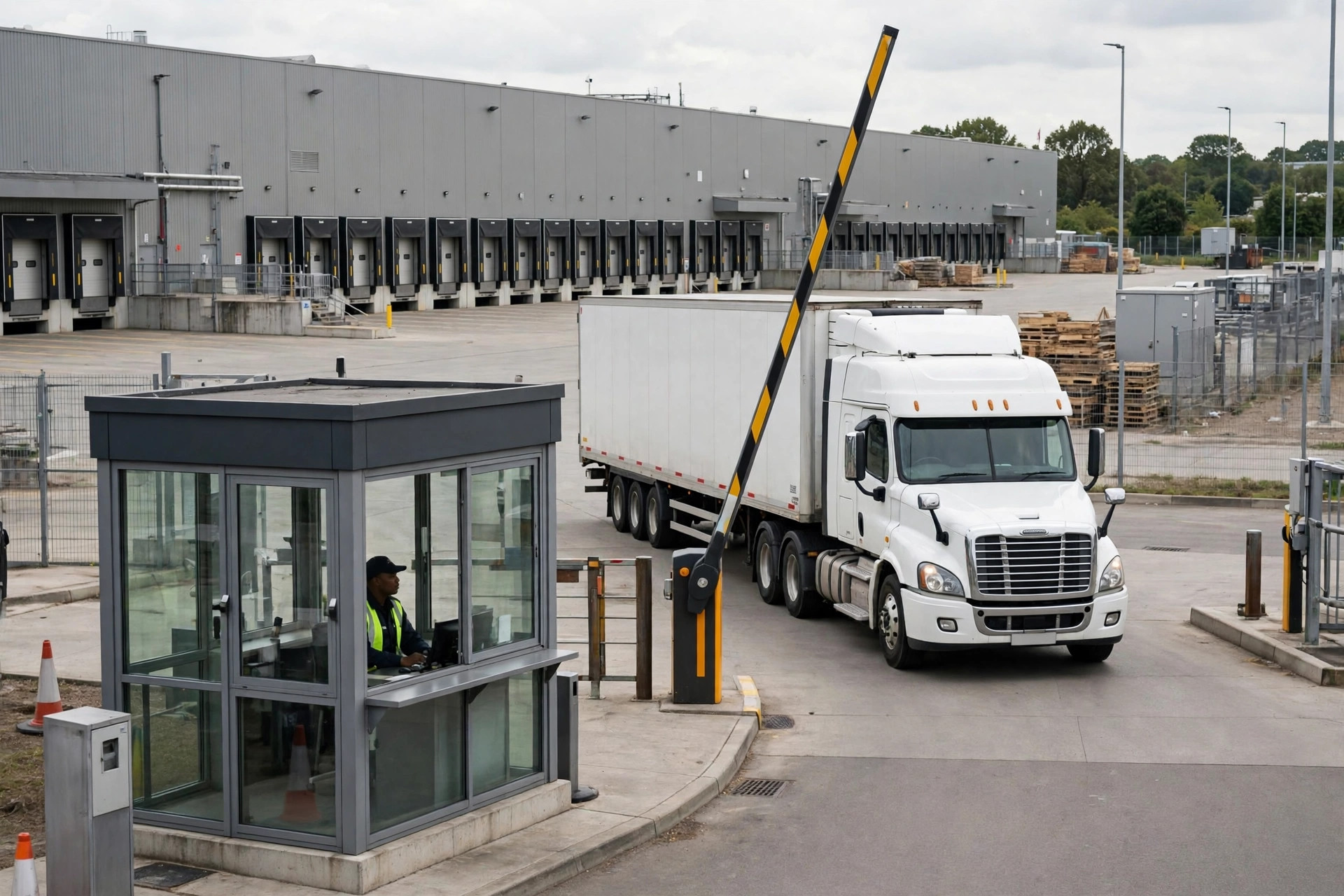
Two winters ago, I was sitting in line at a distribution center in Fontana, waiting for my turn at the dock, when the driver ahead of me got into it with the loader. The loader said, "This trailer only takes 26 pallets." The driver shot back: "Bull. I loaded 30 in Texas last week!" They nearly came to blows before dispatch stepped in.
Let me tell you, after all these years on the road, I've seen that argument more times than I can count. How many pallets fit in a 53ft trailer — 26, 28, 30? All three numbers are right, and all three are wrong. It depends on how you load them and what you're hauling. Today I'm going to break it down piece by piece. Useful for shippers, useful for warehouse folks on the receiving end.
How Many Pallets Fit in a 53ft Trailer: Doing the Math on Three Loading Patterns
First, the fixed numbers. A 53-foot dry van: about 52 feet 8 inches of interior length (632 inches), 98 to 100 inches wide, 108 to 110 inches tall. Standard pallet: 48 by 40 inches. Everything below is arithmetic on those figures.
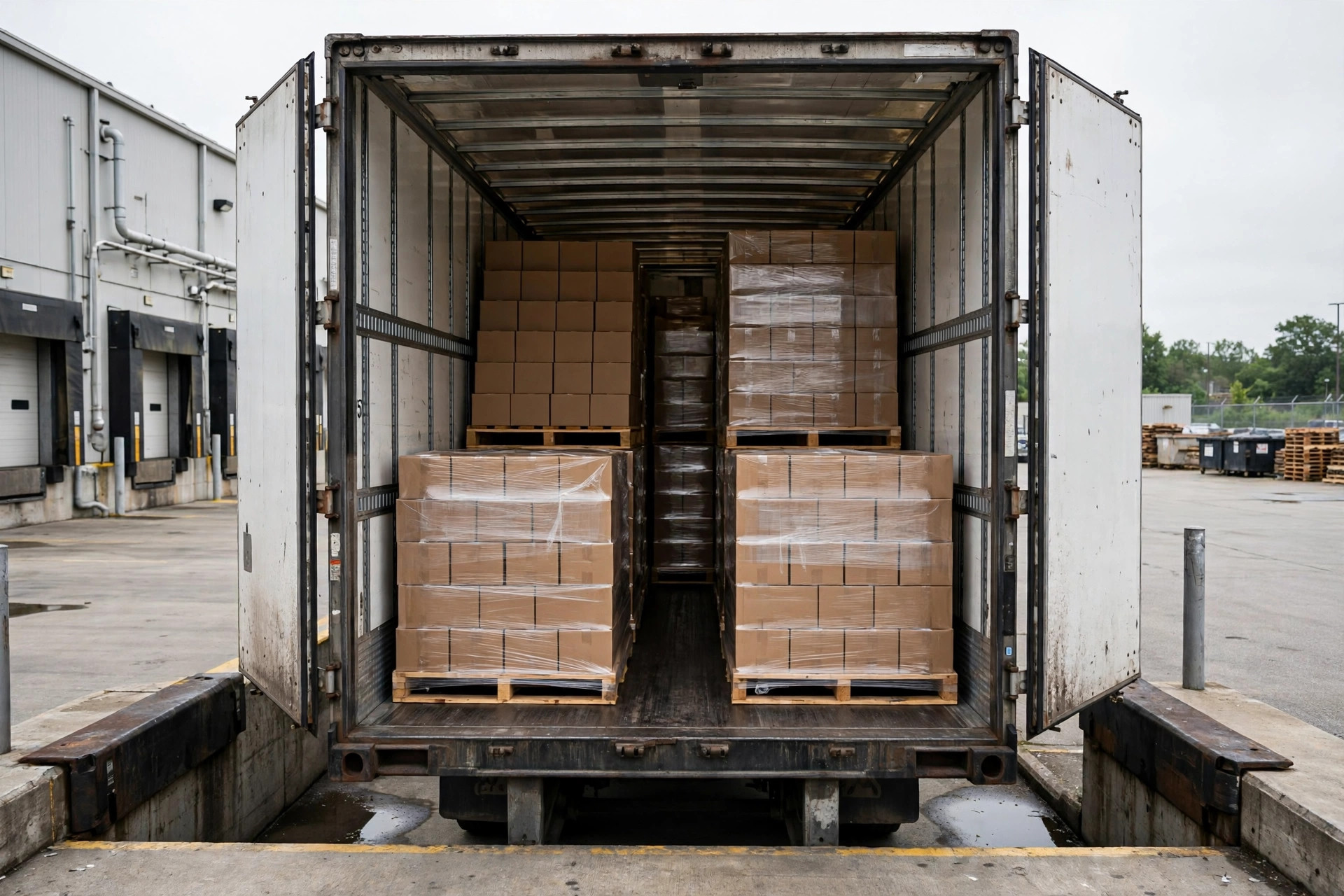
Straight loading: 26 pallets. Pallets go in with the 40-inch side across the width — two side by side take 80 inches — and the 48-inch side running the length of the trailer. Each row eats 48 inches of length. 632 divided by 48 is about 13.17, so you get 13 rows. 13 times 2 is 26 pallets. This is the easiest pattern; any forklift driver can load it in their sleep, and drivers love it. The downside is obvious: you're only using 80 of your 98 inches of width, leaving nearly 10 inches of dead space on each side.
Turned loading: 30 pallets. Rotate every pallet 90 degrees. Now the 48-inch side goes across the width — two pallets take 96 inches, leaving about one inch of clearance on each side in a 98-inch trailer. The 40-inch side runs lengthwise: 632 divided by 40 is 15.8, so 15 rows, 15 times 2 is 30 pallets. Four extra pallets, but you pay for it: one inch of clearance means the forklift operator better be a veteran, one twitch and you're scraping the wall. And the freight can't bulge out even slightly.
Pinwheel loading: 28 pallets. Alternate — one row straight, one row turned. Each straight-plus-turned pair takes 88 inches of length. 632 divided by 88 is about 7.18, so 7 pairs, 14 rows, 14 times 2 is 28 pallets. The middle ground, with decent width utilization.
I've checked all three with a tape measure. They hold up. Here's the side-by-side:
| Pattern | Pallets | Length used | Width used | Loading difficulty |
|---|---|---|---|---|
| Straight | 26 | ~624 in | 80 of 98 in | Easiest |
| Pinwheel | 28 | ~616 in | Alternating 88–96 in | Medium |
| Turned | 30 | ~600 in | 96 of 98 in | Hardest, needs a veteran |
| Double-stacked (straight × 2) | 52 | — | — | Watch height and weight |
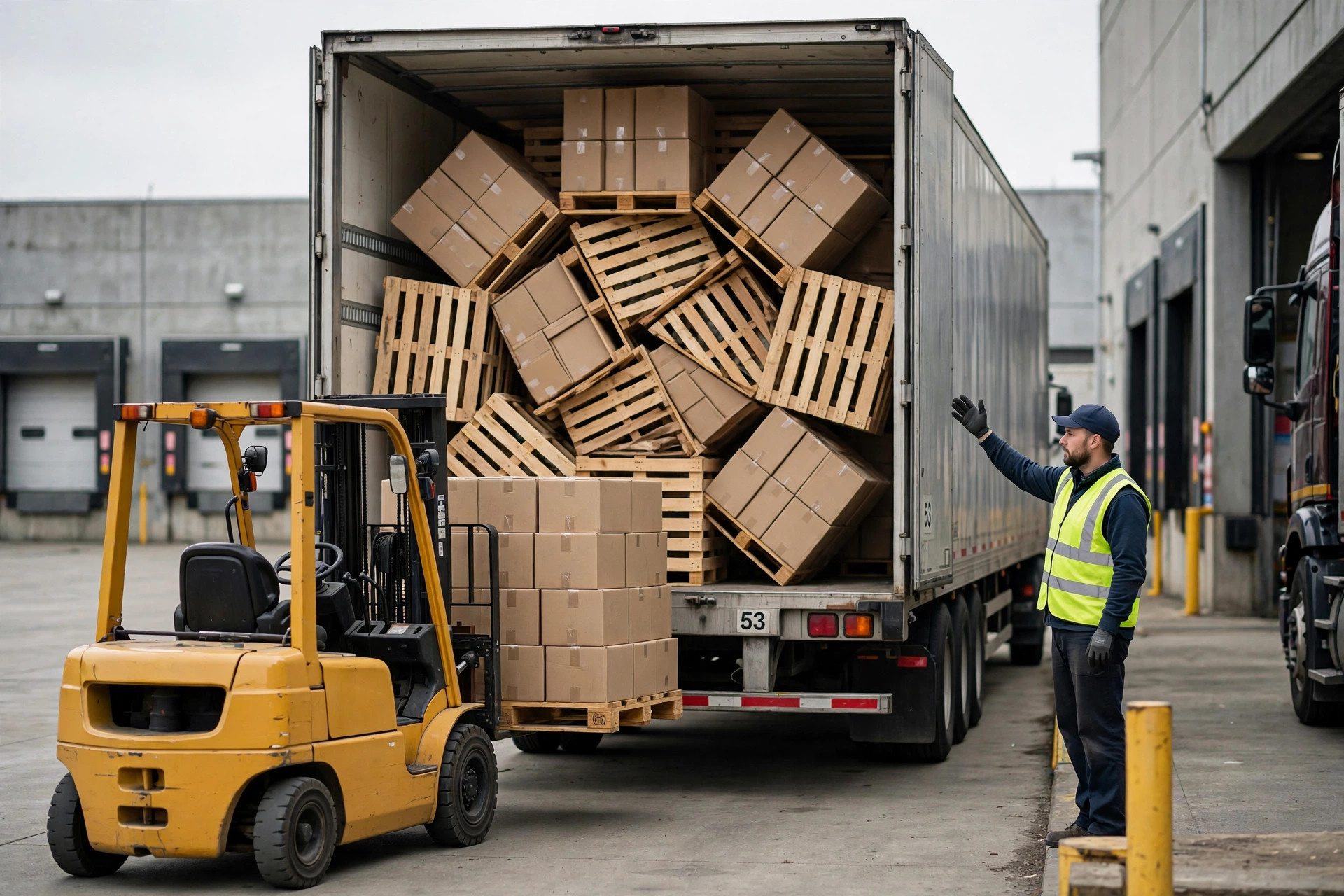
So next time someone argues 26 versus 30 with you, ask one question: "Which pattern are you talking about?" Turns a fight into a real conversation.
Beyond Pallet Count: Does Weight or Space Fill Up First?
This is where rookie shippers get burned — they obsess over pallet count and forget the trailer has a weight limit. A 53-footer is generally capped around 44,000 to 45,000 pounds of payload (80,000 pounds gross, minus tractor, trailer, and fuel). Cube-wise you've got plenty: roughly 3,800 to 4,000 cubic feet.
July 2024, I hauled bottled water from Ontario to Phoenix. The shipper planned 26 pallets. At pallet 22, we rolled over the scale — overweight. One pallet of bottled water runs about 2,200 pounds; 22 of them put me past 48,000. I ended up pulling two pallets off and rolling with 20. The shipper was on the phone sucking his teeth: "But I promised the customer 26 pallets!" I told him, "Highway patrol doesn't care about your promises, buddy."
Here's the counterintuitive part: with heavy freight, it's the scale that decides, not the floor space. Water, beverages, tile — the weight maxes out while there's still daylight in the trailer. A 26-pallet plan might only legally carry 20. Flip it around with light, bulky freight — paper towels, chips, down jackets — and 30 pallets turned will fill every inch while the scale barely reads 20,000 pounds. Space fills first; weight's not even close.
So when you're planning a load, ask one question first: "How much does one pallet weigh?" Heavy freight — work backward from 44,000 pounds. Light freight — work forward from the loading pattern. Two separate calculations. Don't mix them.
Receiving-End Reality: What If the Driver Won't Load Your Pattern?
Now the other end of the trip. The biggest headache for receiving docks isn't counting pallets — it's drivers who won't load the pattern you asked for.
Straight talk: pinwheel and turned both take longer than straight. A 28-pallet pinwheel load adds 20 to 30 minutes at the dock, and it's awkward, tiring work — the forklift angles are all wrong when you're rotating. Plenty of drivers roll up and say, "Straight 26, take it or leave it, there are three trucks behind me." What are you, the receiving clerk, supposed to do about that?
The big warehouses on my regular routes have settled on a playbook. Sharing it with you:
First, put the loading pattern on the shipping order. Don't negotiate it at the dock. When the shipper writes "pinwheel, 28 pallets" or "turned, 30 pallets" on the tender, the driver knows the difficulty before accepting, and those extra 20 minutes are baked into the rate. Spring it on someone at the dock and of course they'll refuse.
Second, receiving inspection in three steps: count the pallets, check the pattern, take photos. Short on count — reject, no debate. Wrong pattern — don't blow up first. Find out whether the shipping warehouse loaded it wrong or the driver reworked it en route. Photos keep the blame clear and cut the arguing in half.
Third, with turned loads, measure height in advance. The trailer's rear door frame is only about 98 inches wide and 105 inches tall — shorter than the 108 to 110 inches of interior height. Freight stacked to 108 inches, with one inch of side clearance in a turned pattern, will jam the moment the forklift drifts. I watched it happen once: a driver shoehorned 30 turned pallets in at the shipper, the load shifted on the road, and it took half an hour at the receiver to fish out the first pallet. The receiving clerk's face said everything.
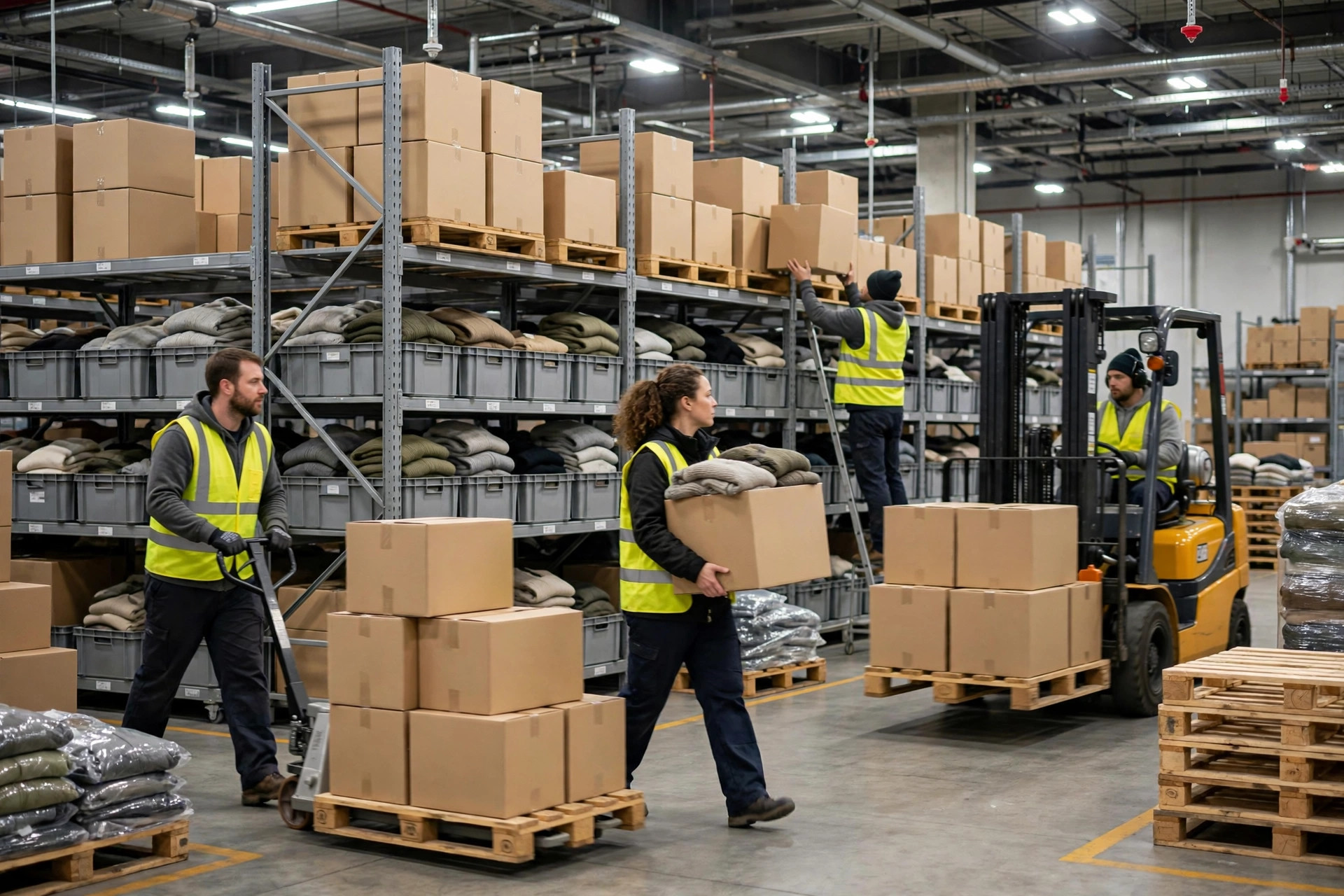
And one piece of advice for the receiving crew: don't just count pallets. On a 26-pallet straight load, there's 10 inches of slack on each side — freight shifts in transit, so check the two outside pallets for tipping first. On a 30-pallet turned load, check the freight near the doors for crush damage. That's experience talking, bought with time.
The trailer doesn't care. People do. 26, 28, 30 are just numbers on paper — what matters is that the freight, the road, and the warehouse all line up. Ask "what pattern, how heavy per pallet" before loading, and you'll save yourself a stomach full of grief — and one less shouting match at the dock.
By Shifu Zhao, Trucking Veteran (15 yrs)