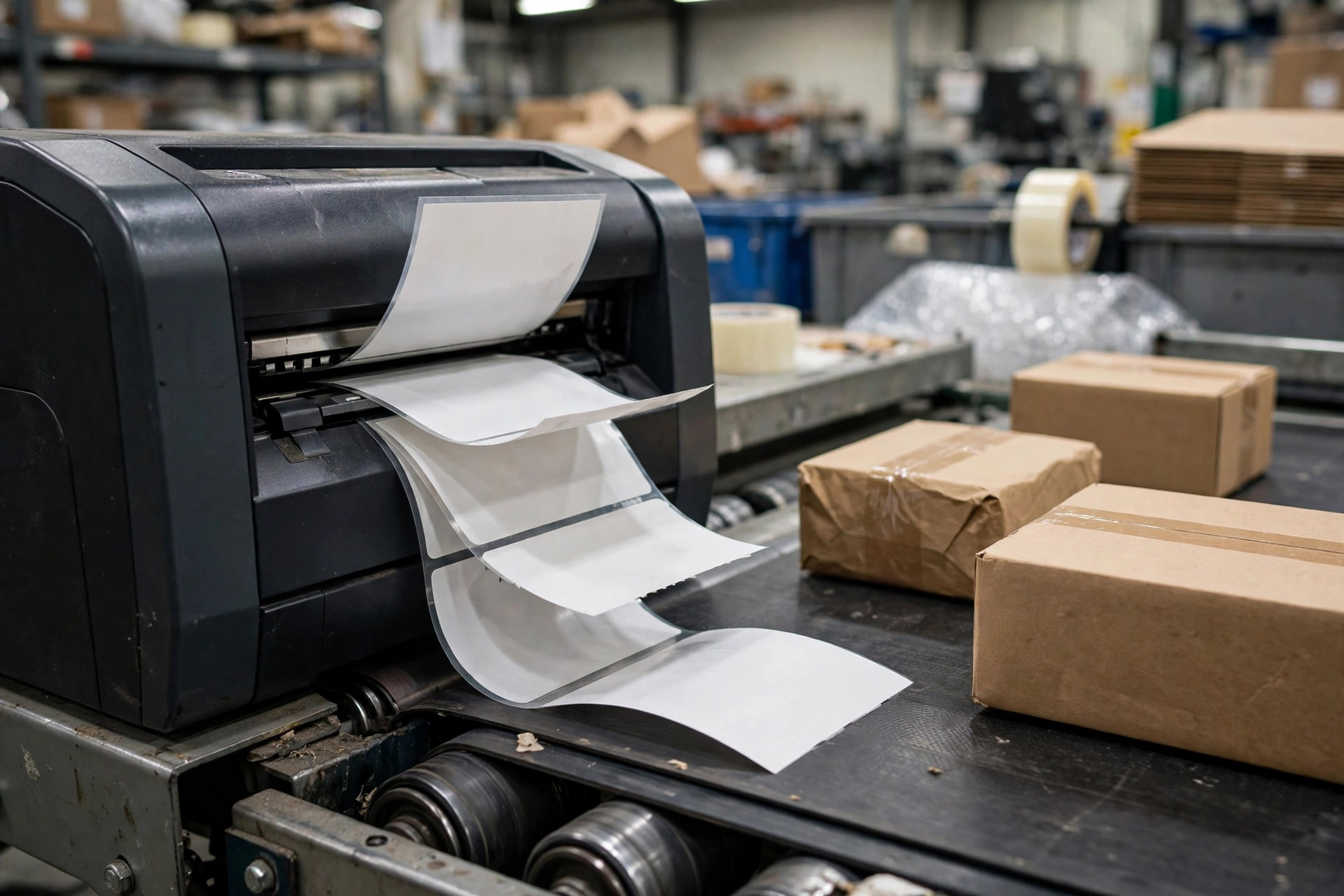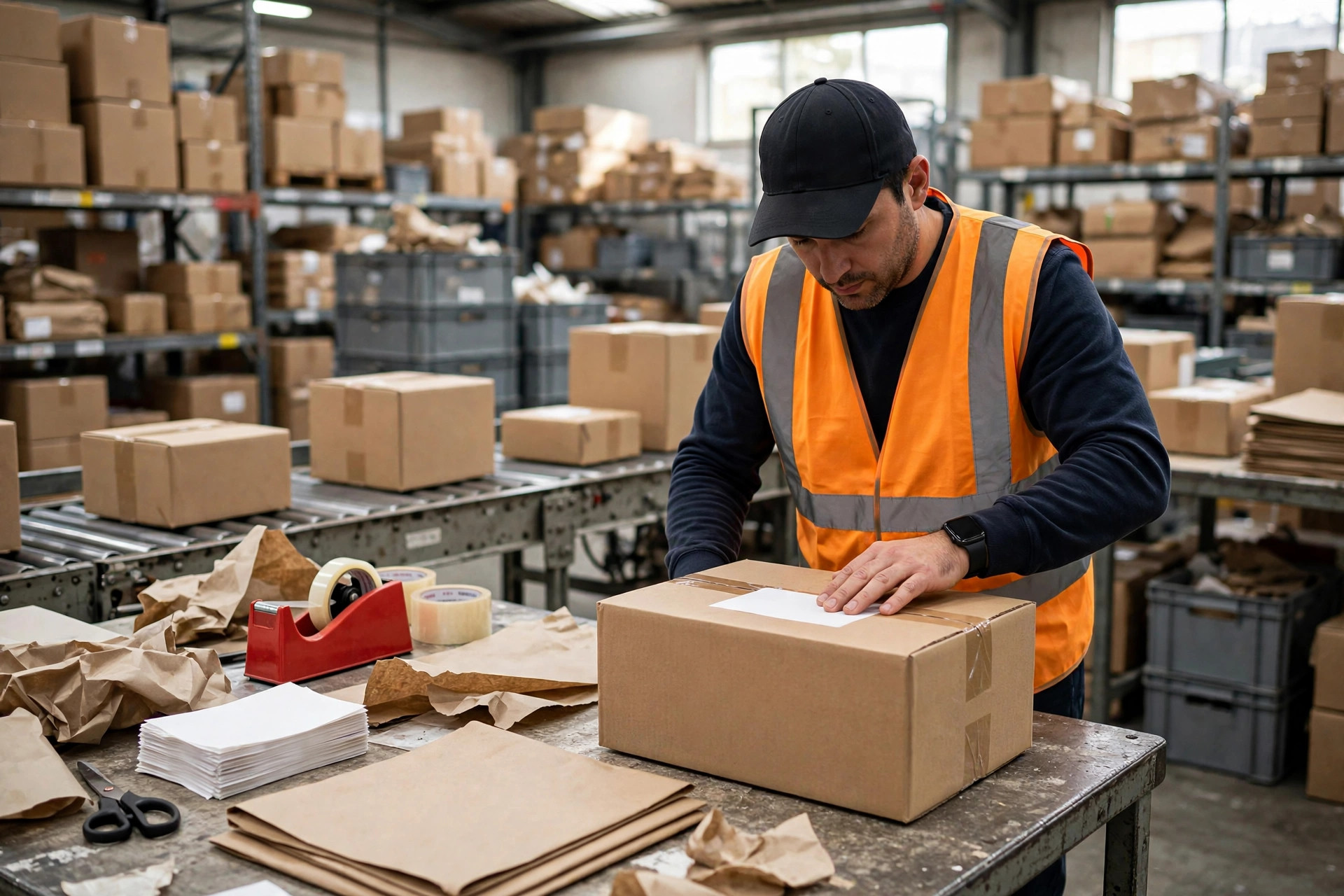
The privacy waybill had been running in our warehouse for half a year, and I thought it was a good thing — until 7:40 on the morning of November 10 last year, when a packer shouted across the floor.
It was the day before the big sale. Volume was running at three times the usual level, and all 12 packing lines were going. A packer held up a parcel and yelled, "Lead, this label went on the wrong box!" I walked over and my stomach sank. Two parcels, same product, same color, same size. The recipient's phone number on the label was masked in the middle, four digits replaced with asterisks. You could not tell the two apart by looking. In the old days, one glance at the full number would have settled it. That morning we had to run a barcode recheck to untangle the two parcels, and it cost us more than ten minutes while the queue behind backed up down the line.
Let me be straight with you: a masked label keeps information away from outsiders. Inside the warehouse, the ledger is still fully open. Masking the number does not mean the information is safe. Not even close.
The Privacy Waybill Arrived, and the Packing Station Felt It First
When masked labels first showed up, the packing area complained loudest. Packers had a habit: the label comes off the printer, eyes sweep across the phone number and address, everything matches, hands stick it on. Once the number was masked, that habit was dead. Without the full number, checking meant scanning, and scanning is half a beat slower. Veterans adapted. New hires were the ones who got burned: grabbing the wrong label, sticking it crooked, never noticing.
Exceptions got harder. A parcel is damaged, the address is unclear, the recipient cannot be reached — in the old days a packer just picked up the phone and asked. With a masked number, there is nothing to dial. Some of our people took shortcuts. One packer used his personal phone to add a recipient on WeChat and ask whether the address was wrong. The moment I found out, I shut it down. The second personal data travels over an employee's private phone, it has left the warehouse's system, and nobody can account for it afterward. That is a red line in our warehouse now. Cross it once and you get a formal talk. Twice and you are gone.
Then there was the night shift incident that scared me more. A young guy got a return parcel whose label did not match the system record, and he was not sure whether to accept it. So he took a photo of the label stub and dropped it in the team group chat — 40-plus people — asking, "Whose return is this?" The recipient's full phone number was right there in the photo. I did not hear about it until the next day. We deleted the photo and spent half an hour on it at the pre-shift meeting. Here is the thing: the label is masked, but the stub is not. One stub is worth more than ten labels.
A Masked Label Does Not Mean the Information Is Safe
Plenty of people think a privacy waybill is just a few asterisks on a label, stick it on, done. After all these years running warehouses, I have learned the opposite: the label is only the most visible stretch of the information's journey, not the whole of it.
From order to delivery, a recipient's personal information passes through several hands: the order system, the label stub, the returns flow, customer service. Masking the label plugs exactly one hole — the parcel in transit. If the holes inside the warehouse stay open, the prettiest masking in the world does not help.
Here is the counterintuitive part: after masking went live, handling exceptions in our warehouse actually got more expensive. What used to take one phone call now runs through the system, through a virtual number, through a customer service handoff. The chain got longer. More links mean more chances to get it wrong. Security was never about printing fewer digits. A longer process, managed badly, is a new leak.
I worked this out for the crew as a simple comparison, and it is still taped to the wall of the packing area:
| Step | Regular label | Privacy waybill |
|---|---|---|
| Print and stick | Fast, one visual check does it | Half a beat slower, barcode recheck required |
| Exception handling | Call the recipient directly | System virtual number or service handoff only |
| The label itself | The biggest exposure | Exposure closed |
| Stub and system data | Also an exposure | Still an exposure, unchanged |
Look at it this way: masking fixes the third row. The first two rows got harder. The fourth row did not move an inch.
What Our Warehouse Does Now With Privacy Waybills
After a few months of learning the hard way, we locked in six rules that fit in one pre-shift meeting.
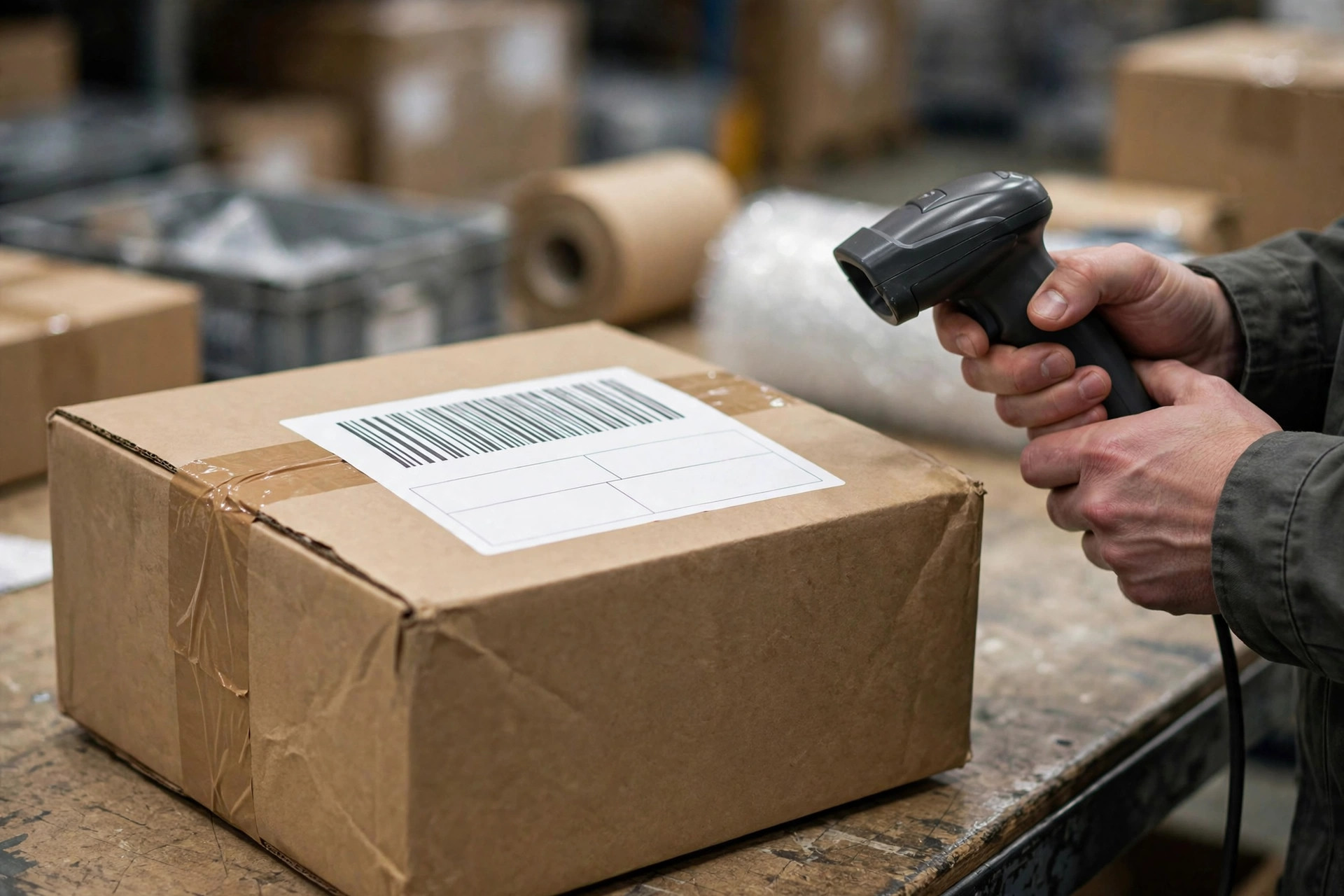
One, scan to verify after every stick. Label goes on the parcel, scanner reads it, the system confirms the match, and only then is the job done. Eyeballing no longer counts, even during peak season.
Two, exceptions go through three steps. Check the system first — whatever can be solved inside the system stays inside the system. If the recipient must be contacted, use the virtual number in the system, never a personal phone. If the virtual number fails, hand it to customer service. The packing station does not improvise its own way to reach the recipient.
Three, stubs get managed separately. Label stubs are collected the same day and locked in a cabinet. They do not leave the packing area. No photos, no group chats. Who took how many stubs gets counted at end of shift. If the count is off, nobody leaves until it is resolved.
Four, returns get their own lane. A return parcel comes in, and we match it against the return record in the system first. If the label and the system disagree, the parcel goes to the exception zone and waits for customer service confirmation. Nobody contacts the returning recipient privately, and nobody adds them on WeChat.
Five, new hires hear three rules on day one: no copying, no photos, no private contact. Do not copy personal information onto paper. Do not photograph it into a group chat. Do not contact recipients from a personal phone. These three go into onboarding, and new hires sign that they heard them.
Six, system permissions get split. Packing station accounts see only the fields needed to print labels — not the recipient's full phone number. The fewer people who can see the full record, the better. Do not assume your system vendor set this up by default. You have to configure it yourself.
Every one of these rules was paid for, not written for fun. The wrong-label morning made the recheck a hard rule. The stub photo made stub management a hard rule. In a warehouse, rules are never just written down. They are earned.
A word on the legal side: the masked-label practice I am describing comes from China's parcel industry, under the framework of the Personal Information Protection Law. The specifics are governed by the latest laws, regulations, and platform rules, and that is the authority to follow. Our warehouse operates under the requirements set by the platforms and the company. But one point is common sense: a recipient's phone number and address are personal information, and once they pass through your warehouse, keeping them safe is your responsibility.
It is worth a quick comparison for readers outside China. In the United States, parcel labels typically still print the recipient's full name, address, and phone number — there is no federal rule requiring masking, and the exposure on the label itself is simply accepted as normal. China's masked-label approach chose the other trade: mask the label, and push the burden of verification onto the warehouse's systems and processes. Neither approach makes the information safe by itself. The American label leaves the front door open; the masked label locks the front door while the warehouse still has to guard the back rooms.
One reminder for fellow warehouse folks: do not treat masking as the finish line. Masking the number is step one. The real ledger comes after — the recheck at the packing station, the exception process, the stub cabinet, the returns lane, and the phone in every employee's pocket. Get those accounts straight, and masking actually delivers. Leave them messy, and the information walks out of your warehouse no matter how nicely the label is masked.
By Chen Feng, Warehouse Operations Manager