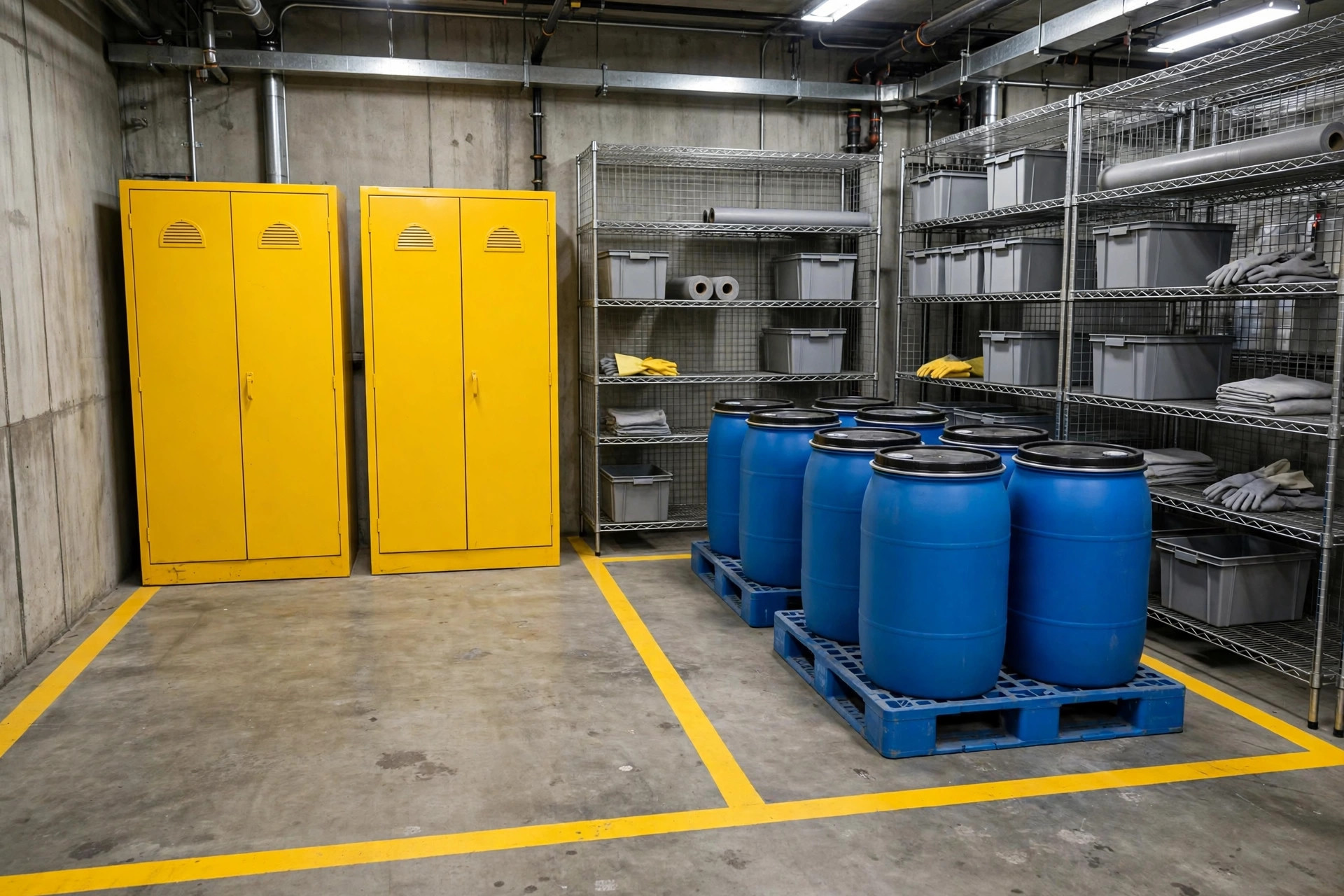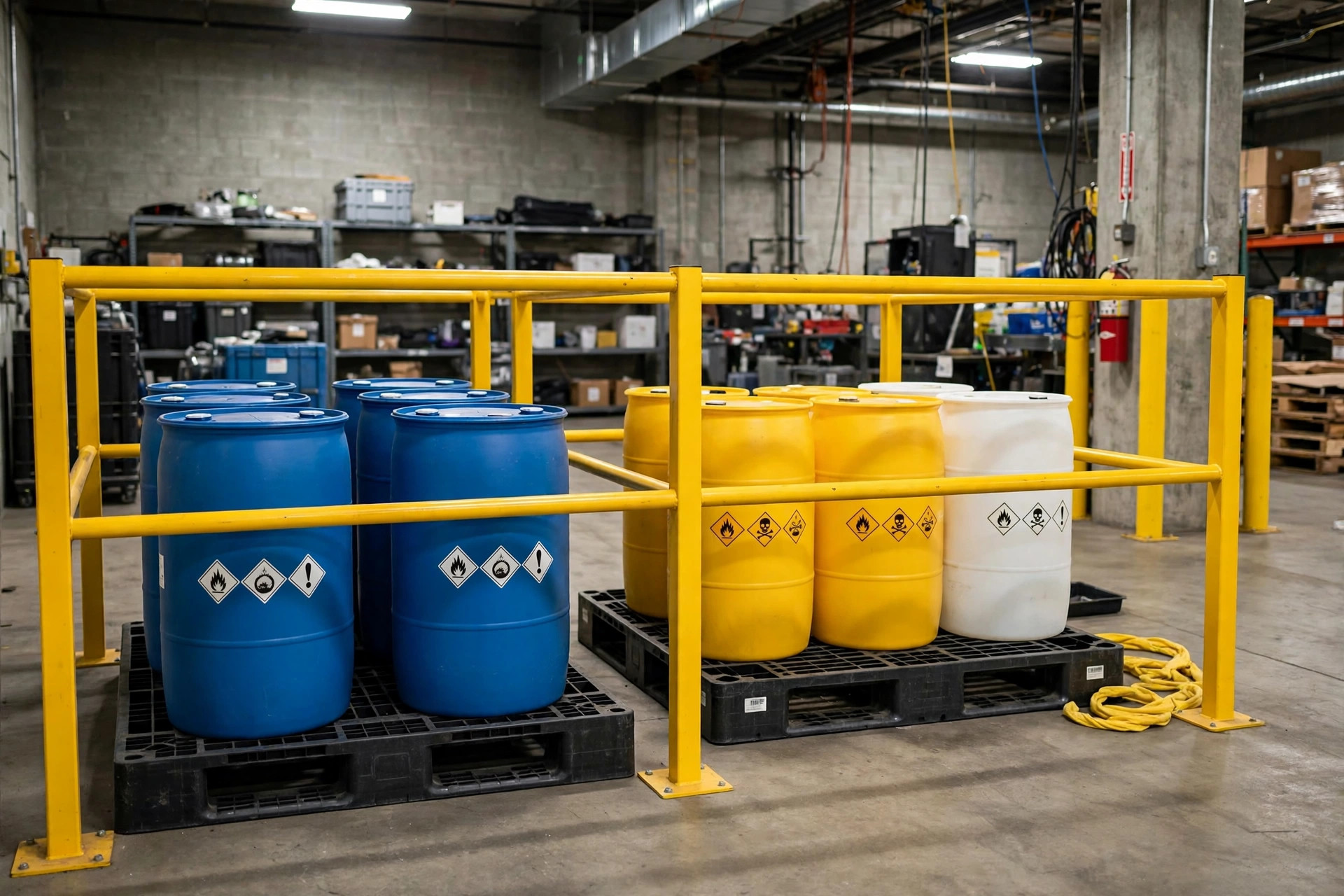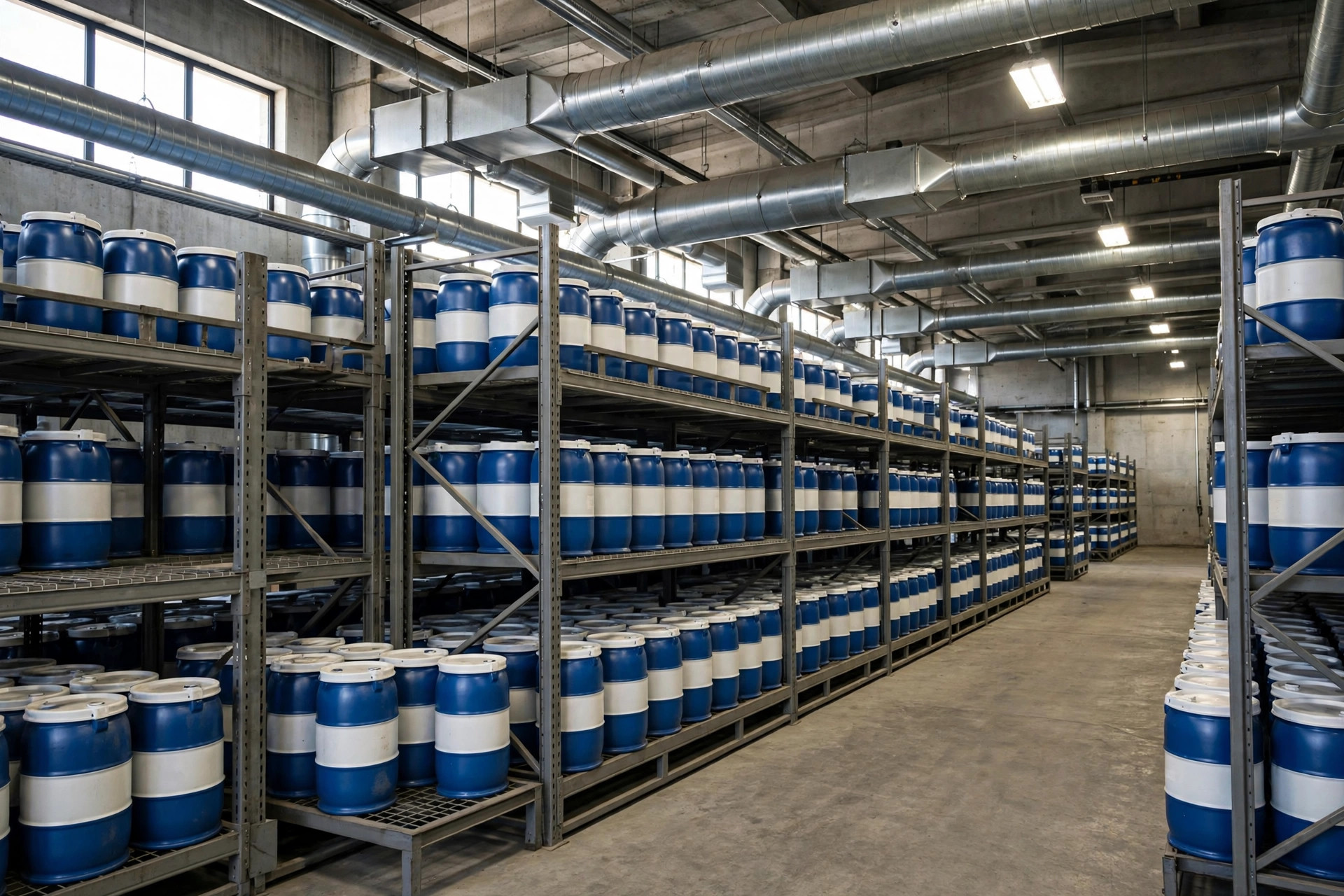
Every summer, the same old problem returns to chemical warehousing on schedule: how to store low-flash-point solvents through the hot months. The concept of flash point is familiar to anyone in the trade — it is the lowest temperature at which a liquid gives off enough vapor to ignite, and it is the first yardstick for how dangerous a given solvent really is. Put flash point next to summer warehouse temperatures and the logic is brutally simple: when the temperature inside the warehouse approaches or exceeds a solvent's flash point, evaporation accelerates, vapors accumulate in low spots and dead corners, and any ignition source — a non-rated switch, a forklift exhaust, even static — can trigger a flash fire. Once you see this chain clearly, summer temperature control and ventilation stop being a box-ticking exercise for inspectors and become what they actually are: risk management.
What Flash Point Really Means: Classification Decides How You Store It
The classification logic runs one way: the lower the flash point, the lower the threshold for releasing ignitable vapor, and the stricter the storage requirements. Under the widely used GHS framework, flammable liquids are grouped into tiers by flash point and initial boiling point — liquids flashing below 23°C sit in the high-hazard tier, with those boiling at very low temperatures in the most dangerous sub-category; the 23–60°C band is a middle tier; above 60°C is relatively mild. National standards in China follow a similar logic of dividing low, medium, and high flash point liquids by flash point ranges. I should note that the exact cut-off values and clause numbers should be checked against the current edition of the applicable standard and your local emergency management authority — what matters here is the order of magnitude and the logic.
Line up the flash points of common solvents and the problem becomes concrete:
| Solvent (examples) | Flash point, order of magnitude | Hazard tier | Summer storage grading |
|---|---|---|---|
| n-Hexane | around -22°C | Highest | Dedicated fire compartment, explosion-proof electrics throughout, mechanical ventilation always on, tightest temperature control |
| Acetone | around -20°C | Highest | Same as above; avoid operating during peak afternoon heat |
| Ethyl acetate | around -4°C | High | Explosion-proof zone, top-tier ventilation air-change requirement |
| Toluene | around 4°C | High | Same as above; note its vapor is heavier than air and pools low |
| Methanol | around 11°C | High | Explosion-proof zone; watch the compounded toxicity risk |
| Ethanol / Isopropanol | around 12–13°C | High | Same as above |
| Xylene | around 25–27°C | Middle | Still an explosion-proof zone, but temperature pressure is one notch lower |
| High-flash mineral spirits | above 60°C | Relatively mild | Standard hazmat handling; temperature logging still needed in summer |
(Flash point figures are commonly cited orders of magnitude from public references; values shift with purity and test method — always go by the batch's SDS.)
The single judgment this table is meant to support: in summer, for the solvents flashing below 23°C, warehouse temperature is effectively "over the limit" all year — they are not dangerous only in summer, summer just amplifies the danger. In an ordinary warehouse with a metal roof and no insulation, indoor temperatures above 40°C on a summer afternoon are unremarkable, and that already exceeds the flash points of more than half the solvents in the table above. Once vapor is being generated, everything depends on ventilation.
Why Summer Is the Danger Season: Three Chains
The first chain is temperature to evaporation. As temperature rises, vapor pressure at the liquid surface rises with it, and so does the evaporation rate — pure physics, indifferent to how well the warehouse is managed. When warehouse temperature climbs from 25°C to 40°C, the evaporation rate of some solvents can multiply severalfold, and a ventilation system sized for spring and autumn duty simply cannot keep up.
The second chain is ventilation to accumulation. Natural ventilation runs on temperature differential and wind pressure, and in summer the outdoors is hot too, so the differential collapses and natural ventilation underperforms exactly when it is needed most. Many warehouses' natural ventilation designs deliver only on the order of 1–3 air changes per hour, while mechanical ventilation can reach 6–12 air changes per hour or more (follow your local emergency management authority's requirements for hazmat warehouses). Summer is precisely when natural ventilation is weakest and demand is highest — that mismatch is where many incidents begin.
The third chain is the human one. Heat makes shifts grueling and inspections perfunctory; ventilation equipment — especially explosion-proof fans — runs at sustained high load and fails more often; hot work or maintenance scheduled during peak afternoon heat stacks the risks. In publicly reported incident reviews, one storyline keeps recurring: "the ventilation unit had been down for hours before anyone noticed."
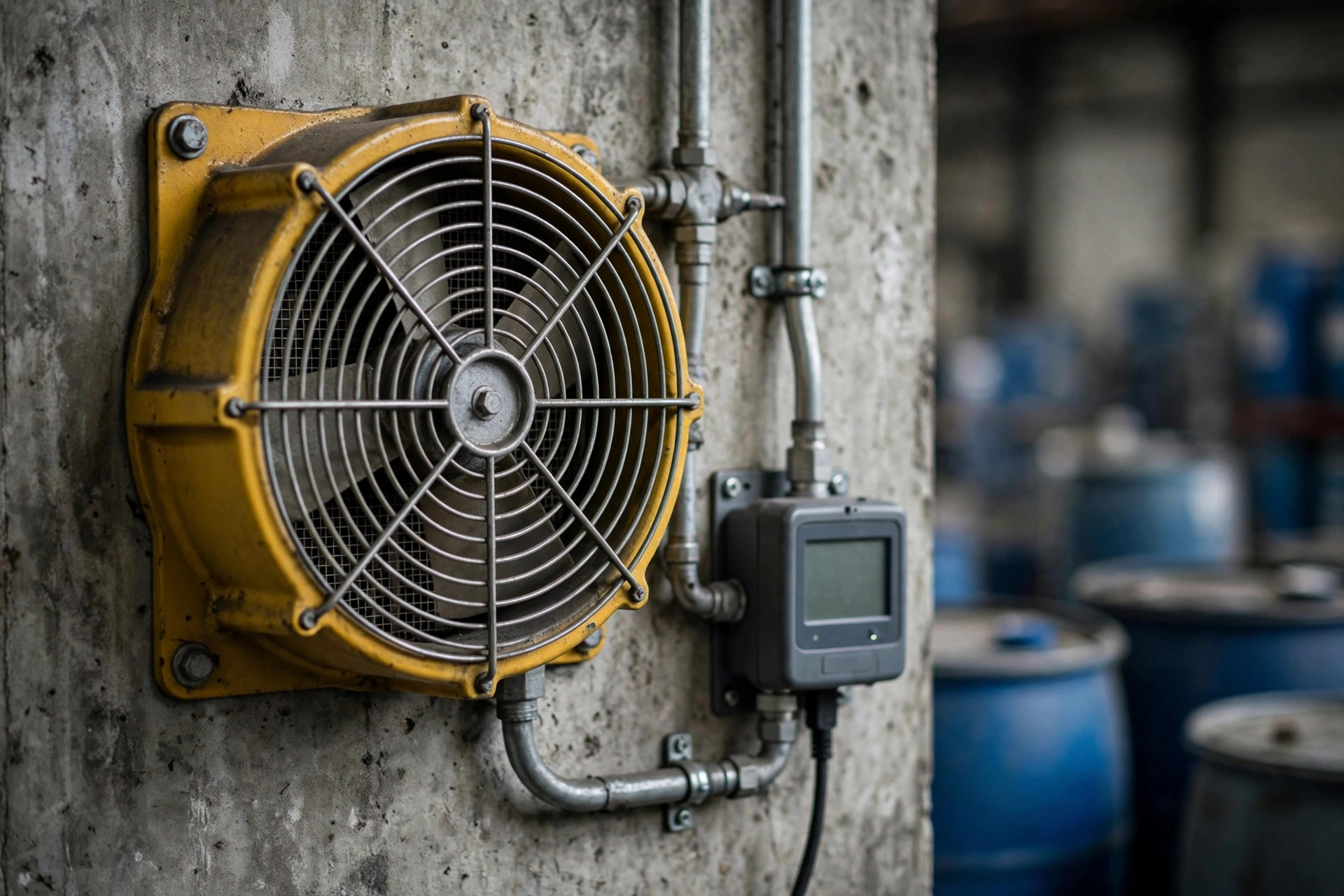
In August 2022, a solvent transit warehouse in eastern China ran through all three chains: during a sustained heatwave, afternoon indoor temperatures exceeded 45°C, an explosion-proof axial fan serving the toluene zone (flash point in the 4°C range) failed and sat idle for about half a day unnoticed, vapor pooled in low areas and found an electrical spark. The flash fire injured two workers and damaged racking — and the public review was blunt: the warehouse had a ventilation design, it just had no way of knowing the ventilation had been dead for half a day. The industry takeaway is worth every solvent warehouse checking against itself: does your ventilation equipment have running-status monitoring, and if it stops, who finds out first?
The counter-example is a good one. In the summer of 2023, routine inspection at a solvent warehouse in southern China found that between 3 and 5 p.m., indoor temperatures were repeatedly creeping toward the internal control limit set for a batch of ethyl acetate. The response that evening was decisive: two explosion-proof axial fans were added, summer inspection rounds went from three to six per day, and manual temperature logs were replaced with automatic recorders plus an over-temperature text alert. Nothing approached the red line for the rest of the summer. The cost, by the warehouse's own accounting, was two fans and a few extra labor shifts — an order of magnitude below what a single incident would have cost.
Temperature Red Lines and Ventilation: Three Things to Get Right
First, set the red line. A warehouse temperature limit should not be a made-up number; the logic should run backwards from the lowest-flash-point solvent in storage, with a safety margin, to derive the indoor temperature ceiling. Once the line is set, temperature and humidity records must be continuous and traceable — three manual readings a day is not enough in extreme heat; automatic loggers with over-temperature alarms are the more reliable approach. The records are also compliance evidence you can actually produce during an inspection.
Second, do the ventilation math. Know whether your building relies on natural or mechanical ventilation and what its real air-change rate is. If it is natural ventilation, face the summer reality — small differentials, poor performance — and compensate during hot hours: open doors and skylights, bring in temporary fans. If it is mechanical, the critical question is whether the fans are actually running: running-status indication, failure alarms, and a standby fan matter more than the airflow figure on the nameplate. The eternal weak link in ventilation is "it failed and nobody knew."
Third, staff the rounds. Summer inspection frequency has to go up, and the hot window — typically the afternoon — should focus on three checks: is temperature approaching the red line, is the ventilation equipment actually running, and is hot work or maintenance being kept out of the peak-heat window. Many warehouses move to rounds every two hours in summer; treat that as a reference order of magnitude, and let your own risk assessment and local requirements have the final say.
With Extreme Heat Becoming Routine, Are the Old Standards Still Enough?
That is the open question I want to leave. Over the past decade, the frequency and intensity of extreme heat events have been climbing — a trend the public meteorological record confirms. Yet much of the ventilation design and temperature-control practice in chemical warehousing still assumes the climate of a decade ago. When the variable itself — the number of days above 40°C in a year — keeps growing, are the air-change rates and inspection frequencies that used to be "enough" still enough? There is no standard answer, but it is a calculation every solvent warehouse manager should run before this summer ends: take this year's actual peak indoor temperatures and actual ventilation operating records, and re-validate your red line and your air changes. If the answer comes back "just barely enough," then next year it probably will not be.
By Dr. Chen, Supply Chain Researcher