Amazon changed the rules again.
Effective January 15, 2026, FBA removal fees dropped — standard small items went from $1.04 down to $0.84 per unit. Sounds like good news, right? Don't celebrate yet. The mountain of returns sitting in your overseas warehouse isn't getting any smaller, and the "abandon or ship back" question is still a killer.
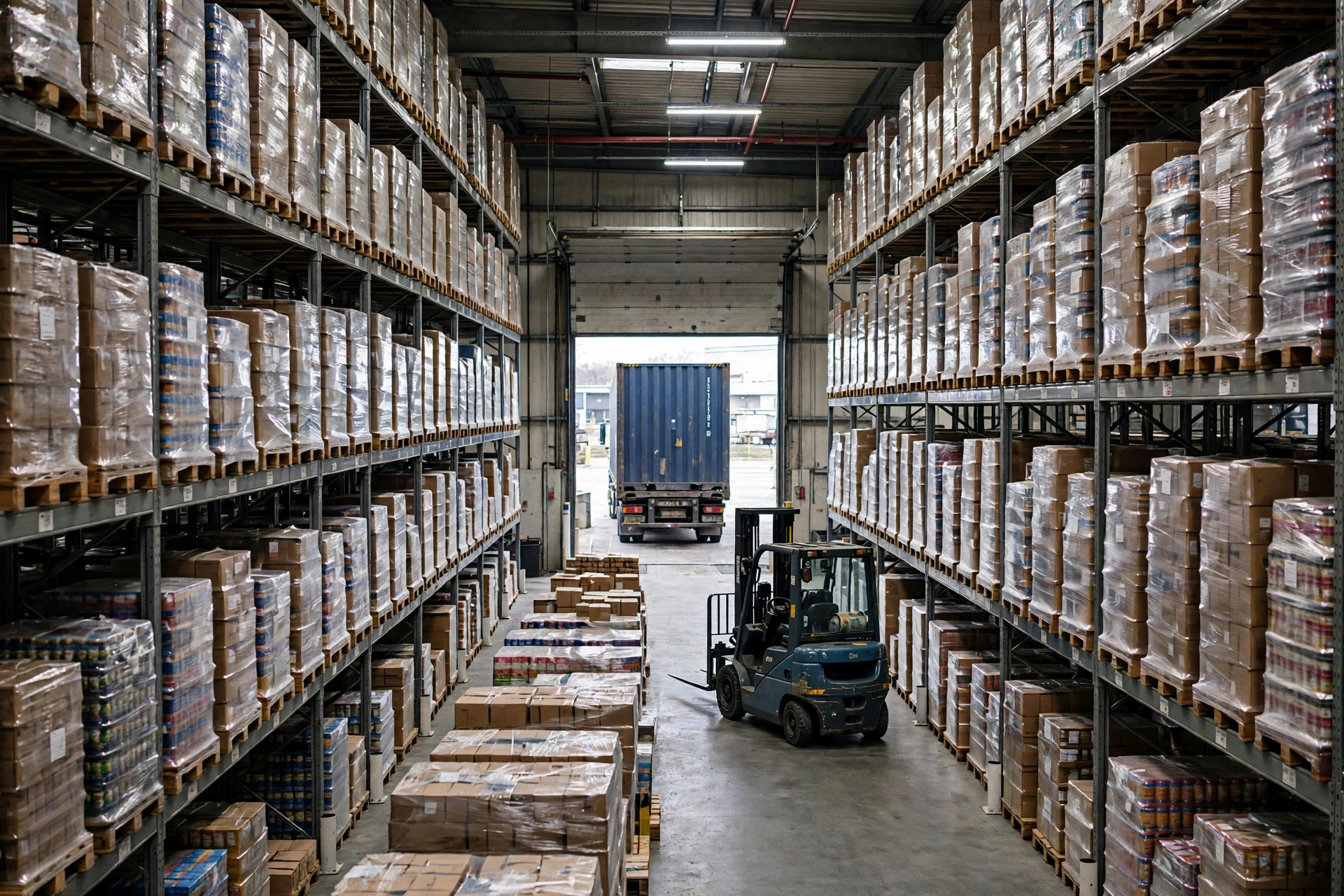
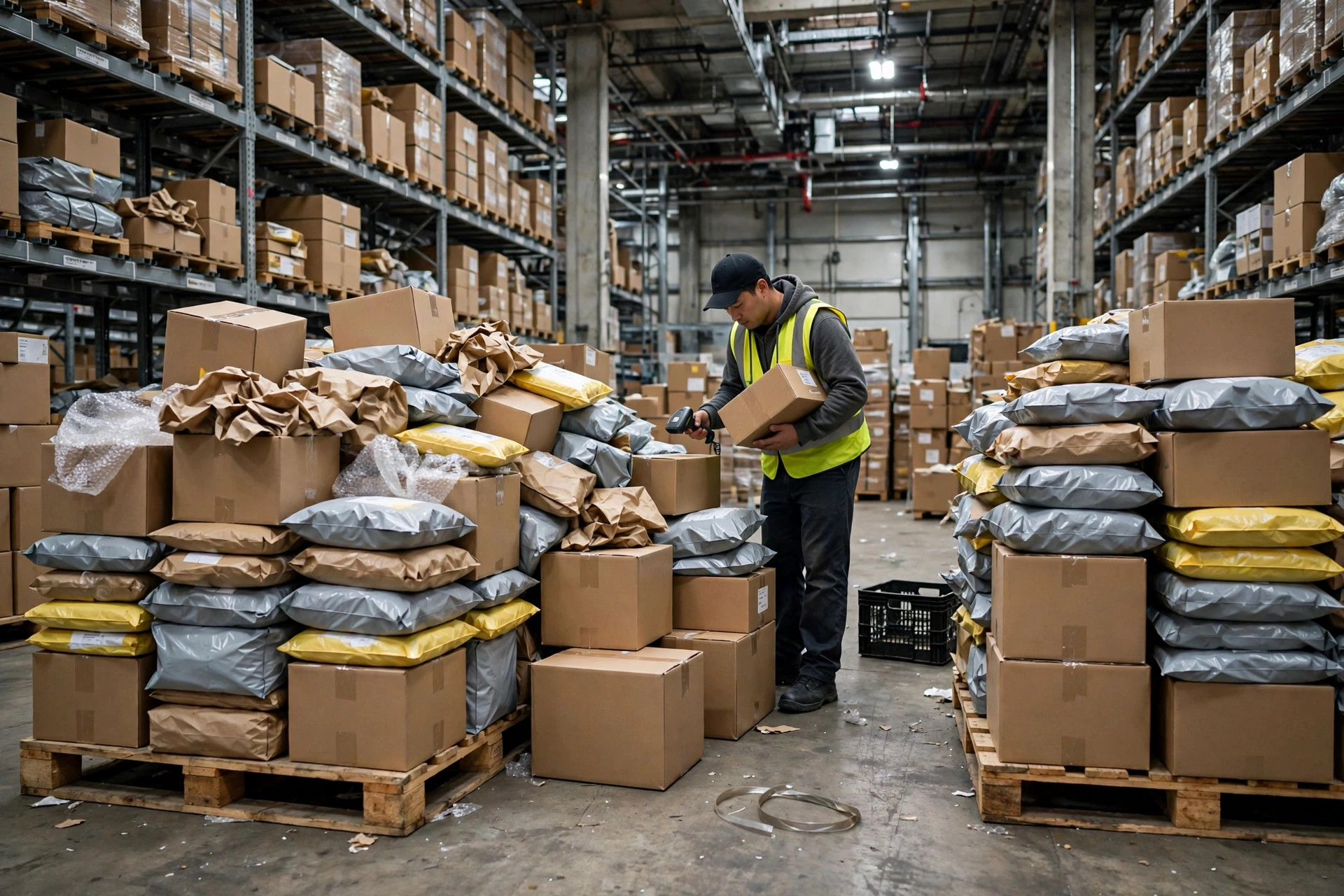
After Black Friday last year, the returns area at my 3PL warehouse in Ontario, California was completely full. 312 small kitchen appliances stacked to the ceiling. My warehouse manager kept messaging me: "K, are you keeping this stuff or not? Keep it and you keep paying storage. Don't want it, we start the disposal process."
Abandon it and it hurts — that's real money tied up in inventory. Ship it back to China and the freight bill hurts just as much.
I've been wrestling with this for five years. Here's my actual playbook, books open.
Sort Your Overseas Warehouse Returns Before You Do Any Math
Most sellers get step one wrong: the moment returns land at the warehouse, they jump straight to two options — dump them or ship them back.
What I do first is spend a little money: pay the warehouse to inspect and sort every return into three buckets.
Bucket A: looks fine, works fine, can be resold as-is. Bucket B: needs light refurbishment — new packaging, new labels, a firmware reflash. Bucket C: broken, missing parts, or out of season. Basically dead.
Inspection cost me $0.50 per unit at the time — $156 for 312 units. That money is mandatory. Without sorting, every calculation after this is guesswork.
Here's what you learn after sorting: only Bucket B is worth agonizing over. Bucket A goes straight to local clearance channels for quick cash. Bucket C gets abandoned, eyes closed. The real question is always the same: is Bucket B worth the freight to rescue?
Abandon vs. Ship Back: One Table, Real Numbers
First batch. November 2024, right after Black Friday: a $29.99 kitchen gadget, 312 returns. After sorting: 89 units in A, 140 in B, 83 in C.
Here's what I was quoted at the time.
The abandon route: $0.80 per unit disposal fee. The C units plus the B units I decided to give up on — gone within a week, no more storage fees.
The ship-back route: ocean freight for roughly 2 cubic meters, all-in costs working out to $4–6 per unit — and that was before domestic warehousing and re-inspection back home. Plus 40-plus days on the water.
I ran the numbers: $29.99 retail, about $12 per unit in product plus inbound freight cost. Spending $5 to ship it back, then paying labor to inspect and refurbish it, for a secondhand unit that won't even sell at full price again. The more you rescue, the more you lose.
Final call: abandoned all 83 C units and all 140 B units. Kept only the 89 A units and cleared them at $9.99 each through a local discount channel — recovered a little over $800.
Did it hurt? Yes. But that's what cutting losses looks like.
Second batch, the opposite story. March 2025: my $79.99 smart LED lamp, 18% return rate for the quarter. I pulled the return reasons — half of them said "couldn't connect to WiFi." Not a quality problem. My manual just didn't explain pairing clearly enough.
High-ticket item, big Bucket B. Different math: about $6 per unit for return freight, $8 per unit for refurbishment back home (firmware reflash, fresh packaging, new labels). Shipped 400 units back, 340 came back to life and relisted at $69.99. Conversion was a bit lower than a brand-new listing, but ACoS stayed under control and they sold through in two months.
That math works: $14 to rescue a unit that sells for $69.99.
Put both bills side by side and the decision framework writes itself:
| Abandon | Ship back to China | |
|---|---|---|
| Direct cost per unit | Disposal fee ($0.80/unit in my case) | Freight + customs ($4–6/unit in my case) |
| Time | Cleared within a week | 40–60 days in transit |
| Fits | Low-ticket, defective, out-of-season goods | High-ticket, refurbishable, resellable goods |
| Hidden cost | Basically none | Cash tied up, re-inspection, stockout risk |
One warning: every quote above was what my warehouse and my forwarder charged me at the time. Rates vary wildly between providers — get a fresh price sheet before you act, and don't treat my numbers as market rates.
The Most Expensive Part Isn't Freight. It's Time.
Most sellers stare at freight costs when they run this math. That's the biggest mistake I see.
The real cost of shipping returns back is time. Your goods spend 45 days on the ocean while your US listing goes out of stock and your ranking slides. To defend ranking you raise ad spend, ACoS jumps from 25% to 40% — that damage costs way more than the freight ever did.
Seasonal products are even more brutal. Ship Christmas inventory back in October, it lands in December, the season is over, and now you're stuck with it.
So here's my hard rule: check your cover period before you ship anything back. If your current inventory won't last until the returns come home, abandon them and don't hesitate. One stockout tanks your listing weight, and the ad spend to recover it costs ten times the freight.
And one counterintuitive conclusion: abandoning isn't admitting defeat — it's stopping the bleeding. Shipping back a low-ticket item means spending $5 in freight to rescue a unit worth $3 in residual value. Accountants call it sunk cost. Sellers call it "I just can't let go." Not letting go is the most expensive emotion in this business.
Four Pitfalls, Consider Yourself Warned
First: shipping back an unsorted batch without inspection is burning money blindfolded. The inspection fee looks like a cost — it's actually what saves you the real money.
Second: never ship goods back right before peak season. Do the transit math — 40 to 60 days. Timing a return shipment against peak season is suicide.
Third: use a proper, compliant disposal process for abandoned goods. If a warehouse quotes you suspiciously low, ask whether the quote includes compliant disposal documentation. One environmental fine in the US will ruin your whole year.
Fourth: Amazon's removal/disposal fees and your 3PL's disposal fees are two separate bills. FBA inventory follows Amazon's rate card (standard small items at $0.84 per unit since January 15, 2026 — rates change, check Seller Central for the latest before you file). Third-party warehouse inventory follows your warehouse's price sheet. Don't mix them up.
My process is fixed now: returns land, get inspected and sorted. A goes to local clearance, B gets the value test — ship back or abandon — C gets abandoned on the spot. Two years on this system, and my returns-handling costs are down roughly 40%.
Tested it myself. It works.
By Ah K, E-commerce Seller (5 yrs)