Let me give you the punchline first: Senegal cashew export warehouse storage logistics is not really about equipment — it is about the time gap. Harvest season lasts a few months; vessel schedules run all year. Everything in between — ten, fifteen, twenty months of inventory — sits in your warehouse, and whether you make money or lose it comes down to drying, moisture control, and inspection discipline. I have seen too many traders price the ocean freight to the penny and then bleed out in the warehouse.
Look at it from both sides. Done right, the warehouse is your leverage: buy cheap at harvest, dry and hold it yourself, ship in the off-season, and pocket the price spread. Done wrong, it is a money pit: over-moisture, mold, weevils — a few points lost on outturn and the whole margin is gone.
The One Number That Rules Senegal Cashew Warehouse Storage: Moisture
Raw cashew nuts going into storage in Senegal need to sit at roughly 0.8% moisture. Above 1%, expect mold. Below 0.6%, kernels go brittle and your outturn drops. That 0.2-point window is the entire difference between a cashew warehouse and a generic dry-goods shed. I am not exaggerating.
Back in 2019 I visited a Chinese trader's warehouse outside Dakar. Nuts trucked up from Ziguinchor, the main producing region in the south, never went straight to stacking. First stop: moisture testing, three bags sampled per truck. Anything over 1% went to a separate zone for re-drying immediately; only 0.8% and below entered long-term storage. That one triage step cut his mold loss from the industry-typical 3% to under 1% across the season. The difference between 3% and 1% on 4,000 tons a year is about 80 tons — at two to three thousand dollars a ton export value, that is over two hundred thousand dollars. The dryer paid for itself many times over.

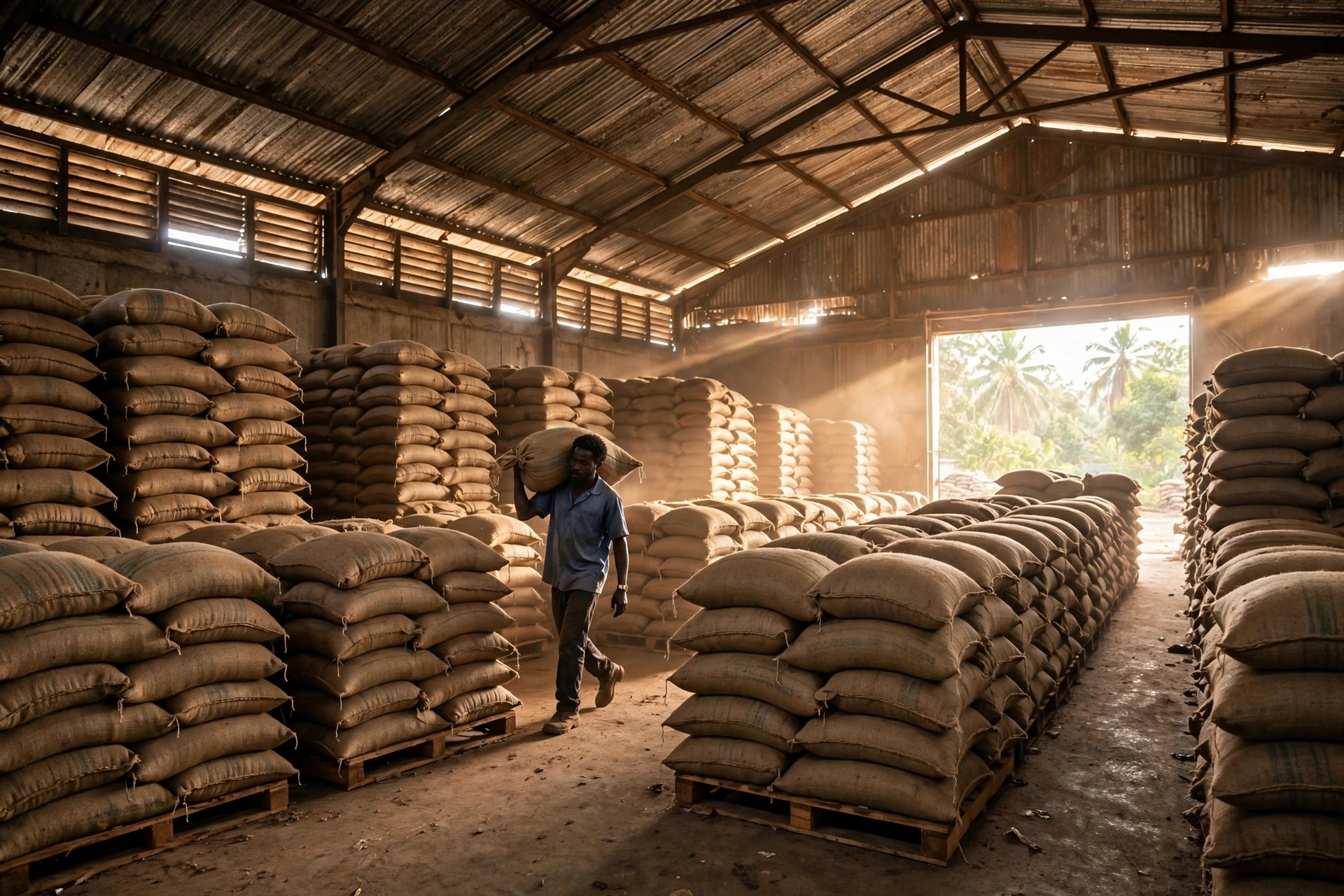
One more practical detail most people skip: stacking. Jute bags go on pallets, never directly on the floor, with aisles wide enough for a person to walk and inspect every stack face. In a humid climate, the bags at the bottom of a tall stack are where mold starts — if you cannot reach them to sample, you do not have a warehouse, you have a blind spot. His rule was simple: no stack higher than eight bags, sampled from the bottom bag monthly. Boring work. It is also the work that keeps outturn above 47.
So here is my blunt take: a cashew warehouse in Senegal without re-drying capability is just a parking lot. The equipment does not need to be fancy — one continuous dryer plus a moisture meter. Small investment, and it is the only reason you can sign a twelve-month shipping contract with a straight face.
Where the Money Goes in Cashew Export Storage
Let us run the numbers. Say you buy 3,000 tons of raw nuts in one season and need to ship evenly across twelve months:
| Cost item | Rough level | Note |
|---|---|---|
| Warehouse rent (Dakar area) | Per pallet/month | Seasonal harvest means ~1,500 tons average inventory — rent is fixed |
| Re-drying energy | Tens of dollars per ton | Rainy-season harvest almost always needs a pass |
| Inspection (outturn) | Hundreds of dollars per batch | 47–52 lbs outturn is a hard contract term |
| Fumigation | Quarterly | Unavoidable in a tropical warehouse |
| Capital tied up | 8–12% annualized | The invisible giant — holding stock for 12 months |
The last line is the one everyone underestimates. Financing 3,000 tons for a full year often costs more than rent plus drying combined. One trader I respect runs a simple rule: if projected storage cost exceeds 60% of the expected price spread on a lot, sell it at harvest and do not hold. Holding inventory is about earning the spread, not about sentiment. If the math does not work, do not hold.
Outturn 47–52 lbs: What It Really Means for Storage
Most export contracts set outturn at 47 to 52 pounds — how many pounds of whole kernels you get per 80 kilos of raw nuts. Below 47, the buyer discounts you. Above 50, you can negotiate a premium.
Storage feeds directly into this number. Too wet, kernels mold and discolor, whole-kernel rate falls. Over-dried, kernels break, same result. So the warehouse's weekly routine translates to three things: test moisture, check for weevil damage, sample outturn. Log it every week. When the trend slides, ship early. Do not wait.
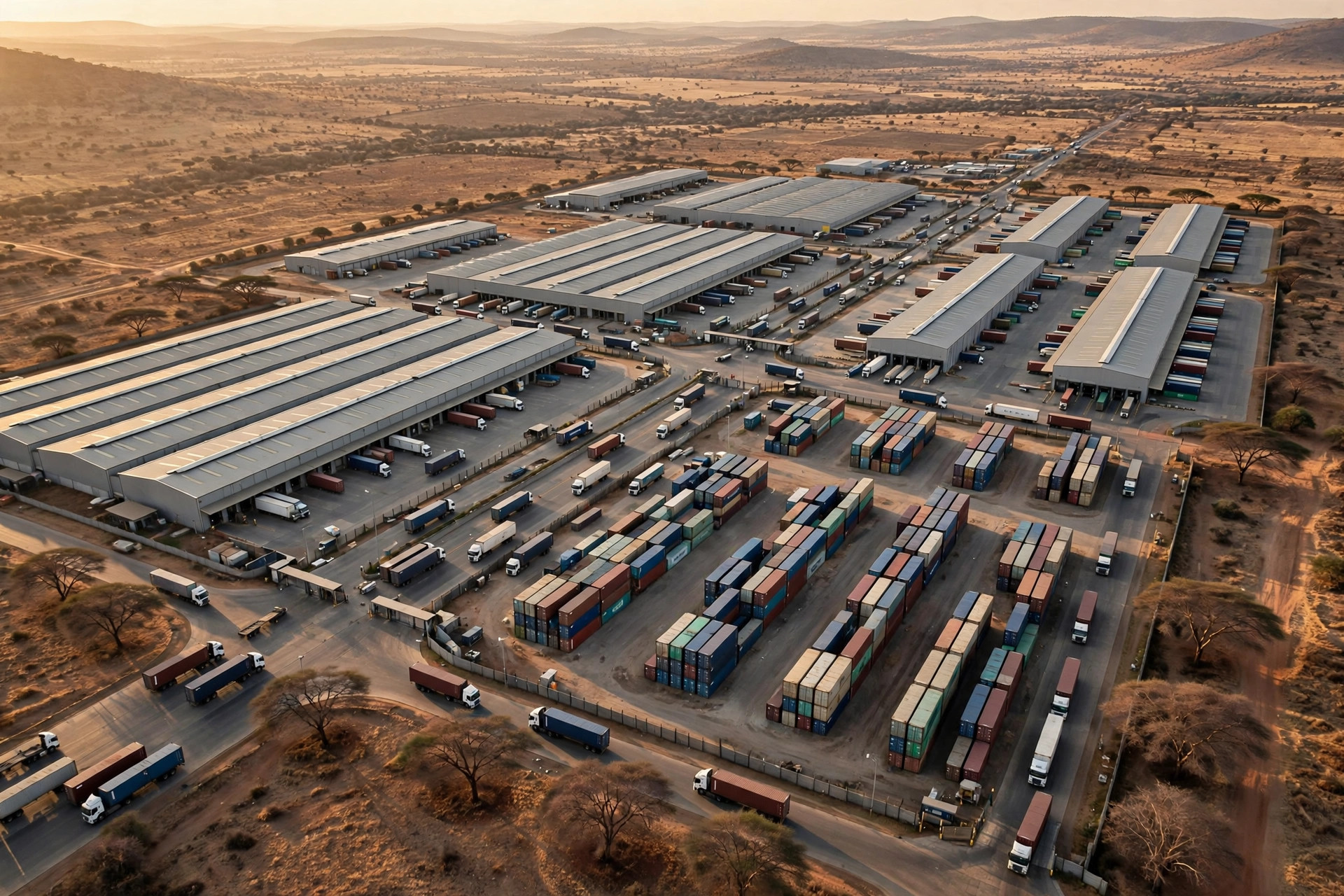
For context on scale: in the 2024 season, roughly 180,000 tons of cashews moved through the Port of Dakar. At that volume, warehouse space near the port is hard currency during harvest — rents spike. After the season, empty sheds everywhere. Veterans lock in warehouse contracts six months early and negotiate 30% off. Newcomers who show up at harvest time pay whatever is asked.
The Port and the Ships: Variables Beyond Dakar
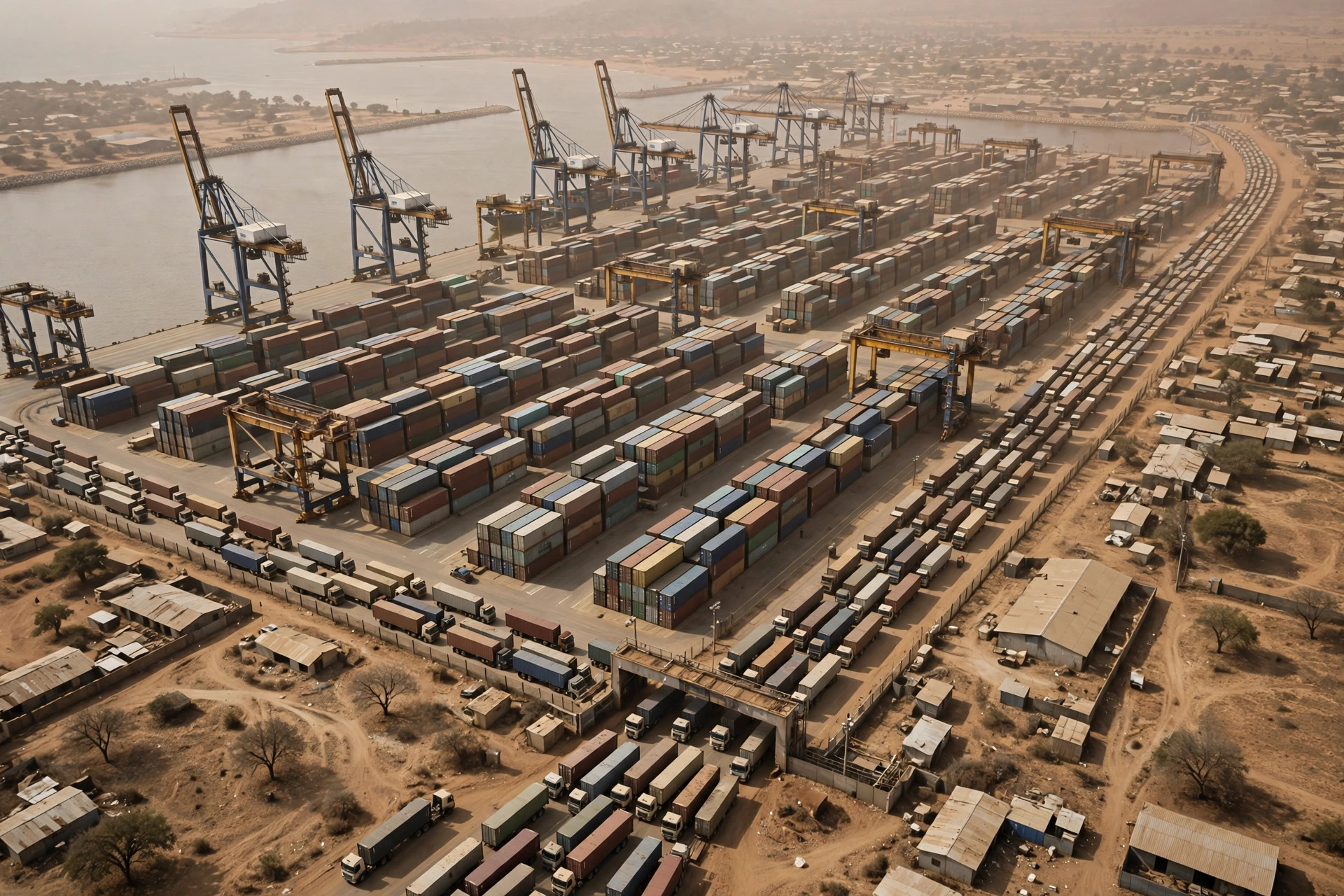
Two more variables worth watching. First, vessels: 2,000-ton bulk carriers like the MV Diogue are the workhorses of regional short-haul movement, and their schedules dictate your outbound rhythm — the warehouse's shipping plan follows the vessel, not your mood. Second, the new Ndayane port, a $1.2 billion project under construction, should ease Dakar's congestion once operational — but warehousing around the new port is currently a blank slate. My call: the two years before Ndayane opens are the window to secure land and sheds nearby. Once everyone sees it, the price will not be what it is today.
Both sides, as always: the new port is a long-term positive, but the 3-to-5-year construction window carries real uncertainty — timelines, supporting infrastructure, customs efficiency. Keep warehouse contracts flexible with a six-month exit clause. That is my standard advice to every client doing infrastructure-follow plays in Africa.
One Last Thing
The Senegal cashew business buys at harvest and sells in the off-season — you are monetizing the time gap. Whether that gap turns into profit depends entirely on whether your warehouse can hold moisture at 0.8% and outturn above 47. Miss either one, and what you are holding is not inventory. It is risk.
So ask yourself one question: would your warehouse sign a twelve-month shipping contract today? If not, fix drying and inspection first, then talk about holding stock.
By Lao Mi, Supply Chain Veteran (20 yrs)