Let me tell you something. I've been driving trucks for fifteen years and I've never set foot in Argentina. But I've sat in a two-day queue outside the Port of Long Beach—engine off, engine on, going nowhere. That feeling is the same in every language. So when I started digging into Argentina soybean export logistics, I didn't start with the spreadsheets. I started with the drivers. And let me be clear about one thing up front: our site already covered Argentina's SEDI import rules—that was the import side, customs paperwork coming in. This is the other direction: how soybeans get out, from the Pampas to the ship, and how a shallow river can choke the whole thing. Every number below comes from a public source I could check, 2026 vintage. If I couldn't verify it, I didn't write it.
Rosario's Truck Queue: Gate One of Argentina's Soybean Export Chain
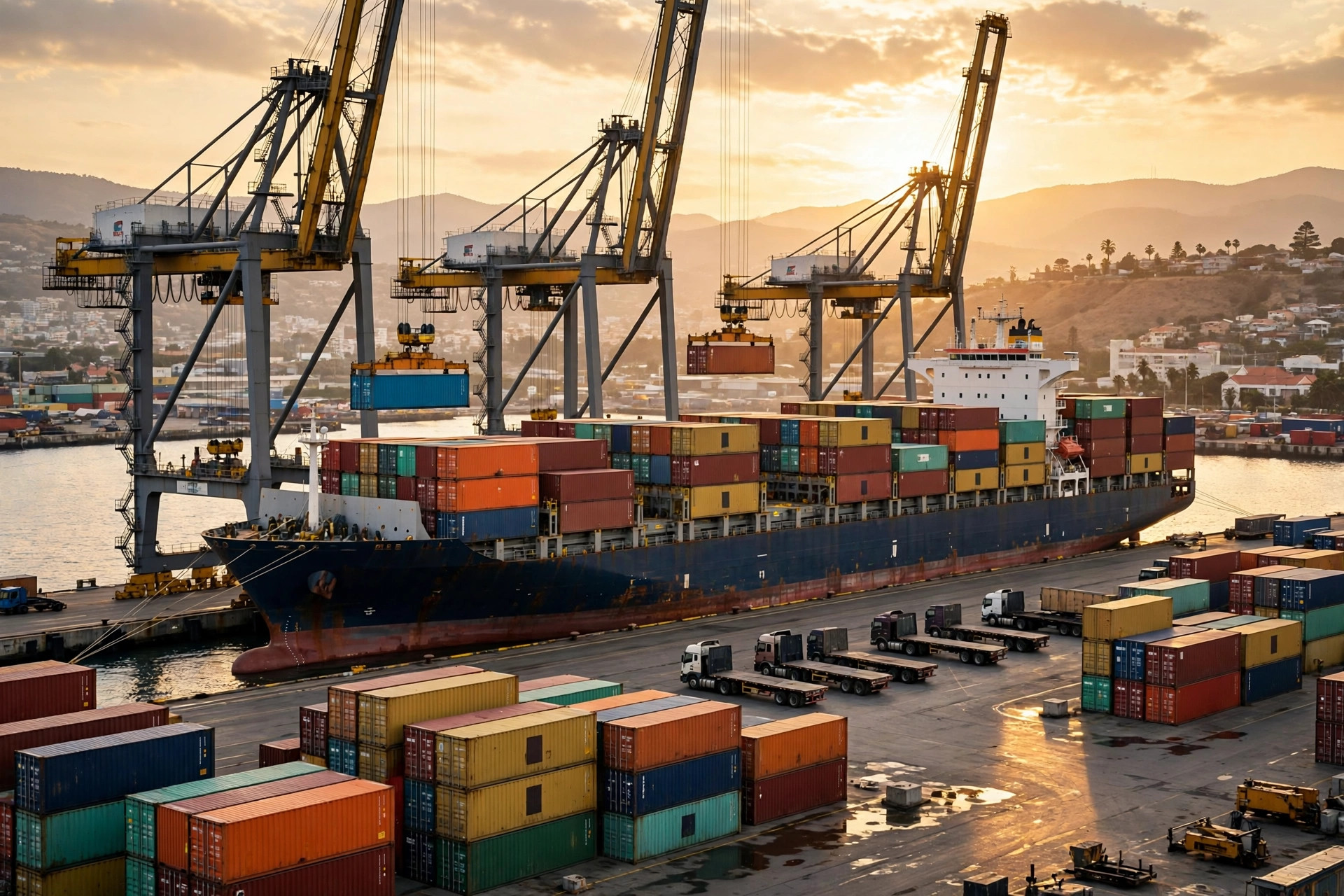
Rosario sits on the Paraná River in Santa Fe province. Argentina is the world's number-one exporter of soybean meal, and soybeans account for more than a third of the country's total exports. Most of that leaves through the Rosario port cluster—not one terminal but a string of silos, crush plants, and docks running for miles along the river, Argentina's main soybean gateway to the world.
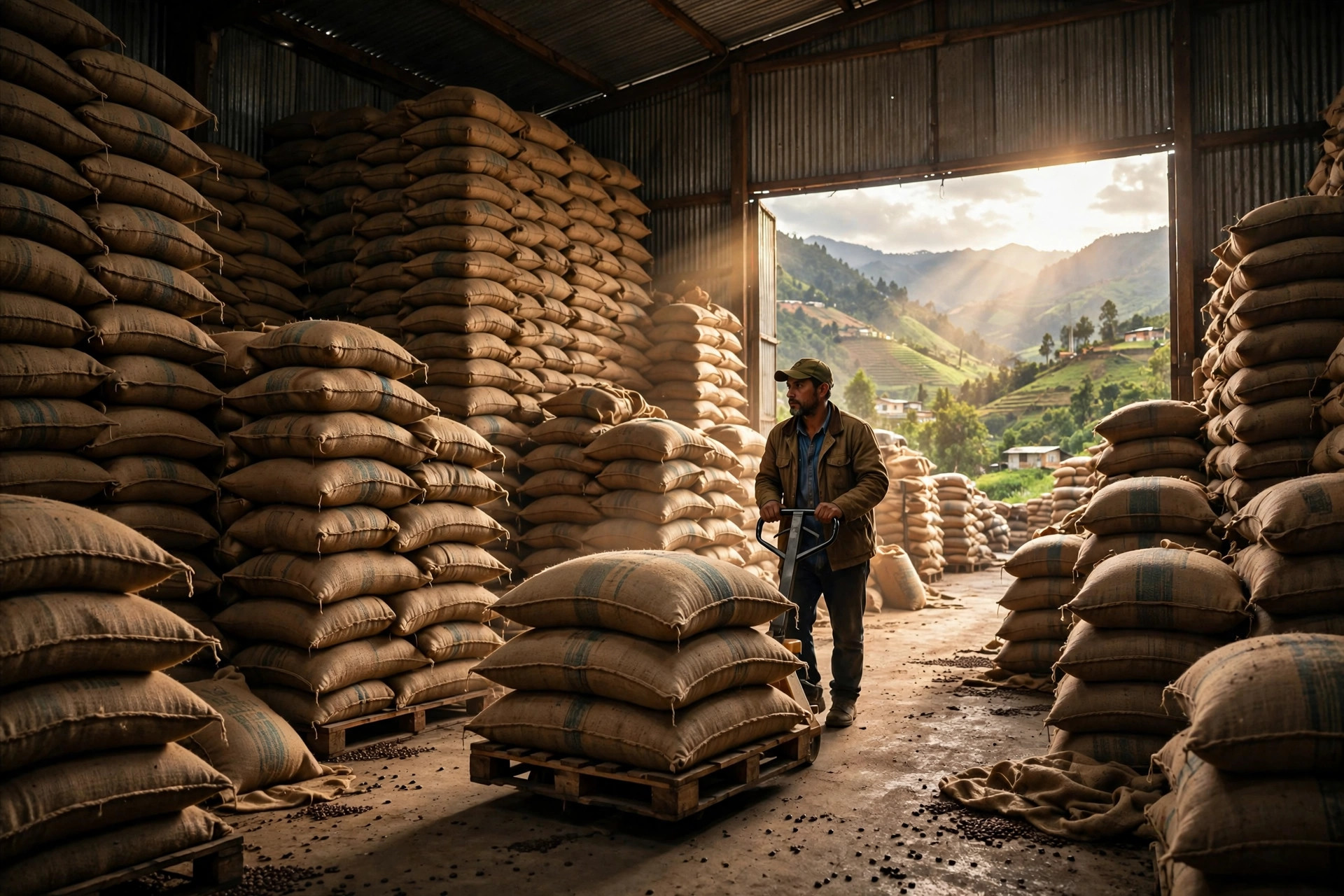
Picture this. COFCO International's complex at Timbúes, just north of Rosario, takes in around 900 trucks a day at peak season. Storage capacity: 90,000 tons. Annual crush: 2.3 million tons of soybeans. Nine hundred trucks a day means the receiving gates basically never stop. Come harvest, the highways into Rosario are nothing but grain trucks, drivers parked on the shoulder for a day or two, eating and sleeping in the cab. Same as Long Beach. Different cargo.

Up in the Pampas, the chain starts at inland collection warehouses. Trucks are the whole game in Argentina—rail barely plays a role—so the first gate is really the road. When highway capacity tightens at harvest, freight rates spike and the collection warehouses start holding beans, waiting for Rosario's silo cluster to open a receiving window.
When the Paraná Runs Low, Argentina's Export Logistics Bows to the River
Here's the part that matters most. The Paraná is Rosario's highway to the ocean; bulk carriers load up and sail downriver to the Atlantic. When the water drops, ships can't load to full draft. Shallow water means light loading. Light loading means the ship sails half-hungry.
The 2026 numbers: drought on the Paraná has already cost around US$240 million, and more than 60 vessels have been hit by draft restrictions. Big bulkers are light-loading 3,200–4,300 tons; a typical Panamax is giving up around 10,000 tons—roughly 20% of its cargo.
Let me do the trucker's math. A grain truck hauls about 28 tons. Ten thousand tons is more than 350 truckloads. So one light-loaded vessel equals 350-plus trucks that drove all the way to the port, dumped into the silo, and now sit there waiting for the next ship. Timbúes has 90,000 tons of storage, which sounds like a lot—until a few light-loaded Panamaxes stack up and the silos fill. Full silos mean trucks can't unload, and the queue gets longer. See the chain? The draft limit doesn't just slow the ship. It backs all the way up the highway.
The Triangle: Silos, Water, and Sailing Schedules
This is the twisted part of Argentina soybean export logistics: three players in a tug of war—the silo cluster (storage), the river draft (water), and the vessel schedule (ships). Everyone wants to run on their own clock. Nobody gets to.
Here's the timeline. Argentina's soybean harvest runs roughly March through June, and that's when the truck flood hits. The shipper wants the beans out while prices are good. The terminal wants steady in, steady out, no overflow. The shipowner has a sailing window of a few days—miss it and the vessel waits, burning charter money. When draft restrictions hit, the ship either sails light (and the freight cost per ton jumps) or sits at anchor waiting for water (and demurrage ticks up by the day).
Here's the math most people get backwards: a ship that sails 20% light doesn't save anyone money. The owner's cost per ton goes up. The shipper's 350 truckloads sit in the silo, racking up storage fees and tied-up capital. And the sailing window is the real killer—grain exports are seasonal, Brazil and the US are competing for the same vessels, and missing one sailing can mean missing a price window. In this triangle, nobody wins. The only question is who loses less.
One more variable: dredging. Argentina is pushing to deepen the Paraná navigation channel from 36 to 39 feet, and the 25-year Hidrovía waterway concession went to a consortium led by Jan De Nul. Deeper water would ease the draft squeeze. But that's tomorrow's fix for today's harvest—like I tell every rookie, when they're repaving ahead of you, you still have to take the detour today.
Straight Advice for Shippers and Warehouses
Fifteen years on the road taught me a few things. For anyone working Argentina soybean export logistics:
First, don't put everything in the port silos. When draft is restricted, the port silo is the most awkward place in the chain—grain comes in, ships can't take it away, and there's no room for the next trucks. The inland collection warehouses become the lifesaver: they hold the truck flow back so the port only receives what the ships can actually carry. The value of storage isn't how much you can hold. It's holding the rhythm when the water is low.
Second, read the draft along with the sailing schedule. When you fix a vessel, don't just look at the freight quote—ask one question: can this ship load full at Rosario? A ship sailing 20% light can cost more per ton than a pricier one that loads full. Do that math yourself. The shipowner won't do it for you.
Third, lock in harvest-season trucking early. March to June is when highway capacity is tightest. Spot trucks at harvest mean either higher rates or no trucks at all. A seasonal commitment with a carrier beats the spot market—and beats watching beans pile up at the collection warehouse.
And one trend to watch: with the US–China tariff fight pushing Chinese buyers toward South America, Argentine soybean volumes are only going to draw more attention. More volume means this storage–water–ship chain gets pulled tighter. The players who build slack into their warehousing and scheduling now are the ones who'll catch this wave.
There's an old saying among drivers: if you don't check the road conditions before you leave, don't curse when you're stuck in traffic. On Argentina's soybean road, the road condition is the river level. Read the water, and you've read the whole warehousing equation.
By Shifu Zhao, Trucking Veteran (15 yrs)