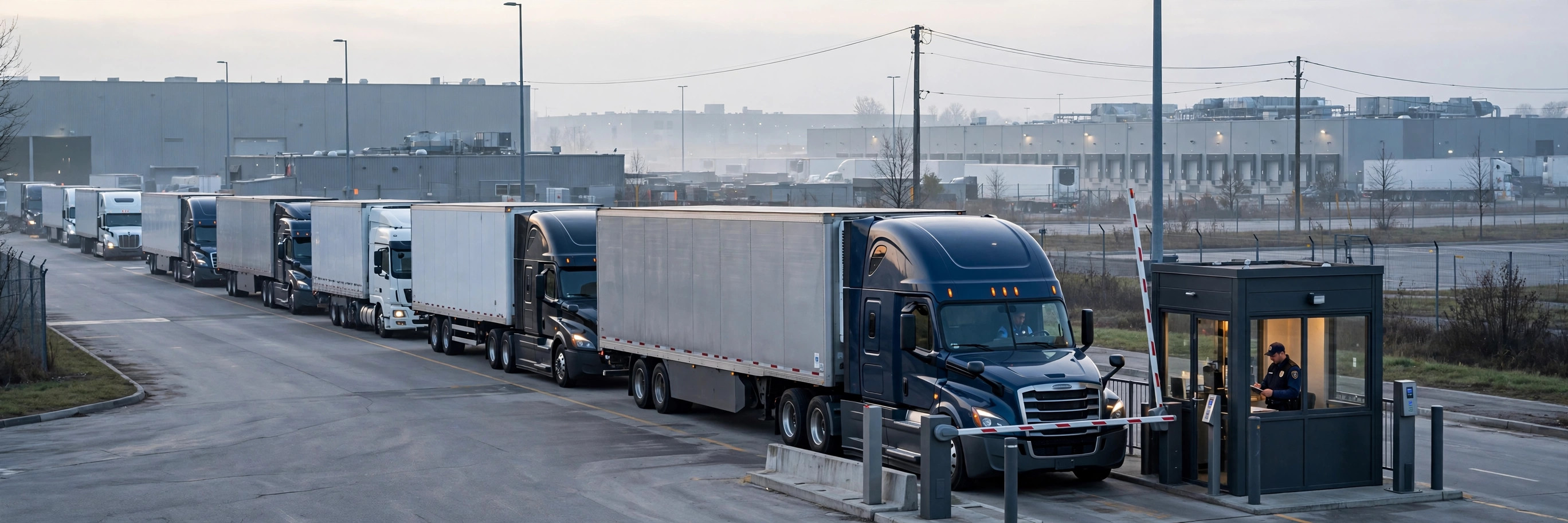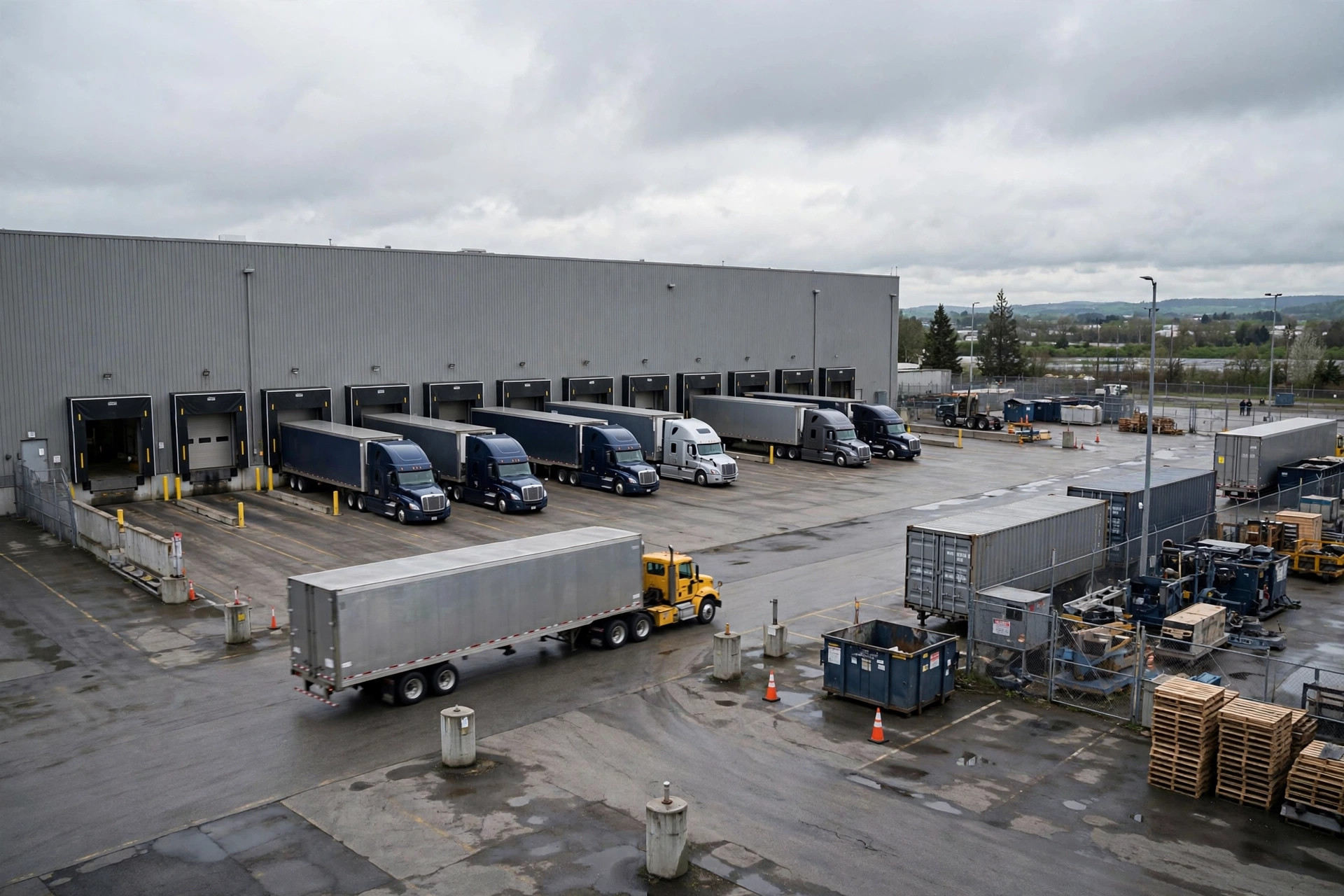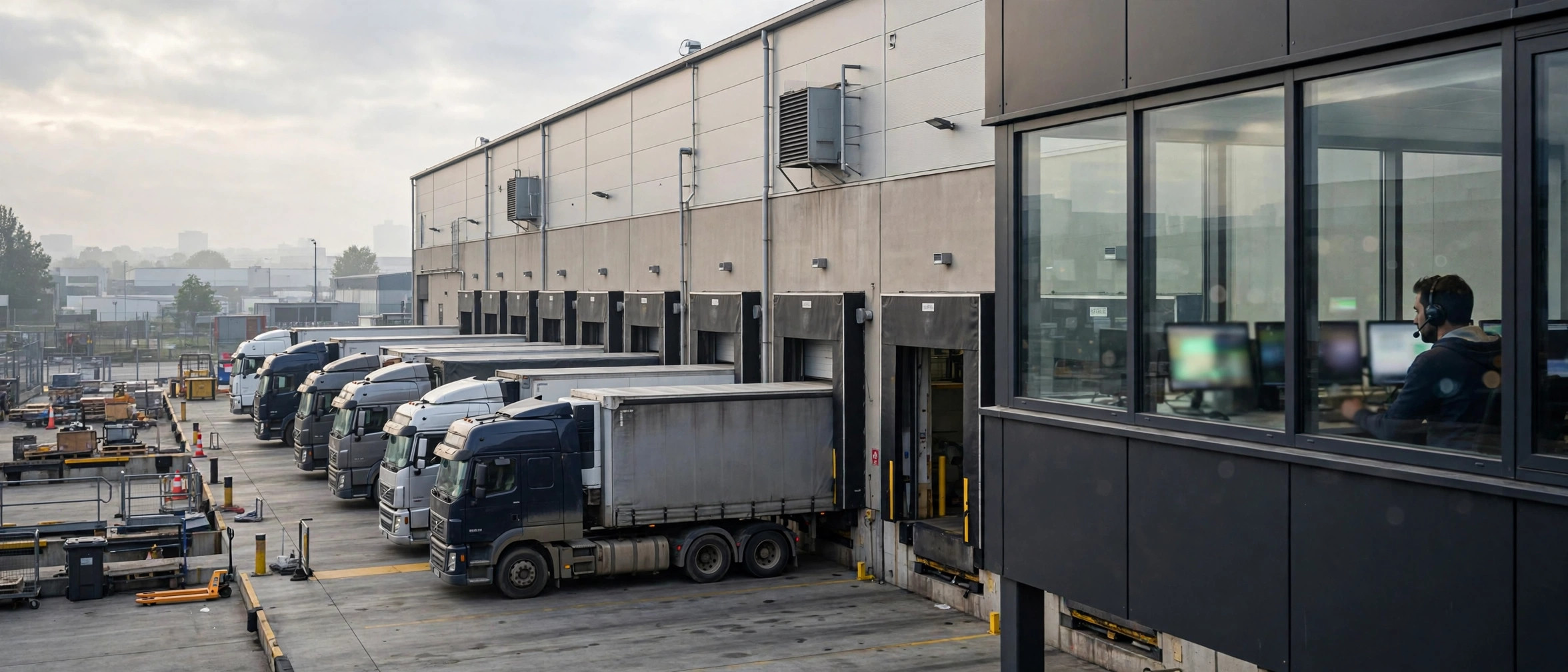
Here's the verdict up front: when a YMS appointment and a WMS outbound wave fail to sync, it's not an integration problem. It's a clock problem. The YMS knows "when the truck arrives." The WMS knows "when the freight is ready." The two to three hours in between belong to nobody — and the driver ends up sitting at the dock for two hours while your wave is still picking.
I've seen this exact pit three times. Not three similar pits. The same one: the appointment number never made it into the wave-release logic, so the truck and the freight ran on two different clocks.
The verdict: YMS and WMS each run their own leg, and nobody owns the gap
About half of my WMS clients also run a YMS. The YMS handles appointments: the carrier books a 10 AM gate slot, the system staggers arrivals by time window, the driver checks in with the appointment number, the gate releases, a dock door gets assigned. The WMS handles outbound: orders drop in, waves get released, pick, pack, verify, load.
Sounds complete. In practice, exactly one human connects the two — the dispatcher, matching appointments to waves over the phone, over chat, and in his head. At 80 appointments a day in peak season, he can't keep up.
Two systems running smoothly on their own does not mean they're coordinated. If the appointment number can't drive the wave-release logic in the WMS, your YMS is just an expensive vehicle logbook.
The pit I've seen three times: a 10 AM appointment, an 11 AM wave
The first time, 2023, a 3PL apparel warehouse in Riverside — 80,000 square feet, 3,000+ orders a day in peak. The carrier had a 10 AM pickup appointment, plain as day in the YMS. The WMS wave? Released at 11 AM, because the wave policy was "release when 200 orders accumulate," and at 10 AM there were only 140. The logic wasn't wrong. Nobody had told it a truck was waiting.
The driver arrived at 9:50, cleared the gate, got dock door 12. Then he waited. Picking started at 11, then verification and packing, and the trailer didn't roll until 12:40. Nearly three hours of idle time, and the carrier sent a detention invoice. The warehouse manager complained to me about the driver's attitude. I told him the driver was right to be angry — you parked a truck at your dock for three hours.
The fix was unglamorous but it worked: we pushed the YMS appointment number through to the WMS. Every outbound order in the WMS got an appointment-reference field, and we added one hard rule to the wave policy — for any order with an appointment, wave release time = appointment ETA minus (pick time + verify-and-load time + 30-minute buffer). At that warehouse, pick plus verify-and-load averaged 90 minutes, so a 10 AM appointment meant the wave released at 8 AM sharp. "Did we hit 200 orders" was no longer the only trigger.
The second time, 2024, an e-commerce fulfillment center in Dallas, the pit ran in reverse: the driver showed up two hours early. Appointment at 2 PM, driver at the gate at noon — "I was in the neighborhood." The gate let him in, a dock door was open, and he started leaning on the crew. The WMS wave was back-calculated from 2 PM; picking wasn't scheduled until 1:30. The driver leaned on the horn, the floor team panicked, somebody jammed in a rush order, and on-time shipping dropped 15 points that day.
Lesson: coordination can't only handle "on time." It needs two playbooks — one for early, one for late. A driver two hours early is just as destructive as one an hour late.
The third time was the most instructive. Early 2025, a 3PL in Ontario: YMS and WMS from two different vendors, integration done — but it only synced the appointment number for display, not the timing. Day three of go-live: a 9 AM truck ran an hour late. The YMS rescheduled; the WMS wave didn't move. Freight picked at 8:30 sat at the dock until 11, blocking the door, so the next truck's freight had nowhere to stage. An integrated interface is not the same as coordination.
The playbook: letting YMS appointments drive WMS wave releases
This is my go-live-eve checklist for every YMS-plus-WMS project. Follow it and you dodge all three pits above.
Step 1: Connect the order numbers. Every WMS outbound order must carry the YMS appointment number. No field, no coordination — everything after this is theater. Sync the field from the YMS, or let the carrier link the outbound order number when booking. Either way, one of them has to exist.
Step 2: Lock in the time formula. Wave release time = appointment ETA − (pick time + verify-and-load time) − 30-minute buffer. Use the P80 of historical pick times for that client and product type (not the average — the average will betray you), say 60 minutes; verify-and-load 30 minutes; buffer 30 minutes. A 10 AM appointment means the wave releases at 8 AM sharp. Write the formula into the WMS wave policy. Don't rely on humans doing the math.
Step 3: Pre-assign the dock door. When the YMS assigns a dock door, push the door number to the WMS. Picked freight stages straight to that door — no second round of shuffling. This is the step most projects skip, and then the freight is ready but nobody knows which door it's supposed to go to.
Step 4: The early-driver playbook. At gate check-in, the YMS pushes actual arrival time to the WMS. Within 30 minutes early, business as usual. More than 30 minutes early, the driver may dock and wait, but the WMS does not release the wave early — never insert a rush order to placate a driver. Give the driver a firm load time instead of "just a little longer." A promise beats a shrug.
Step 5: The late-driver playbook. Less than 30 minutes late: wave stays put, freight waits at the dock. Thirty to sixty minutes late: the YMS auto-reschedules the appointment and the WMS replans the wave — that freight rolls into a later wave and the freed dock goes to the next truck. Over 60 minutes: treat it as a no-show, rebook the appointment, and return the freight to the outbound pool. Three tiers, hard-coded, no case-by-case improvising.
Step 6: The escalation line. Driver waiting at the dock over 45 minutes: auto-escalate to the shift supervisor. Over 90 minutes: escalate to the warehouse manager. The YMS logs wait times, and the same data settles the monthly detention invoice with the carrier.
Step 7: The daily 15-minute reconciliation. Every evening, the dispatcher checks tomorrow's appointment list against the WMS wave-release plan. Any appointment without a wave? Any wave without an appointment? Fifteen minutes catches 80% of next-day disasters.
Step 8: Test three scenarios before go-live. On time, two hours early, one hour late. Run all three end-to-end in the test environment — wave release times, dock assignments, escalation notifications — and only then sign off. When the client says "let's go live first," tell them the Ontario story.
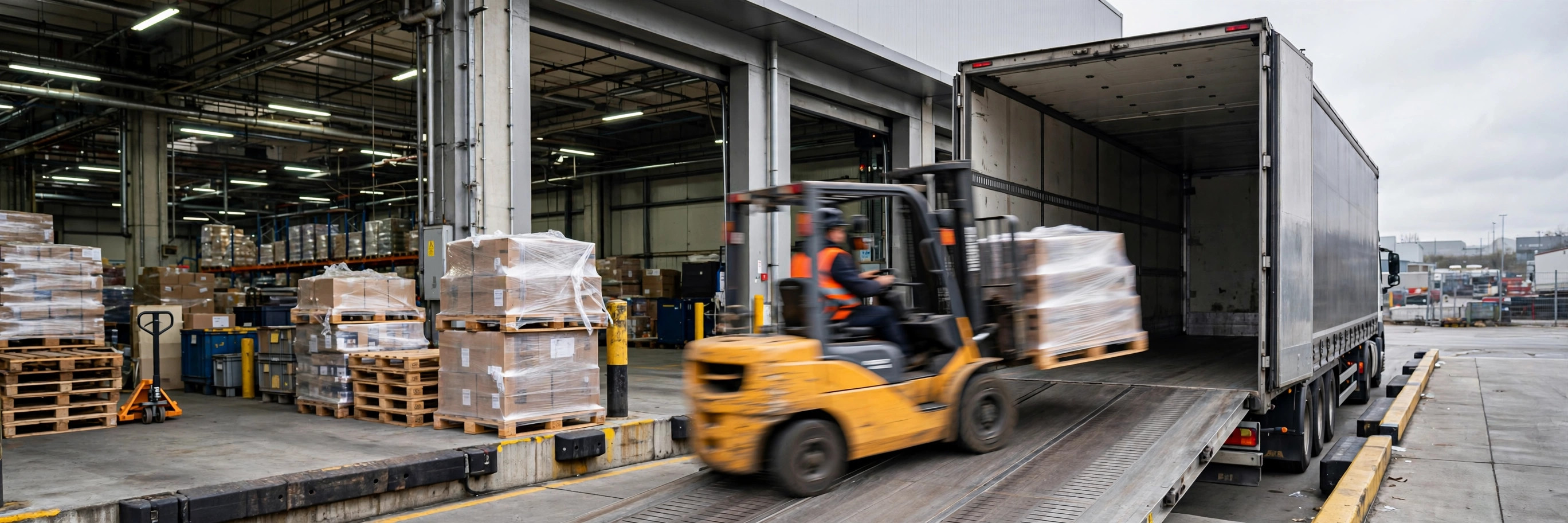
The classic failure: the driver shows up two hours early
This deserves its own section because it's the scenario most likely to be wrecked by "being nice." The driver arrives early, he's polite, he says, "Buddy, help me out, I've got another run after this." The floor lead's heart melts, a rush order goes in. And with it goes the whole wave: pick paths reshuffled, verification queues backed up, afternoon on-time rate in free fall.
My position is firm: an early truck is treated as "not here yet" in the process. Let him dock, get him some water, but the wave release time does not move. The YMS appointment window is a contract, not a suggestion. Break it for today's early driver and tomorrow every driver shows up two hours early — and your wave plan is scrap paper.
The other classic failure is the disappearing buffer. That 30 minutes in the formula exists for the ugly stuff: pick overruns, equipment faults, the network going down. Some clients run three smooth months, cut the buffer to 10 minutes — and blow up on day one of peak season. The buffer isn't waste, it's insurance. P80 pick time plus a 30-minute buffer gets you above 95% on-time; cut the buffer and you're at 80%, and every saved minute gets paid back as detention fees.
One last piece of advice: YMS-plus-WMS coordination is 30% software and 70% getting "when the truck arrives" and "when the freight is ready" onto the same clock — with a script for early and a script for late.
By Lin Xiao, WMS Implementation Consultant