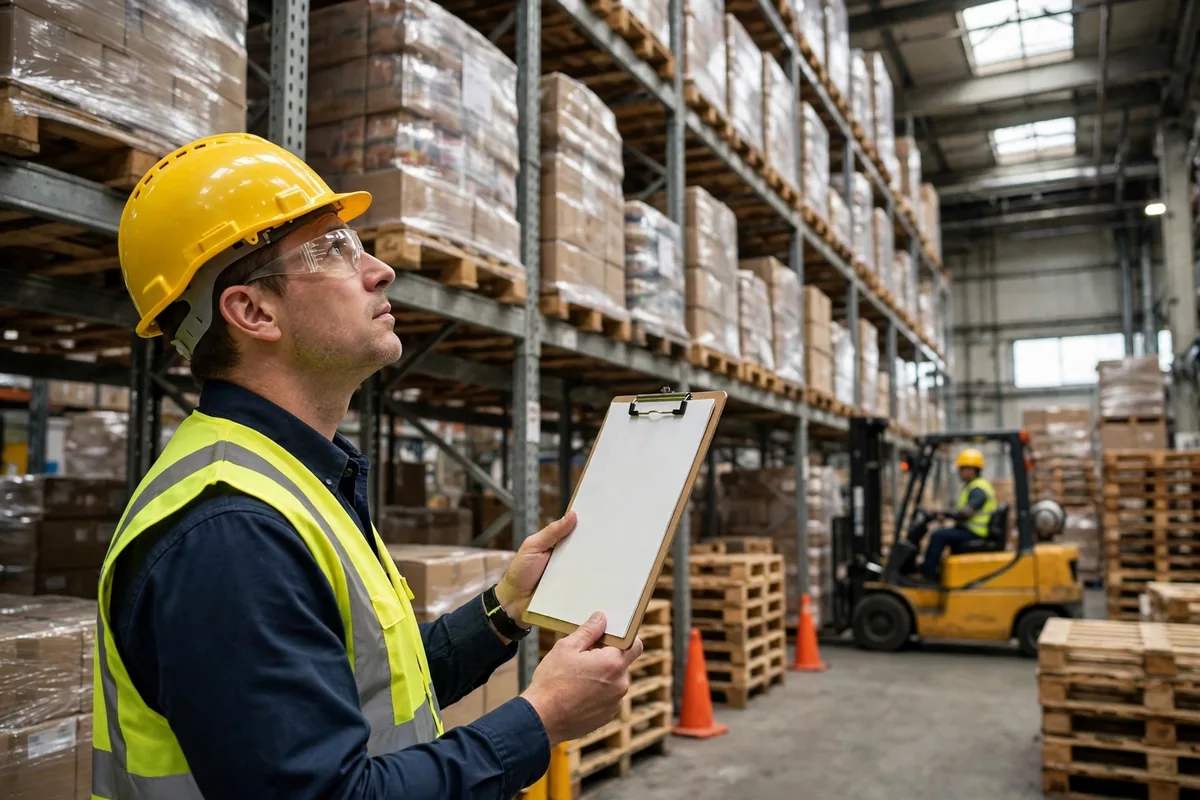
Let me tell you something. After fifteen years on the road, the thing I dread most is not traffic. It is pulling up to a warehouse dock in the morning and seeing two unfamiliar cars by the gate, a few people in hard hats walking in with clipboards. The warehouse manager looks at me and says, quietly, "OSHA is here." An OSHA warehouse inspection had just started, and the whole building froze.
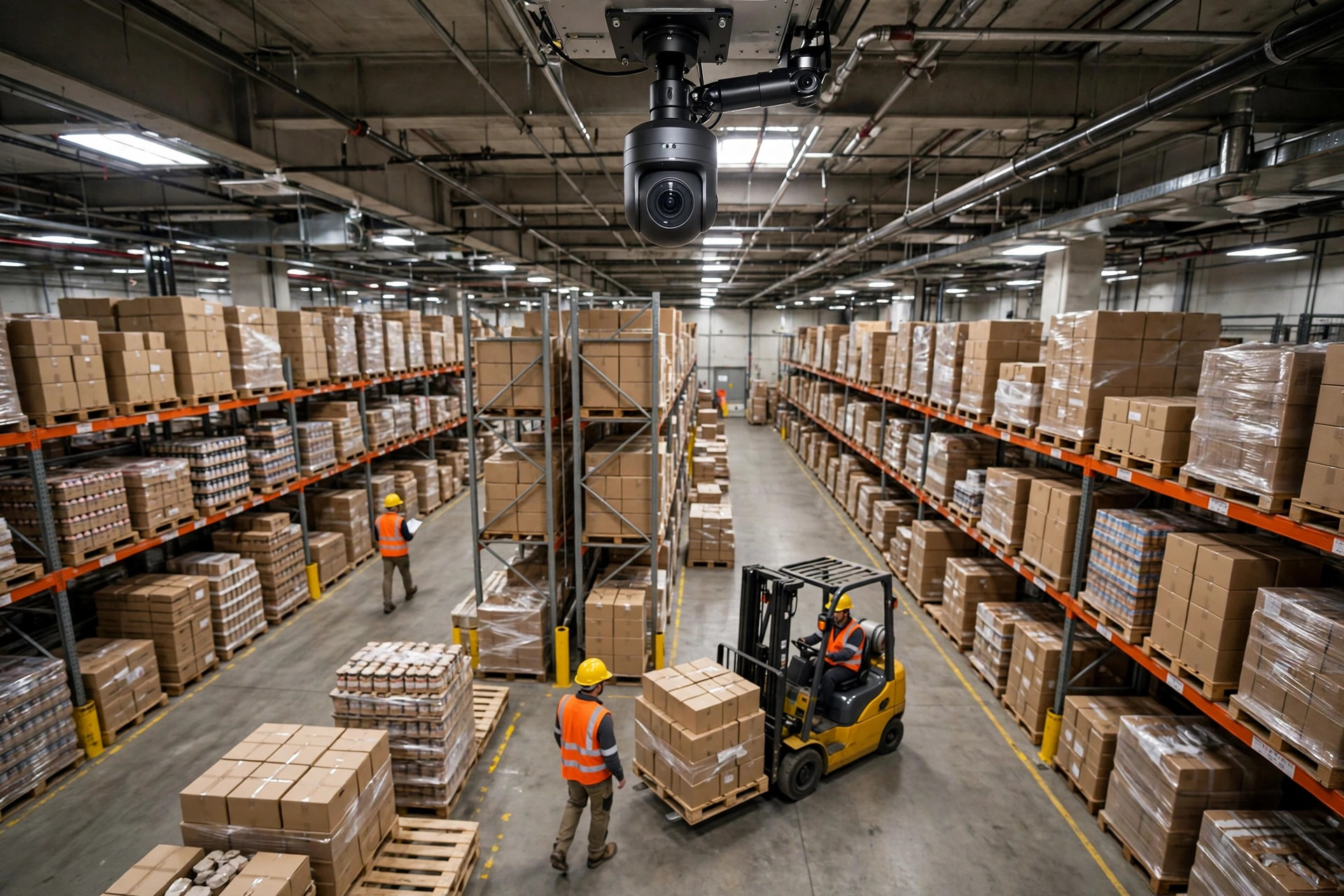
That happened to me one fall morning in Ontario, California. I was delivering to a warehouse of about 30,000 square feet, and I arrived at eight. A normal unload takes me forty minutes. That day I waited more than an hour just to get a dock door. Forklifts were parked. Workers stood against the wall, not sure what to do. The inspectors were not loud or rude. They just walked, looked, and asked questions. When was this forklift last inspected? Why are pallets stacked in this aisle? Whose boxes are in front of that fire extinguisher?
My load did get unloaded eventually. But that warehouse basically lost the day. When I went back a few weeks later, the manager told me the inspection had produced several citations and the fixes took weeks. I asked him which one stung the most. He pointed at a row of fire extinguishers and said, "That one. Two boxes of returns in front of it. Someone put them there for a minute. A minute turned into a citation."
The 5 Most Common Violations in an OSHA Warehouse Inspection
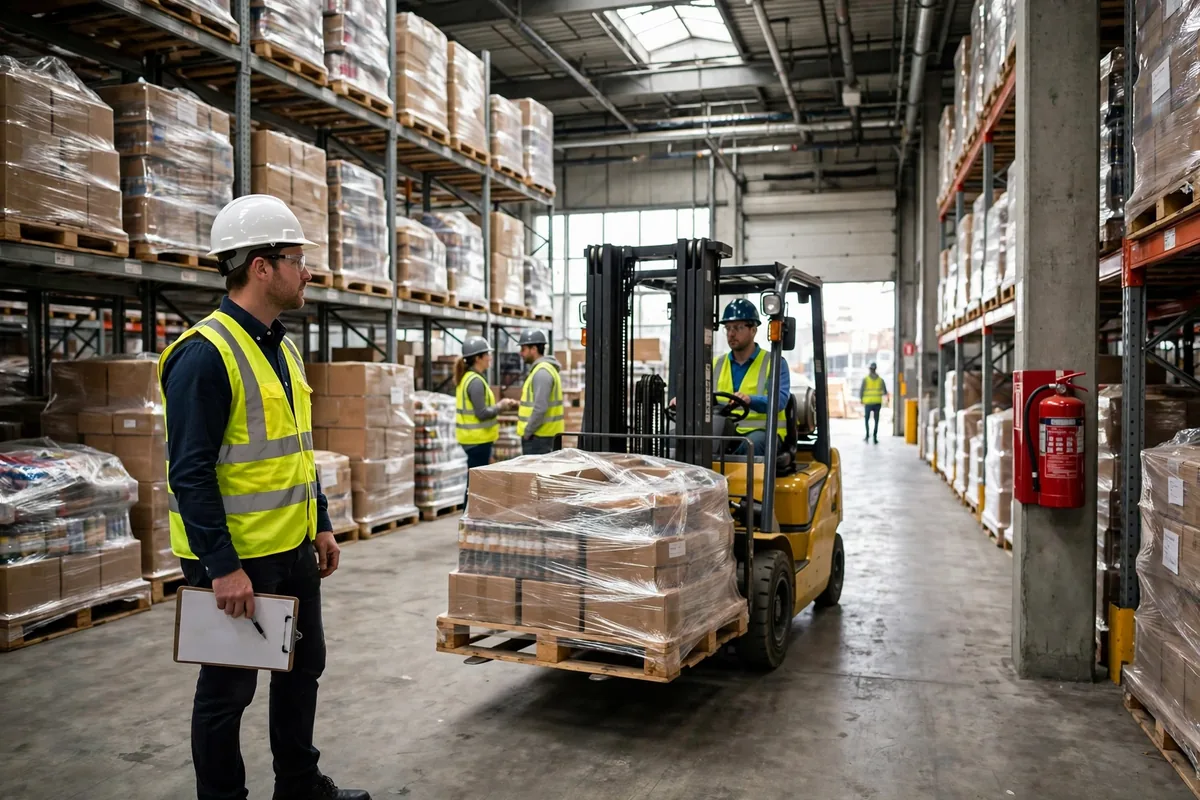
Forklifts come first. It is the first thing I watch at a dock, and it is one of the first things an inspector watches too. Driving a forklift is not the same as driving it safely. The inspector wants to see daily checklists, operator training records, and how the truck is actually driven. I once watched a driver in Fontana reverse with a double-stacked load, glance over his shoulder once, and turn straight toward another forklift that was unloading.
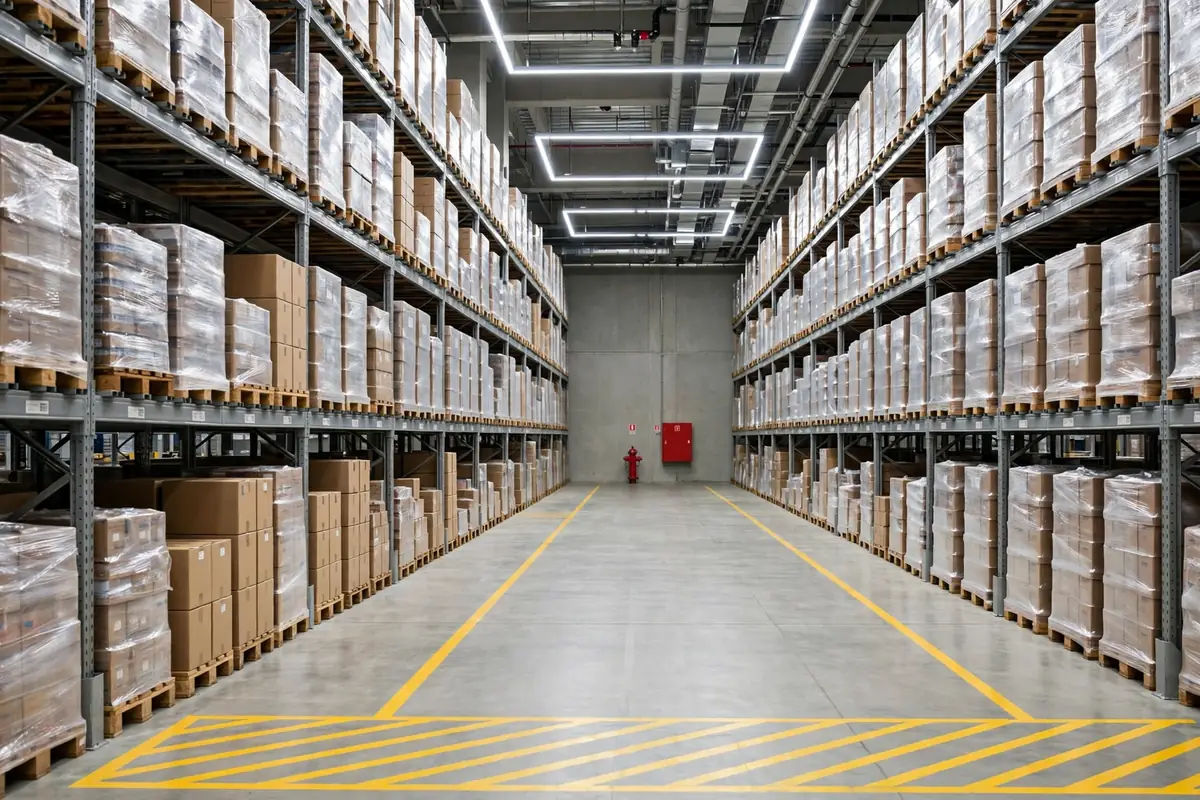
The second violation is blocked aisles and fire exits. This is the most common one, and the most avoidable. In peak season there is nowhere to put a pallet, so someone sets it at the edge of an aisle, thinking they will move it in a minute. A minute becomes the end of the shift. The end of the shift becomes tomorrow. Fire exits, extinguishers, and emergency doors all get blocked the same way: there was no space, so somebody borrowed space that was never theirs to borrow.
I have seen a warehouse where the emergency exit door could open, but the three meters outside it were stacked waist-high with cartons. The manager said the door was not locked, so it was fine. Trust me, in a real emergency nobody has time to move cartons before opening a door. Inspectors do not give that one a pass.
The third is racking and high stacking. Warehouses stack high because floor space costs money. That instinct is fine until a beam is bent and nobody reports it, a pallet sticks halfway out of the rack, or the heaviest load sits on the top level. I once saw a bent rack beam propped up with a piece of wood. The supervisor said they would replace it in the slow season. The inspector asked when the slow season was. He could not answer.
The fourth is fall protection and working at height. I have lost count of how many times I have seen someone climb a ladder to change a light, stand on a pallet to reach a high shelf, or work off a makeshift platform. The worker thinks it will take two minutes, so why bother with a harness or a proper scaffold. The inspector does the math differently. He asks what happens if the person falls. A two-minute job can change a life.
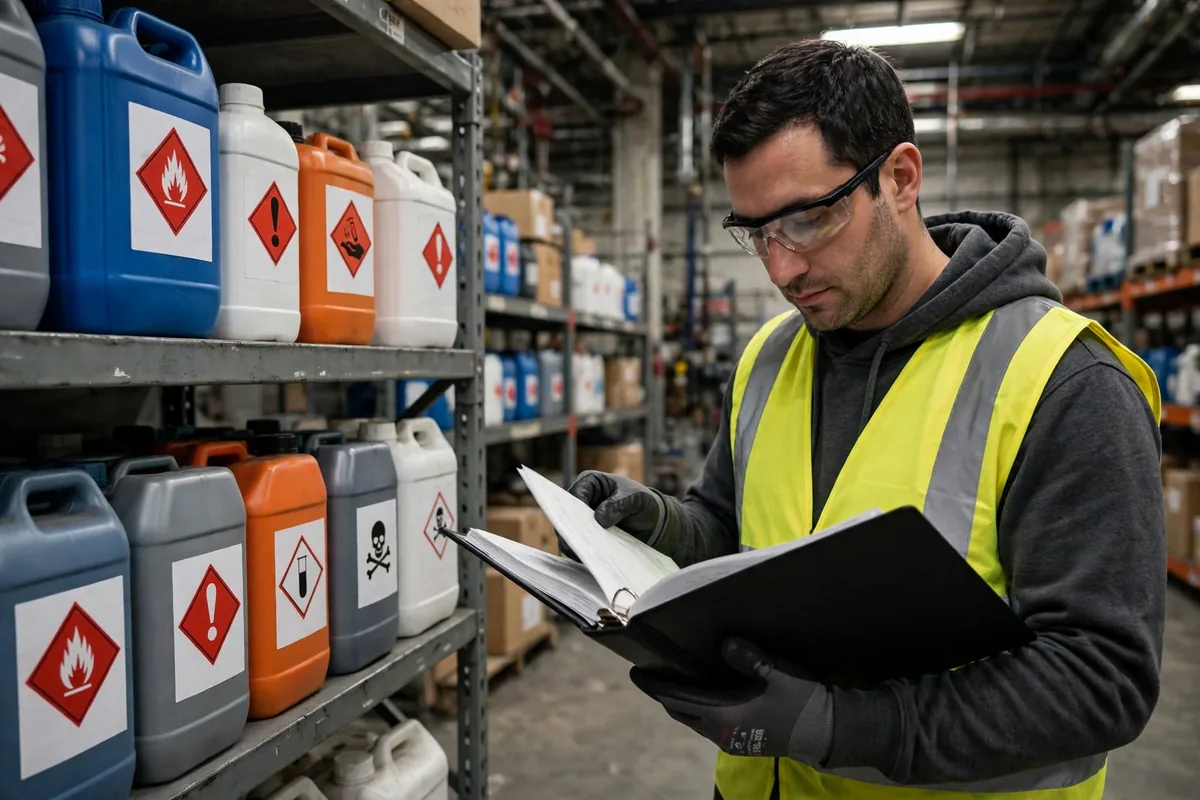
The fifth is records. Training records, inspection records, incident records. A warehouse can do the work reasonably well and still get cited because nothing was written down. The manager says, "We trained everybody, we just did not log it." To the inspector, that is the same as not being able to prove it happened.
What OSHA Warehouse Inspection Fines Actually Cost
I am not going to invent a fine for a specific case. OSHA updates its penalty levels every year, and the numbers change. What I can give you is the official range, from OSHA's own site: for 2026, a serious violation carries a maximum of $16,550 per violation, a willful or repeated violation carries a maximum of $165,514 per violation, and the minimums are $1,085 for a serious violation and $11,823 for a willful violation. Check the latest policy on OSHA's website before you quote any number to a boss or a customer, because the exact figure is whatever the current policy says.
One citation on its own may look manageable. The real bill is bigger. Citations stack. Work stops while you fix things. You pay to repair racking, replace signage, retrain people, and rebuild records. A half-day shutdown in peak season can cost more than the fine itself.
Here is a rough comparison, using a blocked aisle as the example:
| Item | Rough cost |
|---|---|
| Maximum for one serious violation | $16,550, per OSHA's current policy |
| Half a day of stopped shipping to fix it | Half a day of outbound volume, a full day in peak season |
| Repairing racking or replacing extinguisher signs | A few hundred to a few thousand dollars |
| Retraining staff and rebuilding records | One to two working days of labor |
| A ten-minute aisle walk every morning | Almost nothing |
The table makes one point: prevention and punishment are not in the same league. Ten minutes a day, walking the aisles, clearing the extinguishers, filling in the forklift checklist, costs almost nothing. Waiting for an inspector to find the problem costs a fortune.
Here is the counterintuitive part, and I have become more sure of it the longer I drive. The cleanest-looking warehouse is not always the safest. I have walked into buildings with shining floors and perfectly square stacks where the forklift drivers had no current training, a rack beam was bent, and nobody working at height had protection. It looked tidy. Underneath, it was hollow. An inspector does not grade the shine on the floor. He looks at the places nobody manages day to day.
The reverse is true too. I have delivered to warehouses that looked a bit rough around the edges, but the forklift checks were done every morning, the aisles were clear, and the records were kept. The inspector spent half a day there and left without a big finding. So do not spend your energy on a big cleanup the day before an inspection. A cleanup fools the eye. It does not fool a checklist.
What Shippers and Warehouse Managers Should Do
If you are a shipper and your goods sit in someone else's warehouse, an inspection problem is your problem too, because your freight stops moving. When you visit the warehouse, do not only check whether your goods are there and the count is right. Look at three things you can judge without knowing any regulation: are the aisles clear, is anything stacked in front of the fire extinguishers, and do the forklift drivers drive like they are in a hurry or like they are careful. Those three tell you most of what you need to know.
If you run the warehouse, my advice is simpler. Every morning, before the shift starts, the supervisor walks the floor with one other person for ten minutes and checks five things: forklift checklists done, aisles clear, fire exits clear, racking with no obvious damage, and yesterday's records completed. If something is wrong, fix it on the spot. Do not write it in a notebook for next week. Inspections do not wait for next week.
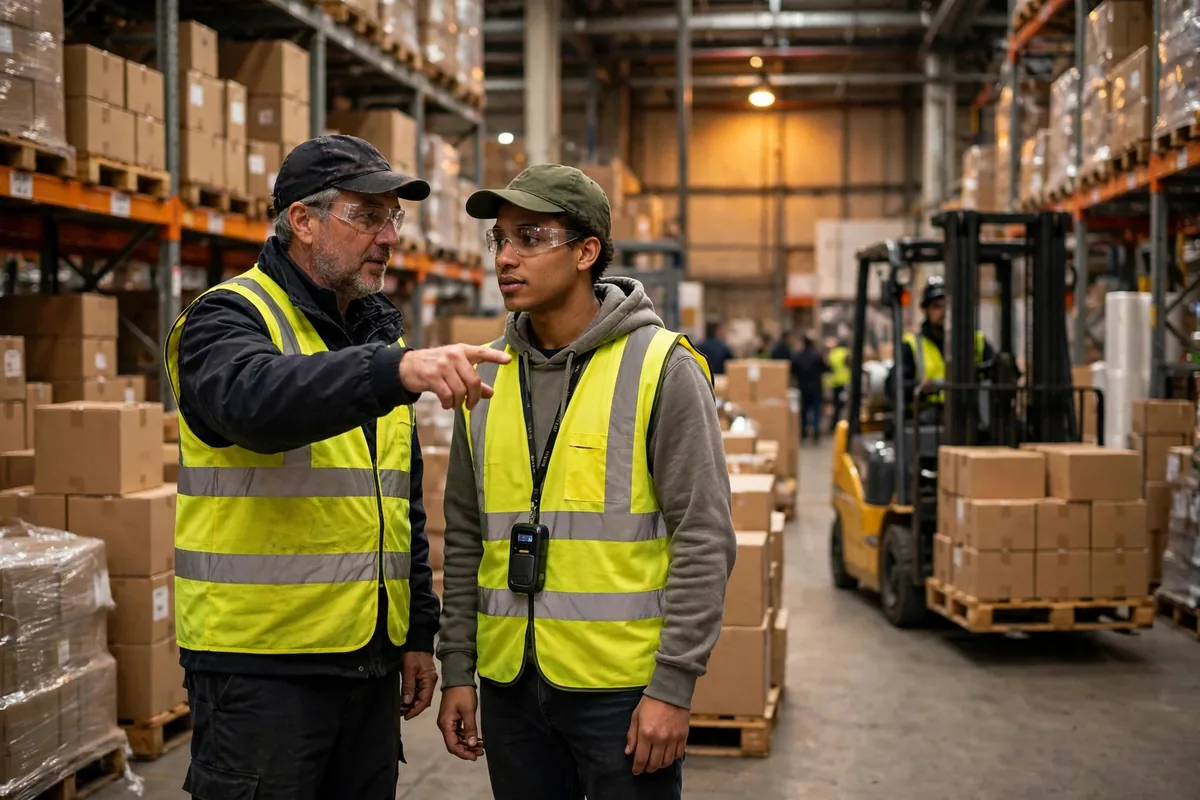
And talk to the workers before the inspector does. They know where the problems are. They know which forklift leaks, which aisle is always blocked, which extinguisher is out of date. A supervisor who spends thirty minutes a month listening to them will find more than an outside auditor finds in a day.
I will leave you with an old saying from the road: a driver is not afraid of the highway patrol. He is afraid of not knowing his own truck. A warehouse is the same. An inspection is not scary. What is scary is not knowing, day to day, where your problems are. Ten minutes of walking the floor every morning is cheaper than an hour of standing around while inspectors walk it for you, and a lot easier to sleep on.
By Shifu Zhao, Trucking Veteran (15 yrs)