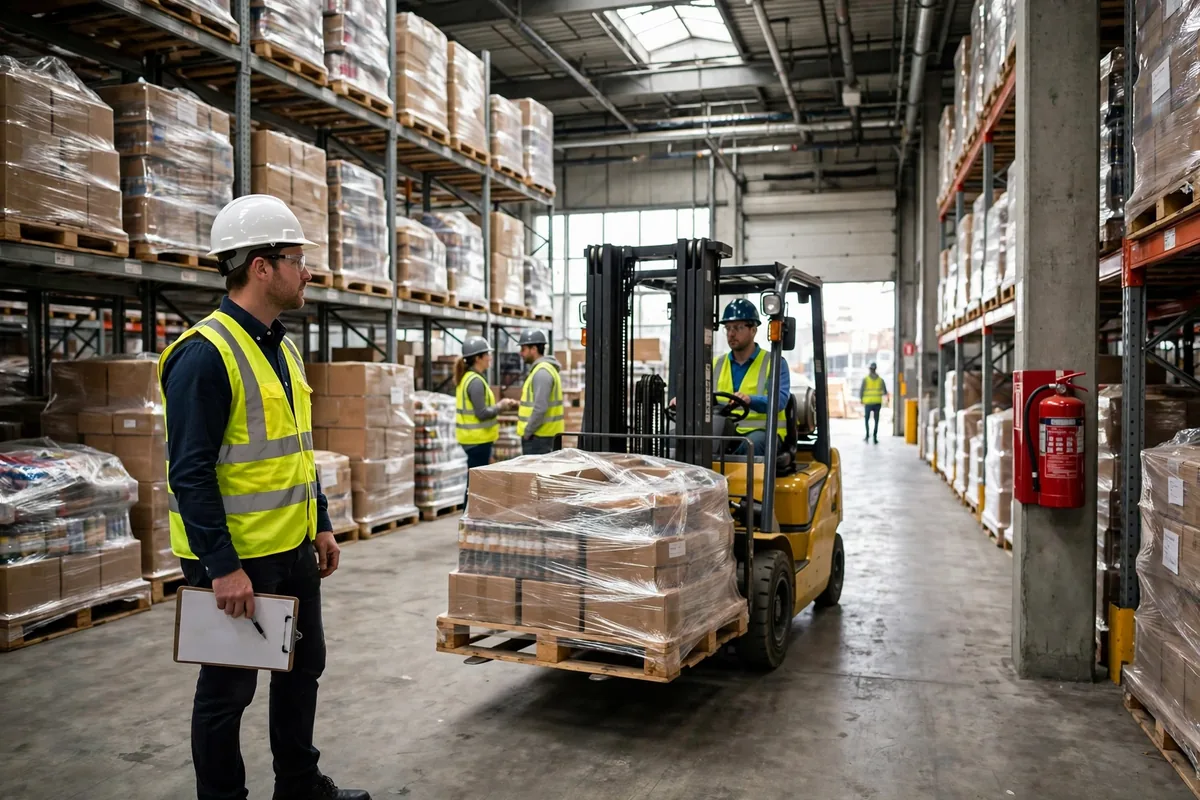
Let me tell you something. I have driven a truck for fifteen years, and I have backed into more warehouse docks than I can count. One afternoon I was delivering to a third-party warehouse out in the Inland Empire, and I saw two unmarked cars by the gate and two people in plain clothes walking in with briefcases. The warehouse manager went pale and started jogging after them — an OSHA warehouse inspection had just walked in. My load sat on the dock for three extra hours that day. A forklift driver told me later the inspectors never even went to the office. They walked straight to the forklift charging area.
Illustrative scene: that delivery was in the fall of 2025, at a home-goods distribution warehouse near Ontario, California. The inspectors stood in the charging area for less than ten minutes, then asked three forklift operators for their certifications. One said his card was at home. Another said his training was from three years earlier, back when he was hired. The inspectors filled a whole page of notes on the spot. Every forklift in that building stopped that afternoon while the office scrambled to pull training records together.
Inspectors carry a mental list, and the items at the top barely change from year to year.
What OSHA Warehouse Inspectors Look at First: Forklift Papers, Aisles, and Racking
Inspectors look first at whatever can kill somebody today. Forklifts sit at the top of that list, and the numbers back it up. OSHA's powered industrial truck standard drew 2,248 citations in fiscal year 2024, ranking sixth among the most-cited standards, and 1,826 citations in fiscal year 2025. The single biggest slice in 2024 was operators working without proper training and evaluation: 531 citations under 1910.178(l)(1). Missed refresher training and re-evaluation added another 305. When an inspector walks in and asks for forklift certifications first, that is not harassment. That is statistics.
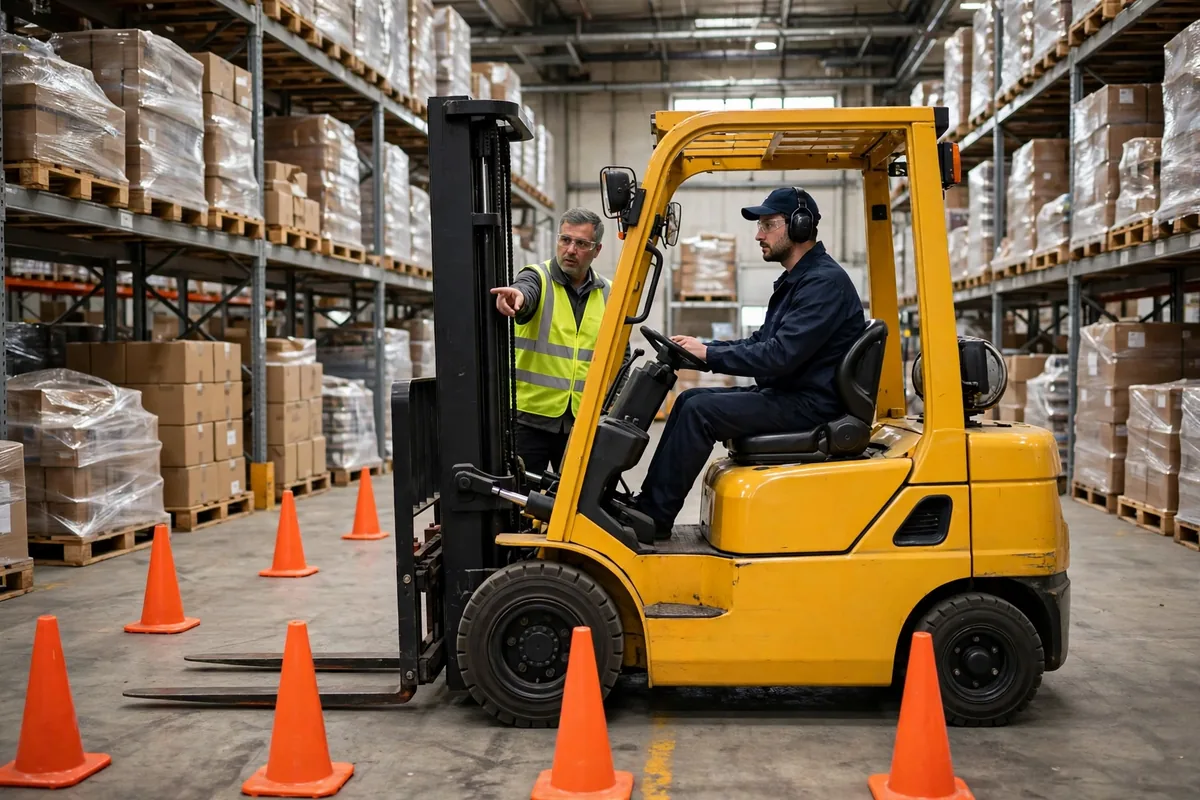
What the inspector wants to see is three things on every operator's record: the training happened, the evaluation happened, and the certification lists the operator's name, the training date, the evaluation date, and the evaluator. Miss one and it counts. Refresher training is not a one-and-done deal either. Under the standard, operators must be re-evaluated at least once every three years, and sooner if there is an accident, bad driving, or a new truck type. Most warehouses get this wrong the same way: the onboarding training is done and filed, and then three years pass and nobody brings it up again. The inspector opens the file and finds a whole shelf of expired operators.
Aisles are the second thing they look at. The rule is written in plain language: where mechanical handling equipment runs, aisles and passageways must be kept clear, in good repair, and marked. In driver language, that means no pallets in the aisle, no blocked fire lane, and floor markings that have not worn away to nothing. I have seen a warehouse stack two pallets of returns in a fire lane, and the manager said it was just for one night. That one night had lasted three months. An inspector sees that and the citation practically writes itself.
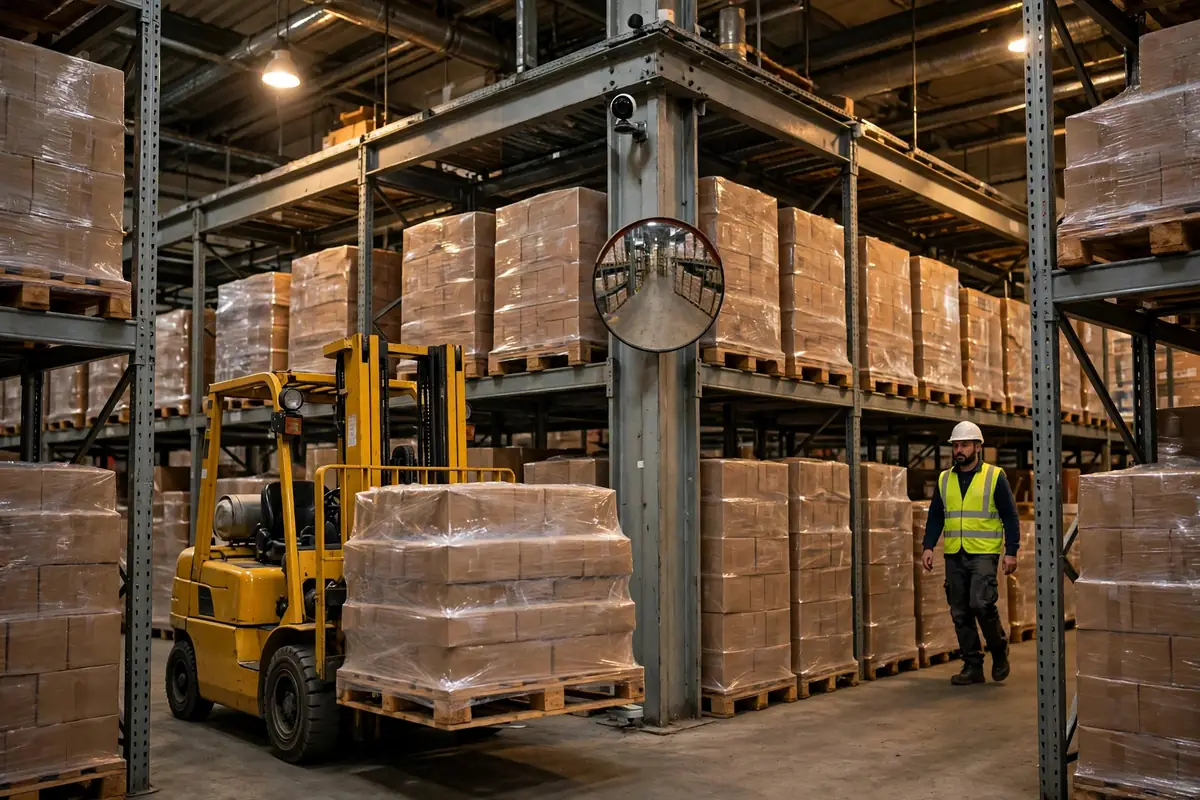
Racking is the third. Stored material must be stacked, blocked, interlocked, and limited in height so it cannot slide or collapse. Inspectors check uprights for forklift damage first, then beam clips, then pallets sticking out past the rack. A bent upright is the classic one. A driver clips it, says nothing, and the bent upright keeps holding weight. An inspector spots it in seconds. Here is the counterintuitive part: a racking problem rarely ends with racking. The inspector follows the thread to the forklift daily inspection records, because a bent upright nobody reported means the inspections are theater too. One loose thread pulls out a whole string.
OSHA Warehouse Inspection Violations and Fines: The Five Repeat Offenders
People get the fines wrong in both directions. Some think every citation is a fortune, and some think it is pocket change. Neither is right. Under OSHA's published penalty schedule, effective January 15, 2025 and unchanged for 2026 (check OSHA's website for the latest policy), a serious violation carries a maximum of $16,550 per violation, a willful or repeated violation up to $165,514, and a willful violation starts at a minimum of $11,823. Fail to fix a cited hazard by the deadline and the penalty runs $16,550 per day. Those are maximums, not what every citation costs. The actual amount depends on company size, good faith, and history, and small employers can qualify for reductions under the rules. Still, the ceiling is the ceiling, and nobody should bet on an inspector's mood.
Here are the five violations warehouses get cited for most often, in the order an inspector tends to find them:
| Violation | Standard | What the inspector checks | How warehouses usually blow it |
|---|---|---|---|
| Forklift operator uncertified or overdue for refresher | 1910.178(l) | Training records, evaluation records, all three certification elements | Onboarding done once, three years pass, nobody tracks expiry |
| Daily forklift inspection skipped, damaged truck kept running | 1910.178(q) | Inspection sheets, out-of-service tags on defective trucks | Checklists ticked without looking, a truck with bad brakes keeps working |
| Aisles blocked, goods piled on the floor | 1910.176(a) | Aisle markings, fire lanes, dock housekeeping | Returns and slow stock living in the aisle for months |
| Unstable stacking, damaged racking | 1910.176(b) | Bent uprights, beam clips, pallets overhanging | Bent upright never reported, stacks built too high to save time |
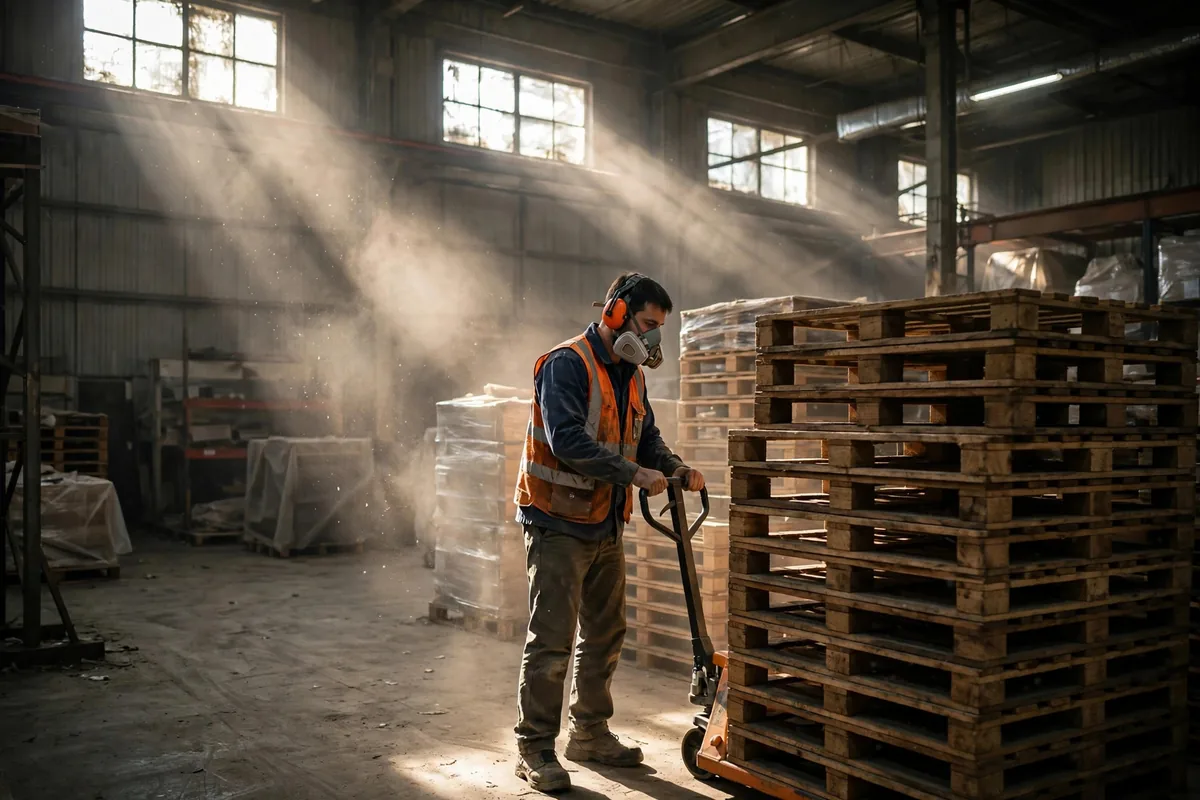
| Electrical and PPE gaps | 1910.303, 1910.132, and related | Clear space in front of panels, PPE actually issued | Electrical panel blocked by cartons, gloves and helmets handed out but never checked |
Illustrative scene: I saw it once more at an auto-parts warehouse in Texas. The inspector found an expired fire extinguisher, then pointed at the electrical panel, which had three cartons stacked in front of it so the door could not even open. None of those items alone looked like a big deal. Put together, the inspector's conclusion was that safety management at that site was theater from top to bottom. The dollar amount on the citation is one thing. That sentence in the report is another, because the next visit will be tougher.
Here is a judgment that surprises most people: the most expensive violation is usually not the most dangerous one. Willful violations carry the frightening maximums, but the citations warehouses actually collect are the small ones: one expired certification, one blocked aisle, one bent upright. The inspector's logic is simple. If you cannot manage the small stuff, the big accident is only a matter of time. Manage the small stuff and most of the citations disappear with it.
After the Inspector Leaves: Fixing It and Checking Yourself
You cannot dodge an OSHA warehouse inspection. OSHA has run a warehousing emphasis program since July 2023, sending inspectors into distribution centers on purpose, not just when somebody complains. The Bureau of Labor Statistics recorded 4.8 recordable injury and illness cases per 100 full-time workers in warehousing and storage in 2024. Inspectors show up because the arithmetic says to. Better to check yourself first than to wait for them to do it.
A monthly self-check takes about half an hour. Go through every forklift certification and schedule refresher training for anyone within three months of expiry. Pull a week of inspection sheets and look for the same handwriting across several days in a row, because that usually means somebody filled them in after the fact. Walk every aisle, and keep fire lanes and electrical panels completely clear. Run a hand along the rack uprights, tag the bent ones, report them, and replace them instead of waiting for an inspector to find them. Check extinguisher and emergency-light dates and swap out anything expired instead of putting it off.
When the inspector does come, remember three things: do not block the door, do not argue on the spot, and do not hide anything. Inspectors have the legal authority to enter, so blocking them achieves nothing, and arguing only makes the notes harsher. The right move is to have someone walk with them, answer what is asked, and fix anything you cannot answer the same day. Citations come with a deadline, and missing it costs money every single day — the most wasteful money in this business.
An old saying fits here: do not fear the inspector's visit, fear the months when nobody was watching. Keep the certifications, the aisles, and the racking in order, and you can meet an inspector at the door with a clear conscience. Leave them alone and the citation is only a matter of time. The only question is whether it lands this month or next.
By Shifu Zhao, Trucking Veteran (15 yrs)