Last October, two brand-new automatic labelers arrived at our warehouse, still half in their crates, when the customer's audit team walked in. The auditor circled the machines twice. He didn't ask about speed. He didn't ask about throughput. His first question was: where's the NRTL certification label? I stood there staring at two bare machines with nothing on them but the factory nameplate, and all I could think was: we're in trouble.
We'd ordered those labelers from a small factory overseas. Cheap, good enough for the job, and exactly right for a 32,000-square-foot warehouse like ours. When I placed the order, all I thought about was saving money. Certification never crossed my mind. In my head, that was big-company stuff, not something a small warehouse owner worries about. The auditor set me straight in one sentence: electrical equipment used in an American workplace has to be "acceptable" — meaning it has to be recognized by a nationally recognized testing lab, either through NRTL listing vs field evaluation. Pick one. Without either, the equipment doesn't go live, and the customer won't put their freight in your building.
That day I paid tuition. I spent the next two months turning the question over, asking other owners, visiting testing labs, until I finally understood how NRTL listing vs field evaluation actually works for a place like mine. Here's the whole thing, in plain language a small warehouse owner can use.
NRTL Listing: The Expensive Route That Pays Off at Volume
NRTL listing means the whole product line goes to a testing lab before it ever ships. The lab tests samples against the standard, reviews the design, and puts the factory on an audit list. After that, every unit of that model rolls off the line carrying the certification mark. The upside is "do it once, done forever": the same model ships a hundred times, and every unit already has its mark. Auditors see it, insurers see it, nobody asks twice.
The downside is just as direct: big upfront cost, long process. The lab reviews your design, tests your samples, and comes back to the factory for follow-up inspections. A small factory can't carry that. And listing is tied to the model — swap a motor, change a control board, and you may have to go through the process all over again. For a warehouse like ours, buying two or three machines a year, getting a listing for a piece of equipment is like digging a well to get a glass of water. We can't afford to burn money like that.
But the route isn't off-limits to everyone. A friend of mine exports a small sorter — same model, same design for three years running, more than two hundred units a year into the US. For him, listing makes perfect sense. The upfront cost spread across two hundred-plus machines is pennies per unit, customers order without hesitating, and customs and audits go smoothly. Listing is a volume game. Once the volume is there, expensive turns into cheap.
Field Evaluation: The Door Left Open for Small Warehouses
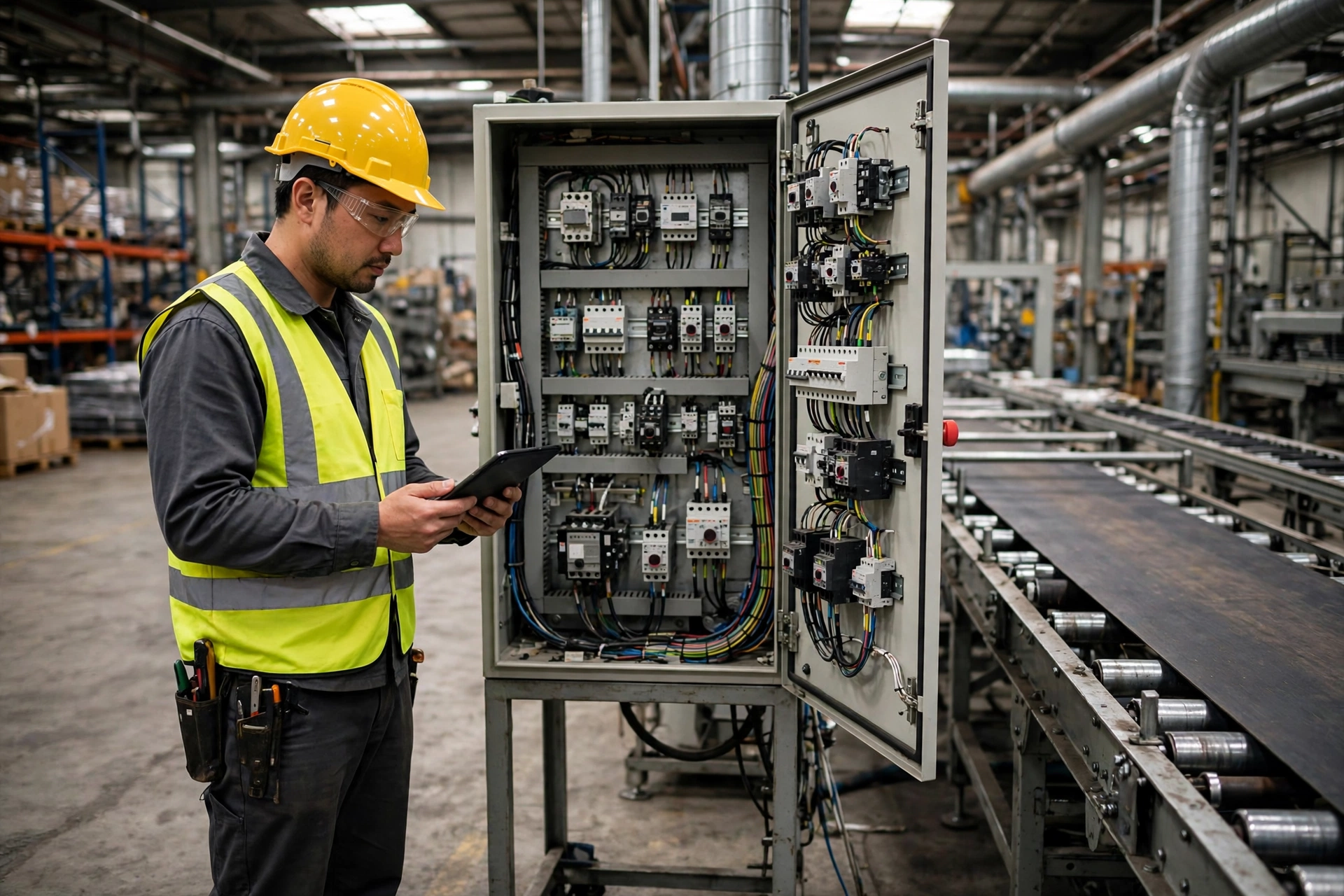
Field evaluation is a different animal. It doesn't certify a product line. It certifies the one machine standing in front of you. The lab sends someone to your warehouse, and they check that exact unit against the standard, item by item: is the wiring right, is the grounding solid, do the safety devices actually work? Pass, and they stick a field evaluation label on it, with a report to match. That machine is compliant.
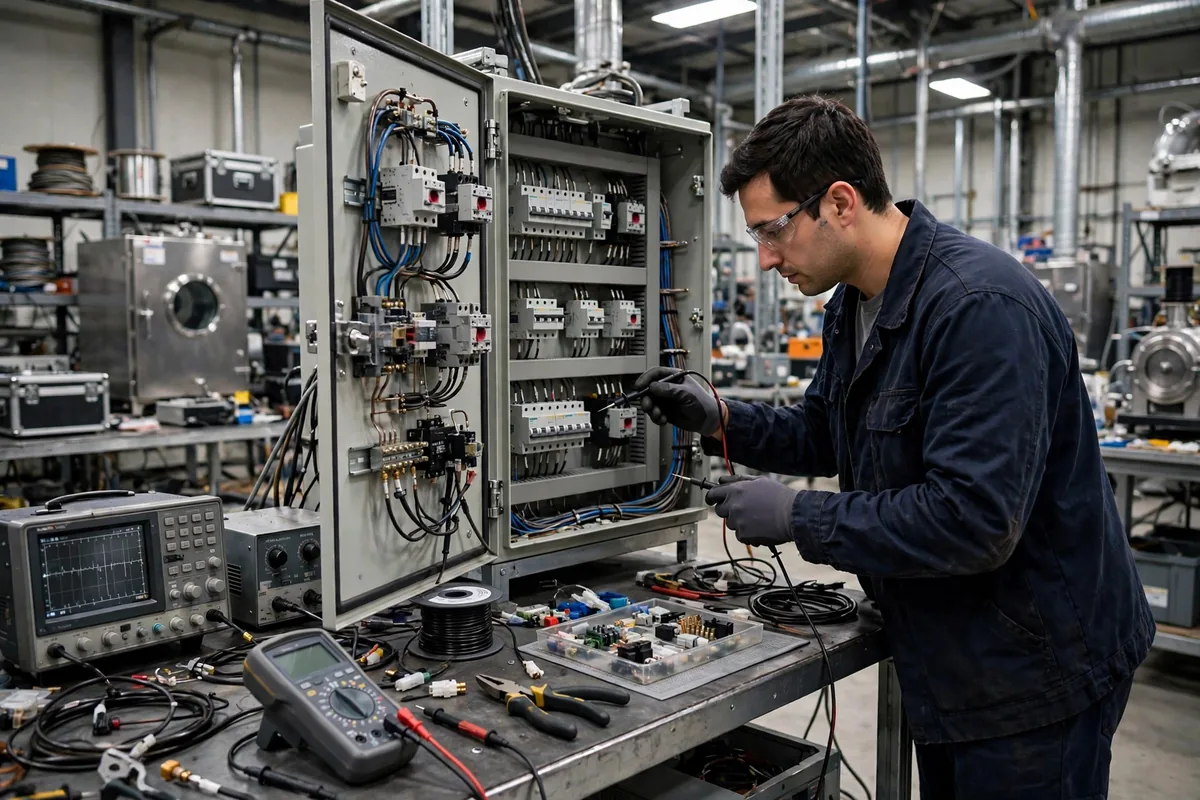
That's the route our two labelers took. The evaluator spent most of a day in our warehouse and found two problems: a ground wire inside the control cabinet wasn't seated properly, and the emergency-stop wiring used the wrong color coding. We fixed both on the spot, he rechecked, the labels went on, and the report went into the file cabinet in duplicate. The next day the auditor came back, saw the label and the report, nodded, and asked nothing else.
Here's the counterintuitive part, and most people get it wrong the first time: the label is only good for that one machine. Buy a second, identical machine, and the label doesn't carry over — it needs its own evaluation. Three machines, three evaluations. So field evaluation fits us — few machines, mixed models, every unit different — but the moment your fleet grows, it quietly gets more expensive than listing. That's small-warehouse math: don't look at the price per unit, look at the total.
One more trap worth flagging: a field evaluation label only counts when it sits next to its report. Label on the machine, report lost — the auditor won't accept it. Our rule now is simple: every report gets scanned and saved, and the paper copy lives in a pouch right next to the machine, so anyone who asks can see it on the spot.
There's also a cheap trick that saves real money before the evaluator even shows up: lay out the manual, the wiring diagrams, and the parts list on the table first. The more complete your paperwork, the less time the evaluator spends digging around, and the fewer findings they write up. Our first machine, we prepared nothing, and the evaluator spent over an hour just hunting for documents. The second one, we had everything ready, and the whole thing was done in half a day.
NRTL Listing vs Field Evaluation: Three Questions That Decide It
Don't let a sales rep decide for you, and don't copy whatever the warehouse next door did. Ask yourself three honest questions first. The answers basically pick the route for you.
| How to choose | NRTL listing | Field evaluation |
|---|---|---|
| Best for | Manufacturers with fixed models and high volume | Small warehouses with few, mixed machines |
| Covers | Every unit of the same model | Only the one machine in front of you |
| Design changes | A major change may restart the process | Only this unit's current condition matters |
| Upfront cost | High, one big investment | Low, charged per unit |
| Cost over time | The more units, the cheaper per unit | More units, and the total bill gets expensive |
First question: how many units a year? Under a handful, field evaluation is almost always the answer. Dozens of the same model, and it's time to seriously run the numbers on listing.
Second question: is the model stable? Buying one brand this year and another next year, changing models every season — listing would be wasted money. A model that hasn't changed in three years is the only kind worth talking about.
Third question: how soon is the audit? The audit team is coming next week and the machine is already on your floor — forget listing, field evaluation is the only route fast enough. The machine is still on paper and you have time — then you can afford to choose slowly.
On actual fees and timelines, every lab quotes differently, so check the latest published pricing on the lab's own website and don't trust a number a salesperson says out loud. My low-tech method: ask three labs at once, get the quote and the scope of evaluation in writing, then compare. A verbal quote doesn't count. If it's in an email, it counts.
And one blunt piece of truth: don't buy the equipment first and ask about certification later. Ask first, buy second. Those two labelers are my cautionary tale — every dollar we saved on the purchase went straight into rework and evaluation, plus two weeks of lost time. Now every purchase order we sign for powered equipment has a line in it: the seller provides the certification paperwork, or cooperates with a field evaluation. That one line in the contract beats a hundred arguments after the fact.
Small warehouses have their own way of surviving, and certification is no different. Big companies take the listing route, and it looks impressive. We take field evaluation, and it keeps us nimble. Neither road is better. The only question is which one fits.
By Xiao Ma, Small Warehouse Owner