Let me start with a complaint. New York New Jersey port warehouse logistics is not hard because the port is slow. It is hard because sellers assume it works like any other port. It does not.
The port handled 8,698,526 TEU in 2024. That made it first on the East Coast, third in the United States, and 23rd in the world. Full-year 2025 came in at 8,897,531 TEU. The volume is real. But volume is not the problem a seller actually faces. The problem starts after the vessel docks: where is the warehouse, where is the truck, and when can my freight get into an FBA warehouse.
I have been selling for five years, and my most expensive lesson came from treating the East Coast as simple. The vessel arrived. I thought the hard part was over. Then the container would not come out. Then it came out and the warehouse was booked solid. Then I rebooked the delivery appointment and waited again. Meanwhile my listing went out of stock. The ads kept spending. The ranking slid. When the stock finally landed, I had to push the listing back up from scratch. The platform does not refund any of that.
So I changed how I work. Now I line up everything downstream while the freight is still on the water: warehouse space, trucking, delivery windows. If the vessel schedule moves, I change the booking right away. I do not wait until the container lands to start making phone calls. It sounds obvious. Very few sellers actually do it. New York New Jersey port warehouse logistics, at the end of the day, rewards rhythm, not luck: whoever lines up space and trucks ahead of the congestion gets into the warehouse first, and whoever waits until the container lands joins the same queue as everybody else.
Big volume at New York and New Jersey does not mean easy warehouse access
Look at the scale for a second. In 2024 the Port of New York and New Jersey handled 35.3% of loaded TEU on the East Coast, measured from Miami to Montreal. Roughly one in three loaded boxes on the East Coast moved through this one port. Volume grew 11% over 2023, making 2024 the third-busiest year in the port's history. The record year was 2022, at 9.49 million TEU.
Big volume means one thing in peak season: everybody is chasing the same warehouses, the same trucks, and the same delivery windows. Your freight is not competing with the seller next door. It is competing with the whole East Coast.
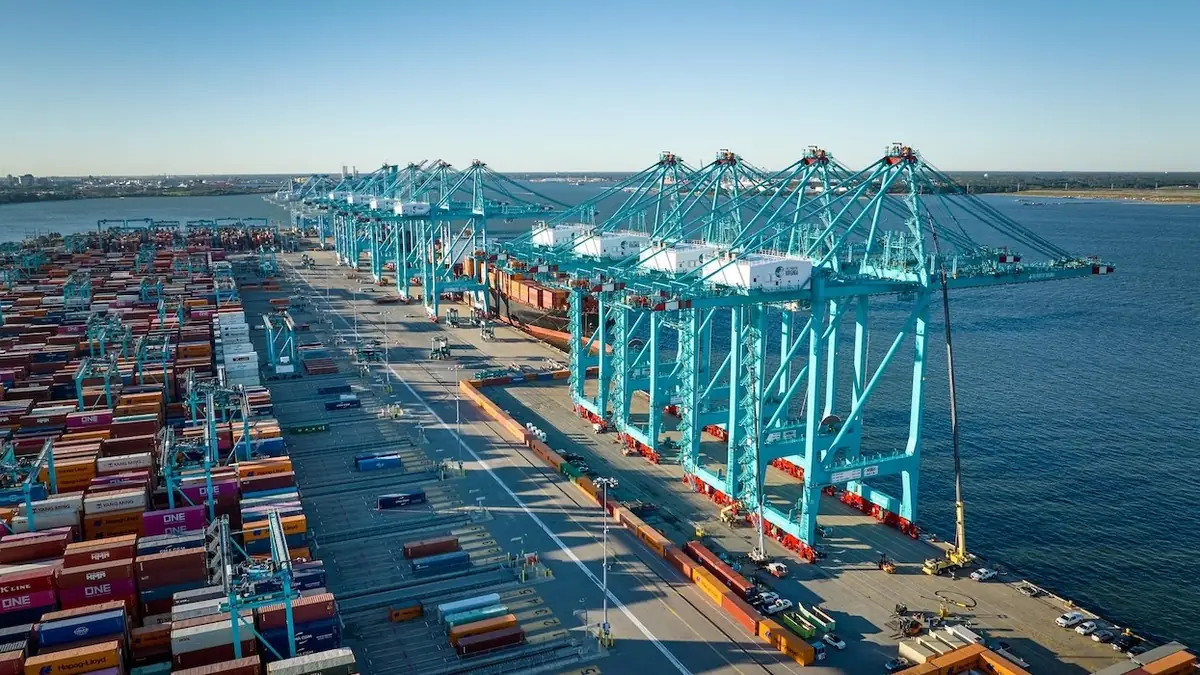
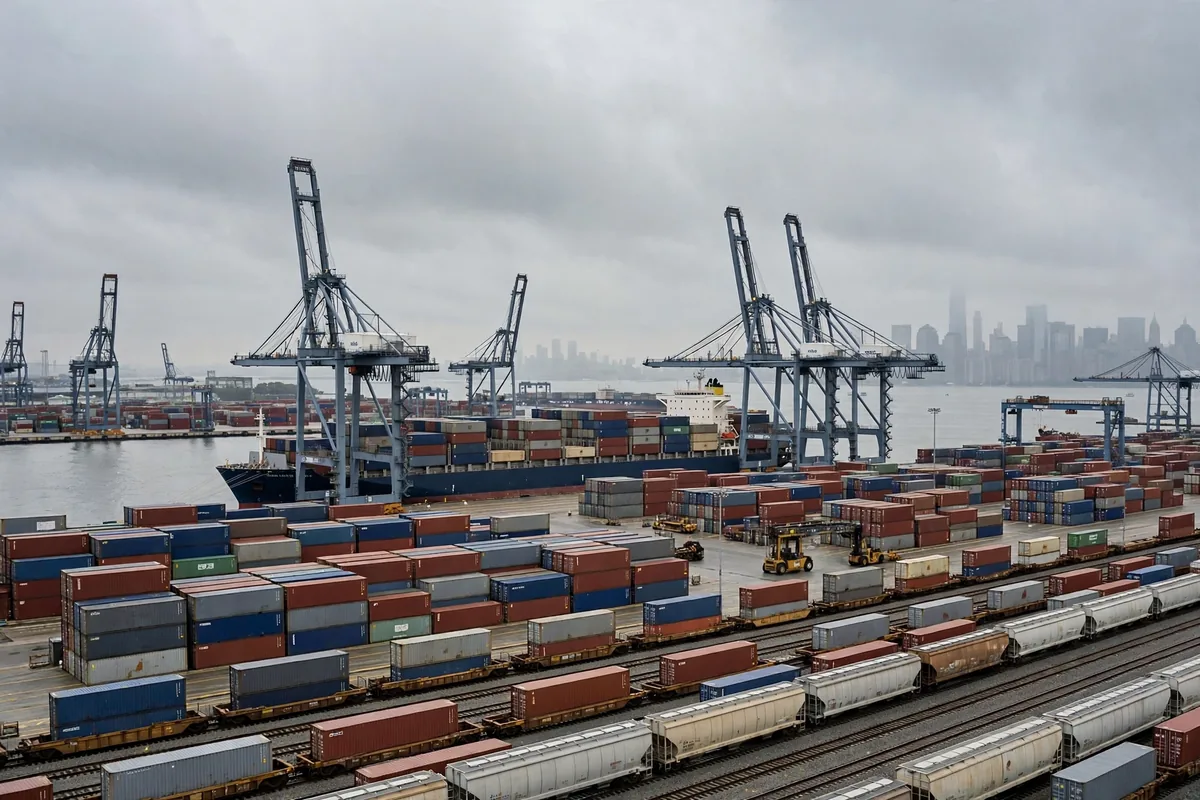
The port has six container terminals, and four of them have on-dock rail. That sounds impressive. It is impressive — for the cargo that can actually use the rail. Most sellers I know still move by truck. The truck is where the queue forms, and once the truck is stuck, the whole restocking plan falls apart.
Here is the part sellers get backwards. People assume a huge port must have plenty of warehouse space, because the infrastructure is all there. My experience is the opposite. At a giant gateway like New York and New Jersey, warehouse space in peak season is harder to grab than at a small port. A small port has less cargo and free space. A big port has everyone squeezed together, fighting over the same warehouse slots, the same truck capacity, and the same delivery windows. In a year like 2024 — up 11%, the third-busiest ever — stocking on a normal rhythm is a gamble.
How I do the math on stocking
The following worked example is purely illustrative, with assumed figures used only to show the thinking; it does not represent real costs. Suppose a shipment is heading for an FBA warehouse on the East Coast. I split the total cost before I book anything: ocean freight, container pickup and trucking, warehouse devanning and handling, final delivery, and one line most sellers leave out — the cost of going out of stock.
| Cost item | What sellers miss | What I do | | Ocean freight | They price the rate and forget schedule swings | Build slack into the vessel schedule, never pin the launch date | | Pickup and trucking | The surcharge bites hardest in congested windows | Pick up off-peak, book the truck early | | Warehouse handling | Devanning queues need a time slot too | Confirm space and labour before the freight arrives | | Final delivery | A missed window means a wasted trip | Check the window first, then book the truck | | Stockout loss | It never enters the spreadsheet, but it costs the most | Hedge with safety stock, never bet on the vessel schedule |
The table makes one point: stocking is not about who pays the cheapest freight. It is about who never goes out of stock. Whatever you save on freight, three days of stockout hands it all back — plus the ranking.
There is a second blind spot. Sellers stare at the port numbers and forget the inland leg. Six terminals, four with on-dock rail — that is a strong setup for bulk, long-haul cargo. It is not the setup my freight uses. My cartons move by truck into a warehouse, and the truck's price and timing are the numbers that actually decide my margin. The port data can look great while the truck cannot be booked, and then none of it matters.
What to avoid at the Port of New York and New Jersey: do not hunt for warehouse space in peak season
Three practical warnings for other sellers.
First, do not wait until the freight lands to find a warehouse. While the vessel is still at sea, ask about space. If one warehouse has nothing, call the next one. Do not hang everything on a single provider.
Second, do not pile all your freight onto one arrival date. One schedule slip and the whole batch gets stuck together. Split shipments when you can. Paying a bit more in handling beats watching a listing go dark.
Third, the delivery window matters more than the freight rate. Miss the window and the truck runs for nothing, the warehouse waits for nothing, and the money is spent anyway. Check the window, then book the truck, then talk price — in that order.
One last thing. New York New Jersey port warehouse logistics will keep growing — 8,897,531 TEU for full-year 2025 tells you the East Coast flow is not moving away from this gateway. The port will not speed up for you. What you can do is put your own rhythm ahead of the congestion: ask about warehouse space early, book the truck early, check the window early, and hold safety stock early. This trick works — I have tested it myself.
By Ah K, E-commerce Seller (5 yrs)