After all these years on the road, one NOM certification Mexico equipment import trip still sticks in my mind: the load that taught me what it really costs when you get it wrong.
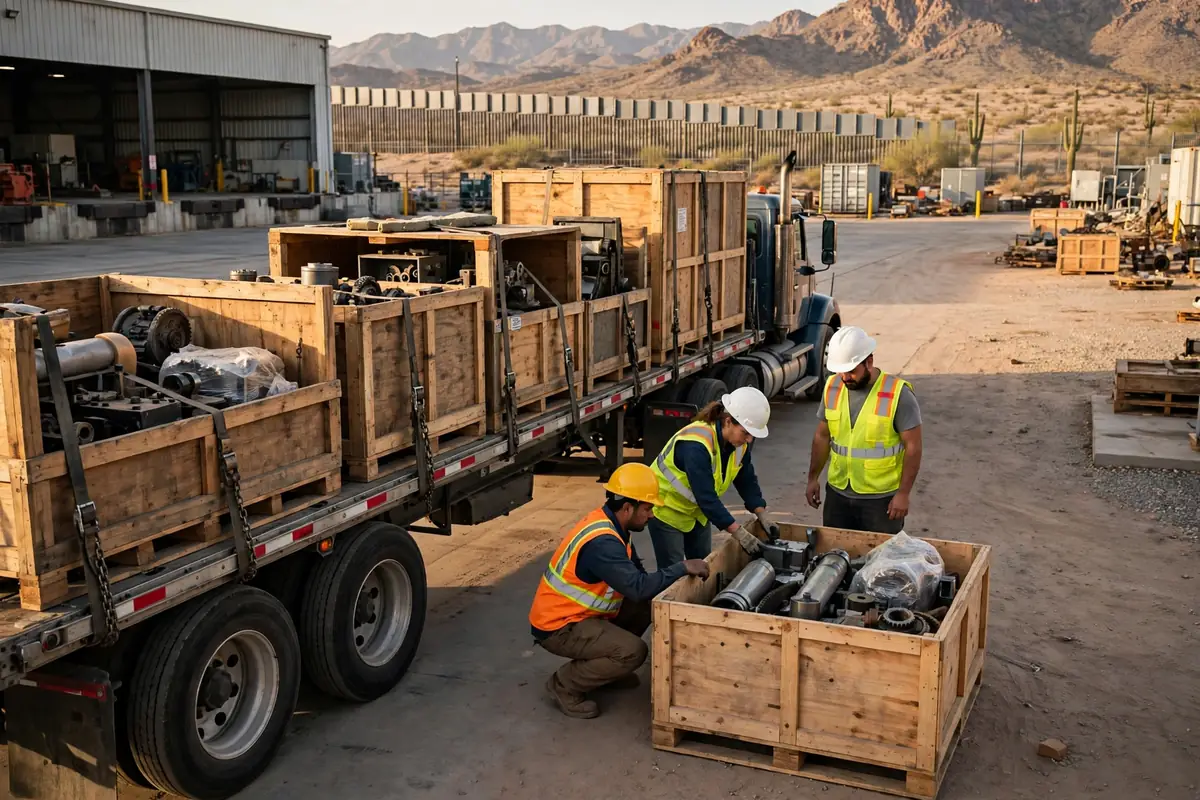
It was winter a couple of years back, and I was hauling a load of equipment south, bound for a factory in Mexico. We got to the crossing, and the officers walked around the load twice, looked at the labels on the crates and shook their heads, flipped through the folder of paperwork and shook their heads again. Then came the verdict: the load stays here until the documents are complete.
That freight sat in the bonded yard for days. The shipper called me every day asking where the cargo was. What could I say? The freight had arrived, the paperwork was one breath short. I spent three nights in a little motel near the border, driving to the crossing every morning to ask the same question and getting the same answer: still missing something, come back later.
In the end, the shipper hired a local agent, fixed the labels and the paperwork, and the load was released. The freight bill was the small part. The factory was waiting on that machine, and every day late cost real money. The shipper told me later that the lesson cost ten times the freight.
So what does that story tell you? If you're selling equipment into Mexico, NOM certification is a gate you cannot go around. NOM is Mexico's official standard, and for equipment it often covers electrical safety and labeling. If your certification and labeling paperwork aren't in order, your freight stops at the border.
What NOM Certification Mexico Equipment Import Actually Is
In plain language: NOM certification is the door the Mexican government sets for imported products. You want to sell equipment into Mexico, you have to prove your product meets Mexico's official standards, especially on electrical safety. And it's not enough to say so yourself. You need proof from a certification body that Mexico recognizes.
Two mistakes come up again and again. The first is assuming a U.S. certification will do. It often won't. The United States has one set of standards, Mexico has another, and a certificate from one side doesn't substitute for the other.
The second mistake is thinking certification is just a label on the crate. It isn't. Behind NOM certification sits a whole file: product testing, factory information, technical documents. The label is only the layer people see on the outside. If the label is wrong, the freight gets held. If the file is incomplete, the freight gets held too. The people at the crossing don't argue with you. They just check whether what you're holding is complete.
Which equipment needs it? As a general rule, powered equipment, machines that plug into the grid, are the ones most likely to run into this requirement. For any specific machine, go by Mexico's latest official rules and the certification body's determination. I'm not a certification expert, so let me say that up front: for a specific product, ask a professional first. Don't guess from experience. A wrong guess costs a lot more at the border than one phone call.
NOM Labeling Is Where Most Shipments Trip
After all these years, the most common failure I've seen isn't the certification itself. It's the label.
I remember one shipper whose equipment was certified, and the labels looked right. The load still got stopped. Why? The label didn't match the certification file: one wrong letter in the model number, a vague voltage rating, a missing line about country of origin. The officers checked the file word by word.
Another one was even more of a shame. The labels were in English, and the key information wasn't marked in Spanish as required. The machine was fine, the certification was fine, but the freight waited days at the crossing while new labels were made and verified again.
So my advice has always been the same: don't leave the label until the day before shipping. Start the label the moment certification starts. Check every word against the certification file, character by character: model number, voltage, origin, certification mark. Before you stick the label on, have someone who knows this stuff take one more look. Fixing a label costs time. Having freight held at the crossing costs money.
The same goes for the paperwork riding with the load: certification copies, packing lists, everything that belongs in the folder, bring it all. The crossing doesn't accept "I'll email it to you when I get back." If the document isn't in your hand, the freight doesn't move.
Picking a NOM Certification Body for Mexico Equipment Import
The question shippers ask me most: which body do I use, how much, and how long? On fees and timelines, I won't give you specific numbers. They vary too much by product, by body, and by timing. Go by the latest official quotes from the authorities and the certification body.
First, check the credentials. The body has to be recognized by Mexico's authorities and able to issue NOM certification. Not just any testing lab qualifies. Ask clearly whether the body can handle your product category. Wrong credentials mean money spent and a certificate nobody recognizes.
Second, don't pick on the lowest quote alone. A cheap quote sometimes means a slow process or extra charges halfway through, and by the end it isn't cheaper at all. More important is the schedule: lab slots, testing, issuing the certificate, every step takes time. A low quote with a lab slot two months out doesn't help if your delivery date can't wait.
Third, get the whole process in writing before you sign: where does the testing happen, do you need to ship a sample unit, how long does the sample test take, and how is the label handled once the certificate comes? Ask all of it before signing, and put it in the contract.
The saddest case I've seen: a shipper picked a small body because it was cheap, and halfway through, the body said it couldn't handle that product category after all. Over a month wasted, the factory waiting. He told me later he wished he'd picked a reliable body from the start, even at a higher price.
Here's the counterintuitive part. Most people think faster is better with certification. After all these years on the road, I think the opposite: this is one thing you can't rush. Testing, review, issuing, every step takes its own time. A body that promises "approved in a week, guaranteed" deserves a second look. A proper body tells you the real schedule.
Time Versus Cost for NOM Certification Mexico Equipment Import
Time and cost are always pulling in opposite directions. Do the certification early, and you spend money and time up front, but your delivery date is protected. Rush the shipment and fix the certification later, and you save time early but gamble on the freight being held at the border.
My suggestion is a simple decision frame, three lines, that's all.
First line: how tight is your delivery date? Is a factory waiting on this machine, or is this warehouse stock that can wait? If it can't wait, certification has to start early.
Second line: has this equipment entered Mexico before? If it has, the timing is easy to estimate. If it's the first time, leave extra room.
Third line: is your certification body locked in? If the body isn't chosen, every plan is empty air. Pick the body first.
Once those three lines are clear, the trade-off answers itself. Certification isn't a contest of who spends least. It's a contest of whose freight clears on time. A load sitting at the crossing one extra day racks up storage fees, idle labor, and lost customer trust, and that adds up to more than the certification itself.
One more thing, and it's the biggest lesson from all my years running the border: there's no shortcut around compliance. Complete files, matching labels, a reliable body, and the freight rolls through smoothly. Try to go around, and the way back ends up longer. NOM certification and labeling are the first gate for equipment entering Mexico. Clear that gate, and the road after it gets a lot easier.
Shipper friends, before your next load goes out, check three things: is the certification body settled? Have the labels been checked word for word against the file? Is all the paperwork riding with the load? Tick all three boxes, then send the truck. There's an old saying where I come from: sharpen the axe before you cut the wood.
By Shifu Zhao, Trucking Veteran (15 yrs)