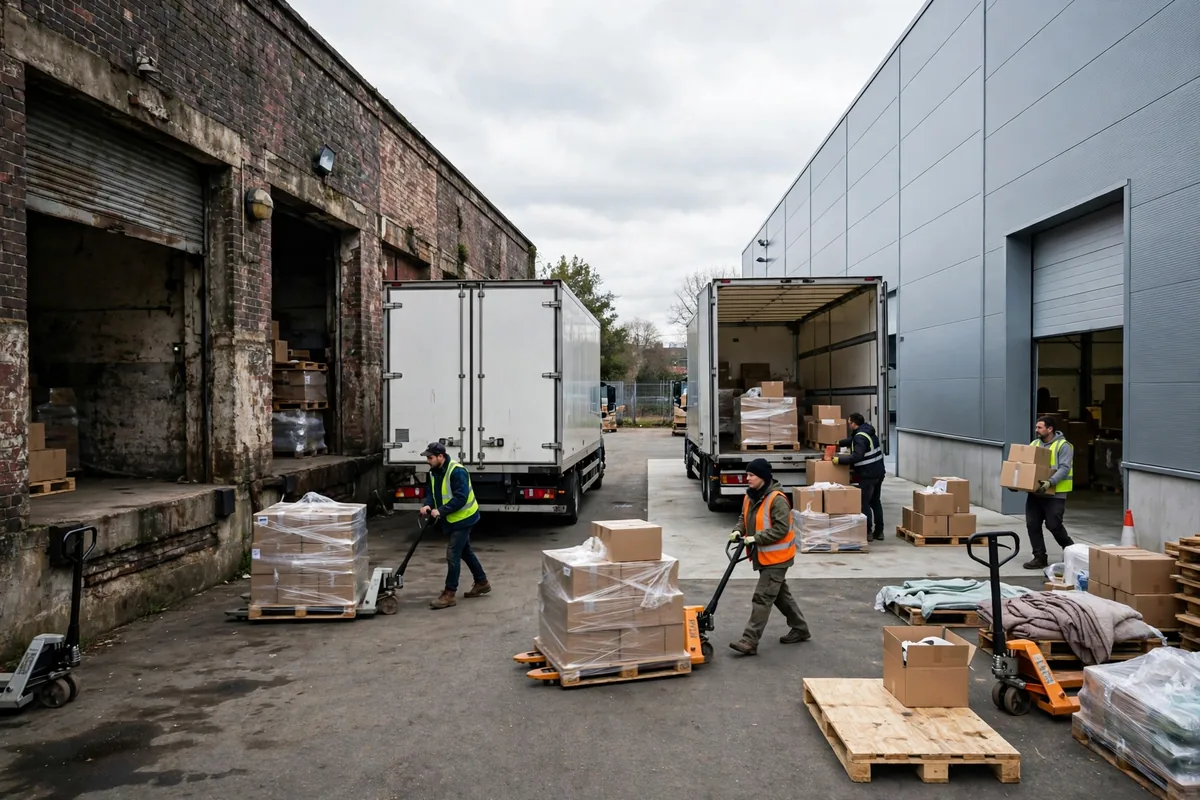
Every seller has a mental list of Amazon FBA shipment rejected reasons, and from January 1, 2026, that list matters more than ever: Amazon stopped offering inbound prep services like labeling and bagging in the US. That means the work the warehouse used to fix for a fee is now entirely yours, before the truck leaves your dock. When a load gets turned away at the gate, the amazon fba shipment rejected reasons are usually boring, small, and completely avoidable — and the bill is much bigger than the freight. I have sold on Amazon for five years. I have been rejected twice: once over labels, once over an overweight carton. Those two rejections cost me more in lost sales than six months of storage fees. This is not theory. These are the eight reasons I see most, and what I check before every shipment.
The 8 Most Common Amazon FBA Shipment Rejected Reasons
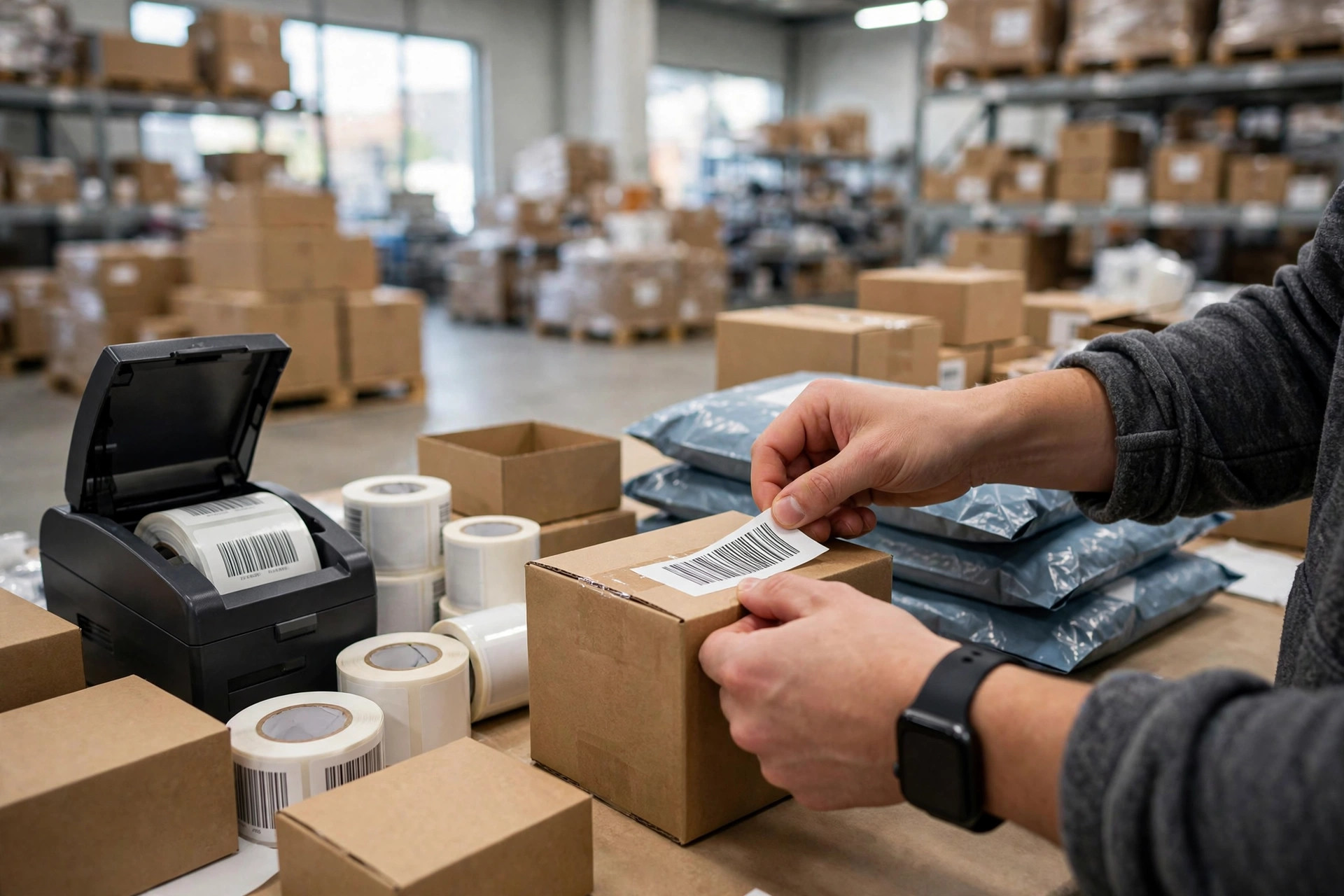
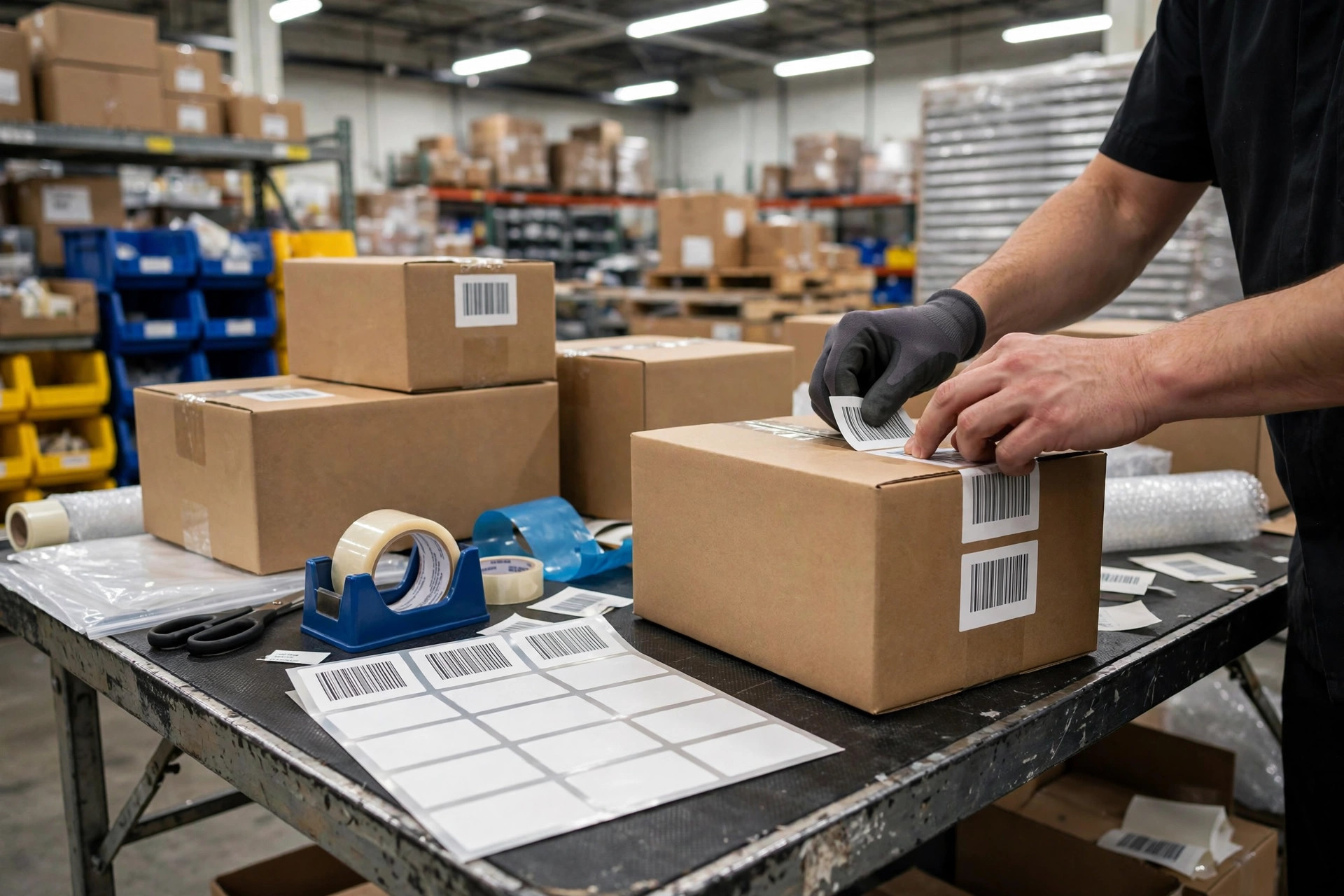
Labels are the number one rejection trigger. An FNSKU label must be at least 1 inch by 2 inches. If it is crooked, wrinkled, or half-covered by tape, the scanner cannot read it and the carton goes back. Worse is the old barcode left uncovered: the supplier's UPC still showing next to your FNSKU gives the warehouse two codes to choose from, and the system picks neither. It rejects the whole carton. A wrong SKU on the label is just as bad — a carton of product A labeled as product B will never match the shipment plan.
My fix is low-tech and it works. One person labels, a second person scans every carton with a handheld scanner before it is sealed. Forty units a carton, three extra minutes. That is nothing next to a rejected load. Keep your label printer in good shape too. Thermal paper goes bad in humidity, so print one test label before each run. If the print looks faded, change the paper and the ribbon. Scenario example: in September 2025, a home-storage seller in Shenzhen sent 120 cartons to a US West Coast fulfillment center. Thirty-seven cartons were rejected because old UPCs were not fully covered. Re-labeling took four days, the bestseller stocked out for those four days, and daily sales fell by roughly 60% while ad spend kept running.
Overweight and oversized cartons are reason two. A standard carton must not exceed 50 pounds. Go over and you either split the carton or route it through a different process — most sellers just ship it and hope. The dock does not hope. It measures. A bulging carton fails the same way: tape stretched tight over an overstuffed box changes the dimensions, and the conveyor will not take it. Pack to the size, not past it.
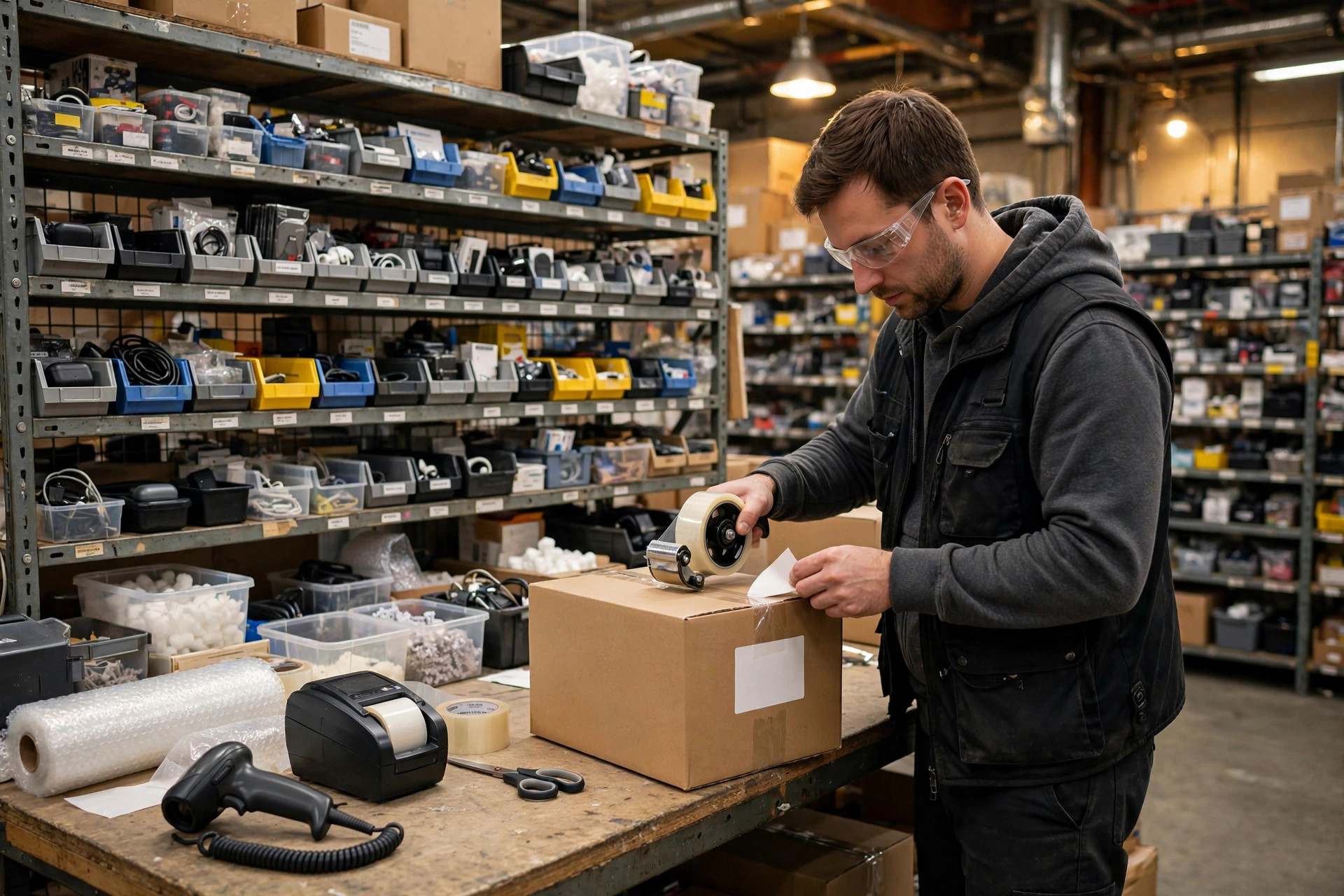
Reason three is the poly bag. Products in bags with an opening need a poly bag with a suffocation warning, and the bag must be at least 1.5 mil thick. Wrong warning placement, a bag that is too thin, or an unsealed opening all earn a rejection. Plenty of sellers only learn this rule at the dock. I keep bags, warning stickers, and a sealer stocked at the packing table as fixed supplies. When stock runs low, reorder. Never discover you are out on shipping day.
Reason four is the mismatch between what is in the carton and what the shipment plan says. The plan says 30 units, the carton holds 28, and the warehouse stops the load. Mixed cartons are the worst for this: three SKUs in one carton, one count off, and the whole carton gets opened and counted by hand. I print the packing list and the shipment plan and tape them to the packing table wall. Pack one carton, tick one carton, and a second person counts again. Scenario example: in March 2026, a pet-supplies seller shipped mixed cartons and one of three SKUs came up 12 units short. Eighty cartons sat at the dock for two days, twenty were opened for recounting, and truck detention plus extra handling were all added cost.
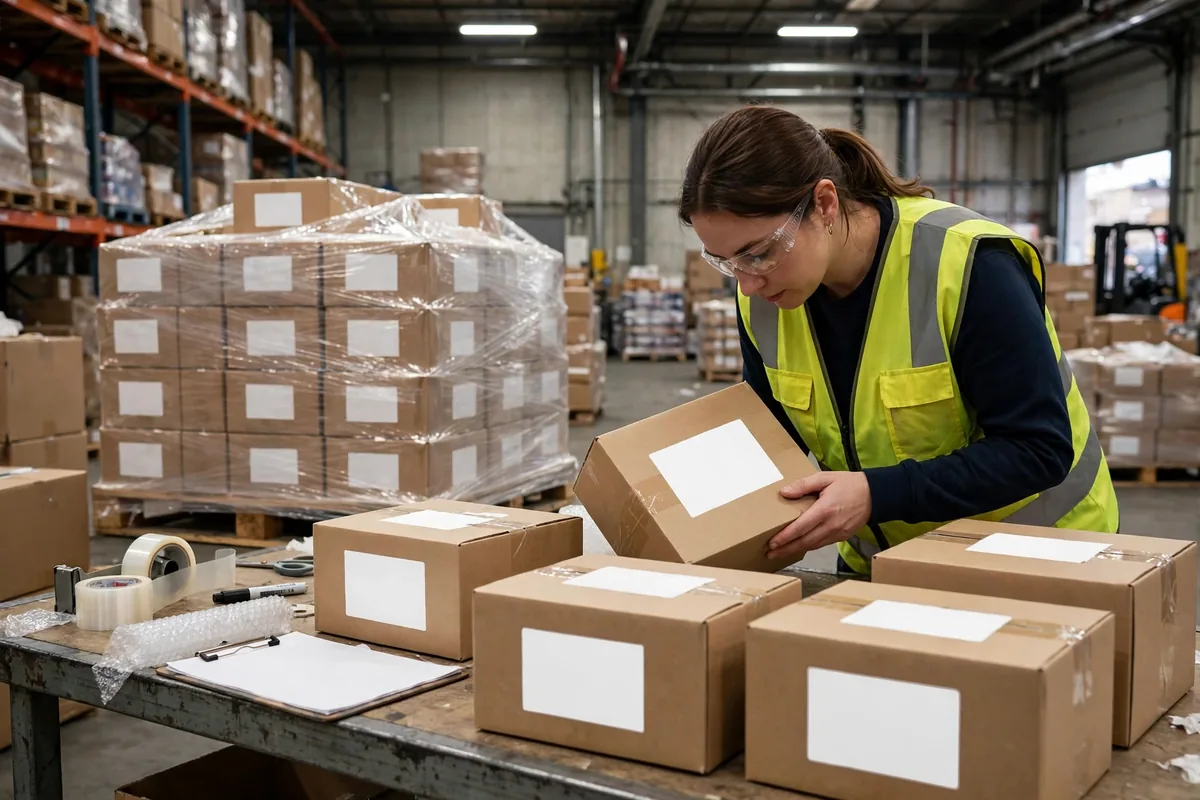
Reason five is missing pallet labels. For palletized shipments, a pallet must not exceed 72 inches high or 1,500 pounds, and an FBA pallet label goes on each of the four sides — four labels in total. Miss one side and the forklift driver does not know where the pallet belongs, so the warehouse refuses it. Damaged pallets and wrong-size pallets get refused too. Walk around the pallet before the truck is called: four labels on, no cracked boards, height and weight inside the limits.
Reason six is shelf life. Food and supplements usually need at least 90 days of shelf life remaining when Amazon receives them. Sellers check the production date and forget the transit time. A month on the ocean and the product arrives with 80 days left, and the whole batch is rejected. Count shelf life backwards from the receiving date, not the shipping date. Thirty days at sea plus seven days for customs plus 90 days means you need at least 127 days left when the goods leave your supplier. Do that math before you ship, not after.
Reason seven is the appointment and delivery window. FBA warehouses need a booked delivery appointment. A truck that shows up without one, or misses its window, does not get in. In peak season, appointments book a week out. My habit is to book the delivery slot before the cartons are even packed, then schedule packing around the slot. Get the order wrong and finished goods sit in a third-party warehouse for days.
Reason eight is the packaging itself. Fragile goods without enough cushioning, liquids without leak protection, battery products without the right markings — the warehouse looks at the packaging, calls it non-compliant, and turns it away. This problem starts when you pick the packaging, not on shipping day. An extra layer of bubble wrap costs almost nothing next to a rejected shipment.
What Amazon FBA Shipment Rejected Reasons Really Cost
Most sellers count only the freight when they price a rejection. That math is wrong. The real cost sits behind it. Every one of the amazon fba shipment rejected reasons above is cheap to prevent and expensive to fix at the dock. Worked example with assumed figures: a shipment worth $20,000 gets rejected. Re-labeling at an assumed $0.50 per unit for 500 units is $250. A return trip plus one day of truck detention, assumed at $800. The expensive part is the stockout: assume the listing sells $1,500 a day, five days out of stock is $7,500 of sales gone, and ranking drops while the listing is dark. Add assumed $500 in extra ad spend to win the ranking back. The total passes $9,000 — several times the freight.
| Cost item | Assumed example | Note | | Return freight and truck detention | $800 | One round trip plus one day of detention | | Re-labeling and repacking | $250 | 500 units at $0.50 each | | Five days of lost sales | $7,500 | $1,500 daily sales | | Extra ad spend to recover ranking | $500 | Assumed example | | Total | About $9,050 | Excludes labor and opportunity cost |
Here is the counterintuitive part: the money you save by skipping checks at the packing table almost always comes back doubled on rejection day. Sellers think a second pair of eyes on labels is wasted labor — three minutes per carton. One rejection pays for checking 3,000 cartons. The cheapest step in the process is the most expensive one to skip. There is a trade-off too: labeling in-house is slower but you control it; outsourcing labeling is faster but you cannot see the mistakes. I label core SKUs myself and outsource the long tail, but I inspect 30% of outsourced cartons and any labeling error sends the whole batch back for rework. That is written into the contract.
The 10-Minute Check Before the Truck Leaves
Here is the list taped to my packing table wall. Ten minutes, tick each line. Labels: FNSKU big enough, scannable, old barcodes covered. Cartons: none over 50 pounds, none oversized, none bulging. Bags: suffocation warning present, at least 1.5 mil thick. Contents: counts match the shipment plan, mixed-carton ratios right. Pallets: four labels on, under 72 inches, under 1,500 pounds. Shelf life: 90 days or more left on the receiving date. Appointment: delivery window booked, truck arrival time confirmed. Packaging: fragile cushioning and leak protection and battery markings in place.
That list took my rejection rate from two or three a year to zero over two years. Amazon will change the rules again — the end of prep services in 2026 is only the latest change — so update the list every time a rule changes and never ship from memory. Rules change every year. The checklist is the only moat you actually own.
This one actually works — I tested it myself: tape the checklist to the wall, spend ten minutes on it before the truck leaves, and rejections mostly stop being your problem. By Ah K, E-commerce Seller (5 yrs)