Let me tell you, motorcycle warehouse storage is not really about parking. From the outside it looks like rows of bikes lined up neat. After all these years on the road and in and out of dealer warehouses, I know it is really about fire. The warehouses that get into trouble are not always the messy ones. They are the ones that never sorted out fuel and electricity.
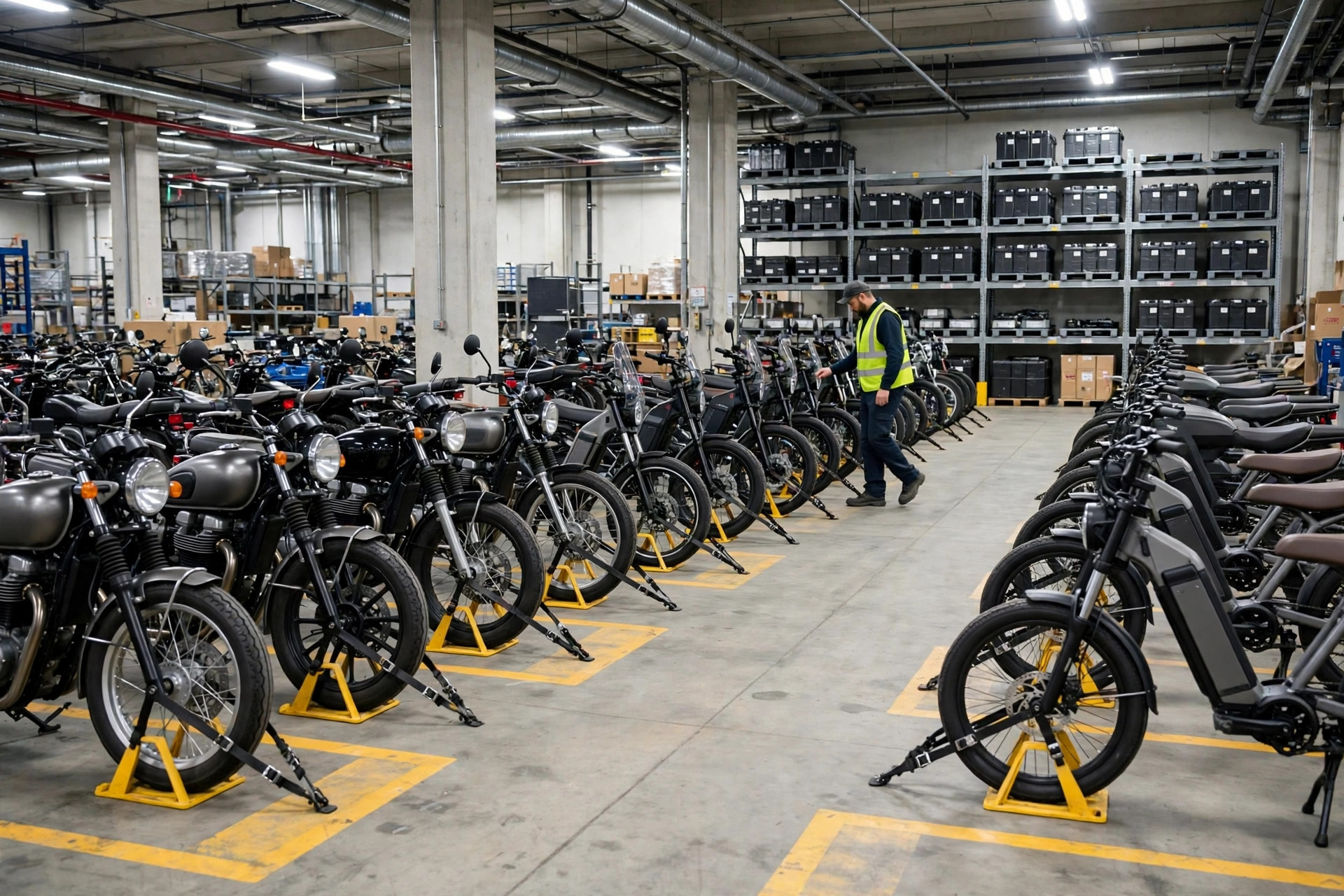
Last summer I dropped a load of parts at a dealer warehouse near Ontario, California. The place held more than sixty bikes, gas motorcycles and e-bikes mixed together in one big open bay, separated by nothing but a yellow painted line. By afternoon the place smelled of gasoline. The manager told me the trade-in bikes from the season change had just come in and had not been processed yet, so they were parked there for now. I told him: there is no "for now" with fuel in a warehouse. A few days later the local fire department came for an inspection. Every gas bike had to be moved to a separate area, the tanks handled, and the ventilation fixed. It took two days to get back to normal work. Not one bike was lost, but the delayed deliveries and repair jobs cost the manager a month of headaches.
I saw the other side of the same problem near Phoenix, in an e-bike service warehouse. That place looked clean: no oil on the floor, workers in gloves, everything tidy. But they kept removed lithium batteries on the same row of racking as whole bikes. One battery had already swollen slightly, and a worker, trying to save time, stuck a note on it and left it on the second level of the rack. The manager stopped everything, moved the battery into a metal isolation cabinet, and re-marked the whole row. Nothing caught fire that day, and that was pure luck. After that came a hard rule: no battery, swollen or not, ever shares a row with a whole bike.
Motorcycle Warehouse Storage Starts With Three Groups, Not Empty Floor
The first step is not finding an empty spot. It is sorting bikes into three groups: gas motorcycles, whole e-bikes, and removed batteries. Gas bikes bring fuel vapor risk, e-bikes bring battery thermal runaway risk, and a loose battery brings impact and crushing risk. Mixing them puts three problems at the same table.
A gas bike goes through fuel draining before storage. Draining does not just mean emptying the tank. Fuel left in lines and carburetors, and the vapor sitting in the tank, has to be handled too, and the bike needs ventilation until the gasoline smell is gone. Do not skip this step to save time: half an hour per bike buys you a warehouse you can leave at night without worrying. The draining record should match the vehicle identification number — who drained it, when, and who checked it. If something goes wrong later, that record tells you where to look.
For a whole e-bike, the battery condition comes first. Before storage, check for impact damage, swelling, leaking, or burn marks around the charging port. A bike with a suspect battery does not go into general storage: isolate it first, then get the manufacturer or a qualified technician involved. Warehouse staff should not open a battery pack themselves. Charging needs its own rule too: charge only in a designated area, disconnect promptly when done, and never leave high-current charging running overnight with nobody on site.
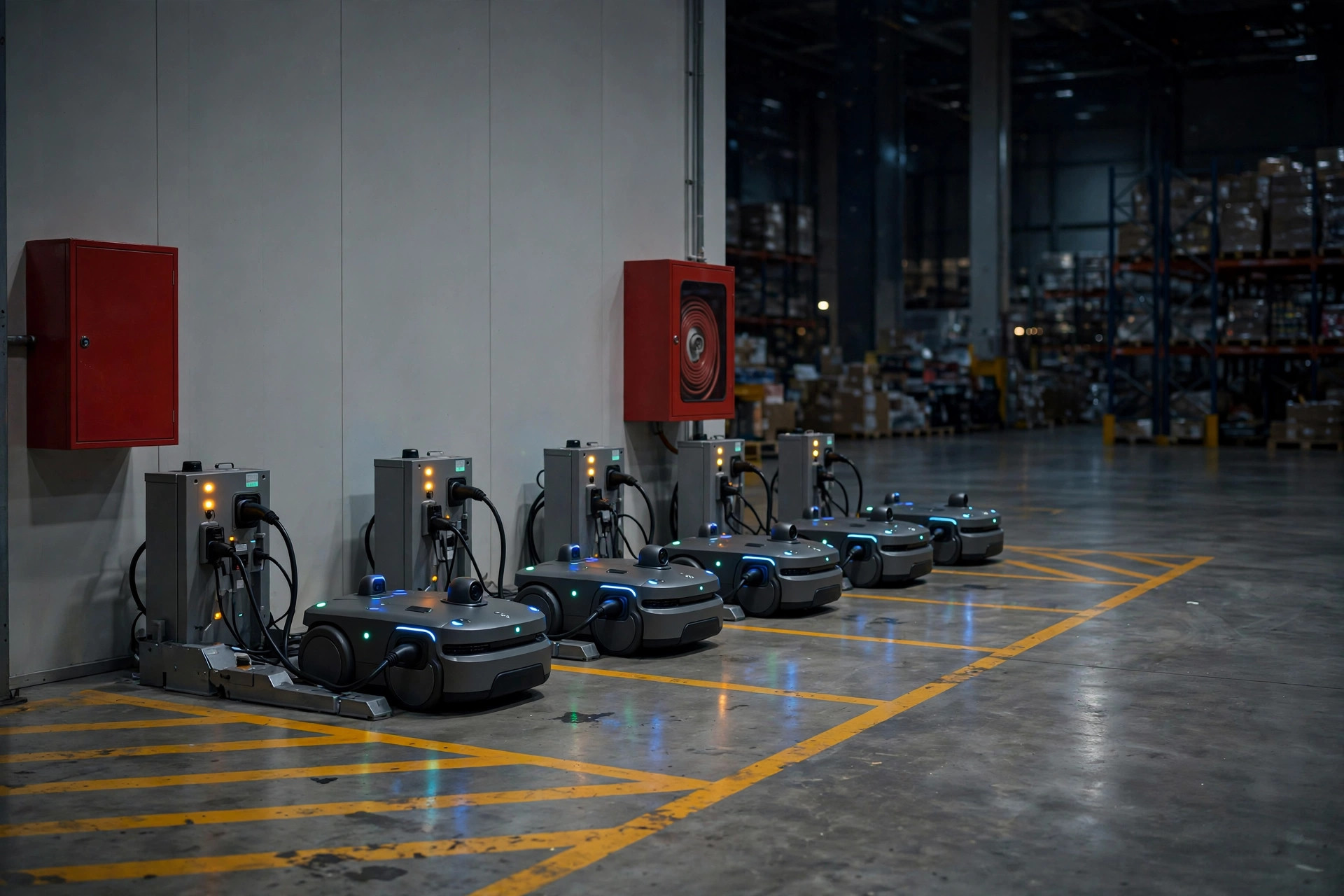
Removed batteries are the trickiest item in the building, and the easiest to underestimate. My advice is a dedicated isolation area, in metal cabinets or fire-resistant boxes, away from gas bikes and anything flammable. No cardboard stacked around it, no tires leaning against it. Handle batteries gently, never stack or squeeze them, and any swollen, damaged, or water-exposed battery gets isolated, logged, and sent through a professional channel — never repaired in-house.
Motorcycle Warehouse Storage Fire Math: Fuel and Electricity Counted Separately
Most people do the storage math wrong. They count floor space and how the rent divides out. Let me tell you, that math leaves out the most expensive line: what one fire incident costs. Fuel and electricity have to be counted separately, because you prevent them in completely different ways.
The gas area needs ventilation and separation: its own zone, away from hot work, charging, and battery isolation. Keep it clear, keep extinguishers where hands can reach them, and make sure staff know how to use them. Ventilation cannot just mean opening the big door. Gasoline vapor is heavier than air and travels along the floor, so low-level ventilation and daily floor checks matter just as much. Walk the area at opening and closing, smell for fuel, look for stains and leaks, and write it down briefly.
The battery area needs isolation and early detection: smoke detection and a clear plan for a battery that runs hot or starts smoking. The first step is evacuation and calling for help, not pouring water on a smoking battery. Extinguisher setup, spacing, and reporting vary by location, so always follow the latest requirements of your local fire department. Do not copy another warehouse's plan or invent code numbers from experience; every building has different construction and sprinkler coverage.
Here is the comparison I tell dealer warehouses to work through:
| Storage approach | What it saves | What it costs | Who it fits |
|---|---|---|---|
| Everything mixed in one open bay | No zoning work, fastest intake | Fuel and battery risks stacked; one incident hits the whole warehouse | A tiny shop with a handful of bikes |
| Gas, e-bike, and battery zones separated | Risk contained; one incident stays small | More isolation space and labor to manage zones | A dealer warehouse holding dozens of bikes year-round |
| Whole bikes sent to a specialist site | Lowest risk inside your own warehouse | Outside fees plus transport back and forth | Seasonal overflow when your own warehouse is full |
When you run the numbers, do not stop at rent and labor. Put the cost of a shutdown for an inspection fix, and of one fire incident, into the same comparison. Once those are in, the extra labor and space for zoning turn out to be the cheapest insurance in the building.
How to Tie a Bike Down So It Stays Up
There is one more everyday hazard that gets overlooked: a bike falling over. Denting the bike next to it is a small problem; falling onto a person, or snapping a fuel line open, is a big one. I have seen bikes parked so tight that pulling one out of the middle tipped the next one, and three went down in a row. Luckily nobody was standing beside them.
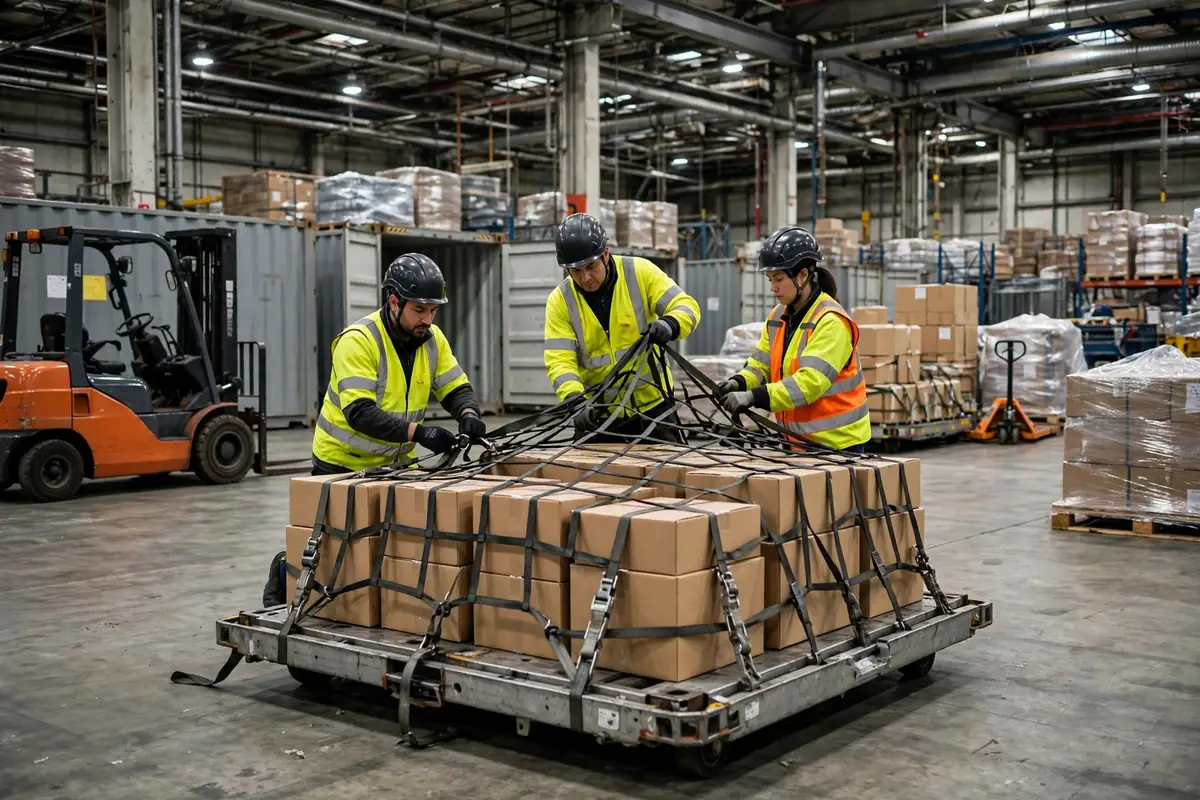
Tie-down has three parts. First, the floor must be flat and non-slip, and every bike gets both its side stand and a front-wheel chock. Never trust the side stand alone. Second, leave a retrieval aisle wide enough that taking one bike out does not mean shoving three others. When the aisle is too narrow, workers yank and push, and a falling bike is only a matter of time. Third, put heavy bikes against a wall or column, in a stable spot. Do not squeeze light e-bikes into the same row as heavy gas bikes; one bump can knock the light one over.
Storage order matters too. Bikes leaving soon go outside, long-term bikes go inside, and seasonal trade-ins get their own row. Motorcycle warehouse storage is about density, sure, but density comes after tie-down and fire safety. A bike parked for months needs regular checks on tire pressure, battery charge, and fuel lines, and before it goes back out it should pass the same intake check as a new arrival. A bike sitting still develops problems quietly.
Here is a judgment that surprises most people: the most dangerous bike is not the one with a full tank. It is the one with half a tank that has sat untouched for months. Less fuel means more vapor space inside the tank, and vapor catches fire far more easily than liquid fuel. Add months of nobody checking it, and an aging fuel line can leak unnoticed. So do not judge by the fuel gauge. Every gas bike entering storage goes through the same draining process, no matter how much fuel is left, no exceptions.
Motorcycle storage comes down to three sentences: keep fuel and electricity apart, isolate batteries on their own, and tie every bike down before you talk about density. One extra aisle, half an hour of draining, one more isolation cabinet — that is what buys you nights when you can sleep. After all these years on the road, I believe one thing: the most valuable thing in a warehouse is not the bikes. It is the days when nothing goes wrong.
By Shifu Zhao, Trucking Veteran (15 yrs)