Morocco holds roughly 68 percent of the world's known phosphate rock reserves, yet produces only about 15 percent of global output. First in reserves, second in production — that gap is the right place to start any serious look at morocco ocp phosphate export warehouse logistics. The question is not how much rock sits underground. It is how the rock gets above ground, converted into shippable product, and loaded onto vessels on schedule.
Morocco OCP Phosphate Export Warehouse Logistics in Three Sets of Numbers
According to the U.S. Geological Survey, Morocco produced about 35.3 million tonnes of phosphate rock in 2024, up from 32.1 million tonnes in 2023, ranking second in the world behind China. Reserves stand at about 50 billion tonnes, roughly 68 percent of the global total, ranking first by a wide margin. The distance between those two rankings says something important: Morocco's advantage was never about how much it digs in a given year. It is about holding the supply of the decades ahead.
The export mix says even more about where the warehousing work actually sits. USGS trade data put Morocco's 2024 fertilizer exports at about 12.4 million tonnes, up from 10.9 million in 2023; phosphate rock exports at about 6.8 million tonnes, up from 4.6 million; and phosphoric acid at about 1.4 million tonnes. Mining exports totalled about 9.3 billion dollars, or 20 percent of Morocco's total exports, and phosphates and derivatives accounted for about 8.7 billion dollars of that — 94 percent of mining exports. In other words, the country's main export is no longer rock. It is processed fertilizer.
Supply is equally concentrated. OCP Group, the state phosphate company, is the country's sole producer of phosphate rock, phosphoric acid, and phosphate fertilizers, with the government holding about 94.12 percent of the company. In 2025 OCP reported revenue of about 114 billion dirhams, up roughly 17 percent year on year. One company, one chain, from mine to port under a single hand — a structure that is rare among global bulk commodities.
A 187-Kilometre Pipeline Rewrote the Warehousing Math
Khouribga holds Morocco's largest phosphate deposit, and Jorf Lasfar is the world's largest phosphate fertilizer production complex. About 187 kilometres lie between them. Before 2014, that gap was bridged by rail, with about 14 trains a day hauling rock to the port for processing. In April 2014, a 187-kilometre slurry pipeline entered service, designed to move about 38 million tonnes a year at roughly 90 percent lower transport cost than rail.
What flows through the pipe is not rock. It is slurry: ore ground fine and mixed with water, pumped to the coast and dewatered for processing. That detail deserves a pause, because it contains the counterintuitive point of the whole chain. Morocco's biggest logistics innovation was not digging faster. It was changing what gets transported, from a solid to a liquid, so that ore could flow like water. In the rail era, warehousing meant stockpiling at the mine, waiting for trains, and loading wagons. In the pipeline era, warehousing means continuous flow, buffer capacity at the port, and receiving at the processing end. The bottleneck moved from "are there enough wagons" to "does pipeline throughput match processing capacity," and the warehouse's job shifted from managing stockpiles to managing flow.
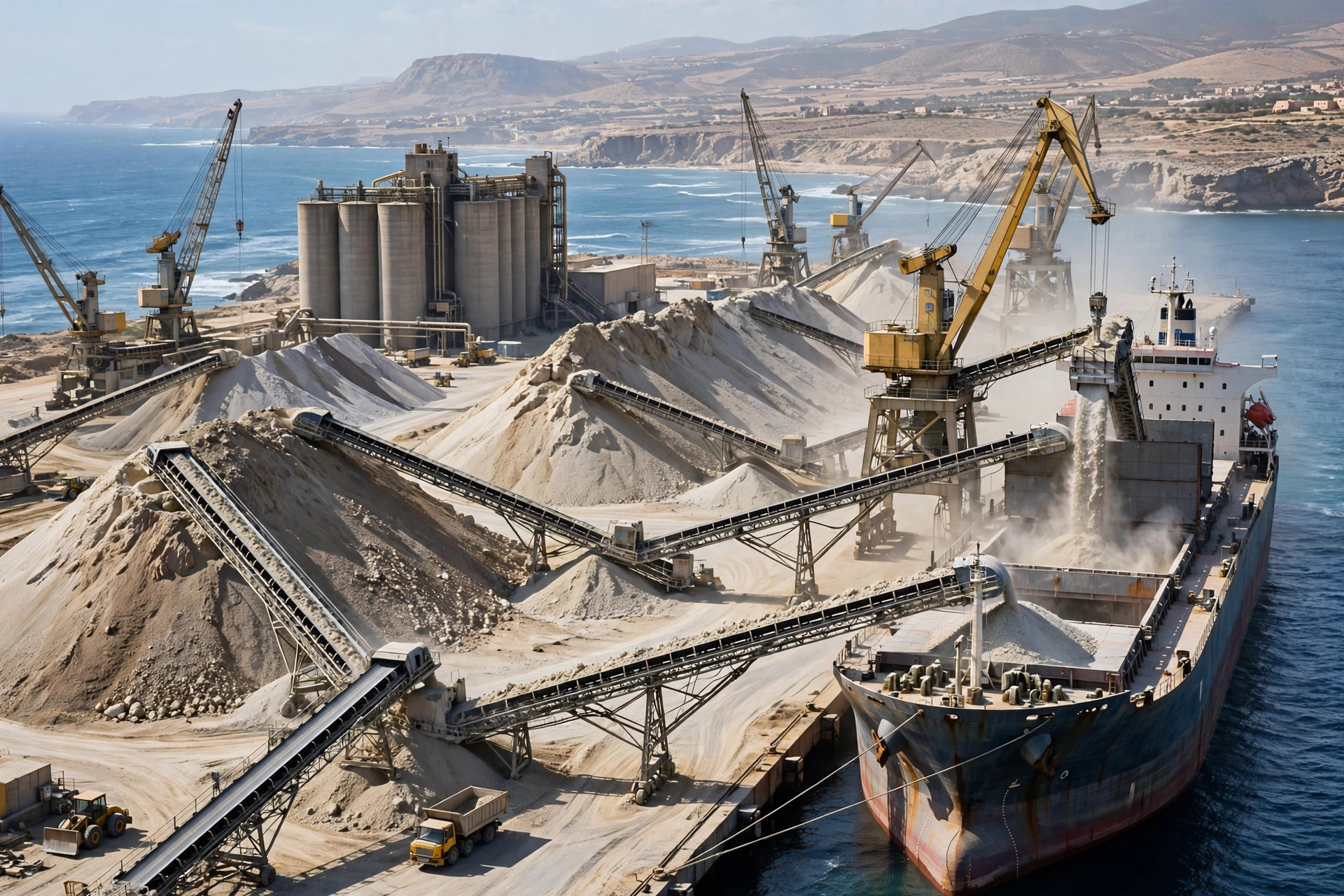
The pipeline also explains how Jorf Lasfar grew into the world's largest phosphate fertilizer complex. Feedstock arriving in a steady, uninterrupted stream lets processing units run near full load all year, and lets the port's stockyards, silos, and shiploading systems run on an industrial rhythm instead of reacting to a train timetable. Warehousing here is not a cost centre. It is the metronome of the entire chain.
One more comparison is worth noting: the pipeline was designed to move about 38 million tonnes a year, while Morocco produced about 35.3 million tonnes of phosphate rock in 2024. Design capacity and output are nearly matched, which leaves little slack — any stoppage anywhere along the line reaches the port almost immediately. That is the hard part of morocco ocp phosphate export warehouse logistics: the bet is not on how deep the inventory runs, but on whether the flow ever breaks.
The Export Mix Has Moved On, and Morocco OCP Phosphate Export Warehouse Logistics Moves With It
The three export forms have entirely different storage requirements, and the 2024 export volumes make a ready-made comparison:
| Export form | 2024 exports | Storage requirement |
|---|---|---|
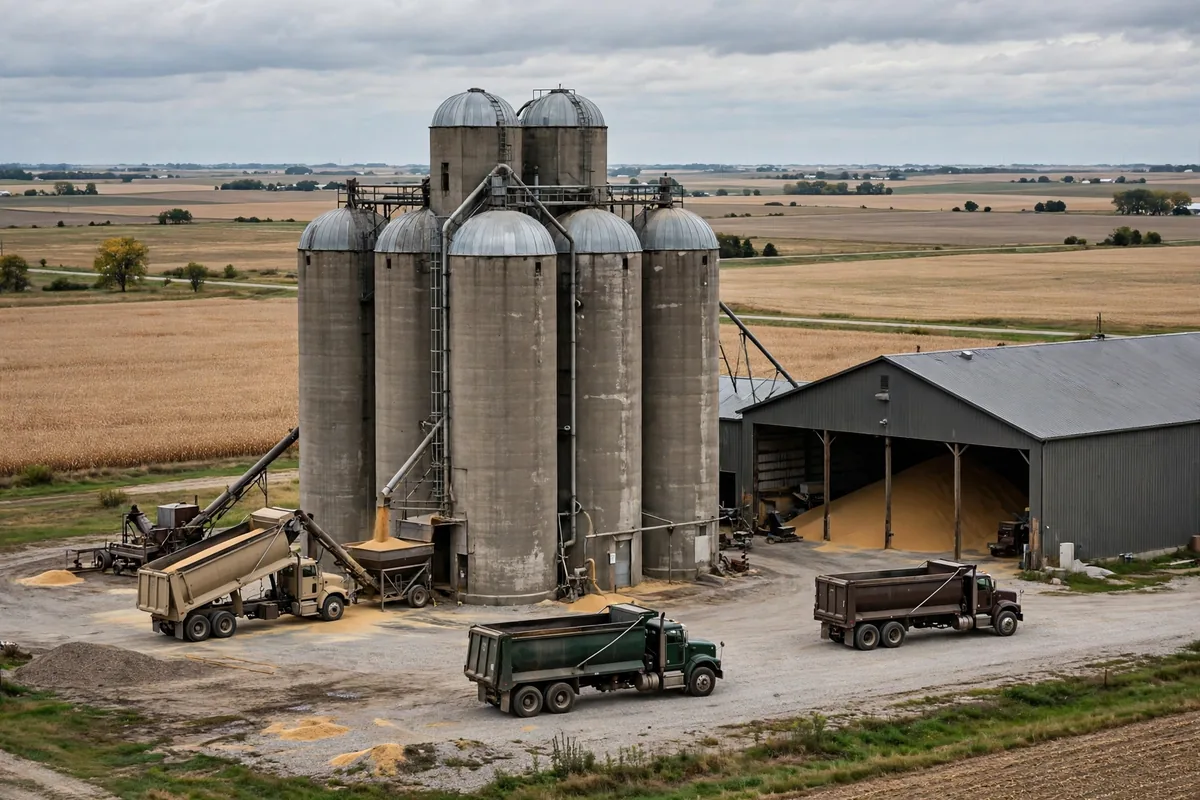
| Phosphate rock | about 6.8 Mt | Open stockyards, rain protection, dust control, fast turnover |
| Phosphoric acid | about 1.4 Mt | Tank storage, corrosion protection, leak control, liquid handling |
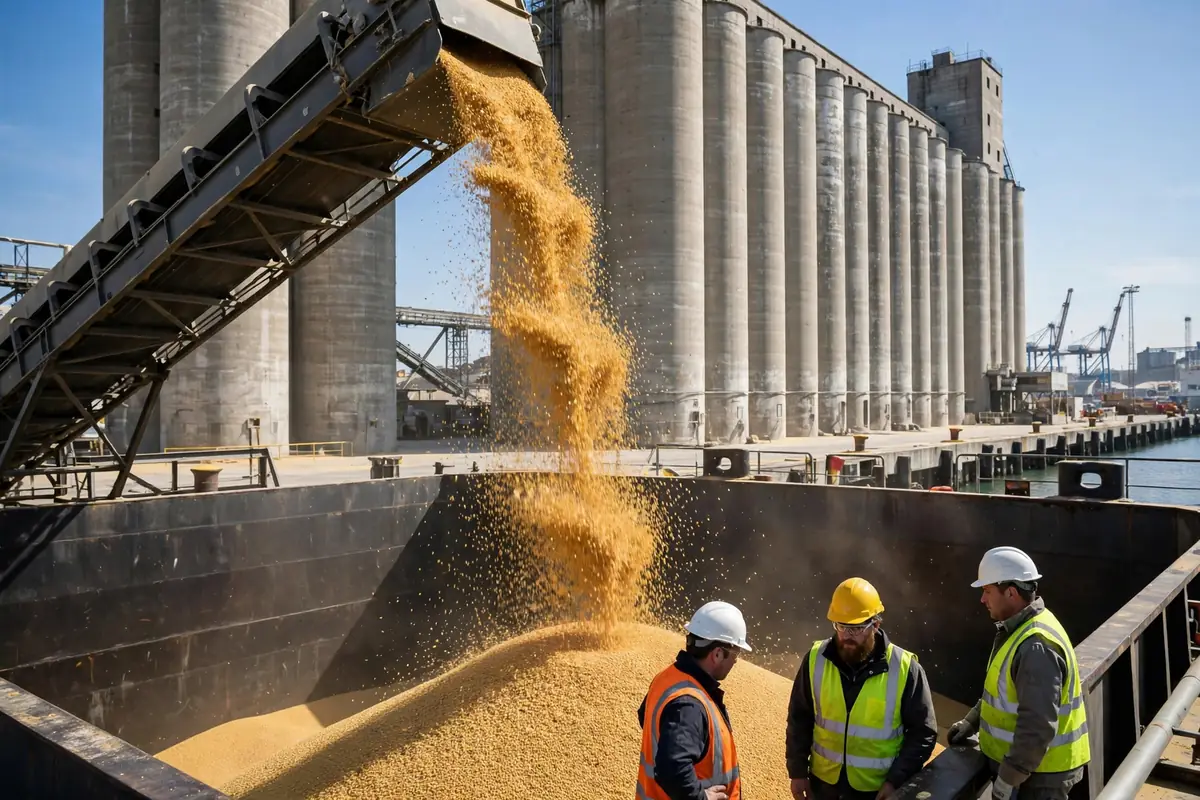
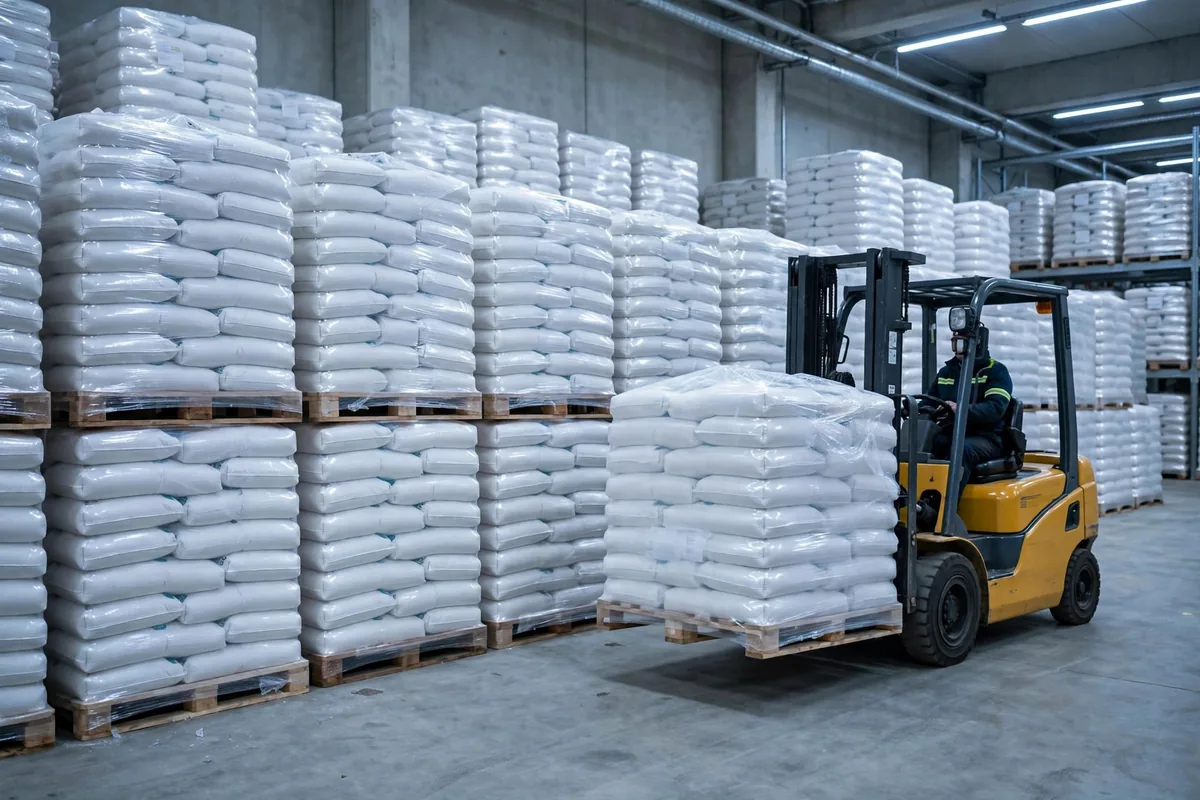
| Phosphate fertilizer | about 12.4 Mt | Silo storage, moisture protection, anti-caking, segregation by grade |
Fertilizer exports run at nearly twice the volume of rock, and the balance keeps tilting toward processing. OCP is expanding phosphate rock capacity from about 47.5 million tonnes a year in 2024 toward 70 million tonnes a year by 2028, and the expansion covers the whole conversion chain rather than mining alone. For warehousing, that means the return on silos, finished-product stores, and port shiploading capacity is now outrunning the return on mine-side stockyards.
Demand is adding pressure too. India is one of the largest buyers of Moroccan phosphate, with exports to India expected to exceed 2.5 million tonnes in 2025, up from about 1.8 million tonnes in 2024. The more dispersed the buyers, the denser the shipping schedule, and the less room the port has for a missed rhythm.
One more variable belongs in any forward-looking assessment: water. Ore processing and slurry transport both consume water, and Morocco is chronically water-stressed. In 2025, a desalinated-water pipeline from Jorf Lasfar to Khouribga entered service — about 203 kilometres long, able to deliver about 80 million cubic metres a year — helping OCP reach full reliance on non-conventional water two years ahead of schedule. Water never appears in a warehousing plan, but on this chain water is another form of inventory: if the water stops, the pipeline stops, and the port stops receiving cargo.
Put the numbers together and the direction of travel becomes clear. Morocco's moat is shifting from "ore in the ground" to "a chain above ground." The reserve advantage will not disappear, but export competitiveness is increasingly decided by processing depth, pipeline throughput, and port rhythm. The next date worth watching is 2028: whether the capacity target is met will decide if Jorf Lasfar's silos and berths need another round of expansion. And for every buyer who depends on Moroccan fertilizer, the indicator that matters is not the reserve figure. It is the month-to-month stability of shipments along this chain.
As for warehousing itself, the answer was already written into that 2014 pipeline: once cargo starts flowing like water, a warehouse stops being a place to pile things up and becomes a valve that controls the flow.
By Dr. Chen, Supply Chain Researcher