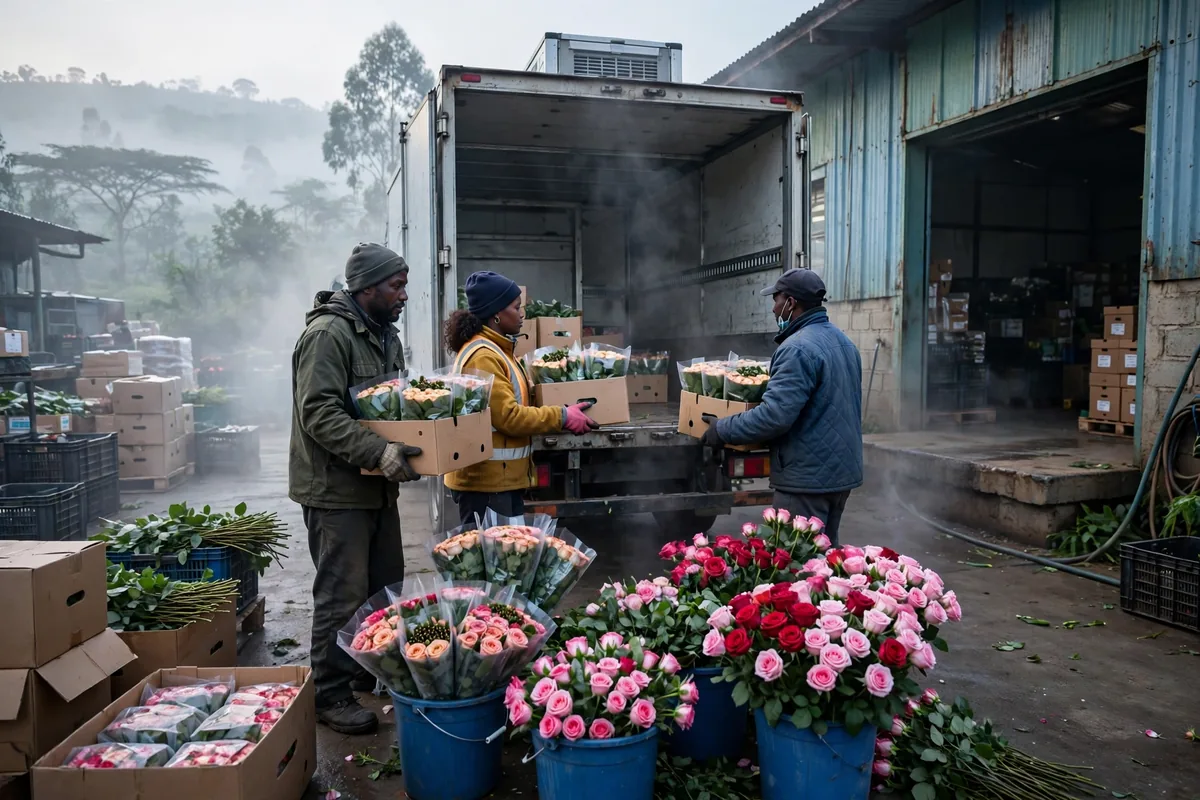
Any serious discussion of mombasa kenya flower cold chain logistics has to start with a correction. The great majority of Kenyan cut flowers do not leave through the Port of Mombasa at all. They are grown in the highlands around Lake Naivasha, Nakuru, and the outskirts of Nairobi, trucked a relatively short distance to the airport in Nairobi, and flown to auction and distribution markets in Europe. Mombasa matters greatly for Kenyan tea, coffee, and containerised cargo that tolerates a sea voyage. Flowers, measured against a vase life counted in days, generally do not. If an analyst models flower logistics as a port problem, the bottleneck will be placed in the wrong location from the outset.
How mombasa kenya flower cold chain logistics actually flows: packhouse first, airport second
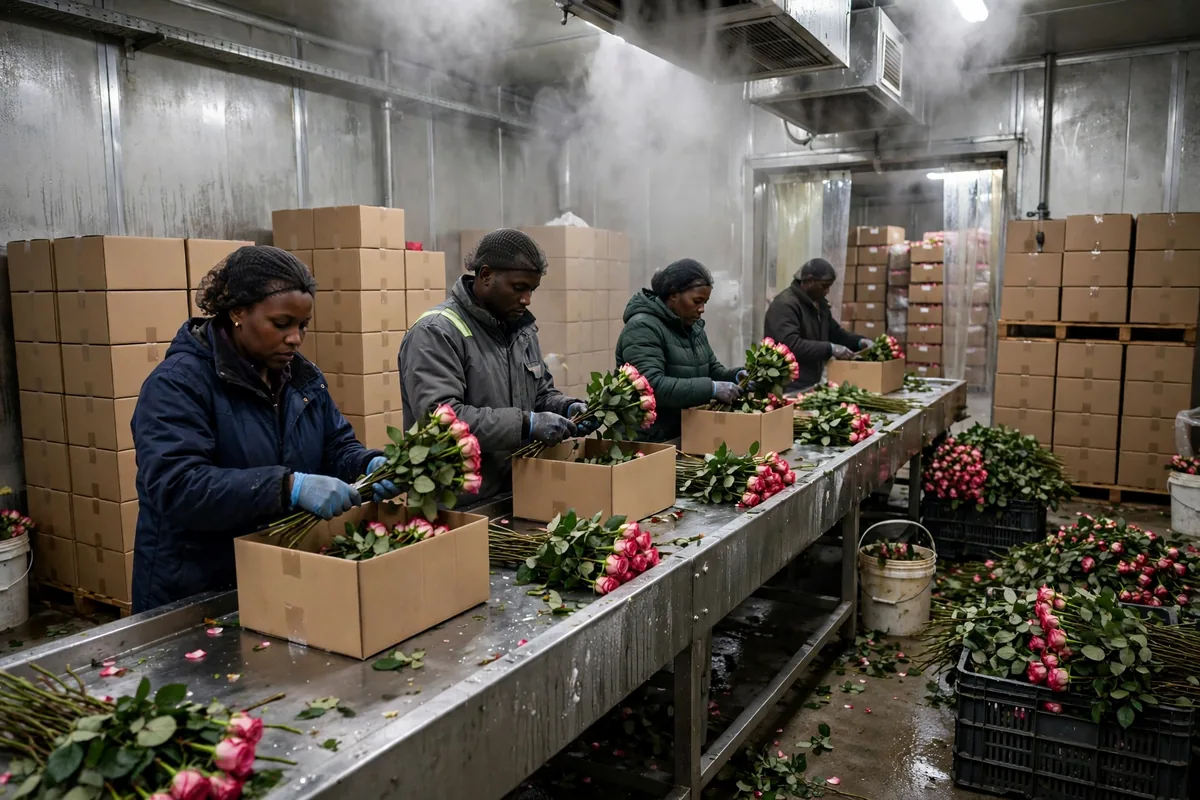
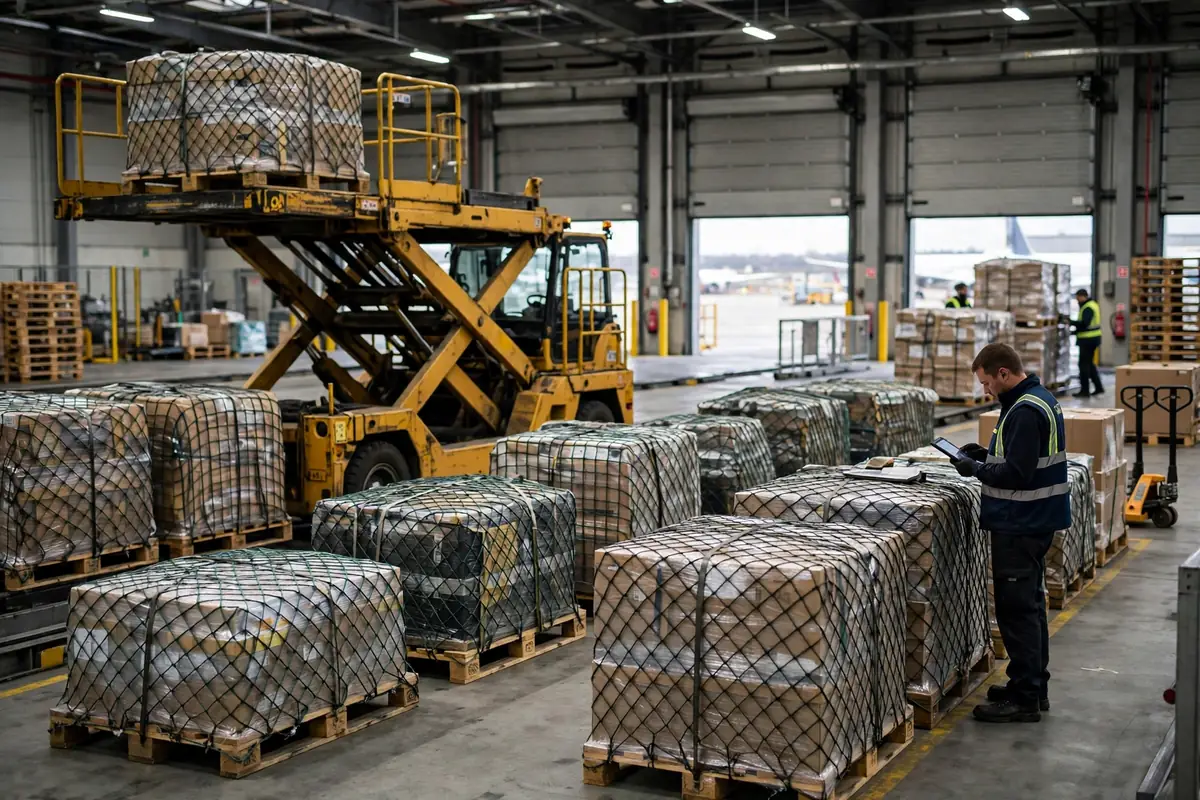
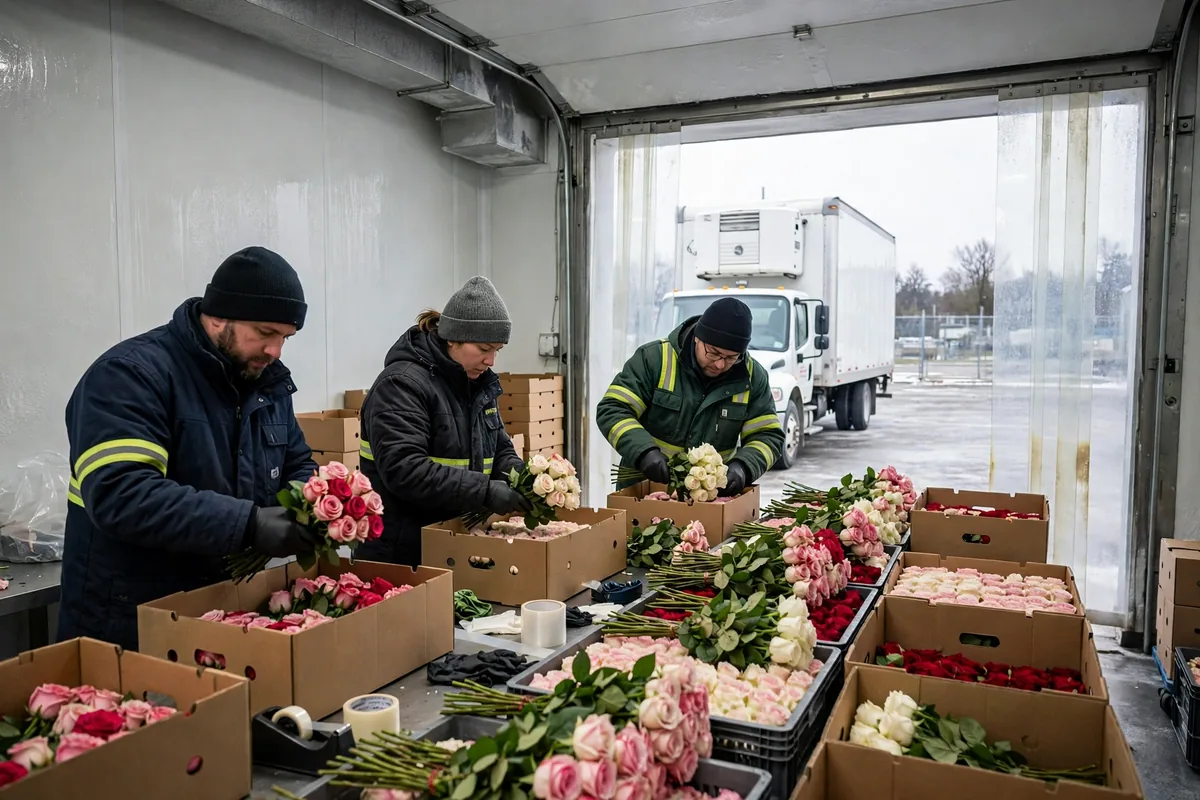
The chain begins at harvest, usually in the early morning when field heat is at its lowest. Stems are graded, bunched, and moved into pre-cooling, where forced-air or hydro-cooling pulls the product temperature down toward the low range required for transport. Only after that step are flowers boxed, palletised, and loaded into a refrigerated truck for the run to the airport cargo village, where they are screened, built onto air pallets, and held in cold rooms until loading.
Two field cases illustrate where quality is actually lost. In 2023, during a visit to a mid-sized rose farm near Naivasha employing roughly a few hundred workers at peak season, one pre-cooling fan failed on a harvest morning. A batch of several thousand stems waited hours longer than planned in the ambient grading area before cooling. The farm did not publish a precise loss figure, and it would be misleading to invent one, because sensitivity varies sharply by variety. What the farm could show was directional and consistent: that batch drew noticeably more quality complaints at destination than batches cooled on schedule the same week.
The second case comes from 2024 at a cargo handler near Nairobi's airport. An exporter had scheduled the refrigerated truck to arrive very close to the flight cut-off. The vehicle waited for its handover slot, doors were opened repeatedly during checks, and the in-box temperature trace rose during the wait before settling again in the cold room. The equipment on both sides worked. What failed was the buffer: there was no slack in the schedule for a routine delay. Placed side by side, the two cases support the same attribution. Losses concentrate at transitions, not on the longest leg of the journey.
Pre-cooling and handover breaks in mombasa kenya flower cold chain logistics
A simple framework helps allocate attention across the four stages:
| Stage | Core task | Typical break point | Investment priority |
|---|---|---|---|
| Farm pre-cooling | Remove field heat quickly | Cooling capacity shortfall, grading queues | High |
| Packing and boxing | Grade, bunch, box after cooling | Rewarming after boxing, blocked airflow | High |
| Road leg to airport | Hold temperature in reefer truck | Truck not pre-cooled, door openings | Medium |
| Airport handover | Screening, build-up, wait for loading | Ambient waiting, logging gaps | High |
The framework contains a counter-intuitive judgement: for flowers, buying a more expensive refrigerated truck often delivers less than cutting one hour from the pre-cooling queue. The reasoning is physiological rather than financial. At warm temperatures, respiration and deterioration proceed much faster than they do once the product is cold, so an hour lost at the warm end cannot be bought back by excellent temperature control later. Operators nevertheless tend to fund visible transport assets first, because a truck is easy to specify and photograph, while re-sequencing a grading line looks unglamorous. The data pattern, however, points the other way.
A small illustrative calculation makes the trade-off concrete. Suppose a packhouse handles 100 boxes on a peak morning and its cooling room can process 25 boxes per hour. The last boxes therefore wait about four hours before cooling even begins. Adding a second cooling position that doubles throughput cuts that wait to roughly two hours for the same volume, without changing the truck fleet at all. The numbers here are illustrative rather than a benchmark, and each farm should measure its own queue, but the arithmetic shows why queue time, not vehicle specification, is usually the first variable to examine.
Packing detail matters more than most audits acknowledge. If cartons are sealed before cooling is complete, cold air cannot reach the centre of the box, and stems can arrive with a cool exterior and a warm core. The sounder sequence is to finish cooling first, seal afterwards, and leave airflow channels when palletising, even when that costs a little loading density. None of that requires major capital spending, yet it determines whether the cold room thermometer reading actually describes the temperature of every box.
Temperature logging deserves separate treatment. The more mature exporters place data loggers at pallet or box level from post-cooling through airport handover and onward to the destination warehouse, producing one continuous curve. The value of that curve is diagnostic rather than punitive. If the trace is flat on the road and climbs during the cargo-village wait, the corrective action is obvious and narrow. Without a continuous record, buyer and seller are left arguing from arrival condition alone, which raises dispute costs for both sides. Logger density should still be matched to shipment value and variety sensitivity; uniform maximum coverage is not automatically the rational choice.
Where does Mombasa fit, then? As a comparison case. Sea-freight cold chain through Mombasa is a contest of stability over weeks: reefer container integrity, yard power, and dwell management. Air-freight flower cold chain is a contest of speed and continuity over tens of hours: cooling rate, handover discipline, and flight timing. Trials of sea-freighted flowers exist and are worth watching, but voyage length and variety tolerance mean they are more plausibly a niche supplement than a near-term replacement for the air route.
Three variables will reward continued observation. First, whether airport cold-room and handling capacity in Nairobi keeps pace with peak-season flight density. Second, whether smaller growers gain reliable access to shared pre-cooling or third-party packhouses, which would narrow the quality gap between large and small exporters. Third, whether logger data begins to be shared routinely across the handover points rather than held by one party. The trade totals will move for many reasons; pre-cooling coverage and handover waiting time sit closer to the source of loss, and they tend to signal change earlier.
By Dr. Chen, Supply Chain Researcher