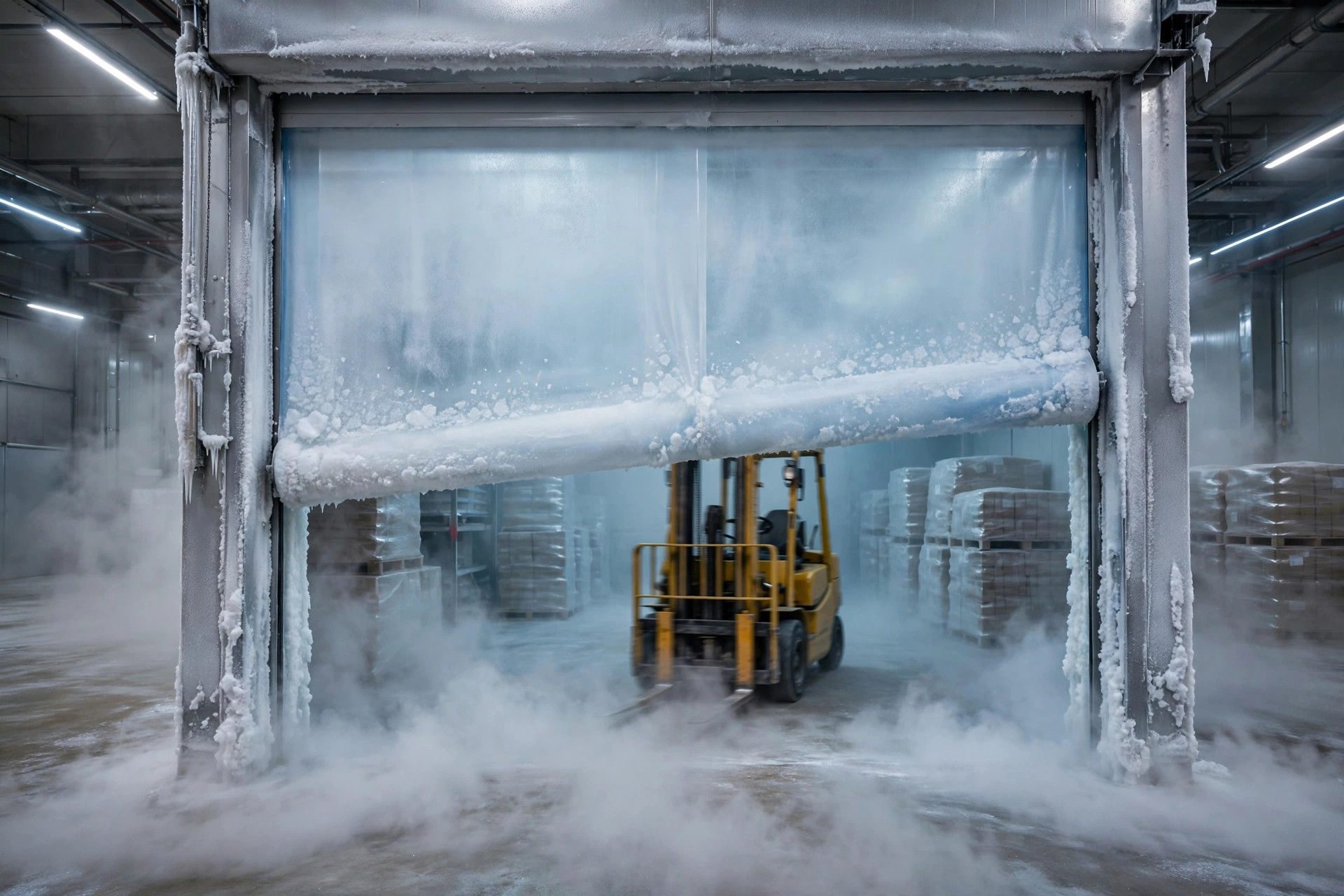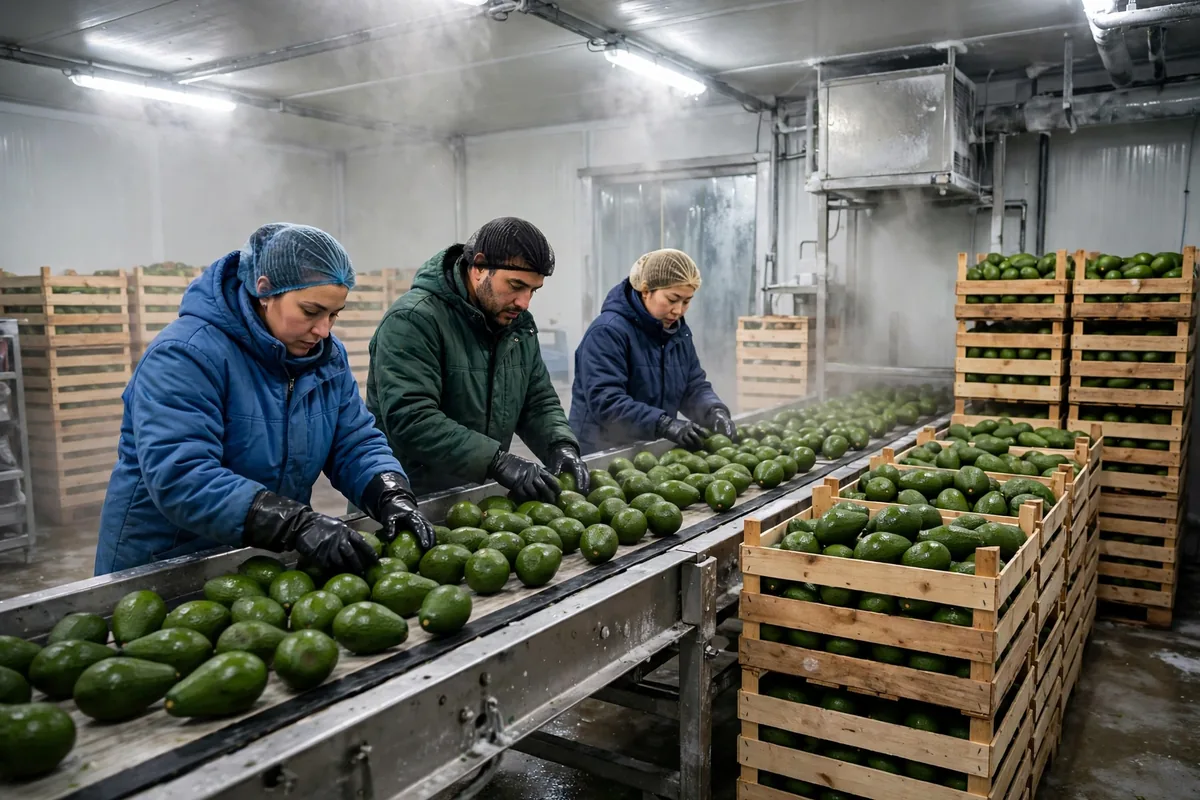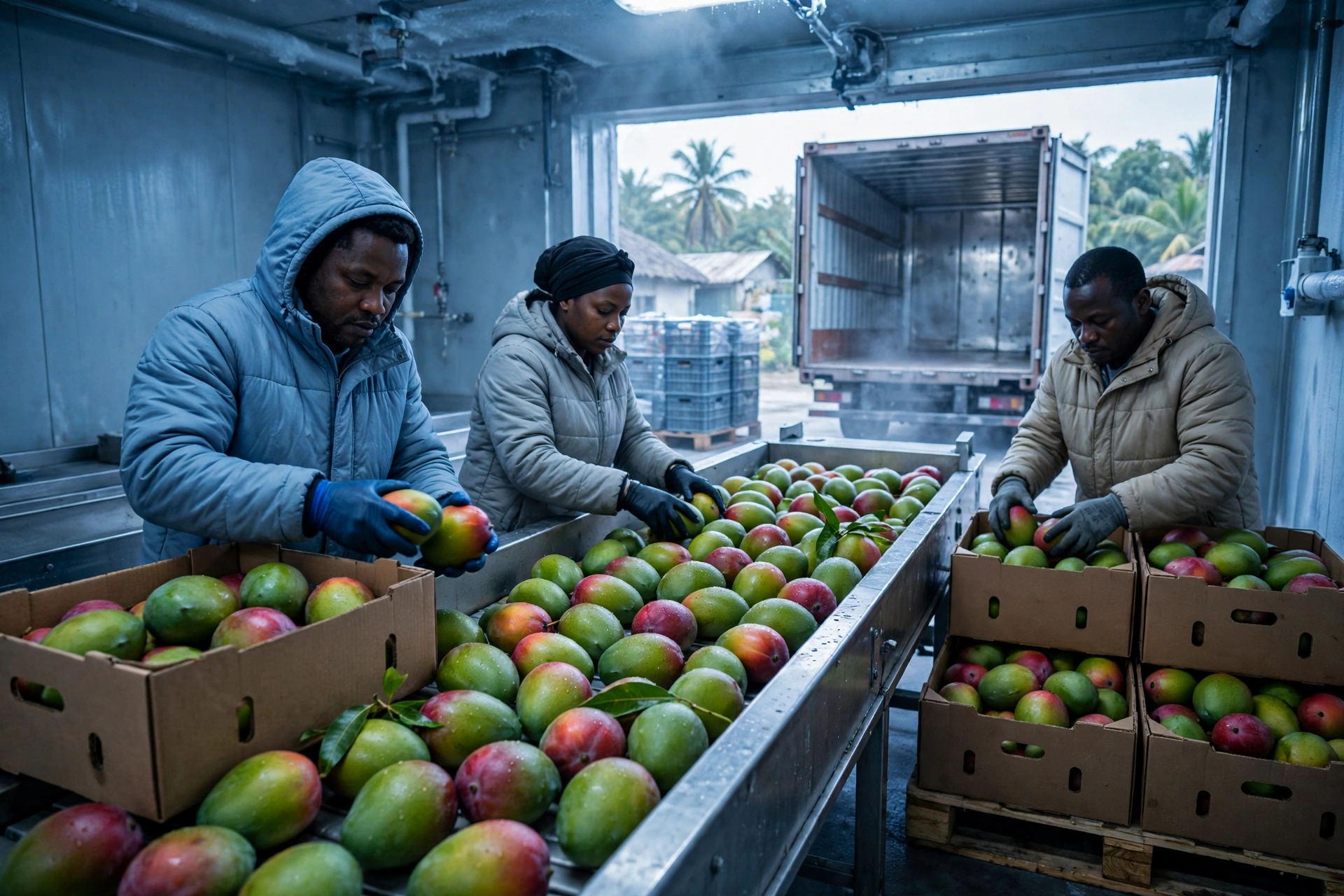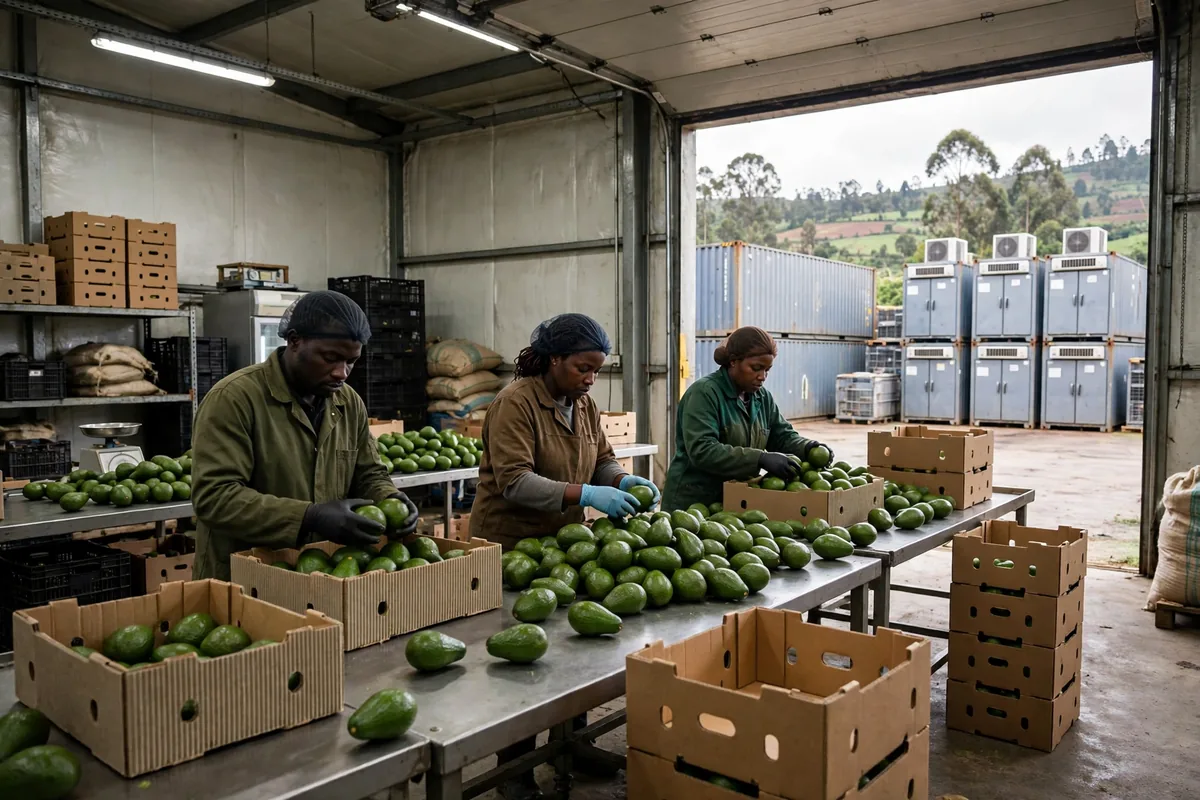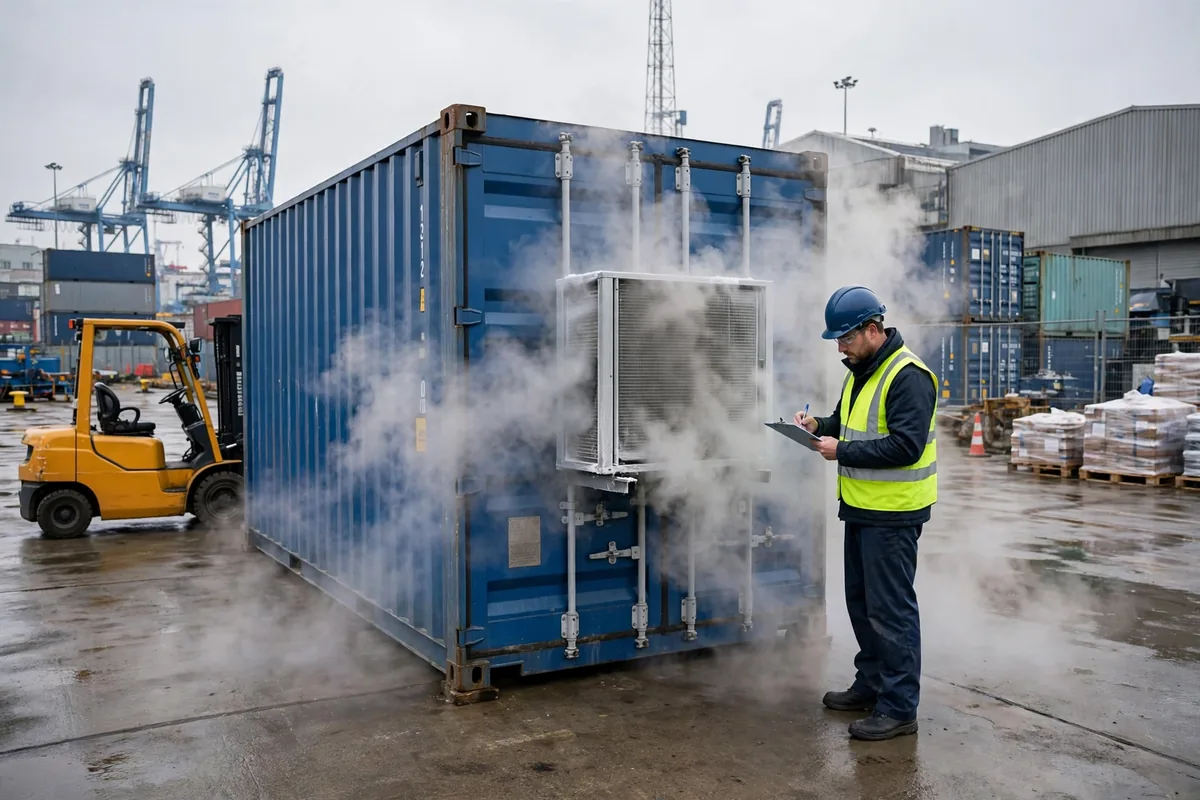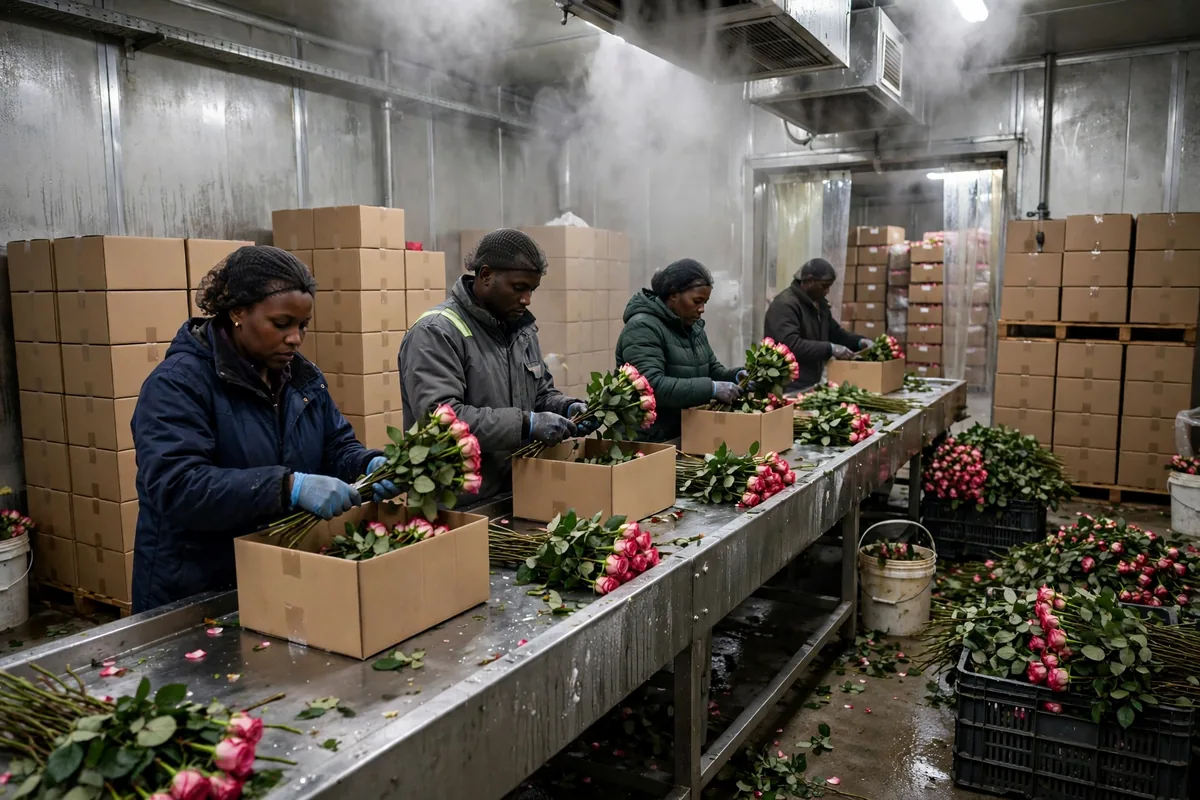
It is half past one in the morning at a cold store near the airport in Nairobi. The roller door is halfway up, cold air is rolling out, and three groups of drivers are already waiting with flower boxes before the forklift has even moved. A kenya flower cold chain warehouse does not fail at noon, when everyone is fresh. It fails at that hour, when the cutoff is coming and tired people start making small exceptions.
Flowers do not argue. They just wilt. Heat left in the stem at intake stays in the box all the way to the aircraft, and no cold room setting can undo a bad first hour.
Where the Loss Actually Happens in a Cold Chain Warehouse
I break one night into five stretches: intake, grading, pre-cooling, cold storage, and build-up for handover. When one stretch slips, every stretch after it has to rush. Rushing is where batches get mixed, checks get skipped, and boxes end up stacked wherever there is space instead of where they belong.
Here is an illustrative example, not any one company's figures. Say the plan is four outbound batches, each needing grading and pre-cooling. If the grading bench runs short of hands, the first batch finishes a little late. A little late sounds harmless. But pre-cooling slots are now taken by the second batch, so the third batch waits in staging, in the warmest, dampest part of the building. By cutoff time the team is building pallets at full speed and the final check gets squeezed. The machines never stopped. Nobody stood idle. The loss still showed up, in the waiting and the rework, not in the equipment.
So when a buyer complains, do not start with the temperature log. Start with the clock. Ask where each batch waited, and for how long.
| Stage | What usually goes wrong | How we watch it on the floor |
|---|---|---|
| Intake | Trucks queue and boxes sit on the dock | Book arrival slots, unload in order, move boxes inside fast |
| Grading | Short staffing, mixed quality, rework | A senior hand guards the bench and pulls rejects out early |
| Pre-cooling | Boxes sealed before field heat is out | No sealing and no storage until pre-cooling is signed off |
| Cold storage | Aisles blocked, early batches buried at the back | Keep air paths open, store by departure order |
| Build-up | Final checks rushed against the cutoff | Protect one full check round before handover |
Pre-Cooling Before Packing in a Cold Chain Warehouse: Order Matters More Than Power
Plenty of people treat pre-cooling and cold storage as the same job. I'll be honest, they are not. Pre-cooling takes the field heat out of the flower. Cold storage only holds a flower that is already cold. Reverse the order and you seal warm air and moisture inside the box, stack it in the cold room, and feel the cold cardboard with your hand. The outside feels fine. The core is still warm. You find out at inspection, when nothing can be fixed.
We solved it with a low-tech gate. Pre-cooling became a door that freight must pass. No pass, no sealing, no place in the storage rows. Beside the door hangs a whiteboard with three things: batch number, time in, and the name of the person who released it. A new hire once asked why we could not pack while pre-cooling to save time. I told him to push his hand into the middle of a freshly sealed box. It was warm. He never asked again.
Here is the counterintuitive part. A lower cold room setting is not automatically better. The common practice is a low range just above freezing, but the exact band depends on the variety and the buyer's standard, so follow the buyer's standard, not a number someone wrote on a wall years ago. What hurts more than the setting is a door that opens every few minutes, stacks packed so tight that air cannot move, and warm staging habits. On a busy night the curtain goes up and stays up. The row by the door and the row by the wall end up living in two different climates. Spend your effort on door discipline and air gaps before you spend it on a bigger machine. Put the power bill and the loss side by side and the answer is obvious.
Packing follows the same logic. A box protects the flower, but sealed too early it traps moisture, and packed too loosely it crushes under stacking. Our trade-off is simple: we will pack a little slower, but we will not steal time from pre-cooling. Minutes stolen there get paid back as hours of rework.
Long Roads, Short Roads, and One Intake Door
Supply reaches Nairobi from different directions, and freight linked to Mombasa has a long road behind it before it ever sees our dock. Loads from nearby collection points arrive steadier. Loads off a long haul arrive tired, and they do not all deserve the same place in the queue.
One night shift, again as an illustrative scene, two trucks arrived together. One had come off the long road and its boxes felt noticeably warm. The other was a short local run and looked steady. The young shift lead queued them strictly by arrival order. Fair, and wrong. The warm load waited a full extra round on the dock, and by the time it reached pre-cooling the heads had already dropped. After that night we changed the rule: judge condition first, then set the order. A steady load can wait a little. A struggling load cannot. That is why a senior worker stands at intake. One look, one hand on the box, and the call gets made by a person, not by the clock on the gate.
Keep temperature zones boring. Different requirements and different departure times live in different physical places, with big batch cards and clear lanes. At three in the morning nobody remembers batch details reliably. Position, cards, and a signed handover sheet remember for you.
Plan Backwards From the Flight Cutoff
Air export work runs backwards. You start from the flight cutoff and count back: handover and build-up, then the final check, then packing, pre-cooling, grading, and finally the intake deadline. Exact cutoff rules vary by airport, carrier, and forwarder, so confirm them against the latest local official guidance and the shift's own booking notes. The method, though, never changes.
Two stages get protected in that backward plan: pre-cooling and the final check. They are the easiest to squeeze and the most expensive to lose. Our wall board does not say when work starts. It says when each stage must close. Freight that misses the intake deadline does not get forced into the batch. It moves to the next flight, and we tell the shipper early. I'll be honest, forcing one late load into the plan can wreck four good batches behind it. Protecting the many over the one is not hard-heartedness. It is arithmetic.
Staffing runs backwards too. Grading needs experienced eyes. The pre-cooling gate needs a careful person. Build-up needs strength and accuracy. Do not stack all your senior people in the first half of the night and leave new hires alone against the cutoff. We pair every key post with at least one veteran, and handover happens face to face: open batches, problem boxes, and special buyer requests spoken out loud, then signed. Once it is said in front of a witness and written down, responsibility stops wandering.
A kenya flower cold chain warehouse is, in the end, a people system that happens to involve refrigeration. Anyone can buy machines. Anyone can draw a flow chart. The difference shows at the tired end of the night, when the team still pre-cools in order, still stacks by departure, and still closes each stage on the backward clock.
One reminder for anyone running a similar floor. If flowers get rejected at the airport while your logs show perfect temperatures, do not blame the machines first. Pull that night's waiting times, door openings, and handover notes. The answer usually sits in a careless fifteen minutes that nobody thought was worth writing down.
By Chen Feng, Warehouse Operations Manager