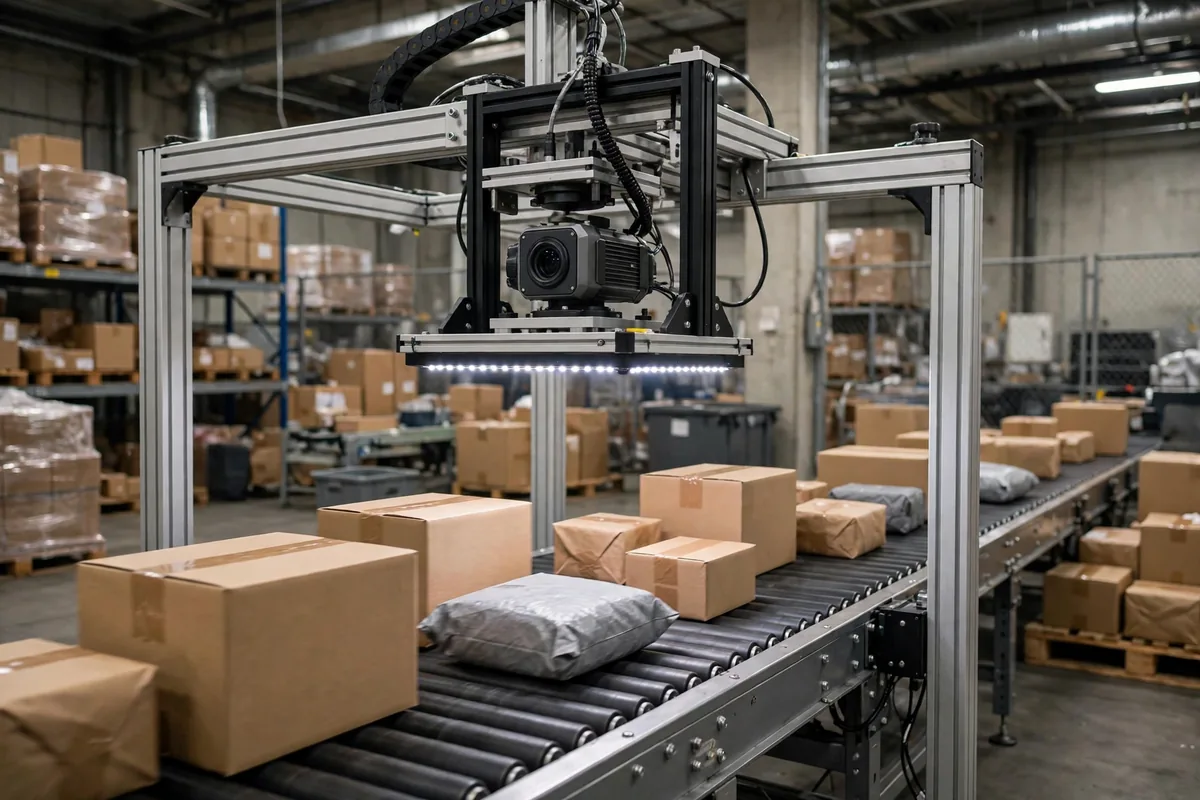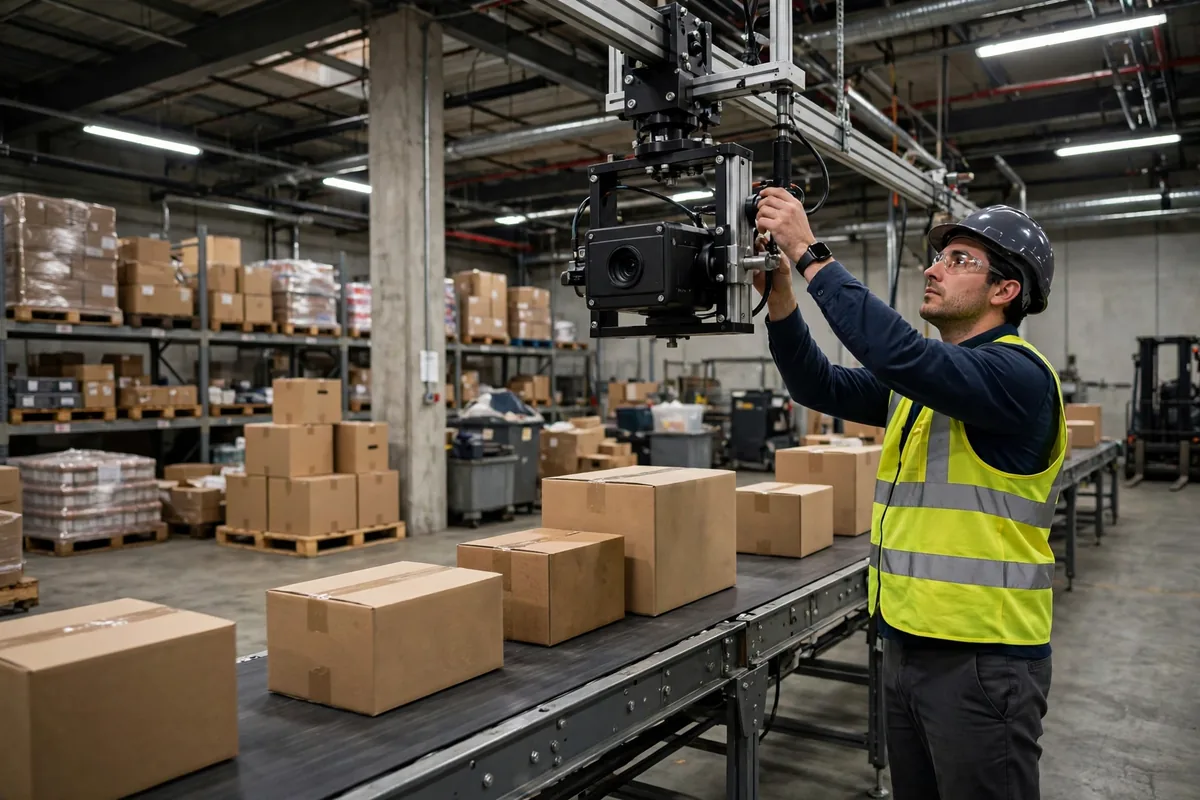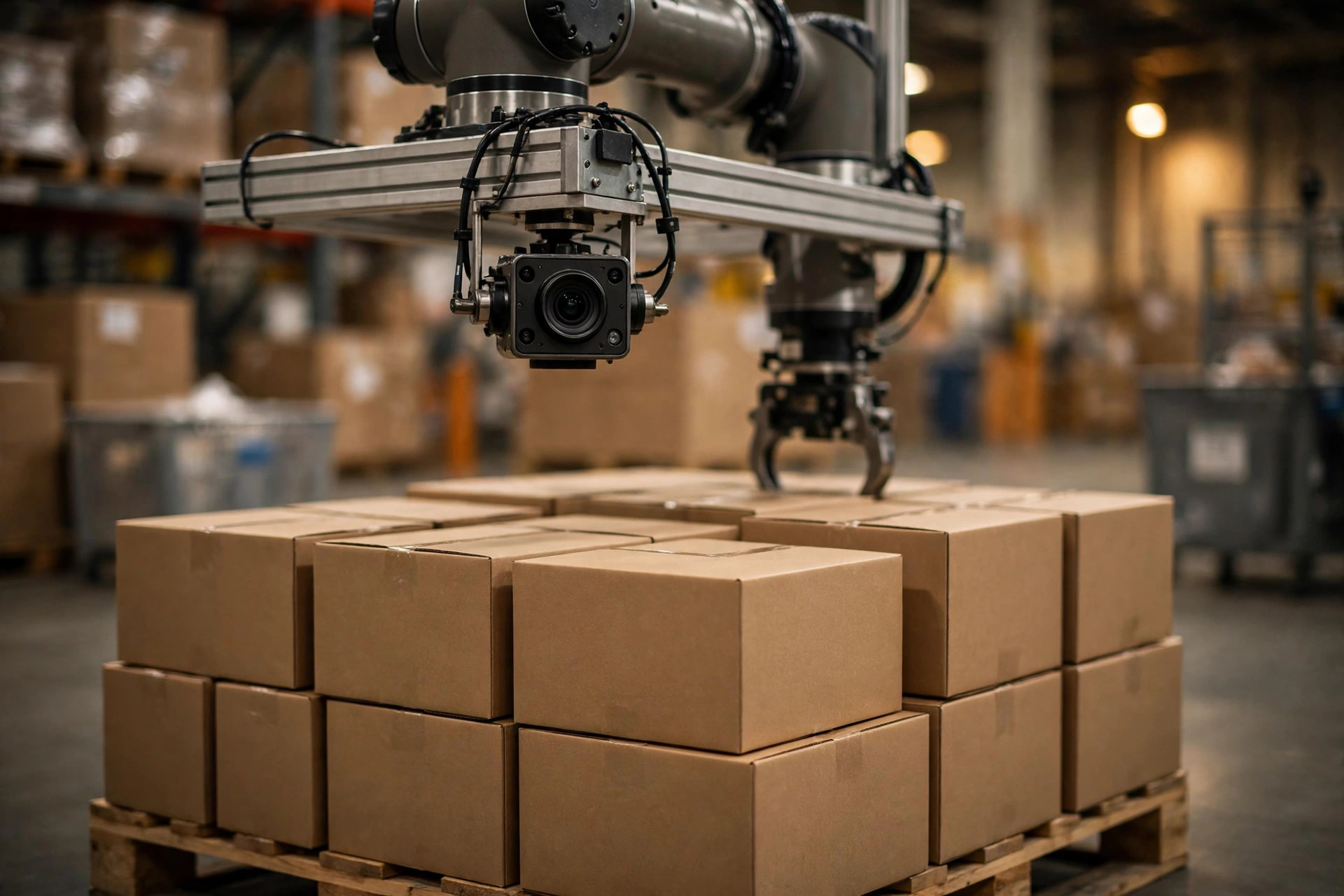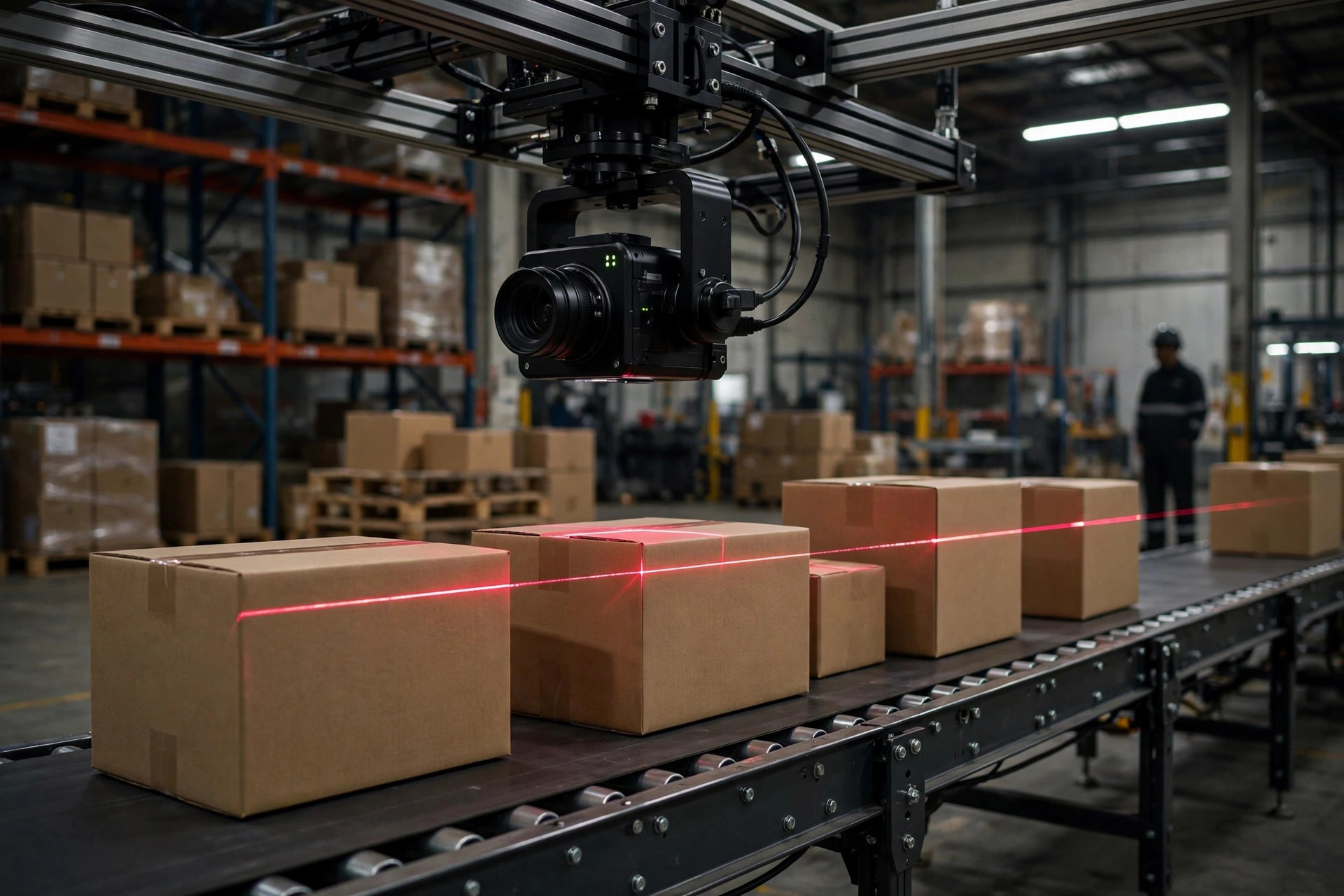
The 2D vs 3D camera question has a simple answer for a small warehouse like mine: nine out of ten of us don't need 3D at all. A 2D camera does the job. Don't get me wrong, 3D is great. Who doesn't want the good stuff? The problem is simple — we small warehouses can't burn money like that. A 3D setup, camera plus calibration plus integration, often costs several times what an equivalent 2D setup costs, and when you run the numbers, the labor it saves doesn't even cover its maintenance. So here is the 2D vs 3D camera question, answered from the floor of a small warehouse.
The Jobs a 2D Camera Already Handles
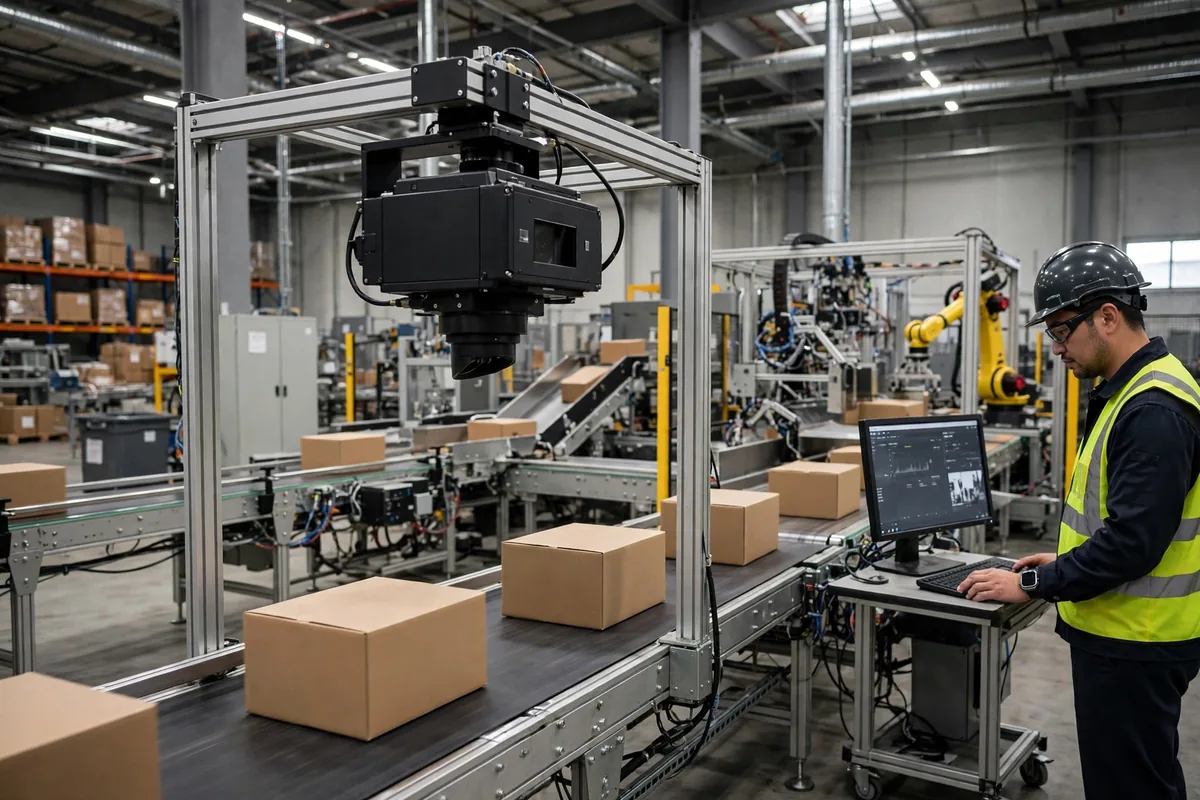
Let me start with our own warehouse. Last year our receiving dock was jammed every morning. Every carton had to be checked against its label by hand, pallets counted one by one, and during peak season two people couldn't clear the queue before noon. So I gritted my teeth and put in a 2D camera setup: the camera reads the barcode on each carton label, counts pallets, and checks whether a pallet is loaded or empty. Just those two jobs. The result? Receiving checks took roughly half the time they used to, and mis-ships dropped noticeably. Why? Because reading codes, counting things, and detecting presence don't need depth information. One flat image is enough. That is what a 2D camera was born to do. That, in one line, is the whole 2D vs 3D camera question: what does the job actually need to see?
There is one detail people always underestimate: lighting. A 2D camera hates glare and shadows. Our dock has a big window, and in the afternoon the sun slants right in and the read rate visibly drops. The fix was embarrassingly low-tech: a cheap fill light and a slight change in camera angle. Problem basically gone. Most 2D camera headaches are lighting and mounting headaches, not camera headaches. Sort those two out before you even think about buying a different camera.
So my call is this: if what you need is reading codes, counting pallets, checking presence, or verifying a label is on straight, a 2D camera is more than enough. Don't let a sales pitch talk you out of it.
When 3D Is Non-Negotiable — and How to Tell
Of course, there are jobs a 2D camera simply cannot do. A friend who runs a warehouse for odd-shaped goods ships items in all shapes and sizes, and his clients bill by volume. He went 3D for volume measurement, and this time I'm on his side: volume, stack height, and the dimensions of irregular items cannot be worked out without depth data. No 2D camera, however cheap, can calculate what it cannot see. After his 3D system went live, volume disputes with clients dropped sharply and billing got much smoother. That money was well spent. This is where the 2D vs 3D camera decision stops being about specs and starts being about your product mix.
But I have also watched the opposite happen. Another warehouse, shipping nothing but standard cartons in two or three sizes, bought a 3D volume system on a vendor's recommendation. The measured volume came out almost identical to the cartons' nominal dimensions, every single time. After six months, the 3D system's core feature had barely done any real work. The money was gone. Measuring standard cartons with 3D is like measuring a football field with calipers: accurate, sure, and completely pointless.
Before you spec anything, go through your own product mix against this table:
| Job | Is a 2D camera enough? | Notes |
|---|---|---|
| Reading barcodes and carton labels | Yes | Fix the lighting before swapping the camera |
| Counting pallets, detecting presence | Yes | Flat image data is enough |
| Label alignment, missing-part checks | Yes | Works best with a fixed angle |
| Volume measurement, bill-by-volume | No | 3D is required |
| Stack height, over-height pallet checks | No | Needs depth data |
| Sizing and shape checks on irregular items | No | 2D cannot calculate it |
Count how many of your jobs land on the right side. Zero? Buy the 2D camera and stop worrying. One or two? Then ask whether those jobs carry enough volume to justify a 3D system of their own.
The Small Warehouse Playbook: Get 2D Working First
Here is the counterintuitive part: for a small warehouse, going 3D is not a technology problem. It's a math problem. Big companies adopt 3D because they push tens of thousands of units a day, so the errors and labor saved spread thin across the equipment cost. We push a few hundred units a day. However accurate 3D is, what it saves us can't cover its calibration, maintenance, and replacement parts. Technology was never the small warehouse's bottleneck. The math is.
So my advice is plain and a little scrappy: get one 2D scenario working first. Pick your single most painful job, say barcode reading at receiving, and run it for a month. See how much time it saves and how many errors disappear. Once it works, your team has a real feel for machine vision, and the 3D conversation happens with actual numbers in hand. If it doesn't work, the problem isn't the camera, it's the process — fix the process first, because that saves more money than any camera swap.
There is one more bill people forget to budget for: calibration and maintenance. A 3D system isn't install-and-forget. Move the camera and you recalibrate; let dust build up on the lens and accuracy drifts; and every recalibration usually means a service visit with a bill attached. A 2D setup is far more forgiving — wipe the lens, swap a light, and anyone on my team can handle it without calling anyone. A small warehouse has no dedicated equipment engineer, so maintenance belongs in the selection math, not just the quote. So before you sign anything, settle the 2D vs 3D camera question with one cheap experiment, not a vendor demo: pick your most painful job, run 2D on it for a month, and let the numbers decide.
And one more honest word: don't chase full automation from day one. Semi-automation is the sweet spot for a small warehouse. The camera reads and counts, people move and judge. Machines do what machines are good at, people do what people are good at, and together the setup is cheaper and steadier than a fully automated line.
A small warehouse has its own way of surviving, and machine vision is no different: get the 2D camera doing real work first, and 3D will come when it's actually time. No need to leap in one step.
By Xiao Ma, Small Warehouse Owner