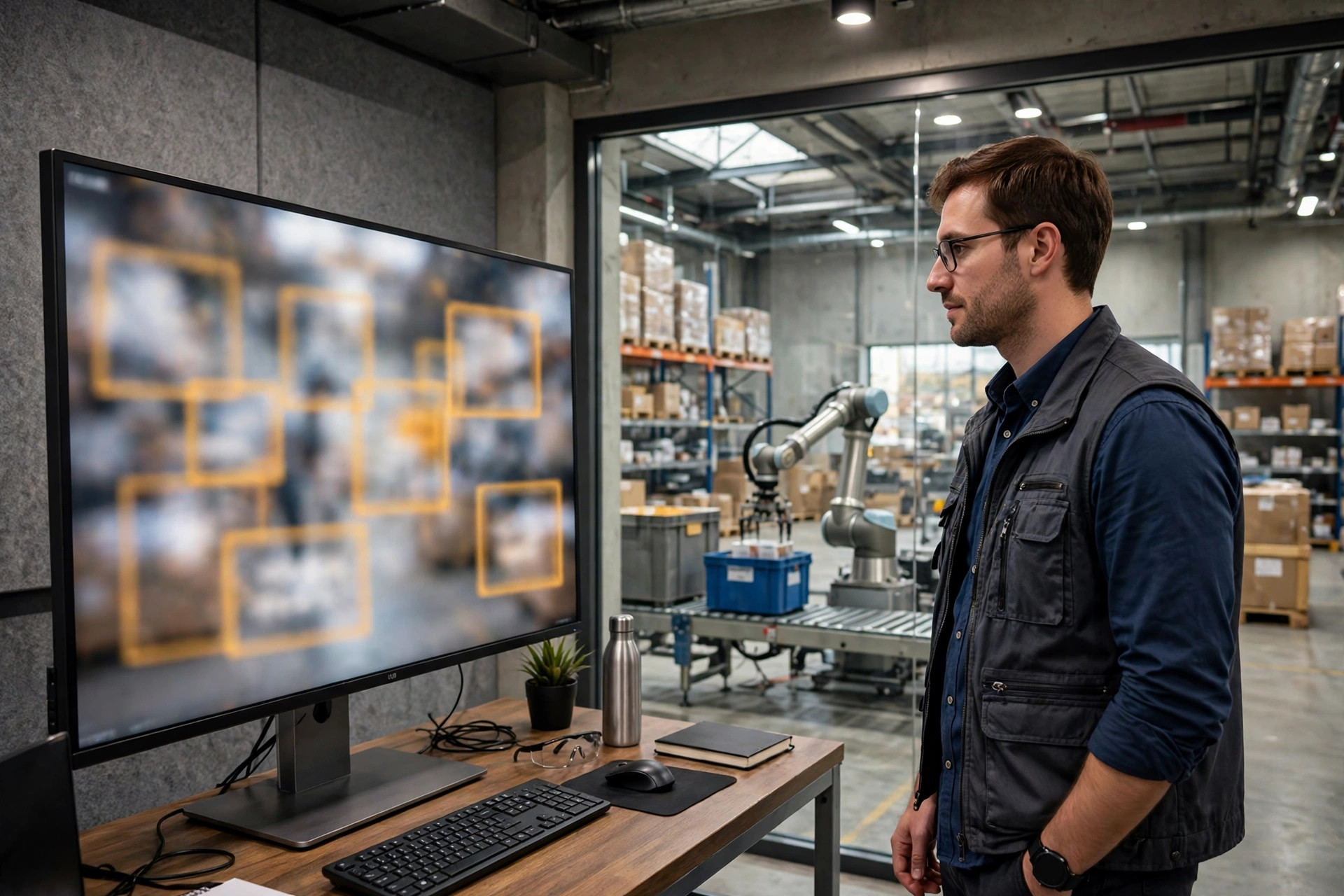
We have a client, an auto-parts 3PL, who gritted their teeth last year and installed a 3D vision sorting system for all those oddly-shaped parts. At the project acceptance dinner, the boss kept doing the math out loud: cameras plus integration plus commissioning, nearly 900,000 yuan all in. And the result? Three months after go-live, recognition rates were hovering around 92%, and line workers still had to stand by doing manual re-checks — basically 900,000 yuan for a very expensive decoration.
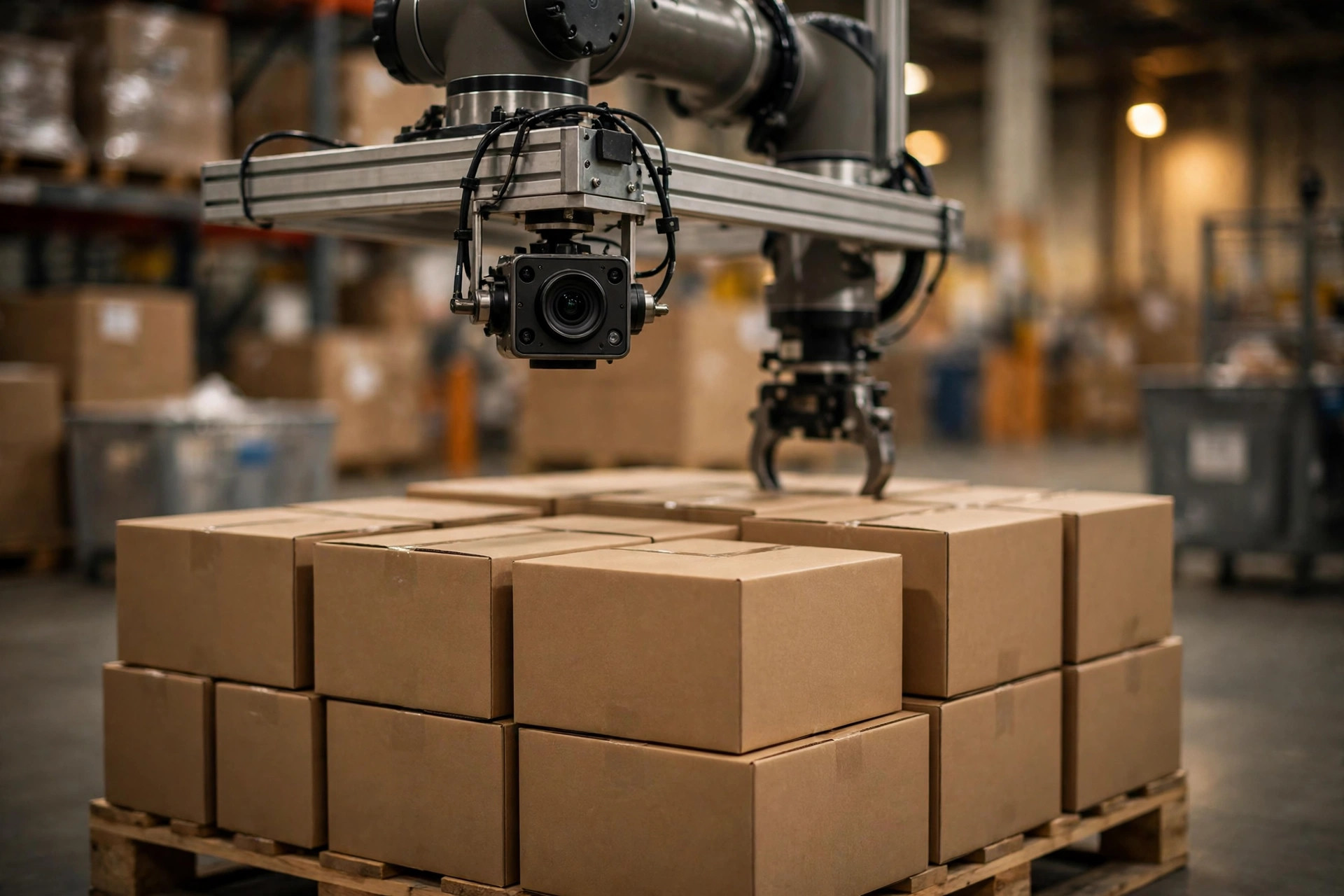
Where did it go wrong? When we did the post-mortem, the root cause was step one: 3D camera selection. They'd chosen a structured-light camera, and against highly reflective metal parts, the projected light patterns were swallowed by mirror reflections. The point cloud came back full of holes, and no algorithm can cook a meal without rice. It wasn't that the technology was bad — the technology was mismatched to the scene.
So let me break this down. For warehouse 3D cameras, there are three mainstream technology routes: ToF, structured light, and stereo. Coming from sales, I judge technology selection on four dimensions — plus one insider truth that only someone on the vendor side will tell you.
Meet the Three Contenders
ToF (time of flight): The camera fires modulated light and measures how long it takes to bounce back, computing distance directly. Fast, cheap, simple — industrial ToF cameras commonly list in the 10,000–30,000 yuan range. The catch: mediocre accuracy (millimeter-level), lower resolution, and sensitivity to strong ambient light.
Structured light: Projects coded light patterns onto the object and reconstructs 3D shape from how the patterns deform. Best accuracy of the three — sub-millimeter — and the finest detail on small static parts. The price: expensive (30,000–80,000 yuan is common), and it hates two things: reflective surfaces and strong outdoor light. Once the pattern is disturbed, the data is garbage.
Stereo vision: Two cameras working like human eyes, computing depth from parallax. No active illumination needed, works outdoors, mid-range cost (20,000–50,000 yuan typical). Downsides: hungry for computing power, and easily fooled by low-texture surfaces like plain cardboard boxes unless the algorithm compensates.
One sentence to remember: there is no best technology — only the one that best fits your goods and your scene.
Four Dimensions, One Table
| Dimension | ToF | Structured Light | Stereo |
|---|---|---|---|
| Accuracy | Millimeter-level, adequate | Sub-millimeter, best of three | Millimeter-level, middle |
| Environment tolerance | Struggles in strong light, stable indoors | Hates reflections + strong light, most delicate | Works outdoors, toughest |
| Unit price range | 10k–30k yuan | 30k–80k yuan | 20k–50k yuan |
| Integration effort | Low, near plug-and-play | High, calibration demands experience | Medium, algorithm tuning is key |
(Prices are common market ranges for industrial-grade products; confirm with current vendor quotes.)
How to use this table? Look at your goods. Sorting standard cartons or locating pallets — ToF is enough. Estimating grasp poses for precision parts like 3C components or oddly-shaped auto parts — only structured light's accuracy covers it. Outdoor docks or scenes with wild lighting swings — stereo is the only one that won't throw a tantrum.
Do the Math: The Camera Is the Small Part
Many clients open with "how much is this camera?" and I always have to spell it out: the camera unit is only 20–30% of total project cost. The real money goes to integration, commissioning, and downtime.
Take our other client, an apparel 3PL. They picked a stereo setup for depalletizing — the camera was just over 40,000 yuan, "not expensive." But once the integrator moved in, calibration took two weeks, and the line stopped for six half-days to cooperate. At 80,000 pieces a day in that warehouse, the downtime losses plus overtime catch-up topped 250,000 yuan in hidden costs. Total project spend: 380,000 yuan. The camera was barely a tenth of it.
Here's the counterintuitive take: when selecting, haggling over the camera price matters less than vetting the integrator's commissioning capability and penalty clauses. A 10,000-yuan difference in camera price can mean a hundreds-of-thousands difference in project outcome. That's why I always tell clients: you're not buying a camera, you're buying the integrator's experience with your exact scenario — have they handled goods as reflective as yours, cycle times as fast as yours? Get that clear, and it matters ten times more than camera specs.
Vendor Insider Truth: Why Integrators Always Push the Priciest Option
Time to spill a vendor-side secret. Many integrators default to recommending structured light — not because it fits you best, but because of three conveniences: it has the highest unit price, which fattens the project total and the commission; their team knows structured light best, so commissioning is easy for them; and if accuracy falls short, they can blame "your goods are too reflective" — after all, you signed off on the selection.
So in negotiations, don't get dizzy over technical parameters. Ask these three questions, and they'll know you're not an amateur:
One: "How many projects have you done with goods as reflective / as fast / as mixed as mine? I want to see the site." If the case history doesn't match, walk away.
Two: "Put the recognition rate in the contract — below what number do you pay penalties, and how much?" Only a vendor confident enough to write 98% into a contract with penalty clauses truly believes it. Anyone who only promises verbally — turn around and leave.
Three: "Who eats the downtime losses during commissioning when my line has to cooperate? Put it in the commercial terms." This one filters out half the unreliable integrators and forces the true project cost onto the table.
One last honest word. 3D cameras are genuinely exciting these years, but they're not magic. We've seen too many warehouses where a 2D camera plus a simple height sensor would have solved it, yet they insisted on 3D — and the extra money became tuition for "technological advancement." First ask yourself: what exactly can't 2D solve in my scenario? If you can't answer, don't rush to buy 3D. Save that money and give your workers a raise instead — doesn't that sound better?
By Susan, 3PL Sales Director