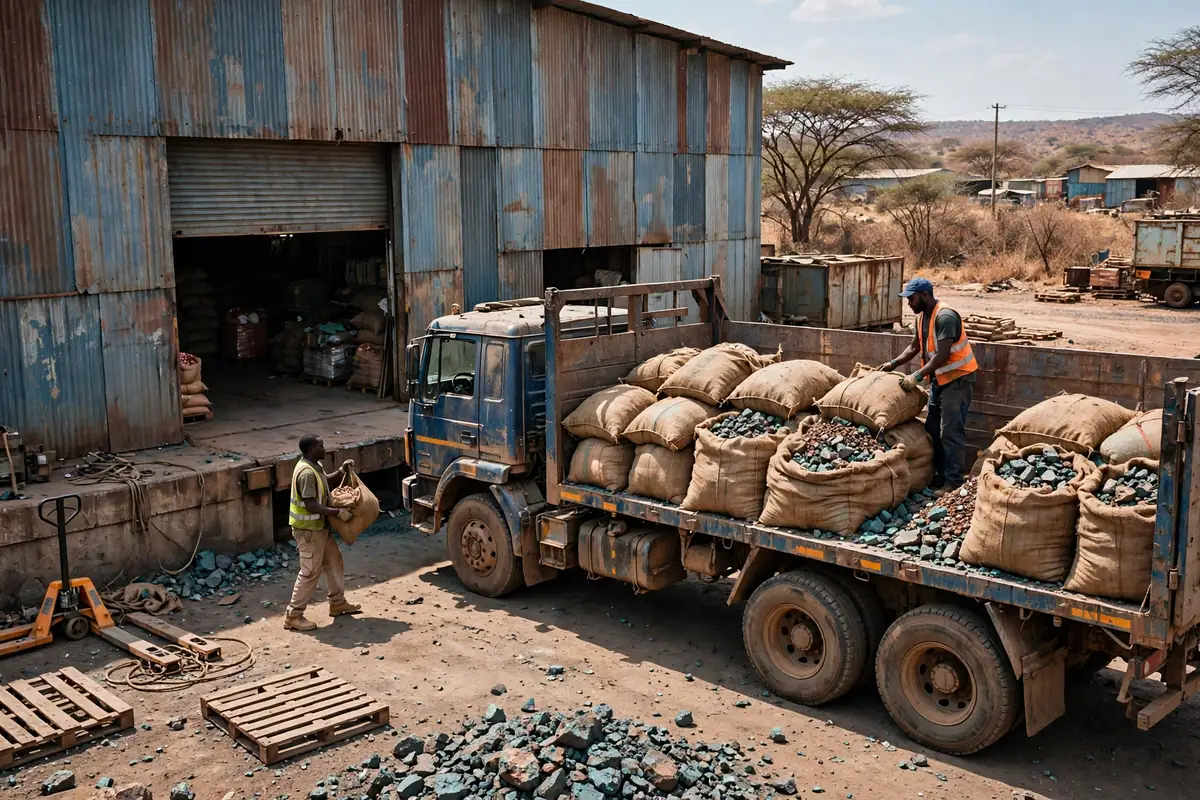
We had a client who sold mining consumables and rented a warehouse in Lusaka. On signing day he was delighted. The rent was lower than he expected, and big trucks could park right outside the door. He told me the Copper Belt mines were not that far away, and once Lusaka, Zambia, inland warehouse distribution for the Copper Belt was running, the road would take care of the rest. Three months later he called back in a very different mood. The goods had left, but the mine kept saying nothing had arrived. The customer was chasing him, the driver was burning time on the road, and another batch of spares was still sitting in his warehouse, with nobody able to say when the next truck would go.
I have seen this story too many times. Moving freight from an inland warehouse in Lusaka to Zambia's Copper Belt mines is rarely hard because of the warehouse itself. The hard part is getting goods from that inland warehouse to the customer's hands at the mine, reliably, again and again. Lusaka is Zambia's capital and a major node for freight moving through the country. The Copper Belt province sits to the north, where mines, smelters, and maintenance workshops are spread across several towns. The road north from Lusaka is open, but the number of variables on that road is much larger than a newcomer expects.
We had another client, an agent for mining spares. His first approach was simple: the Lusaka warehouse would be pure cross-dock, with goods sent straight on to the mines and no stock held. The logic was sound. Stock sitting in a warehouse is money sitting still. Reality taught him a lesson quickly. Mine spares are often urgent. When one machine stops, the whole line waits for one valve or one set of seals. If the truck from Lusaka is slowed by poor road conditions in the rainy season, or held longer at a checkpoint, the mine waits longer too. The customer does not calculate that wait in freight cost. He calculates it in lost production. In the end, that client changed his setup. He kept a small protected area in the Lusaka warehouse for fast-moving urgent spares, while slow-moving items stayed on an order-by-order basis. He was not holding more stock for its own sake. He was separating the goods that cannot wait from the goods that can.
Why Copper Belt freight gets stuck inland
Here is a truth that sellers on this lane rarely say out loud: the largest cost in inland warehouse distribution is usually not warehouse rent. It is uncertainty on the road. A day of extra storage is a visible cost. A day lost on the road is a cost you cannot easily calculate. The driver waits, the customer chases, and the plan for the next shipment falls apart. Worse, demand from mine customers is uneven. Maintenance season brings a sudden concentration of orders, while quiet weeks bring very little. A warehouse that stocks only to the average will run short exactly when maintenance season arrives.
There is also an information gap. Once goods leave the Lusaka warehouse, many sellers are left with only the driver's phone number. Where is the truck now? When will it arrive? Who will receive it at the mine? Is that person even on site today? If nobody is coordinating both ends, the answer is left to luck. One of our clients learned this the hard way. A truck reached the mine gate, but the engineer who was supposed to receive it had just gone underground and could not be reached by phone. The driver waited most of the day at the gate, then had to bring the goods back and make the trip again the next day. The freight cost doubled, and, more importantly, the customer's trust took a hit.
So the first step in Lusaka inland warehouse distribution for the Copper Belt is not negotiating freight rates. It is drawing the whole chain clearly: where goods come from, how long they sit in the Lusaka warehouse, who checks outbound goods, who follows the truck on the road, who receives it at the mine, and how the signed proof of delivery comes back. Every handover point needs a name and a phone number. A link in the chain with no name attached will break sooner or later.
Where the money actually goes in Lusaka inland distribution
When we talk about quotations, the client always asks the same question: why is your freight so expensive? My answer is usually the same: do not compare the headline price first. Compare what is actually included. A quotation for inland warehouse distribution should be broken into at least four parts: warehouse handling, line-haul transport, final delivery to the mine site, and exception handling. Many low quotations are cheap precisely because the fourth part is missing. When something goes wrong on the road, the contract says nothing about whether you pay extra, wait, or solve it yourself. Then the argument is settled by whoever shouts loudest.
My advice to clients is practical. Before signing, ask three things. First, does the price include waiting time for unloading at the mine site, and after how long does waiting start to be charged, and on what basis? Second, how are loss and damage established, and what counts as proof of receipt: a photograph, a signature, a system confirmation? Third, when capacity is tight during peak or maintenance season, where does your freight sit in the queue: does the contract give you priority, or is it first come, first served? Once you have asked those three questions, you will know quickly whether the other side has really worked this lane before.
The warehouse itself matters too. In Lusaka, location matters more than size. A warehouse close to a main road, with easy access for trucks, may cost more in rent, but vehicles move in and out smoothly and turnaround is fast, so the total cost is not necessarily higher. A cheaper warehouse with awkward access, where a large truck struggles even to turn around, will eat the rent saving in extra trips and wasted driver time. Check unloading conditions as well. Mining spares include heavy and long items. Before signing, visit the site in person and check whether the dock and the forklift capacity suit the goods. Do not rely on photographs alone.
Picking an export corridor for Copper Belt freight
Zambia is landlocked, so goods leaving the country must use a port in a neighbouring country. To the east, there is Dar es Salaam in Tanzania. To the south, there is Durban in South Africa. To the west, there is the Lobito Corridor through Angola. These are all real export corridor options in use today, each with its own road conditions and rhythm. The question is not which corridor is shortest in theory. It is which corridor suits your goods, whether your customer can wait, and which corridor your forwarder and carrier genuinely know well.
One of our clients learned this by defaulting everything to a single corridor because it was simplest. Then an urgent batch of spares had to move while that usual corridor was congested, and the goods waited outside the port for several extra days. After that, he changed his approach. Routine replenishment used one stable corridor, while urgent shipments were planned separately through a more controllable arrangement, even at a higher unit price. It sounds like spending more. In practice, it was buying insurance for the risk he could not afford: the cost of a disrupted plan, which ripples through everything that follows.
Here is a counterintuitive judgement: for the Copper Belt trade, a bigger inland warehouse is not necessarily better. Many newcomers want a large warehouse from day one, as if size itself were a sign of seriousness. The value of a warehouse here lies in turnover, not floor area. Goods coming in, going out, and accounts reconciling matter far more than renting extra hundreds of square metres. A modest warehouse that is well managed beats a large one that is chaotic. Goods sitting still in a warehouse are money asleep on a shelf.
In the end, Lusaka inland warehouse distribution comes down to two things: a chain that actually runs, and a contract that is actually clear. When the chain runs, goods reach the mine on time. When the contract is clear, everyone knows who to call and what to pay when something goes wrong. The next time you negotiate a contract, remember to ask those three questions: how waiting time is charged, how loss is established, and where your freight stands in the peak-season queue. Ask those first, then talk about price.
By Susan, 3PL Sales Director