
Last fall I was waiting on a load outside a warehouse in Fontana, and the shipper next to me looked like he'd swallowed a lemon. His carrier had tacked nearly a thousand bucks onto one LTL shipment headed to Dallas. Same freight, same weight — they'd just bumped his freight class from 70 to 92.5. After all these years on the road, I've watched this movie play out more times than I can count. So let me walk you through how to determine freight class for LTL shipments: how the class actually gets set, how carriers punish you for lowballing it, and which traps you can't dodge no matter what.
How to Determine Freight Class: Just Do the Density Math
Let me tell you, freight class looks mysterious, but there's one iron rule underneath it: the denser the freight, the lower the class number, the cheaper the rate. The system is called NMFC — 18 classes, from 50 up to 500. Class 50 is the heavy, dense stuff like steel. Class 500 is the light, fluffy stuff like uncollapsed cartons or down jackets.
The density-to-class relationship is simple: higher density, lower class number.
| Density (lbs per cubic foot) | Freight class |
|---|---|
| 50 and up | 50 |
| 35–50 | 55 |
| 30–35 | 60 |
| 22.5–30 | 65 |
| 15–22.5 | 70 |
| 13.5–15 | 77.5 |
| 12–13.5 | 85 |
| 10.5–12 | 92.5 |
| 9–10.5 | 100 |
| 8–9 | 110 |
| 7–8 | 125 |
| 6–7 | 150 |
| 5–6 | 175 |
| 4–5 | 200 |
| 3–4 | 250 |
| 2–3 | 300 |
| 1–2 | 400 |
| Under 1 | 500 |
The math is one formula: length × width × height (inches) ÷ 1728 = cubic feet, then weight ÷ cubic feet = density. That 1728 never changes — one cubic foot is 1,728 cubic inches.
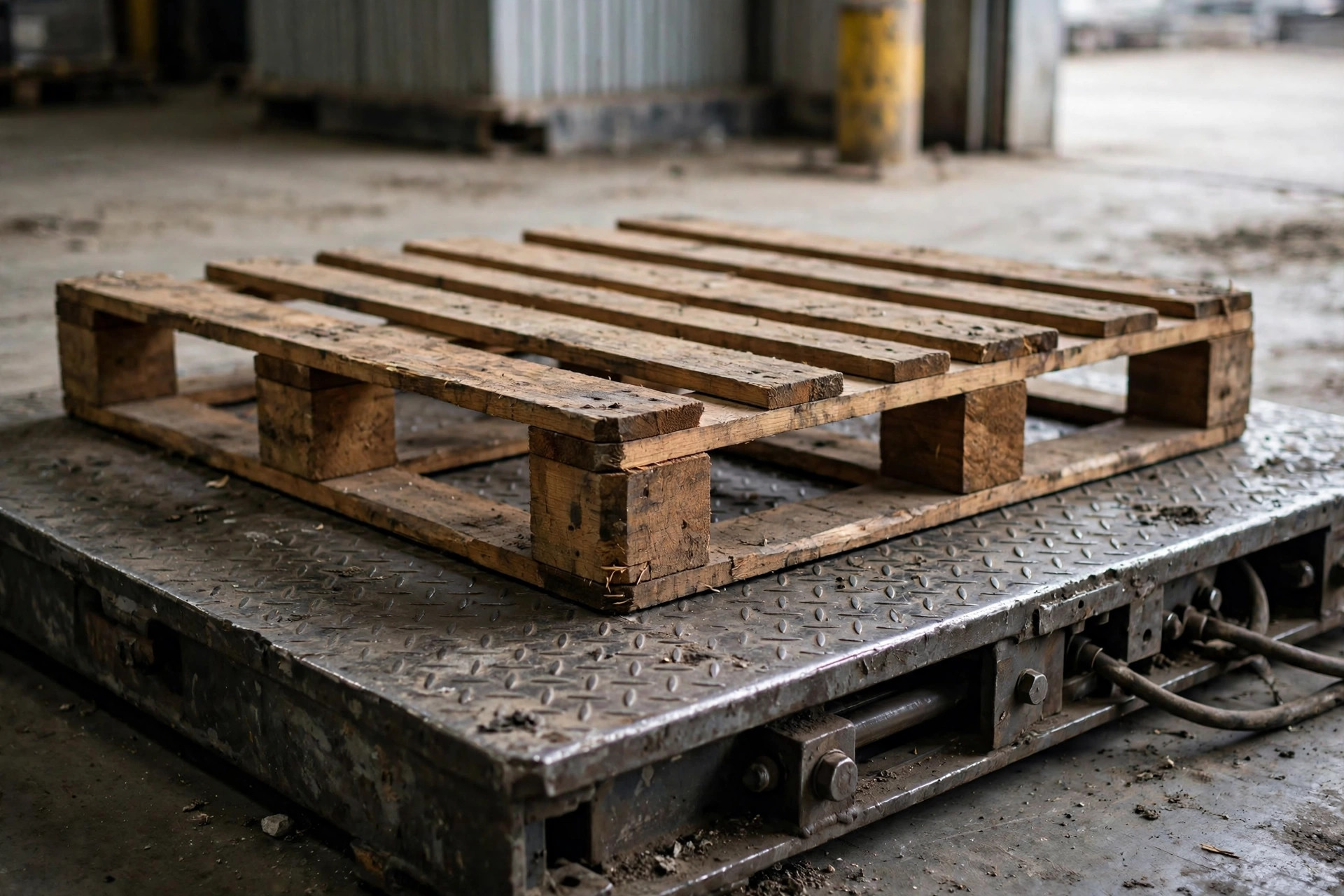
A real example. A pallet measuring 48×40×50 inches, weighing 800 lbs. 48×40×50 = 96,000; divided by 1728 = 55.6 cubic feet. 800 ÷ 55.6 = 14.4 lbs per cubic foot. Look at the chart: the 13.5–15 band means class 77.5. Measure, weigh, calculate — three steps and you're done. Measure the shipment as it will actually travel — pallet, stretch wrap, and all, not the bare product.
When the Class Is Fixed and Density Doesn't Matter
Everything above applies to density-based freight. But NMFC has another category: fixed class. The carrier doesn't care about your density — the commodity code dictates the class, period. Furniture and certain machinery fall in here. You can pack it dense enough to earn class 100 on the math, but if the code says 125, you pay 125.
I know a solid-wood furniture shipper out of LA who learned this the hard way a couple years back. Dense pallets, clean math pointing at class 100 — that's what he declared. The carrier checked the NMFC item number: fixed at 125 for that commodity. Reclassified, back-charged, a few hundred dollars gone. So before you ship, ask one question: does my commodity have a fixed NMFC class? If yes, use the fixed class and don't do your own math. Any decent freight broker or carrier rep can look it up — asking costs nothing.
What Happens When You Lowball the Freight Class
Back to that shipper in Fontana. He'd declared class 70. At the carrier's terminal they measured and weighed it: density just over 11, which charts at 92.5. The carrier reclassified it on the spot — freight re-rated at 92.5, back charges for the difference, plus a reclassification inspection fee. The money stung, but worse, the freight sat two extra days before it moved, and his customer nearly missed a delivery window.
Here's the thing: most carrier terminals now run dimensioners and floor scales that feed straight into their systems. You declare 70, the scanner says 92.5, and there's nowhere to hide. Some shippers figure declaring one class lower saves a little. The math doesn't work that way: whatever you saved on the rate difference, one reclassification wipes out with room to spare. Declaring the honest, correct class is actually the cheapest way to ship. That's the counterintuitive part — freight class isn't about going as low as you can get away with. It's about getting it right.
One more note: reclassification and inspection fees vary by carrier — check each carrier's current published rules tariff rather than taking a sales rep's word for the number.
One more thing only veterans think about: when your density lands right on the boundary between two classes, declare the higher one. Say your math comes out at 13.4, a hair under the 13.5 line for class 85. The carrier's dimensioner reads a centimeter more, the scale reads a pound heavier, and suddenly you're outside the 85 band — and they will not give you the benefit of the doubt. On boundary freight, take the higher class yourself rather than handing the carrier an excuse to fine you. That small "loss" is worth it.
Run This Checklist Before Every Shipment
After all these years on the road, this is the one-pager I hand shippers. Tape it to the wall:
- Measure every shipment's length, width, height — pallet included, outermost packaging dimensions, not the product itself
- Weigh it on a floor scale and write down the gross weight — no estimating
- Run the density formula and set the class from the chart
- Check NMFC for a fixed class on your commodity — fixed beats calculated
- Photograph your measurements as evidence — if you get reclassified, you need something to argue with
- For commodities you ship regularly, write the standard density and class into your SOP so new people do it the same way
Old saying among drivers: the freight moves fine when the paperwork's honest. Get the class right before you declare it, and it won't cost you.
By Shifu Zhao, Trucking Veteran (15 yrs)