Excerpt: Lithium battery warehouse storage is often mistaken for a transport question. UN38.3 answers whether cells may travel; it does not answer how thousands of pallets should sit under one roof for months. This article separates the two questions and offers a grading framework warehouses can actually use.
Lithium battery warehouse storage begins, in my experience, with a misunderstanding. Walk into almost any warehouse that handles lithium batteries and you will hear some version of the same sentence: our batteries passed UN38.3, so storage is covered. The sentence confuses two different questions. UN38.3 addresses transport safety testing, whether a cell or battery may be carried by road, air, or sea. Warehouse storage addresses a different set of questions entirely: how several thousand pallets behave under one roof over three months, how an abnormal pallet is spotted before it affects its neighbors, and what evidence a fire authority, an insurer, or a customer's audit team will ask to see. Those answers do not live in the same document.
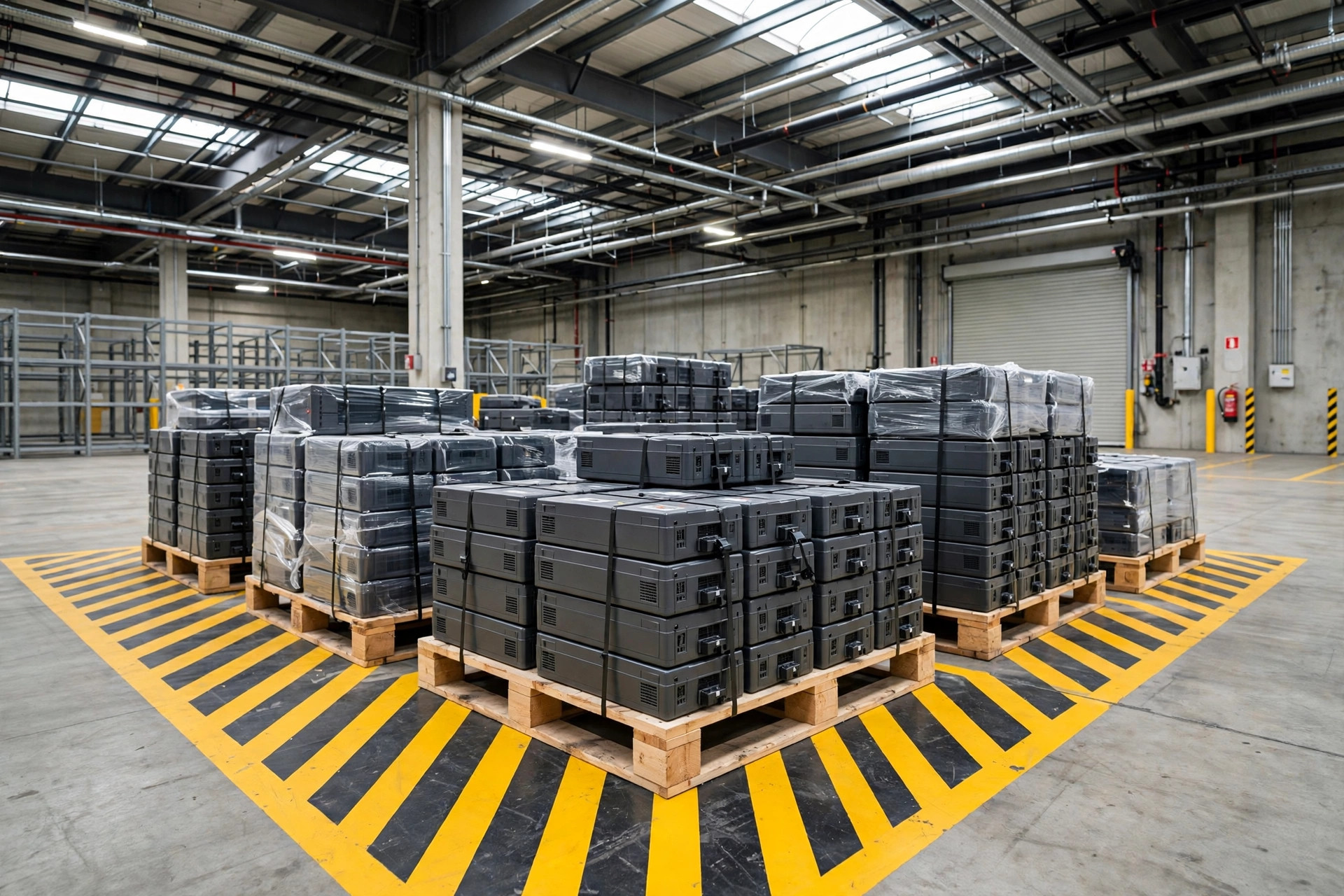
In the autumn of 2024, I visited a contract warehouse in Dongguan handling energy-storage batteries, and the numbers there told the story better than any argument. The site covered under 8,000 square meters and held roughly 1,200 pallets of finished and semi-finished lithium batteries, all racked the way general cargo is racked: high bays, dense rows, aisles just wide enough for a forklift to turn. The warehouse manager told me the daily check consisted of looking for damaged packaging and missing labels. Then a large customer arrived for an audit and asked three questions the warehouse could not answer: were batteries at different charge states stored in separate zones; where did damaged, returned, and quarantined units go; and if one pallet showed signs of smoking, could the pallets beside it be moved away within minutes? None of those questions can be answered with a transport test report.
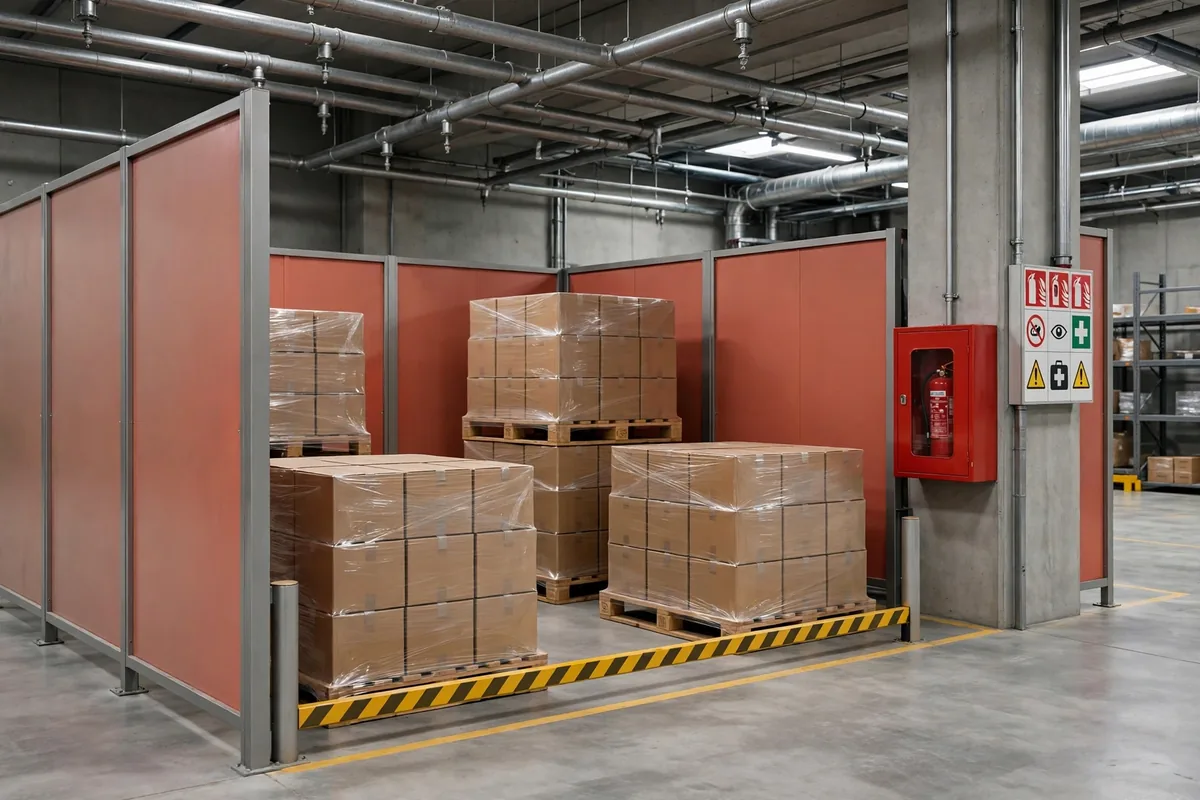
A second observation, from an export warehouse near Ningbo in early 2025, showed the opposite pattern. That warehouse had set aside a dedicated battery zone with a zoning map at the entrance, height limits on the racks, and a fenced quarantine area for damaged and returned goods. Staff patrolled twice a day and logged any visual or odor anomaly with a date, a location, and a name. What struck me most was not the hardware spend but the grading logic: finished goods, semi-finished goods, returns, and quarantined units each followed a different procedure, and mixing them was itself treated as an anomaly. The same class of goods received entirely different treatment in the two warehouses, and the difference had nothing to do with test reports. It came down to whether the warehouse treated batteries as a category requiring its own management.
Lithium Battery Warehouse Storage: Grade First, Then Rack
The pattern across these observations points to one conclusion: the first step in battery storage management is grading, not equipment purchasing. Grading should run along at least four dimensions. The first is product state: new finished goods, semi-finished goods, returns, and damaged or quarantined units carry different risk levels and deserve different management intensity. The second is packaging state: factory-sealed cartons and units that have been opened, repacked, or relabeled cannot be treated identically. The third is dwell time: fast-turning stock and stock that sits for a full quarter should not share an inspection rhythm. The fourth is concentration: the more units stacked in one zone, the harder isolation and evacuation become, and the more zoning matters.
Cross those four dimensions and a warehouse gets its own management map instead of a copy of someone else's racking diagram. The framework below is an illustrative management grading, not a statement of any regulation or standard's specific limits. Actual technical thresholds, test names, and compliance details vary by jurisdiction and change over time; verify them against the official source currently in force and against the requirements of the local fire authority and insurer before adopting any of it.
| Grade | Goods profile | Storage approach (illustrative) | Inspection rhythm (illustrative) |
|---|---|---|---|
| Standard zone | New finished goods, factory-sealed packaging | Dedicated zone, height limits, full working aisles | Daily visual and label patrol |
| Watch zone | Opened or repacked units, stock past one turnover cycle | Separate rack section, reduced stacking | Daily patrol with written log |
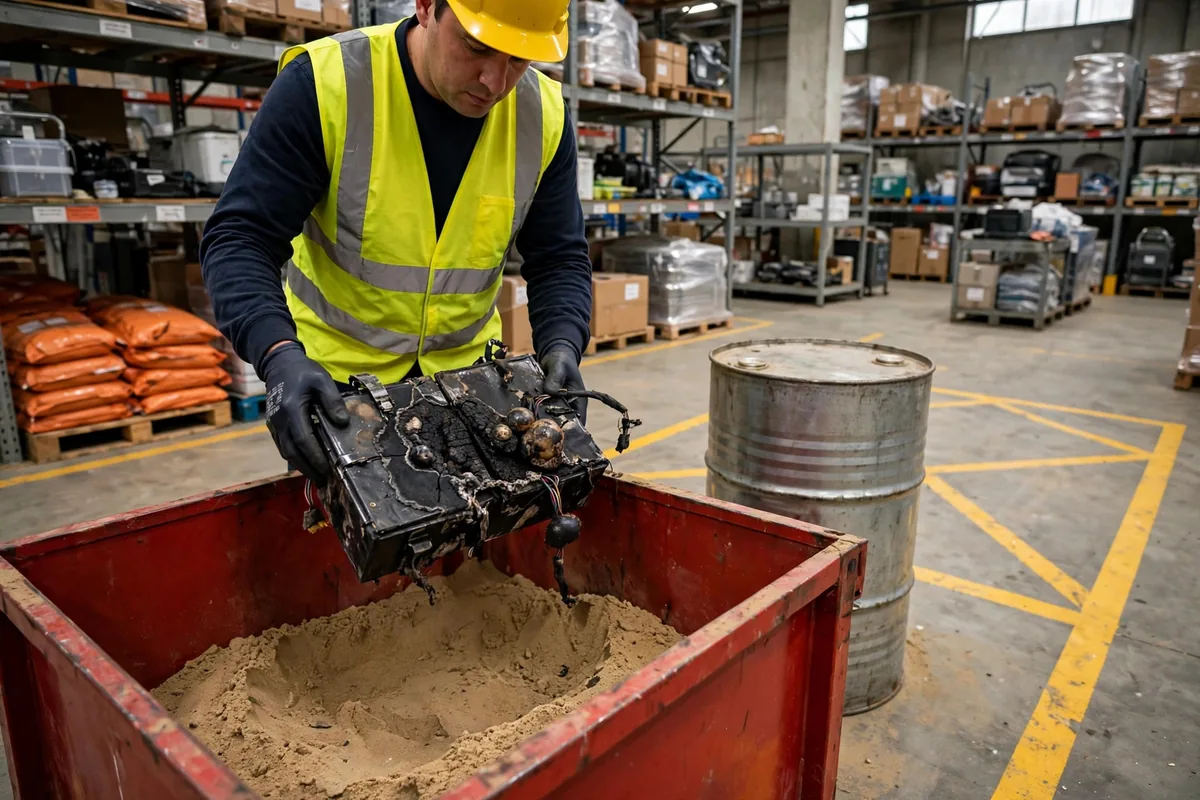
| Quarantine zone | Returns, damaged units, pending inspection, visible anomalies | Fenced area away from standard stock | Every shift, anomalies escalated immediately |
| Hold zone | Signs of swelling, leakage, or smoking | Immediate isolation, dedicated watch, emergency procedure activated | Continuous observation until specialists arrive |
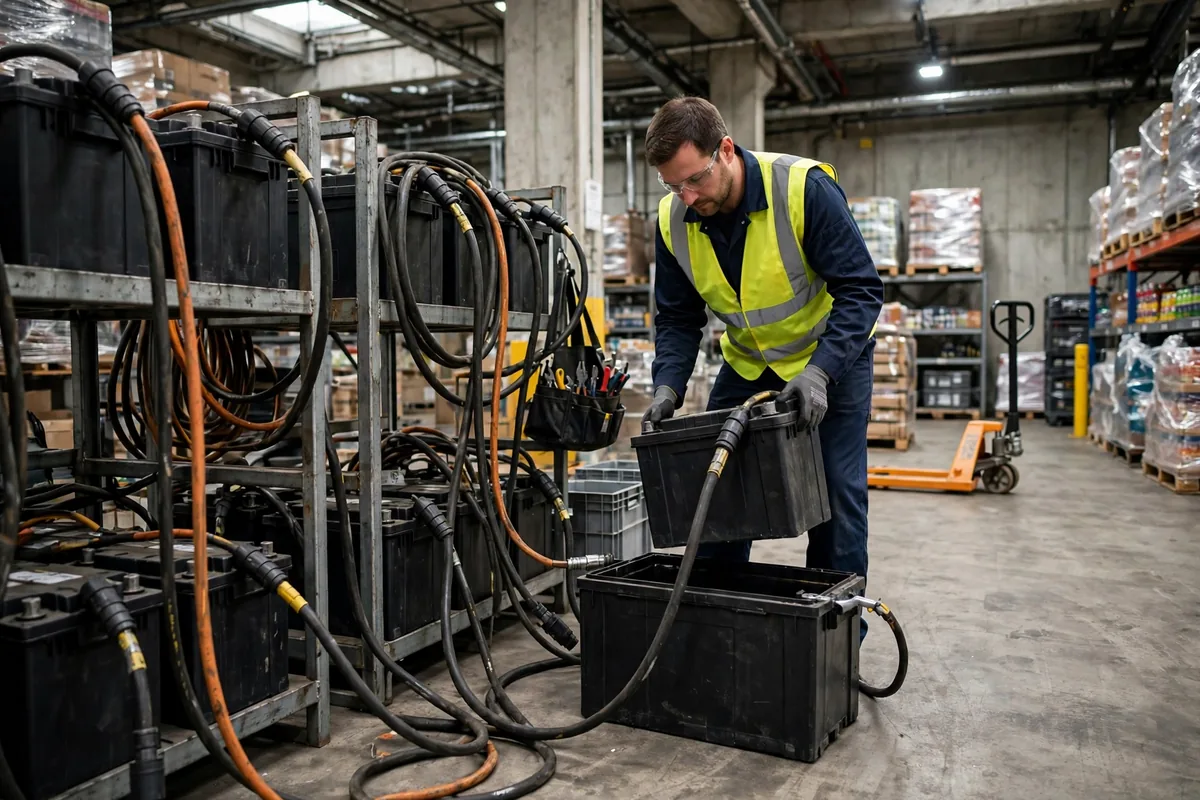
Here is the counterintuitive finding: the highest-risk moments in battery warehouse operations are usually not storage itself. A finished pallet sitting quietly on a rack is in its most stable state. The risk concentrates in the moments when people handle the goods, receiving inspections, unboxing, repacking, relabeling, and secondary packing. Those are the operations most likely to dent a cell, crush packaging, or mix up batches. Many warehouses invest heavily in racking and fire hardware while leaving handling procedures the loosest part of the operation. That is a classic case of strong hardware and weak process, and it is exactly backwards.
Lithium Battery Warehouse Storage Checklists and Where This Is Heading
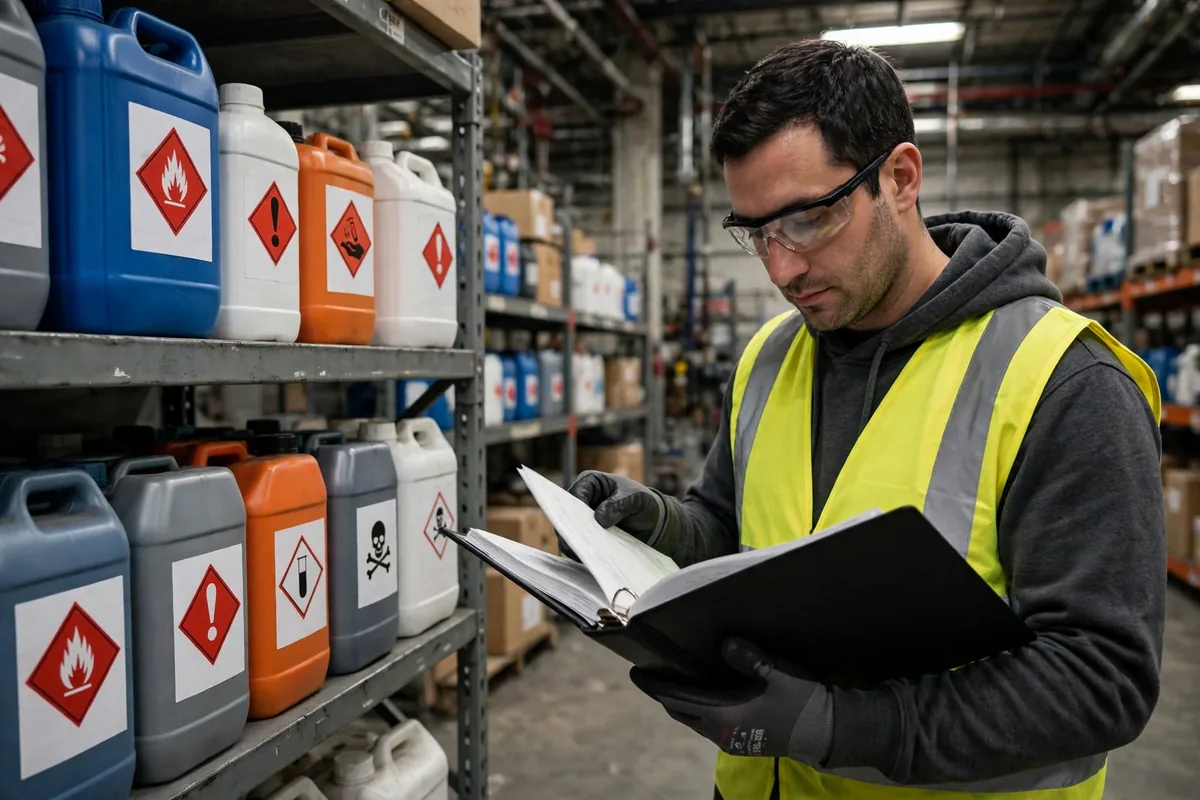
For execution, a warehouse can audit itself against a short checklist. Is the zoning map posted at the entrance? Do damaged and returned units have a quarantine area of their own? Do patrol logs carry dates and names? Does the emergency plan state who may order an evacuation, who gets notified, and where the isolation area sits? Do staff know that the first response to a smoking pallet is isolation and escalation, not improvisation? None of these items requires advanced technology, but the absence of any one of them will draw questions from auditors and insurers alike.
Looking at the trend, the more interesting shift is in what buyers and insurers ask for. Attention is moving from whether a warehouse holds a test report toward whether it holds a continuous chain of management evidence. A test report is a one-time document. Patrol logs, zoning maps, and drill records are continuous. The warehouses most likely to win large-customer contracts in the coming years may not be the ones with the most expensive hardware, but the ones with the most complete evidence chain. In other words, lithium battery warehouse storage competition is shifting from an equipment race to a records race.
That judgment still needs more samples to confirm. Fire codes, insurance terms, and customer audit standards differ across regions, and any specific technical limit or compliance detail should be verified against the official source currently in force before a warehouse copies a checklist from elsewhere. Grading, isolation, and record-keeping, however, travel well across jurisdictions. If you run a warehouse that stores lithium batteries, the useful question is not whether you passed a transport test. It is which grade your operation currently sits in, and what evidence you could show an auditor tomorrow. The answer is usually clearer, and more uncomfortable, than expected.
By Dr. Chen, Supply Chain Researcher