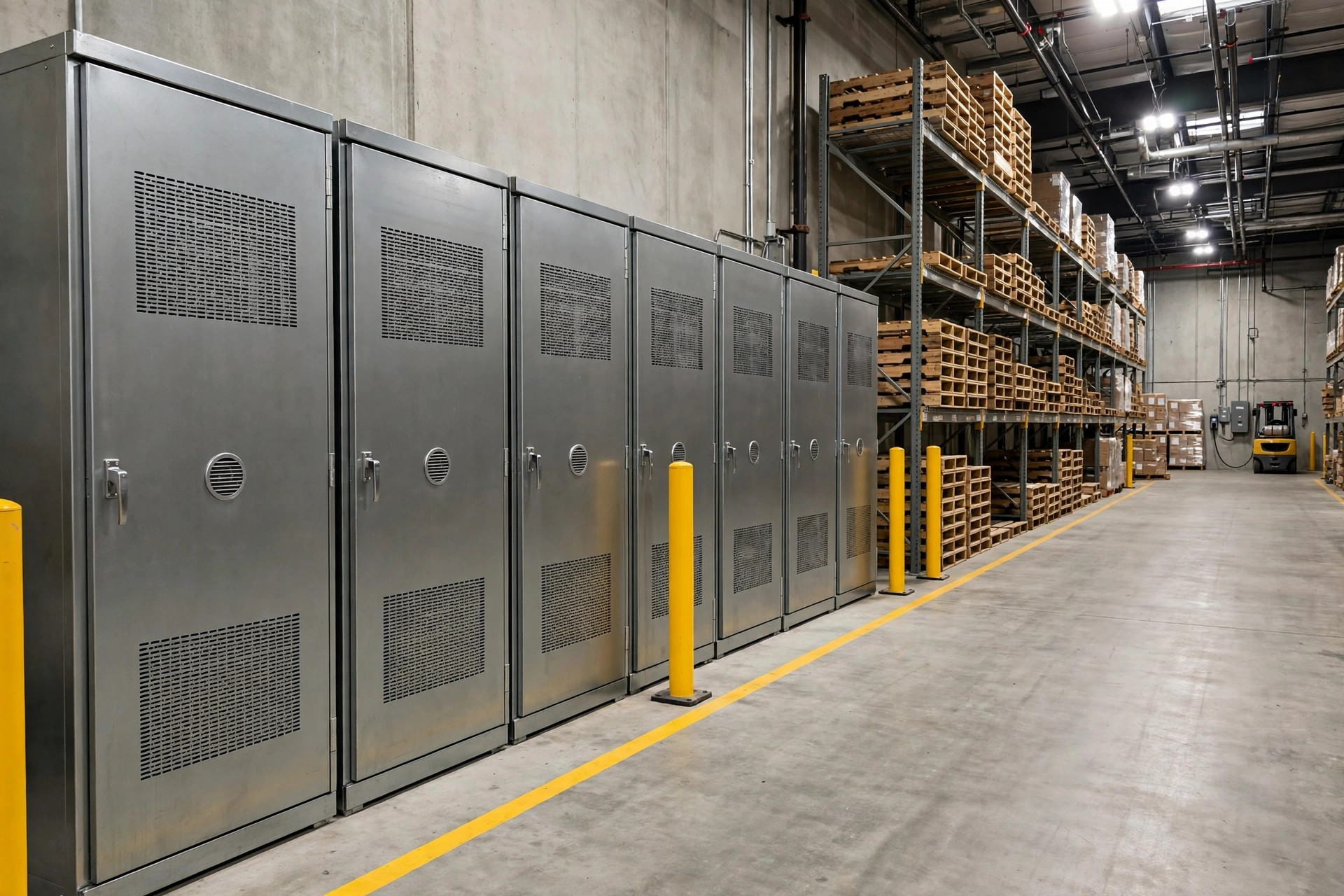
Here's the uncomfortable truth: most warehouse operators treat lithium batteries like any other commodity. They receive them, rack them, and ship them — and never think about them again until something starts smoking. I've walked 3PL buildings where pallets of battery-powered products sat wall-to-wall with corrugated cartons and foam dunnage, charging e-bikes plugged into daisy-chained power strips in the middle of an aisle. The operations manager's fire plan, such as it was, amounted to "call 911."
That approach has an expiration date. Fire codes have fundamentally changed how batteries-as-commodity are treated in warehouses, and the gap between "how we've always stored them" and "what the code now expects" is where the real exposure lives.
Why a pallet of batteries is not a pallet of toasters
The hazard isn't the battery sitting on a shelf. It's three specific situations: charging, damage, and commingling.
Charging is the highest-risk moment. Overcharging, cheap aftermarket chargers, and poorly ventilated charging setups are how thermal runaway starts. The worst setup I've seen: a warehouse charging dozens of power-tool batteries off residential power strips tucked beside a stack of cartons. That's not a compliance gap; that's gambling.
Damaged and returned batteries are the second landmine. A customer return has an unknown history — dropped, soaked, swollen. Swollen, leaking, or odd-smelling cells must never go back into general stock. They need immediate segregation and disposal through proper hazardous-waste channels. Too many warehouses treat the returns area as a catch-all pile where batteries mingle with ordinary returns. That habit needs to die.
Third is commingling with combustibles. Storing lithium batteries tight against cardboard, foam, and plastic packaging hands a fire its fuel supply. A battery fire is already hard to kill; surrounded by kindling, the fire department's realistic goal becomes containment, not extinguishment.
And one counterintuitive point: clean-agent suppression systems are nearly useless against lithium thermal runaway. Gas knocks down flame but provides almost no cooling, and runaway is a self-sustaining internal reaction — once the agent disperses, hot cells reignite. The industry consensus is water-based suppression: water cools adjacent cells and stops propagation. Your sprinkler design is quite literally the line between a bad day and a total loss. Density and coverage requirements should come from the code edition your local fire authority has adopted — don't guess.
Build a charging zone that would survive an inspection
The charging area is where I'd start, because it's the highest risk per dollar of remediation. A proper charging zone looks like this: physically separated from general storage, away from combustibles, on non-combustible flooring, with ventilated purpose-built charging cabinets — vented tops tied into exhaust, because charging generates heat and potentially off-gassing that needs somewhere to go.
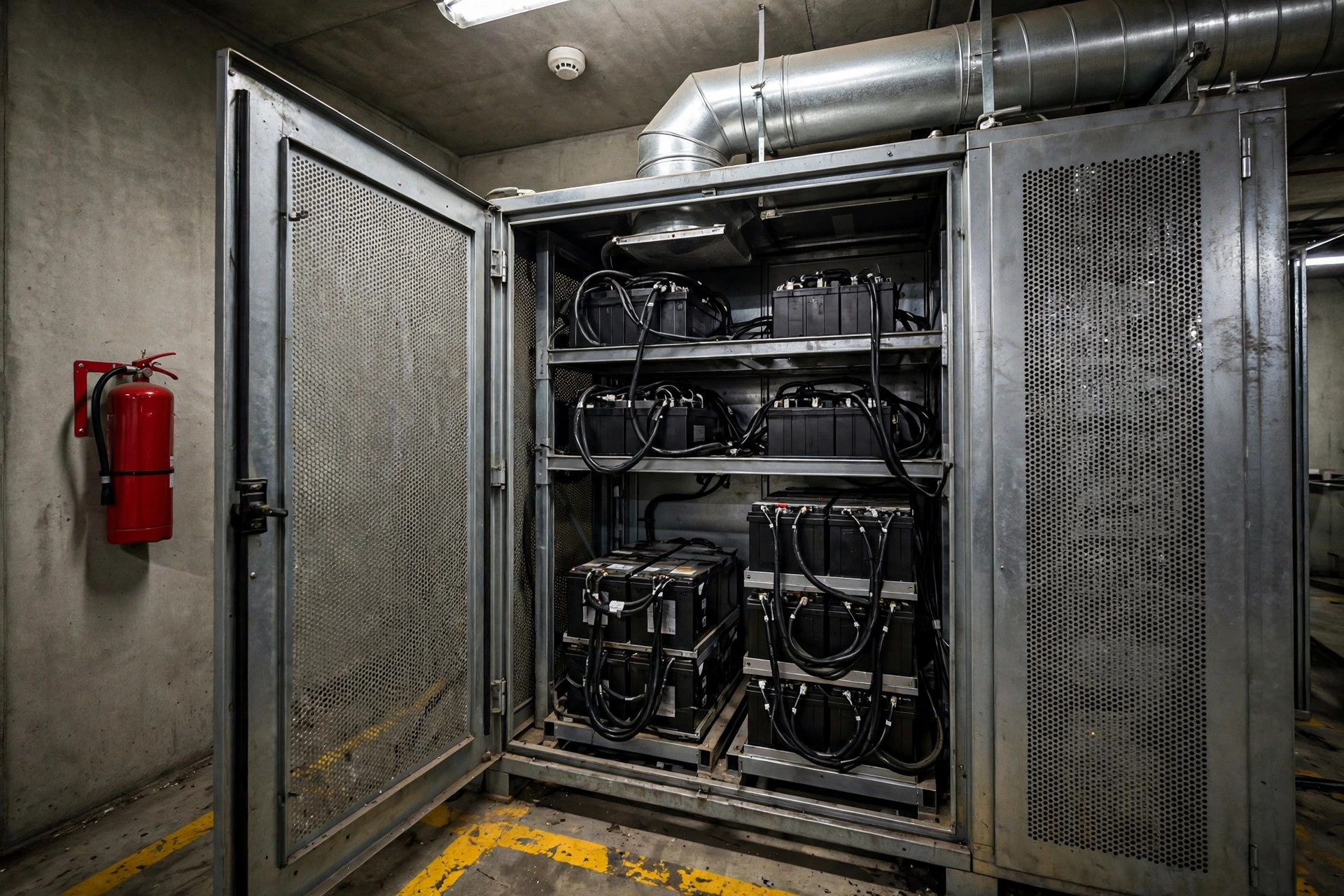
Set up a separate quarantine corner for damaged cells — a small area away from main operations with fire-rated metal containers, every swollen, punctured, or suspicious return going straight in, labeled, and cleared on a schedule. The critical part is the process: whoever handles returns must be trained to pull battery items out of the flow immediately. "Set it aside and deal with it later" is how quarantine areas become fire starters.
Put the charging rules in writing and post them on the wall: who is responsible, maximum concurrent charging load, charging hours (I'd avoid unmanned overnight bulk charging, or at minimum require smoke detection tied to alarm notification), and whether chargers are OEM or certified. A laminated sheet on the wall beats a policy buried in a binder.
The code landscape shifted — here's what changed
On the regulatory side, the last few years brought real change. The 2024 International Fire Code added a dedicated section for lithium-ion and lithium-metal battery storage (Section 320), moving away from treating batteries as generic commodities. NFPA 855 — the standard for stationary energy storage installations — includes battery storage requirements in its 2023 edition, built around a hazard-based approach: chemistry, state of charge, quantity, and storage arrangement, not one-size-fits-all.
Know the applicability boundaries. NFPA 855's threshold for lithium-ion is 20 kWh aggregate per fire area — cross that and the full requirements apply, which is easier than most people think. Batteries installed in the equipment they power are generally exempt. Small consumer batteries in original retail packaging (lithium-ion cells not more than 300 Wh, for example) typically fall outside the strictest provisions. Those exemptions are what separate ordinary e-commerce goods from battery inventory that genuinely needs management.
One timing note: the 2026 edition of NFPA 855 was published in September 2025, but it hasn't flowed into widely adopted model codes yet — your local authority having jurisdiction is most likely enforcing an earlier edition through the 2021 or 2024 IFC cycle. Before you design anything, confirm which edition your AHJ has actually adopted. The details vary more than you'd expect between editions.
Practically, I'd run three storage tiers. Tier one: normal-turnover battery products in intact packaging — manage as high-value goods, but with upgraded sprinkler protection and heat detection in the zone. Tier two: bulk bare cells or high-energy-density packs (EV modules, storage cells) — segregated area, hardened separation and monitoring. Tier three: damaged, returned, and pending-disposition units — the quarantine setup described above. For exact spacing and suppression specs in each tier, take your battery inventory to the fire marshal and your insurer and get their requirements in writing. That's more reliable than reading the code yourself.
The conversation with your fire marshal (have it before they have it with you)
This is the most underrated part of the whole exercise. Many operators avoid the fire department out of fear that contact invites scrutiny. My experience is the opposite: warehouses that engage proactively end up with far lower remediation costs than ones discovered during an inspection. What fire officials fear most is the unknown — not knowing how many batteries you hold, what chemistries, and where. Once they know and you're cooperating, most requirements become negotiable and phaseable.
Walk in with this package ready: a battery inventory (chemistries, approximate quantities, aggregate kWh per zone — start from SKU lists and spec sheets if you have to); a floor plan marking battery storage, charging, and quarantine zones relative to combustible storage; a description of existing fire protection (sprinkler type, detection, extinguishers); and an emergency plan that specifically addresses battery fires — including the line "do not attempt to extinguish batteries in thermal runaway; evacuate and call emergency services."
Don't forget your property insurer. Carriers have their own underwriting requirements for battery storage, sometimes stricter than the fire code. Get their written requirements before you spend on retrofits, or you risk finishing the work and learning your premium just doubled anyway.
The honest bottom line: doing this right costs real money — for a mid-size warehouse, think tens of thousands of dollars and up. But price it against half a building lost to a battery fire, a denied insurance claim, or a shutdown order from the fire marshal. That math isn't close. Start this week with a battery inventory. You'll probably find you have far more batteries in the building than you thought.