Five years selling on Amazon, and the most expensive lesson I ever paid for wasn't ad spend. It was almost getting a whole warehouse shut down over... empty pallets.
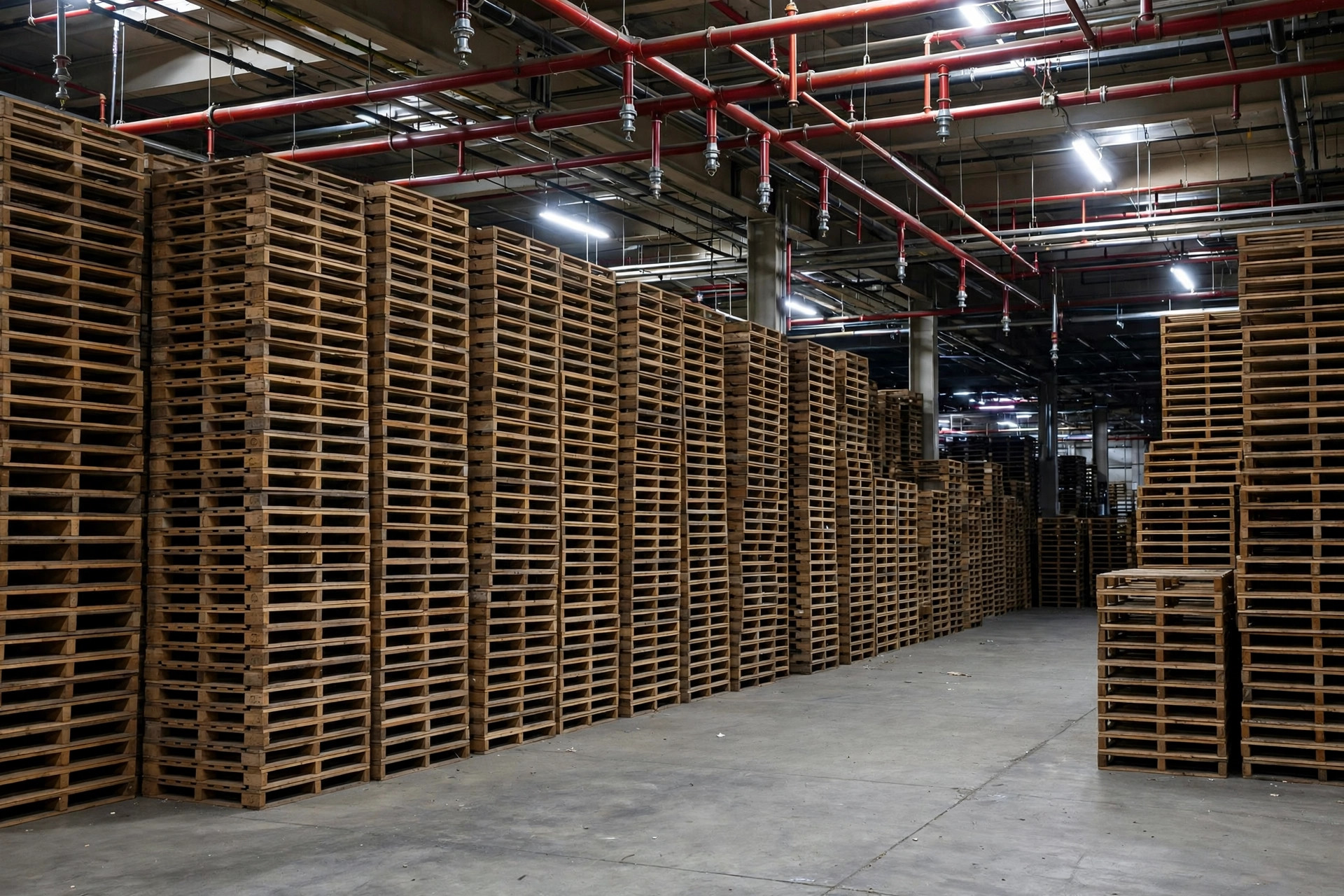
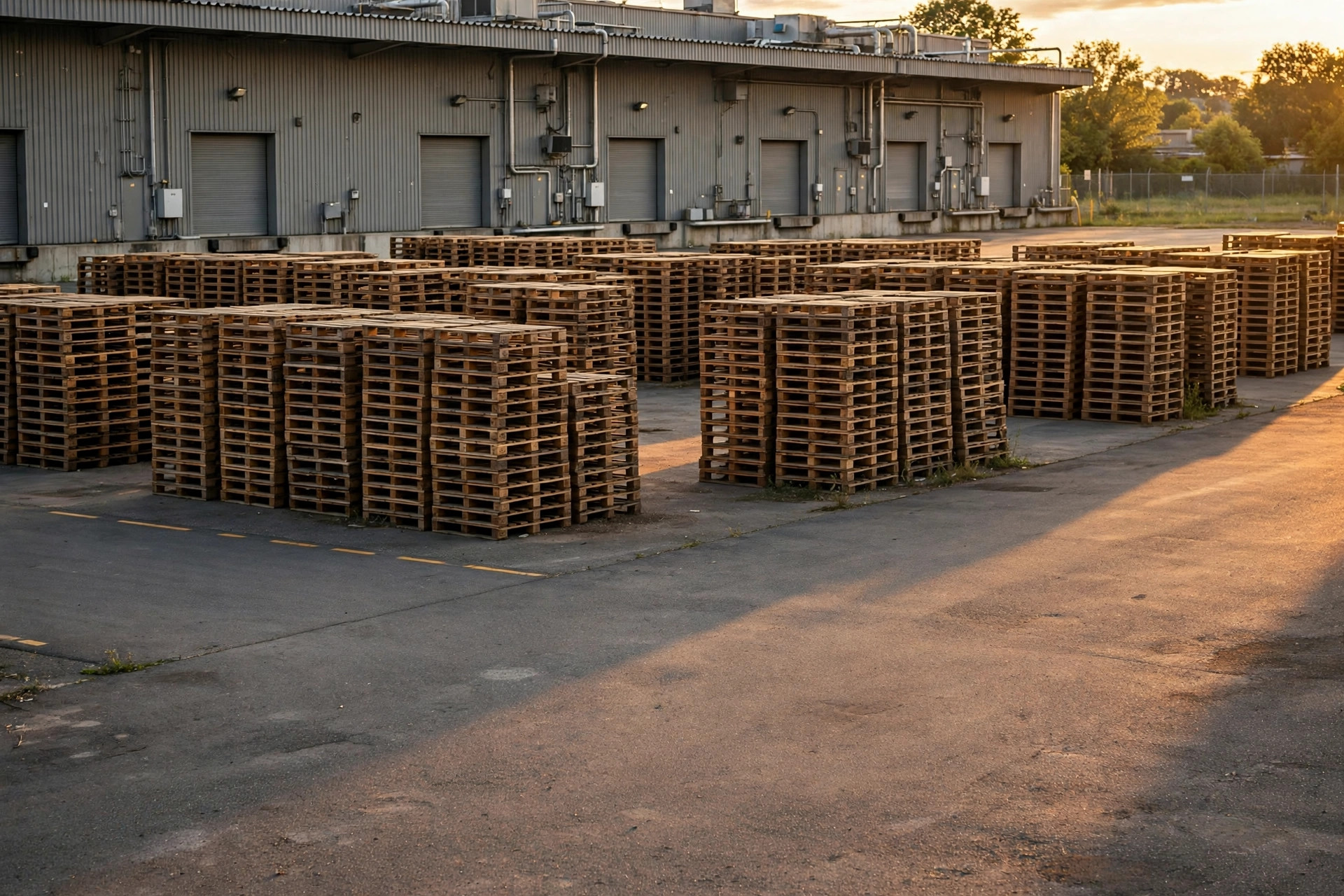
September 2024, peak-season prep in full swing, my 3PL in Ontario, CA. The warehouse manager told me they had nearly 700 idle pallets stacked behind the dock, waiting for the pallet recycler. That afternoon the fire marshal showed up for the annual inspection, walked around that pile twice, and filled a page of his notebook. The correction notice landed the next day: stack too high, too close to the building, not enough separation from the other outdoor storage. I just stood there — empty pallets can get you in trouble with the fire department?
They can. And here's why sellers should care: if the warehouse gets ordered to shut down for corrections, your inventory sits inside, unsellable. A stockout in Q4 means your listing rank tanks, your ads burn money, your ACoS explodes. Search "idle pallet storage fire code requirements" in English and all you get is insurance-company PDF checklists. Nobody writes it from the perspective of people like us — the ones renting the space. So here's the red line, in seller language.
Idle Pallet Fire Code, Outdoors: The 20/30/50-Foot Spacing Comes First
NFPA 1 (2024), section 34.11.3.3, writes the hard numbers in black and white, and even an outsider like me memorized them:
- No stack over 15 ft (4.6 m) tall
- No single pile covering more than 400 sq ft (37 m²)
That's per pile. The part that actually gets people cited is the separation — pile to pile, pile to building. The QBE idle-pallet checklist (built on NFPA 1) lays it out:
| Idle pallet count | Min. separation from other outdoor storage |
|---|---|
| Under 50 | 20 ft (6 m) |
| 50–200 | 30 ft (9 m) |
| Over 200 | 50 ft (15 m) |
Our 700 pallets put us straight in the "over 200" tier: 50 feet. The manager had stacked them less than 15 feet from the dock doors. The marshal pointed at the doors and windows and said: too close to building openings — one spark and the whole row of doors goes up. This table is the most-asked-about part of the idle pallet storage fire code requirements — and the part sellers never hear about until the marshal is already on site.
Distance to the building depends on the wall. Masonry wall, no openings: 10 ft for 200 or fewer pallets, 15 ft for more than 200. Wood-frame or iron-clad metal walls (half the older warehouses in the Inland Empire): 20 ft for 50 or fewer, 30 ft for 51–200, 50 ft for more than 200. One honest caveat — that last tier isn't spelled out in NFPA 1 itself; it's the fire-protection industry's recommendation, and the marshal enforces it on site anyway. Arguing "the code doesn't say that" gets you nowhere.
Doing the Math: What 700 Pallets Actually Cost in Yard Space
"They're just pallets, how much space can they take?" Let me run our 700.
A standard 48×40-inch pallet is about 5.5 inches thick and covers roughly 13.3 sq ft. 15 ft ÷ 5.5 in ≈ 32 pallets per stack. 700 ÷ 32 ≈ 22 stacks, footprint ≈ 293 sq ft — under the 400 sq ft single-pile cap, so one pile is fine on paper.
Then the spacing kicks in. Over 200 pallets means 50 ft from any other outdoor storage. Our building had metal walls, so 50 ft from the building too. The manager measured afterward: to hold those 700 pallets compliantly, the yard needed nearly 2,000 sq ft — more than six times the pallets' own footprint.
That's the trade-off nobody tells you: idle pallets don't consume "pallet area," they consume "fire-separation area." Yard space in the Inland Empire costs real money, and in peak season you're choosing between 2,000 sq ft of pallets and 2,000 sq ft of outbound freight. Our fix was boring but effective: we signed the recycler to twice-weekly pickups, capped the on-hand count under 200, and dropped a whole spacing tier from 50 ft to 30 ft. The yard breathed again.
Counter-intuitive take: the core of pallet compliance isn't height, it's distance. Everyone remembers the 15-ft cap. Nine times out of ten, what the marshal actually writes up is spacing — too close to the wall, too close to the doors, piles too close together.
Idle Pallet Fire Code, Indoors: Wood Caps at 6 Ft, Plastic Is Somehow Worse
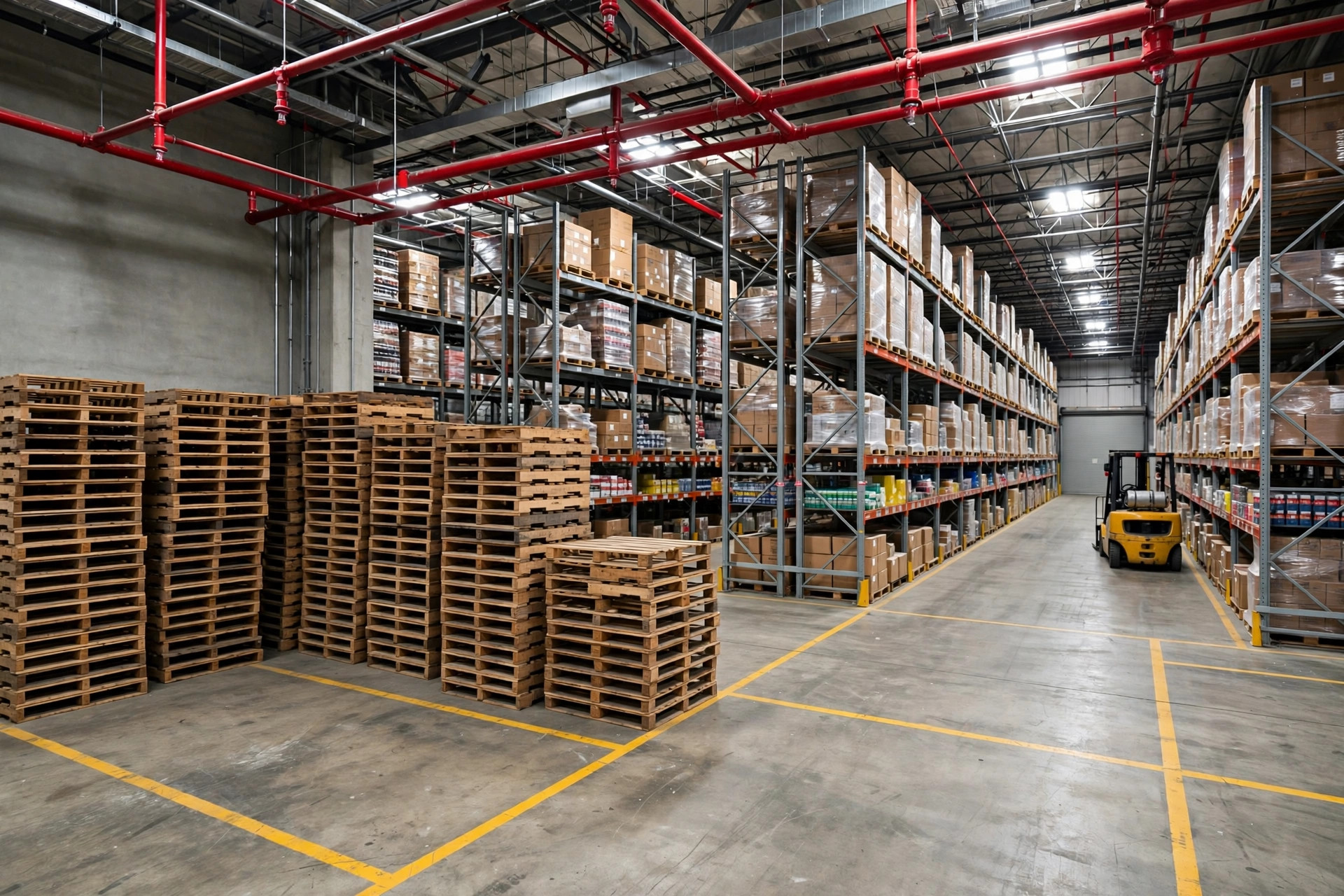
Think moving them inside is easier? NFPA 13 has a separate, harsher rulebook for indoor idle pallets:
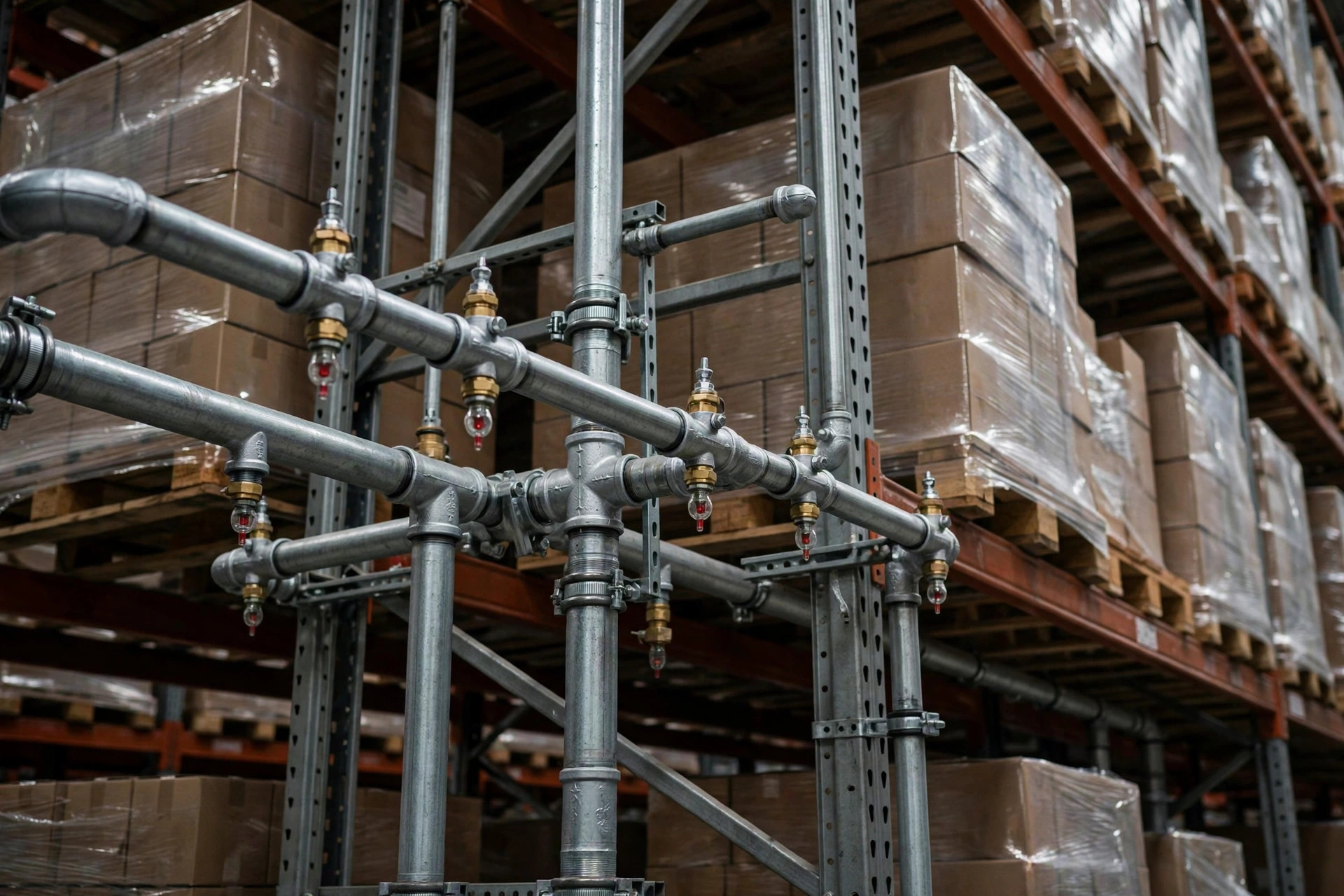
- Wood pallets: stored as plain miscellaneous storage, the cap is just 6 ft, no more than four stacks per pile, piles at least 8 ft apart. Want to go higher? Fine — but then the sprinklers have to be designed for pallet storage specifically (up to 20 ft with density/area design, up to 35 ft with ESFR). That's a different budget.
- Plastic pallets: classified as high-hazard on sight. Without a dedicated cut-off room, the cap is 10 ft, the ceiling can't exceed 30 ft, and sprinklers must deliver at least 0.6 gpm/ft² with K-16.8 or larger heads. Want 12 ft? You need a cut-off room — 3-hour fire walls, at least one exterior wall, 0.6 gpm/ft² across the whole room.
See the irony? Plastic pallets are durable, clean, reusable — better in every way, except in the eyes of the fire code, where they're Group A plastic and a full hazard class nastier than wood. That 10-ft/12-ft split is the nastiest corner of the idle pallet storage fire code requirements for anyone running plastic pallets. Plenty of sellers (me, two years ago) think "switching to plastic pallets is an upgrade." On fire-compliance cost, that upgrade can run backwards — unless your warehouse was already sprinklered for plastic.
One more trap: California's Fire Code (Chapter 32) treats idle pallets as a high-hazard commodity. Stack them over 6 ft indoors and you trigger high-piled storage requirements — possibly a high-piled storage permit on top of everything else. Seven feet of pallets inside, and the marshal isn't just asking how you stacked them, he's asking "where's your permit?"
The Seller's Checklist: You Rent the Space, the Fire Code Is Your Problem
Outsider's honest take: we rent space and use 3PLs. The fire code looks like "the warehouse's problem," but we're the ones who pay for a shutdown. Freight that can't ship bleeds money by the day, and the marshal doesn't care that you have a Prime Day coming.
This one's battle-tested — two lists, twice a year:
- Walk the pallet area every quarter with your phone camera. Count the pallets (are you crossing the 50/200 thresholds?), measure distance to the walls, eyeball the stack height against 15 ft. Keep the photos. Self-audit before the marshal does.
- Ask your 3PL three questions: indoors or outdoors for idle pallets? If indoors, what standard are the sprinklers designed to? When was the last marshal inspection, and were there any citations? If they can't answer, you still have time to switch before peak.
- Lock in a pickup cadence with your pallet recycler or supplier. Don't let empties quietly "grow" past 200 during peak. Keeping the count down drops you a spacing tier — the cheapest compliance move there is.
- If you use plastic pallets, confirm before signing the 3PL contract: is there a cut-off room, and do the sprinklers hit 0.6 gpm/ft²? Don't discover after move-in that your pallets are a contraband-level headache in their building.
Idle pallets — nobody looks at them twice. But in the fire code they sit in the same hazard class as tires and flammable liquids. Remember three numbers — 15 feet, 400 square feet, 20/30/50 feet — and go look once a quarter. Don't wait until the marshal's notebook comes out to remember this article.
By Ah K, E-commerce Seller (5 yrs)