A forklift salesman schooled me last month.
I asked him: electric counterbalance, reach truck, or internal combustion — which one does my small warehouse actually need? He said: "They all work. Depends on your budget." I almost believed him.
Then I spent two weeks measuring my aisles, my racking, my shifts, and my power supply. Turns out these three machines aren't a "budget" decision at all. It's a "what's your operation" decision. Buy the wrong one and it's not about spending more money — it's the truck that can't turn, can't reach, or dies mid-shift.
Here's the short version for busy people:
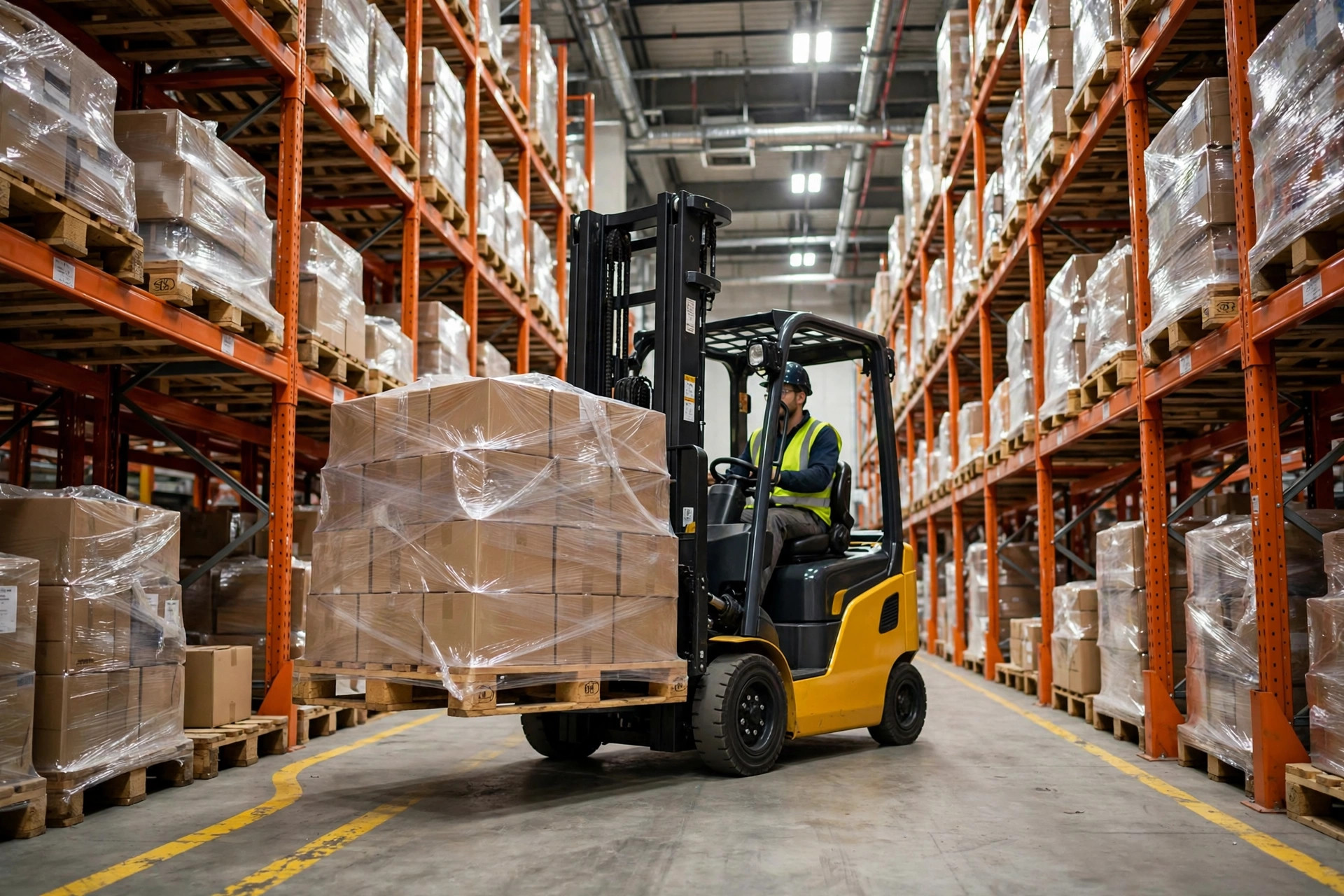
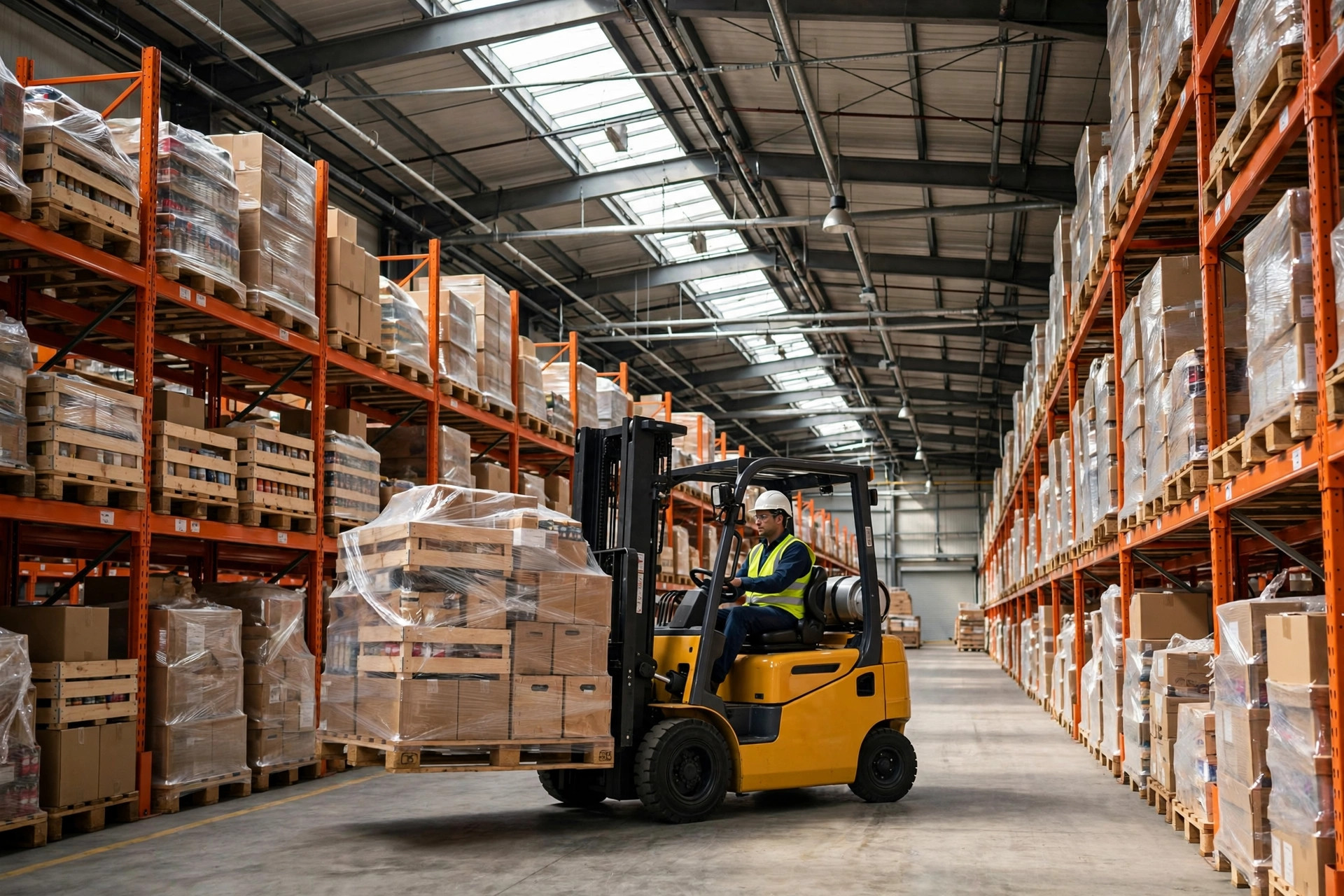
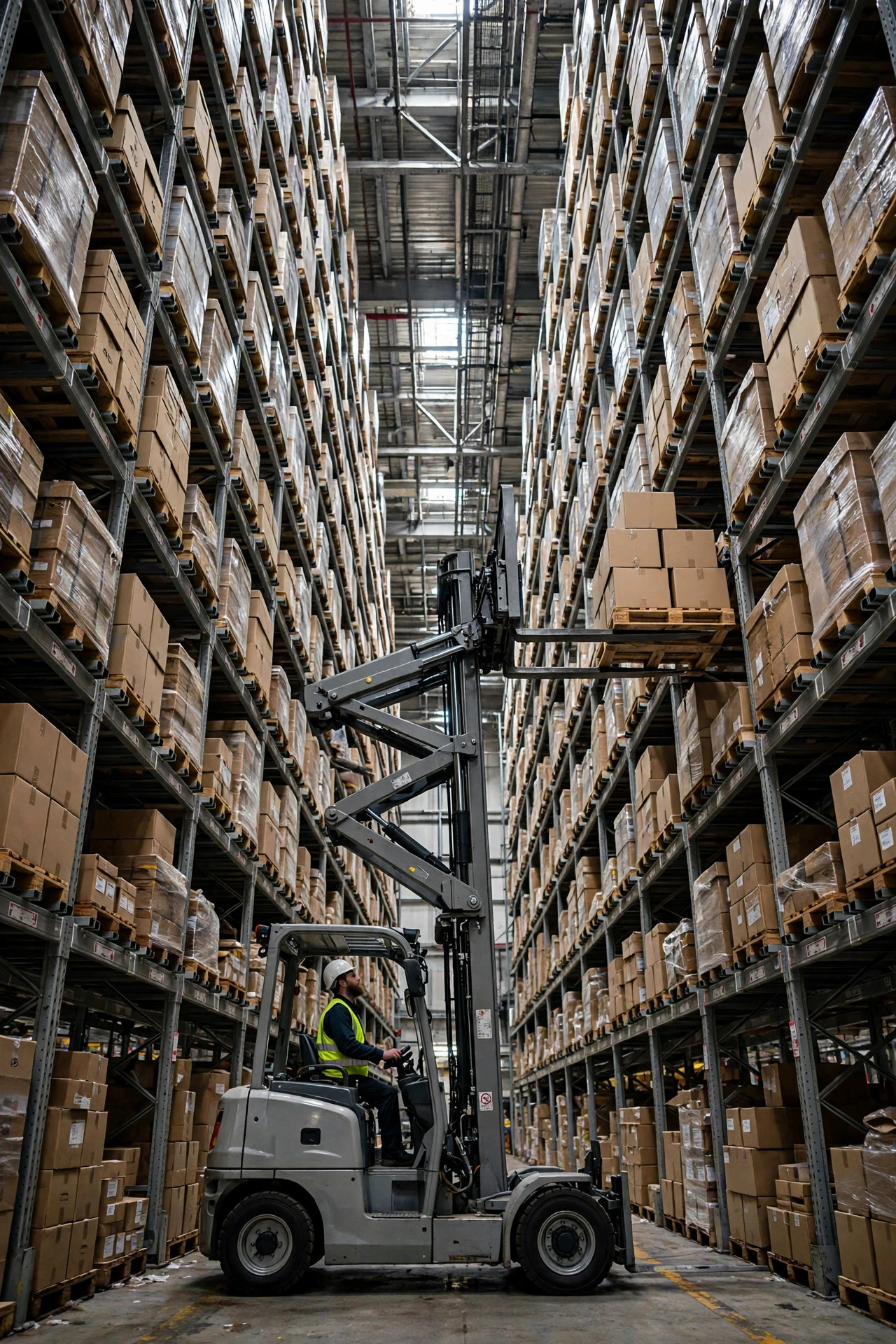
Aisles under 3 meters and racking over 6 meters — get a reach truck, no debate. Indoor only, single 8-hour shift — electric counterbalance. Outdoor yard, heavy bulky loads, running all day — internal combustion.
Want the full story of how I got burned and how the math works? Keep reading.
Aisle Width and Lift Height Are the Two Hard Lines
When you're shopping for a forklift, salespeople love to talk about load capacity — "Is 2.5 tons enough?" Honestly, for us e-commerce sellers, one pallet rarely tops 1 ton. Capacity is almost never the bottleneck. The real bottlenecks are two: how wide your aisles are, and how tall your racking is.
Here's the comparison table I built after cross-checking specs from multiple manufacturers and industry guides:
| Electric Counterbalance | IC (Diesel/LPG) | Reach Truck | |
|---|---|---|---|
| Min. working aisle | 3.4–4.0 m | 3.6–4.3 m | 2.7–3.1 m |
| Lift height | 4–7 m | 4–7 m | 8–12 m |
| Typical capacity | 1.5–5 t | 1.5 t+, heavy-duty is its strength | 1–2.5 t |
| Indoor use | Yes, zero emissions | Gasoline engines stay out; LPG needs ventilation + CO alarms | Yes, built for indoor high-bay work |
| Continuous operation | Depends on the battery (math below) | 5-minute refuel, back to work | Best for single-shift high-bay putaway |
Once you read this table, the choice is just arithmetic.
My own lesson: in 2024 I rented a 1,500 sqm warehouse in Los Angeles with second-hand 4-level racking, top level at 5.2 meters. The landlord's existing aisles were drawn at 3.2 meters. I wanted an electric counterbalance — cheaper, quieter, no exhaust to worry about. The salesman said "3.2 meters is fine." The day the truck arrived, the rear wheels nearly clipped a rack upright on the first turn. A counterbalance forklift needs 3.4–4.0 meters of aisle to turn safely. At 3.2 meters, you can drive in but you can't swing around.
The fix? We widened the aisles to 3.6 meters, which killed an entire row of racking — nearly 80 pallet positions gone. At local rents, that's thousands of dollars a year, wasted. Was it money well spent? No. But it was cheaper than replacing a truck you already bought — because returns on forklifts don't exist.
So remember the order: decide racking height and aisle width first, then pick the truck. Get the order backwards and you pay for it in pallet positions.
The Indoor Problem Nobody Warns You About With IC Trucks
Like a lot of sellers, my first instinct was internal combustion — it's cheaper. A new 5,000 lb LPG forklift runs about $25,000–$32,000, while the equivalent electric lithium model is around $35,000. That's a real gap. Who wouldn't be tempted?
But there's something about running IC indoors that salespeople never volunteer: carbon monoxide.
OSHA's rule is clear — workplace carbon monoxide must stay under 50 ppm as an 8-hour average. A new LPG forklift's exhaust carries roughly 0.5% CO (5,000 ppm); a poorly maintained old one can hit 2–4% (20,000–40,000 ppm). Run that in a poorly ventilated building all day and you'll blow past the limit fast. OSHA flat-out recommends against using gasoline forklifts indoors.
A friend learned this the hard way. Early 2025, he rented a 2,000 sqm warehouse in Ontario and dropped a cheap used LPG forklift inside to save money. Two months in, the landlord came knocking — the neighboring unit complained about a strange smell, and their CO alarm wouldn't stop going off. He ended up paying for exhaust fans, alarm systems, and a formal warning from the property manager. All in, he spent the exact price difference that would have bought him an electric truck in the first place.
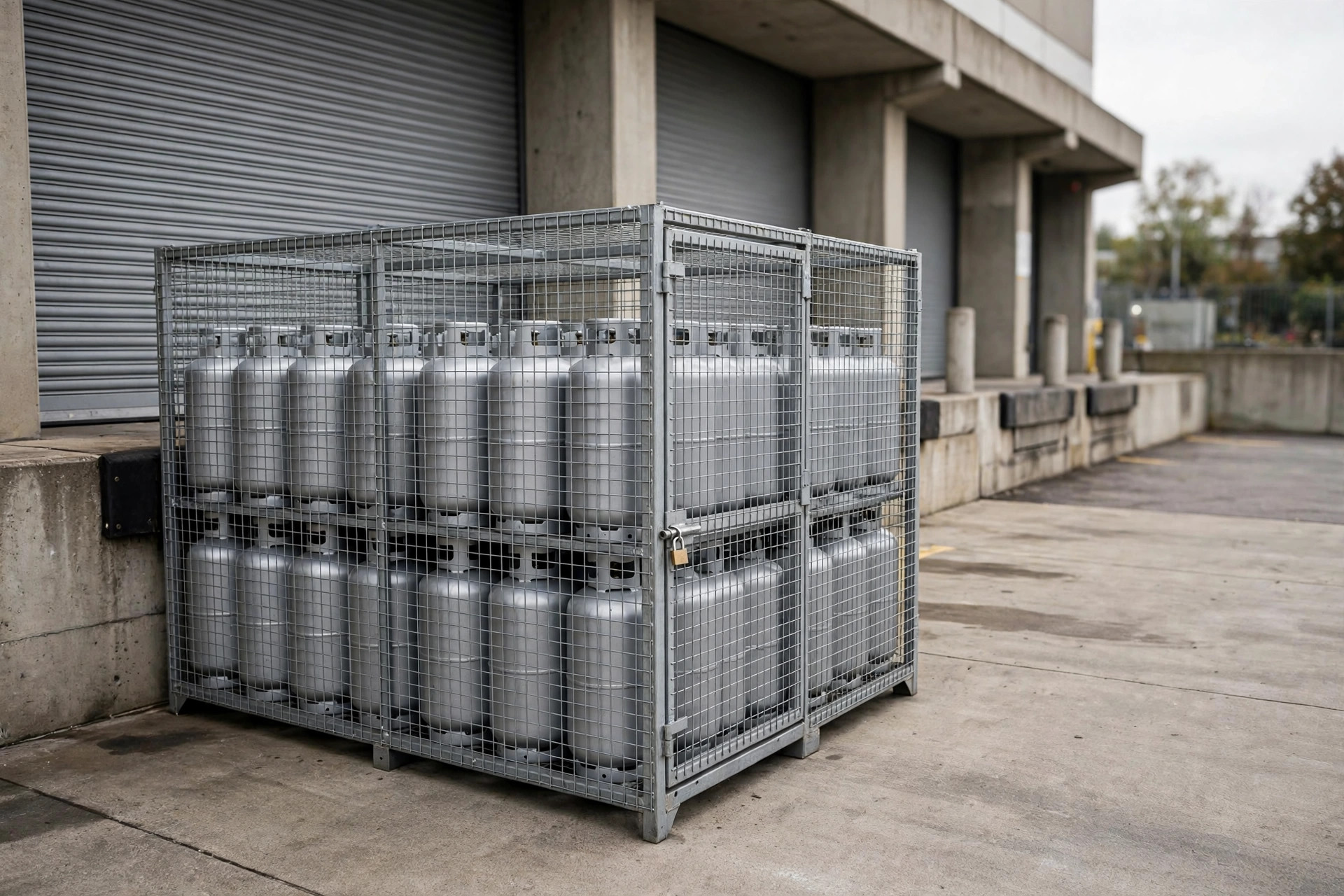
So the line is simple: pure indoor warehouse? Rule out IC, don't even do the price math. Unless half your work is in an outdoor yard — then IC is genuinely great. Five minutes at the pump and it's back at full power. Electric can't touch that.
Lithium vs Lead-Acid: I Did the Math So You Don't Have To
Once you've settled on electric, the next trap is the battery. Salespeople will tell you "lithium is better" but never explain where it's better or whether it's worth the premium.
| Lead-Acid | Lithium | |
|---|---|---|
| Full charge time | 8–10 hours, plus ~8 hours cooldown | 1–3 hours, opportunity-charge anytime |
| Cycle life | 1,000–1,500 cycles | 2,000–5,000 cycles |
| Service life | 3–5 years | 8–10 years |
| Battery price | $2,000–$6,000 | 2–3x the price |
| Daily maintenance | Weekly watering, equalization charges | Basically none |
| Charging room | Dedicated ventilated room required (hydrogen gas) | Charge wherever the truck parks |
The math is simple: single shift, 8 hours a day — lead-acid is perfectly fine. Plug it in after work, full battery by morning. At $2,000–$6,000 a pack, it's cheap and does the job.
But if you run two shifts, or peak season has you working 14–16 hours a day, lead-acid falls apart: 8 hours charging plus 8 hours cooling means you need 2–3 batteries in rotation, plus someone to water them and swap them. Lithium charges in 1–2 hours — plug in at lunch and you're topped up — one battery runs the whole show. Industry analyses put electric forklifts' 5–7 year operating costs 30–50% below IC, mostly saved on fuel and maintenance.
Here's the counterintuitive take: with an electric forklift, the truck isn't the expensive part — the battery and the downtime are. A truck sitting dead for half a day burns your labor budget and your outbound SLA at the same time. Once you factor "nobody can work while the truck is down" into total cost of ownership, lithium often turns out to be the cheaper option.
Can You Buy Used? Yes — But Check These Four Things
We're small sellers on tight budgets, and used is genuinely tempting. A new $35K-class electric counterbalance goes for $10,500–$28,500 used; used reach trucks show up around $17,000–$23,000. But the used market is deep water. Here's my four-step inspection:
First, the hour meter. Forklifts are judged by hours, not years — a single shift racks up roughly 2,000 hours a year. Under 5,000 hours is low usage, 5,000–10,000 is medium, over 10,000 is high-mileage. A well-maintained truck lives about 10,000–20,000 hours total. Watch for one nasty trap: old four-digit meters roll back to zero at 10,000. That "2,000-hour" bargain from 2015 might really be 12,000 hours.
Second, the battery (for electrics). The battery is the most expensive single part of a used electric forklift. Ask the seller for cycle count and internal resistance data. If they can't answer, walk away. One replacement lithium pack costs half another truck.
Third, the mast and hydraulics. Raise it and listen — strange noises, juddering, or oil leaks all mean big repair bills. Uneven tire wear usually signals frame or steering problems.
Fourth, the service records. An 8,000-hour truck with complete maintenance history beats a 4,000-hour truck with no records, every time. I got burned on this once: I found a cheap "4,000-hour" truck, but the mast shuddered on the way up. My mechanic took one look and said the hydraulic pump was dying — $3,000 minimum to fix. I walked away.
The Honest Bottom Line
Forklift selection comes down to three lines salespeople won't draw for you: aisle width decides whether you can turn, racking height decides whether you can reach, and shift intensity decides which battery you need. Capacity, brand, color — all secondary.
And don't get the order wrong: measure the aisles, fix the racking, then pick the truck, then talk price. If I'd measured that 3.2-meter aisle first, I wouldn't have thrown away 80 pallet positions.
This one I tested myself — it works.
By Ah K, E-commerce Seller (5 yrs)