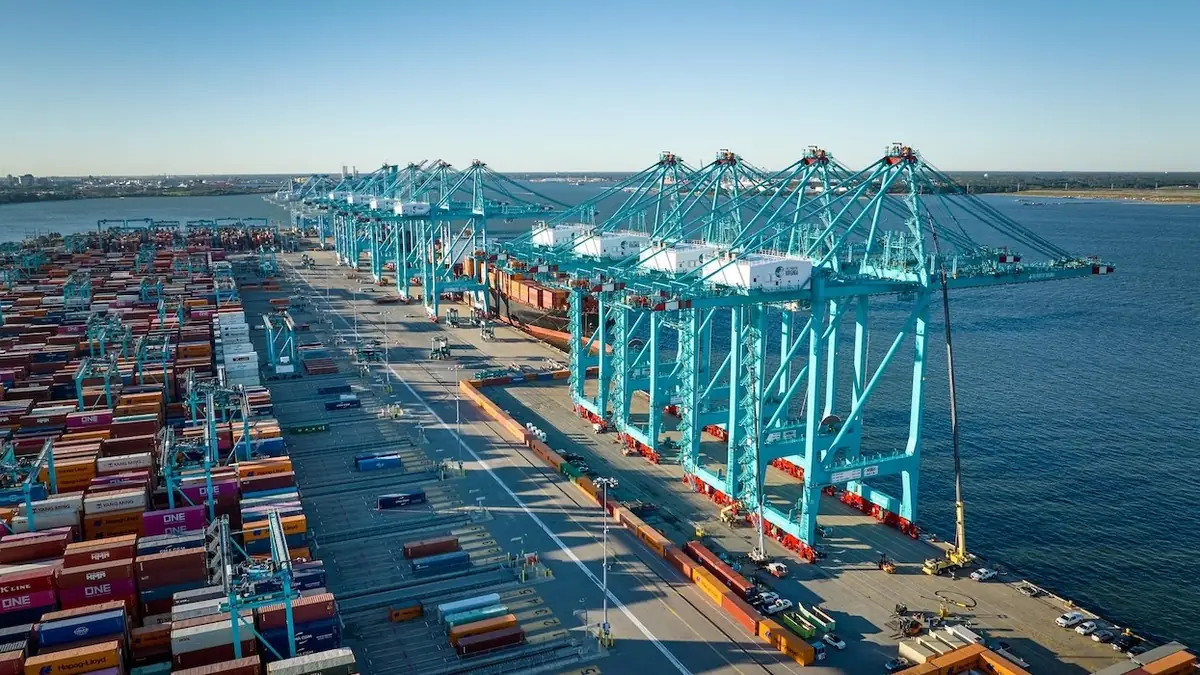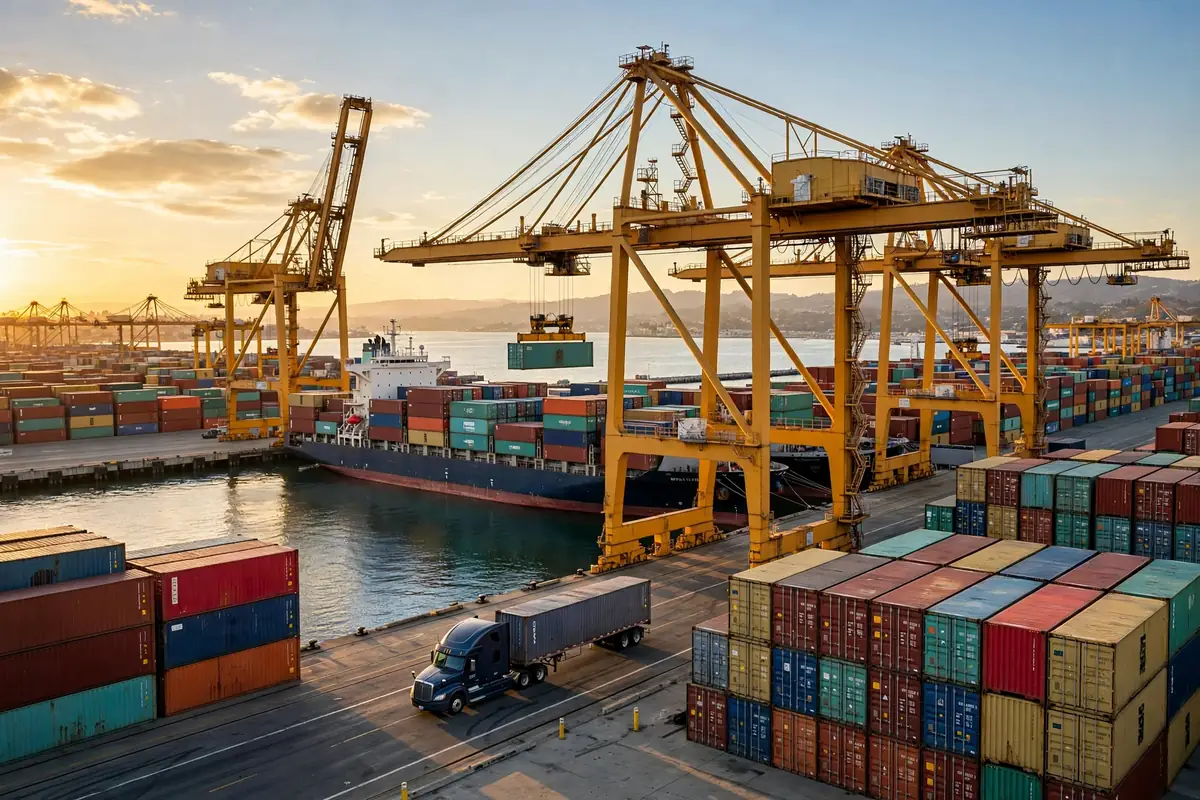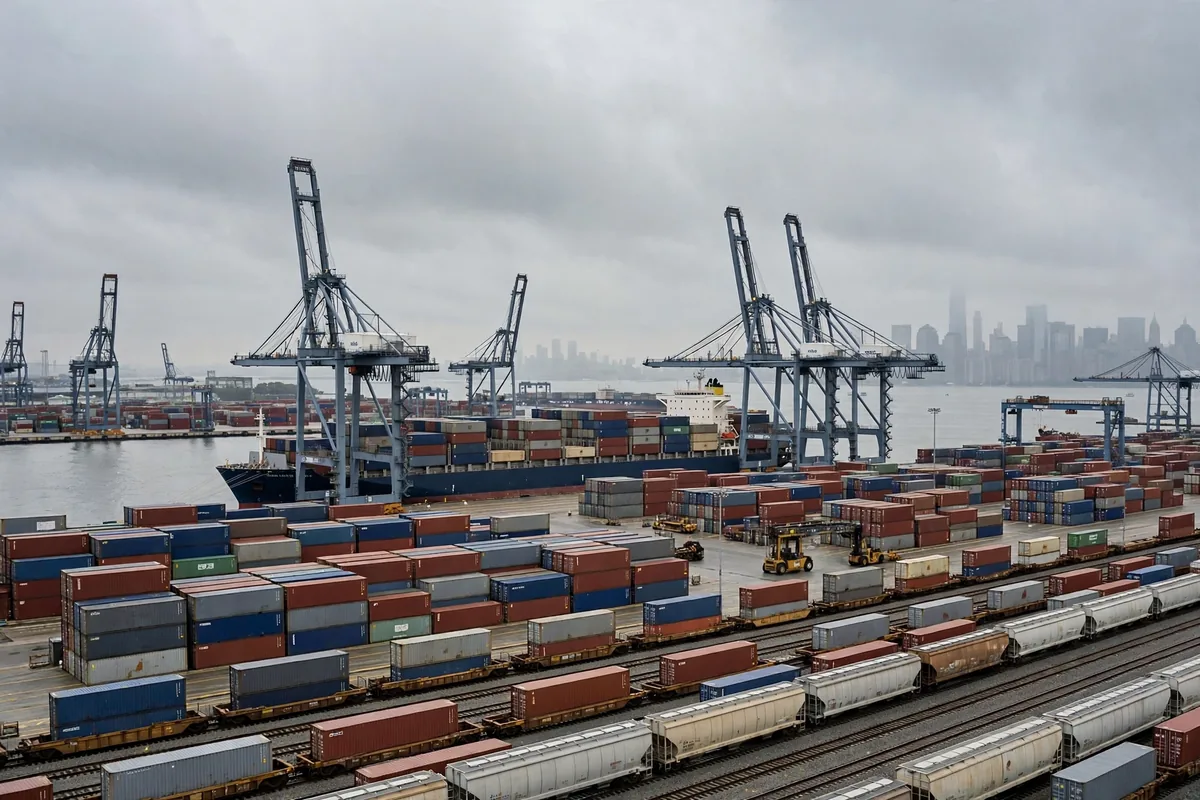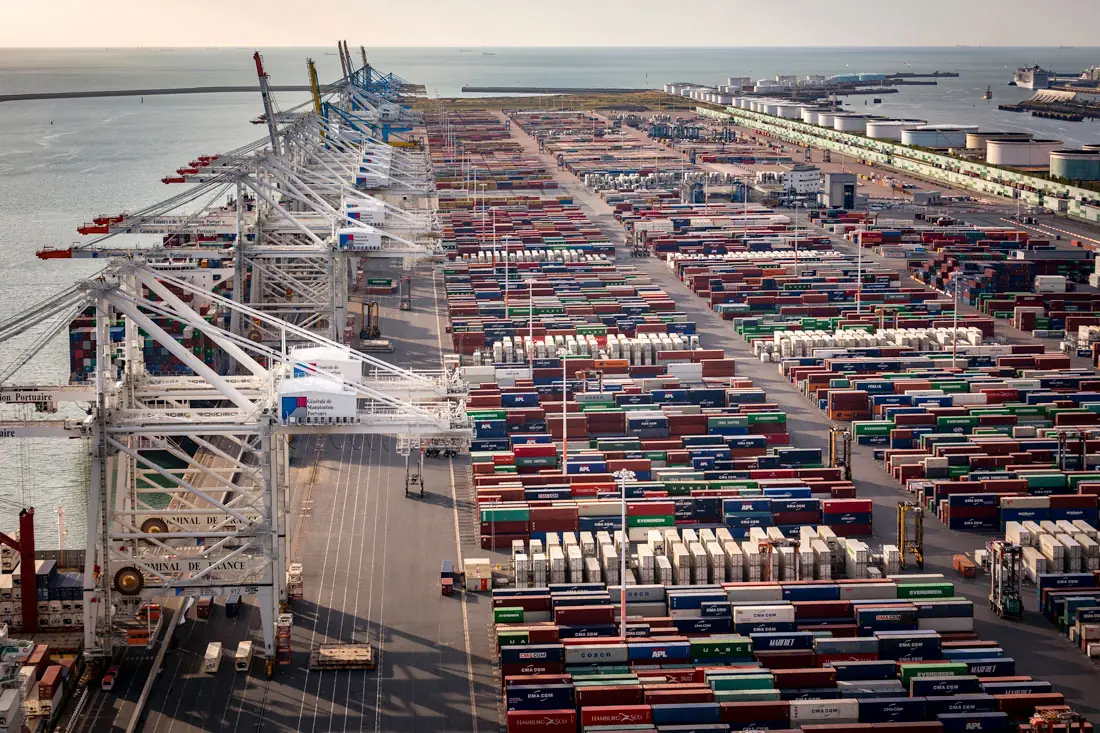
Let me tell you something. Last autumn I drove to Le Havre, leaving Paris before dawn and following the Seine northwest, fog thick on both sides of the road. Outside the port I joined a queue of container trucks waiting to pick up boxes, drivers standing around smoking and chatting. One old hand told me, "This is France's biggest container port now. It never sits idle." I thought to myself that drivers know a port best. Whether pickup runs smooth, how long the queue is, whether the roads work, one trip tells you all of it. The keyword to search in English is le havre france port warehouse logistics. This piece starts with that trip, and works through Le Havre's warehouses, its port, and the Seine corridor behind it.
After all these years on the road, I know two French ports well: Le Havre and Marseille. Le Havre sits in an interesting spot, right where the Seine meets the sea. Ships come in from the English Channel and berth, and once the cargo is off, Paris lies to the southeast and the whole industrial north of France to the east. The port is run by HAROPA PORT, which handled over 3.1 million TEU in 2024, making it France's largest container port. That sounds impressive, but drivers care about something else: with that many boxes, how does the cargo actually get out?
How Big Is This Port? The Numbers First
Here is the bottom line: Le Havre is France's largest container port, and it is still growing. In 2025 it handled over 3.2 million TEU, up 4 percent on 2024. Across northern Europe it ranks fourth by tonnage and fifth by TEU. France's second-largest container port is Marseille, at 1.45 million TEU in 2025, flat against 2024. Le Havre moves more than twice what Marseille does.
On my trip the pickup queue took over an hour. While I waited I talked to the driver ahead of me, who said the big ships keep coming and the berths stay packed. I believed half of it. With 3.2 million TEU moving through, the port cannot be quiet. But I kept a doubt in mind too: lots of boxes does not mean fast pickup. A big port means lots of trucks, and if the gate, the yard, or the pickup window jams up anywhere, drivers sit outside waiting. So you cannot judge a port by throughput alone. You have to look at how the cargo disperses.
The Real Story Is the Seine Corridor
The most valuable thing about Le Havre is not its berths. It is the Seine corridor behind it. In 2025, rail containers reached 145,000 TEU, up 18 percent on the year before, and river plus rail together made up about 20 percent of the total. Any driver should chew on those numbers.
Let me do the math. Twenty percent of 3.2 million TEU is roughly 640,000 TEU moving by water and rail, which leaves about 2.56 million TEU still moving by road. In other words, trucks are still the backbone. Eight out of ten boxes still leave on a truck, one load at a time. But rail growing 18 percent in a year is a trend you cannot ignore. Shippers are not fools. They know which route pays, better than anyone.
Here is the counterintuitive part: the bigger the port, the less a trucker can afford to think only about roads. River plus rail at 20 percent means multimodal transport is no longer decoration. It is a serious second leg. That is the part of le havre france port warehouse logistics most people miss: the corridor behind the port matters more than the quay in front of it. Shippers who know how to combine modes get steadier times and steadier costs. Shippers who only call trucks are stuck staring at the ceiling when peak season jams the roads. After all my years driving, what scares me most is a shipper who only trusts one route. When that route blocks, everything behind it waits.
Dealing with the warehouse is its own skill: before a pickup, get the paperwork and the appointment window straight. I learned that the hard way. Once I went to Le Havre for a shipper and only found out at the gate that my appointment details did not match, so I sat outside most of the morning, burning fuel, and my next two jobs slipped with it. Since then I do it properly: confirm the pickup window, the box number, and the documents with the warehouse before I leave, and ask the yard where to go before joining the queue. It sounds small, and every long-haul driver knows it: every minute saved inside the port is time back on the road.
Last year I hauled a load from Le Havre toward Paris for a shipper who tried something new: river transport from the port to Rouen, then a short truck hop into the warehouse. I grumbled at the time. River is slow, how could that work? But the warehouse reported the cargo arrived right on schedule, timing fully under control, and no driver had to queue for hours at the port. Here is a worked example, labeled as a scenario: suppose you run a steady few dozen shipments a month on this lane and shift part of them to river plus short-haul trucking. A single shipment might not arrive faster than an all-road run, but it arrives reliably, without traffic jams, and that matters most in peak season. For exact charges and schedules, check the latest published terms. I will not invent prices. But the idea is one every long-haul driver understands: steady beats fast. That is the whole point of le havre france port warehouse logistics from the driver's seat: the port gets the headlines, the corridor decides whether your cargo arrives on time.
Three Pieces of Advice for Shippers and Warehouses
First, do not compare port to port. Compare door to door. The ship reaching the berth is only the first half. The cargo getting into your warehouse is the finish line. However big Le Havre is, the freight still has to disperse through the Seine corridor, and how smoothly rail and river connect decides when your goods actually arrive.
Second, ask about rail capacity before peak season. Rail containers grew 18 percent in a year, and space on the popular routes will only get tighter. If you wait until peak season to ask, you will be too late. Asking early costs nothing.
Third, when choosing a warehouse site, do not look only at the highway exit. Look at the river terminals. Warehouses around the port zone and along the Seine that can take river and rail cargo will only grow more valuable. For rents and terms, check the latest official information. But the direction of travel is clear, and it will not steer you wrong.
There is an old saying among drivers: however big the port, the cargo still leaves one truck at a time, and however far the road, the right route never feels far. Le Havre has big ships, a big port, and big volumes, but what really decides whether your cargo moves smoothly is the Seine corridor behind the port, and whether you know how to use it. Before your next shipment, get that corridor straight in your head. It will serve you better than staring at the sailing schedule.
By Shifu Zhao, Trucking Veteran (15 yrs)