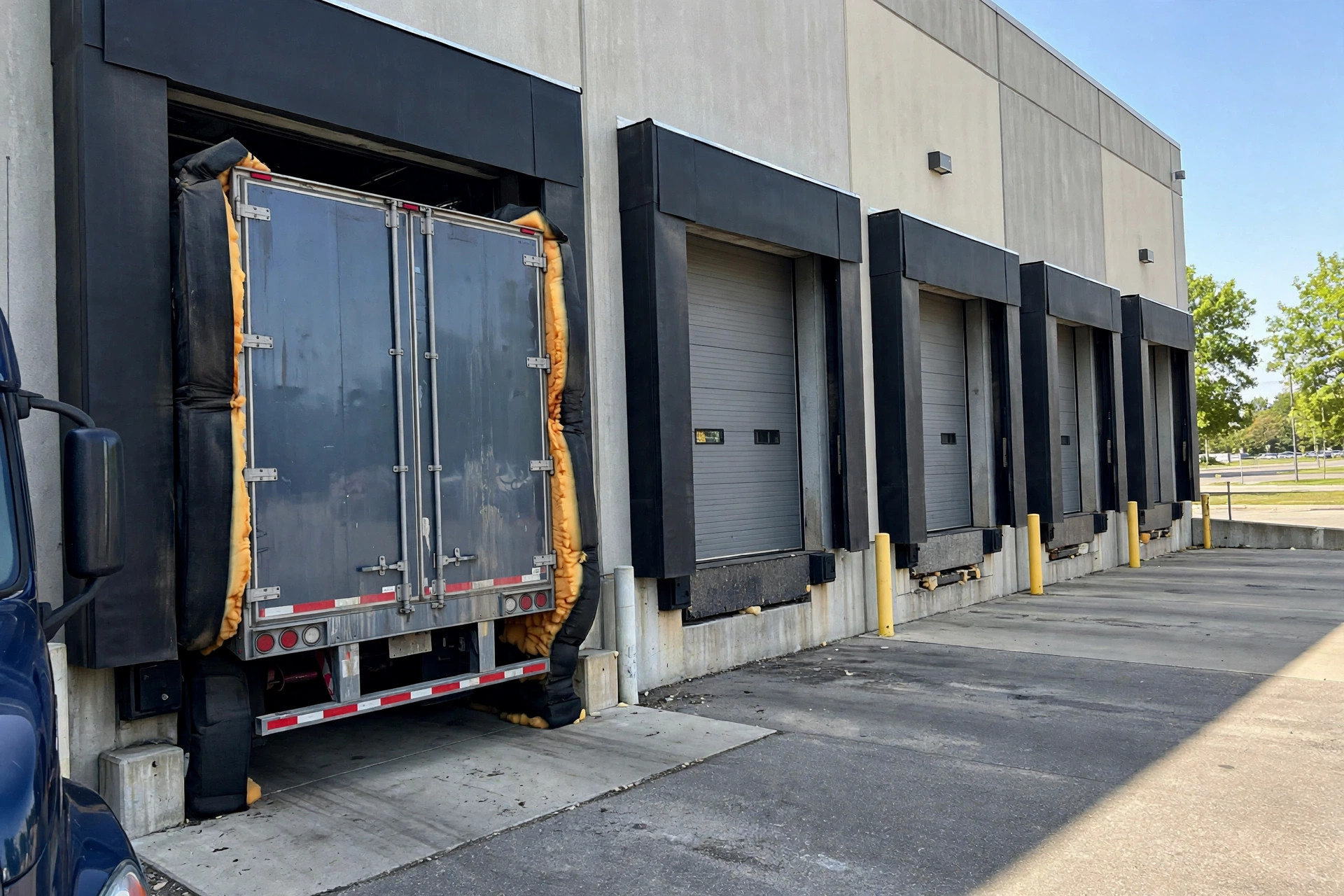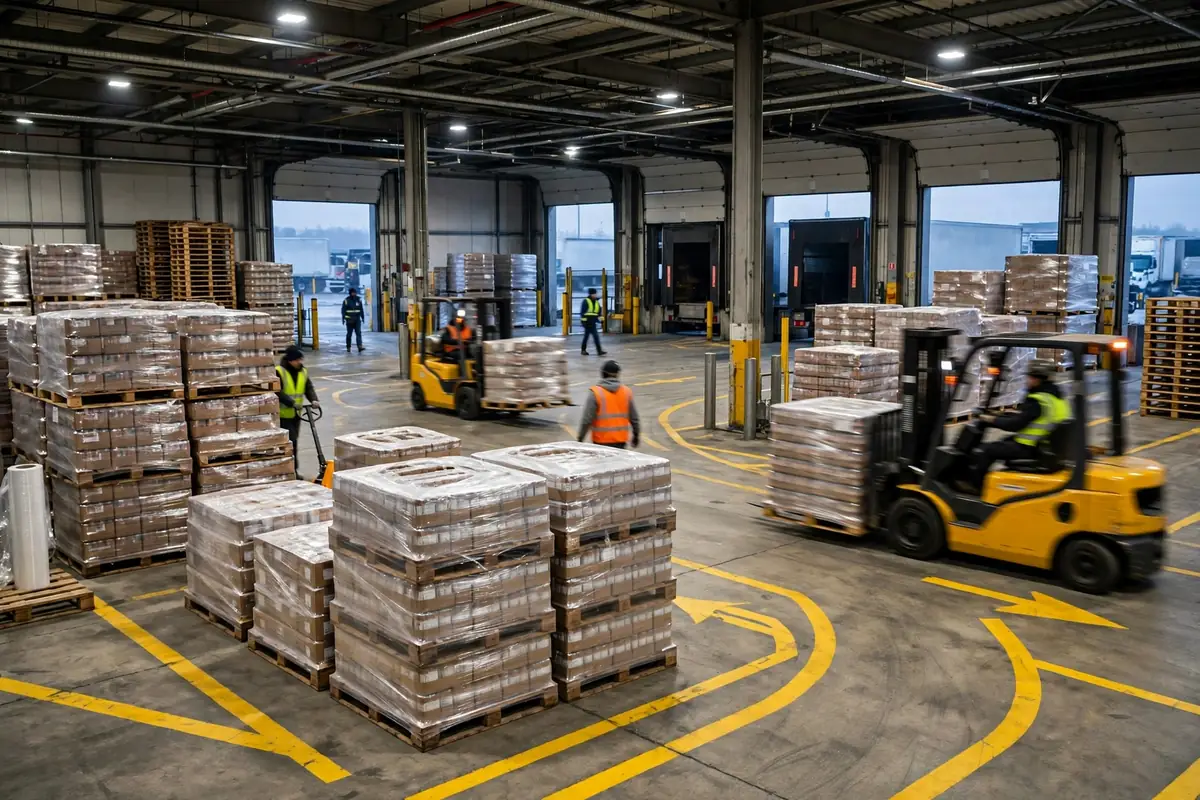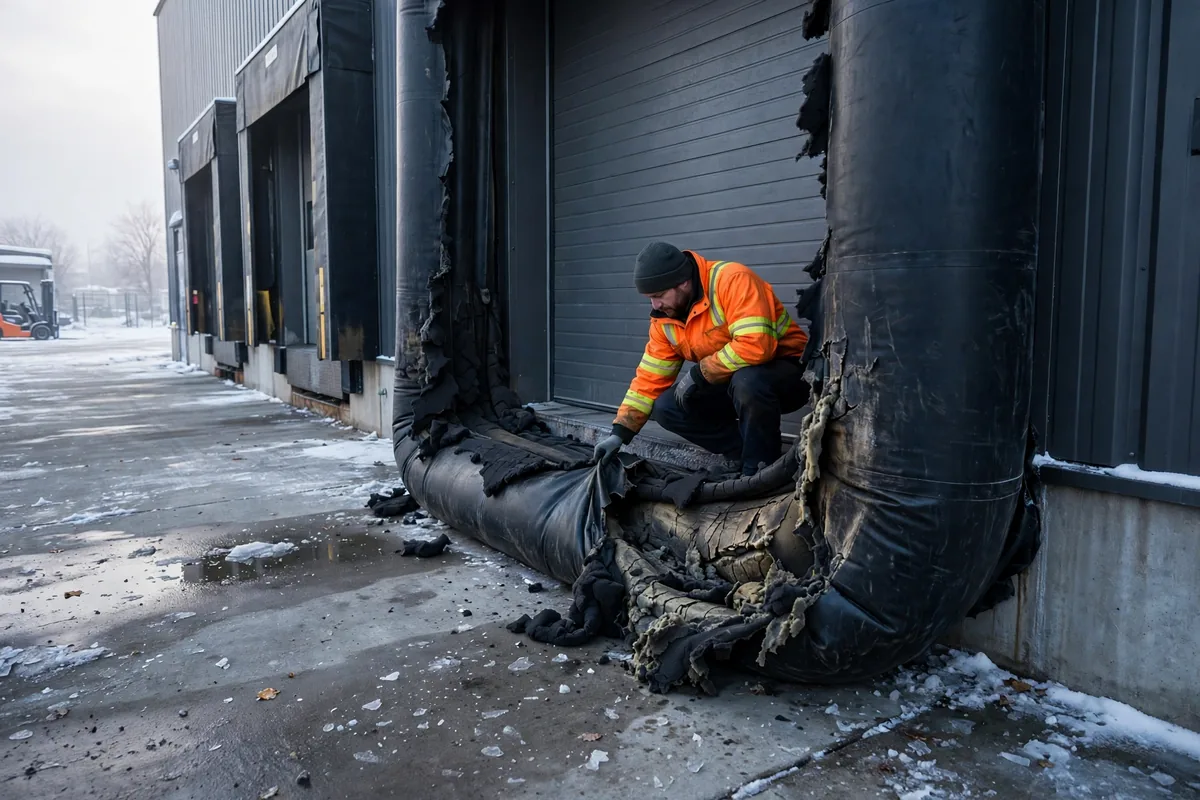
At 5:30 on a freezing morning outside Chicago, loading dock seals were crusted with frost and nobody noticed. A driver backed in, the door went up, and cold air poured through the gaps on both sides of the trailer. The guy working that door kept stepping away to warm his hands. That is how seal failure usually shows up in a real warehouse — not as a breakdown, but as a door nobody wants to work.
In December 2023, at a warehouse I was helping run, we checked all 14 dock doors during live receiving. Only nine sealed properly, based on our own walk-through notes at the time. The rest had flattened top pads, torn lower corners, or loose mounting. Freight still moved. That is the trap. A bad seal never stops the line, so it never gets fixed.
Inspecting loading dock seals by light, not by age
Forget the install date. The fastest honest test is light. Back a trailer in tight, close the overhead door, and look from inside the trailer and inside the warehouse. Where light comes through, air goes through. At night a flashlight from outside does the same job in seconds.
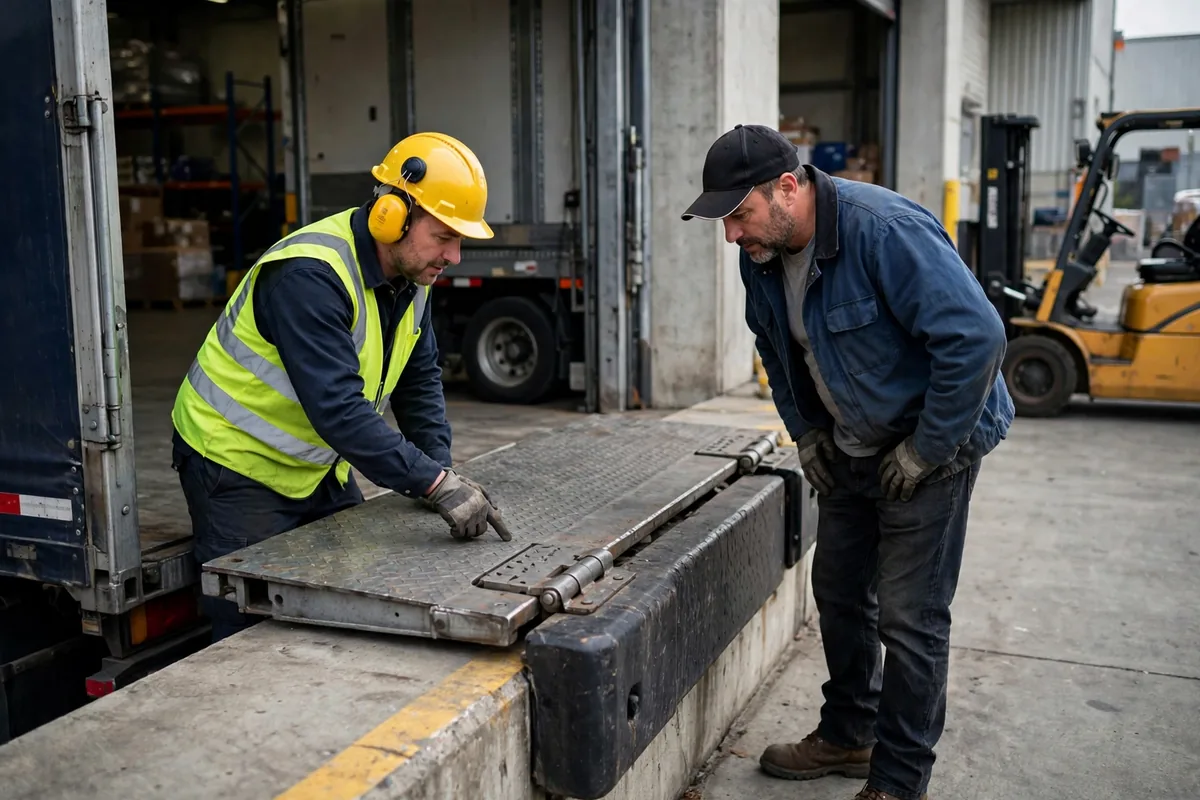
Check four places every time. The top pad takes repeated hits from taller trailers and slowly loses rebound — compression set, where the foam stays flat like a pressed sponge instead of springing back. The lower third of the side pads gets torn up by pallets and forklift traffic. The corners tear first. And check where the unit meets the wall: loose fasteners let the whole pad bow outward, and no amount of careful backing will make it seal.
If you are still deciding between seal types for a new door, start with how to choose between dock seals and dock shelters — this article assumes the seals are already installed and asks a different question: how do you know when they are done?
In January 2024, at that same Chicago site, we did a deliberately simple comparison. Same shift, similar trailer counts, one good door and one flattened door. We did not install lab instruments, and I will not invent an energy figure here. What we tracked was heater run time on that side of the building and how often workers rotated away from the bad door. The difference was obvious to anyone standing there. Treat any savings estimate as an assumption until you check it against your own utility bills and door usage — your rate and climate will decide the real number, so check current local pricing rather than trusting a rule of thumb.
Repair or replace: a loading dock seals decision table
Crews always ask the same question: can we get one more season out of it? Here is the three-tier rule we settled on.
| What you find | What it looks like | What we do |
|---|---|---|
| Still serviceable | Hairline light only, foam still springs back | Clean it, tighten fasteners, keep it on monthly checks |
| Repairable | Torn lower corner, one loose section, leak on one side only | Replace the worn pad section or corner, not the whole unit |
| Replace it | Top pad flat with no rebound, cracking on both sides, light on all four sides | Replace the full set; patching will not restore contact |
Here is the counterintuitive part: the busiest door is often not the first to fail. The door that fails first is the mixed-traffic door. One door that sees the same standard trailer all day compresses evenly and lasts. The door that sees a tall trailer in the morning, a short box at noon, and a crooked back-in at night gets twisted, uneven pressure — and dies early. Rank replacements by trailer variety and visible deformation, not just by door volume. We learned that by replacing the wrong door first.
A summer case makes the other half of the point. In summer 2023, a peer warehouse near Dallas, as the manager described it to me, had a dust and heat problem on the racks nearest the dock. They blamed the cooling system first. Two doors had flattened top pads that looked closed from a distance but left a gap at the top when a trailer was spotted. In winter you lose heated air. In summer you gain hot air, dust, and humidity. After those two units were replaced, the dust complaint dropped first. They never did a careful energy calculation, so I will not quote one.
The cost math is mostly about timing, not hardware. As an experience-based assumption, a full replacement takes a door out of service for half a day to a day once you include rerouting trailers, while a corner or section repair might take two people a couple of hours and keep the door in service that day. The expensive option is waiting until peak season, when every door is spoken for and taking one down creates a scheduling fight. That is why we locked in inspections every March and September — before peak and before hard winter.
The routine that stuck
Monthly, the night lead walks the doors with a flashlight during live spotting and logs leak location in four words or fewer: top, left, right, corner. Quarterly, we do a slower check on a quiet morning: squeeze every pad for rebound, compare thickness against the newest unit on the wall, and look for cracking. The sheet fits on one page — door number, light, rebound, tears, decision.
We also listen to drivers. They feel a dead pad before we see it: a door that feels soft and unresponsive when they back in, or one that scrapes, is telling you something. Our check-in clerk now asks and logs it. And when a new set goes in, we photograph the seal with a trailer spotted and note how the foam feels that day. Without a baseline, six months later nobody can agree whether it got worse.
One last word to fellow managers: seals fail quietly, so they get postponed quietly. Postponing does not save money. It gives you a cold door in January, a dirty door in July, and a crew that bids against working either one. Ten minutes with a flashlight each month beats an emergency door outage in peak week, every time.
By Chen Feng, Warehouse Operations Manager