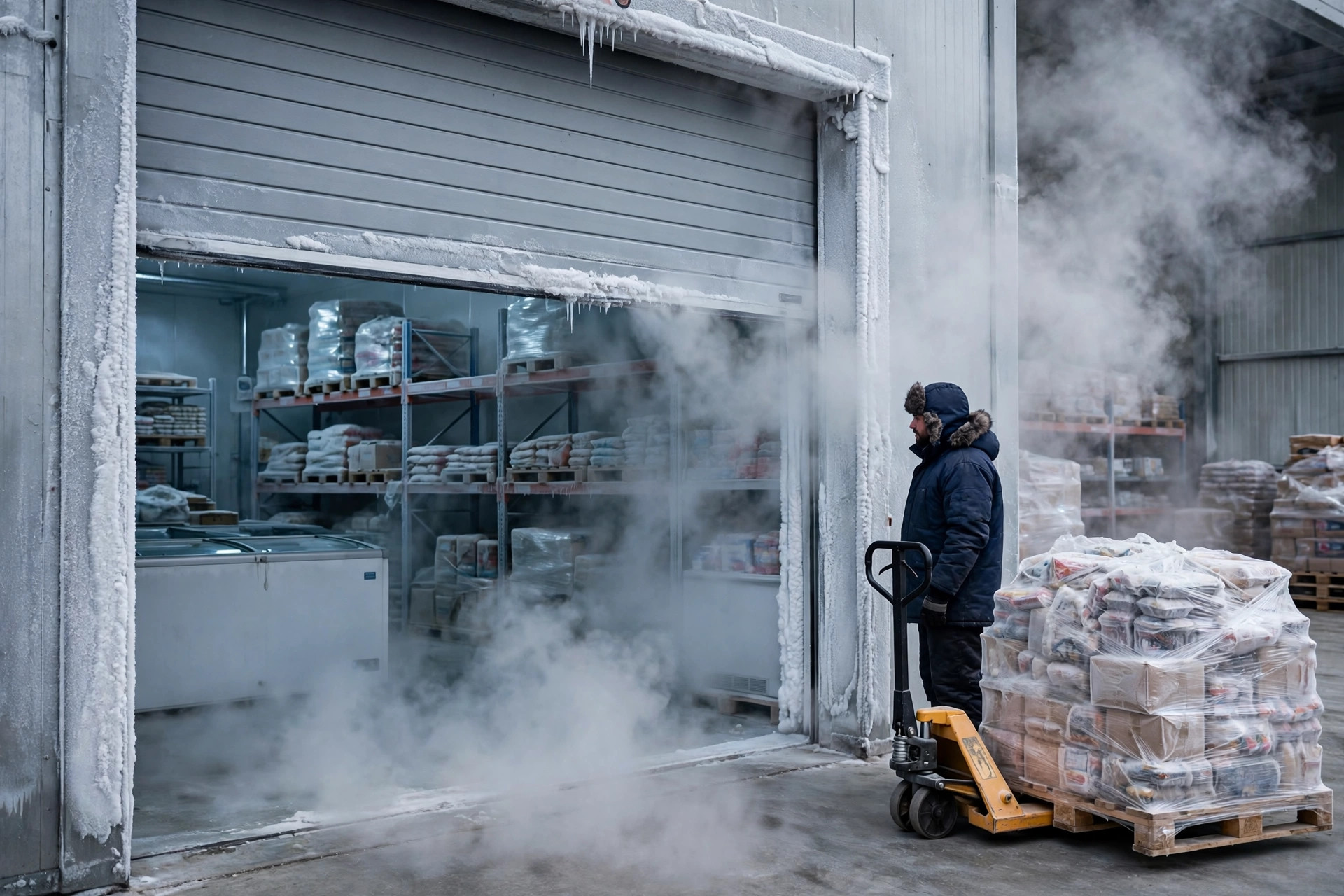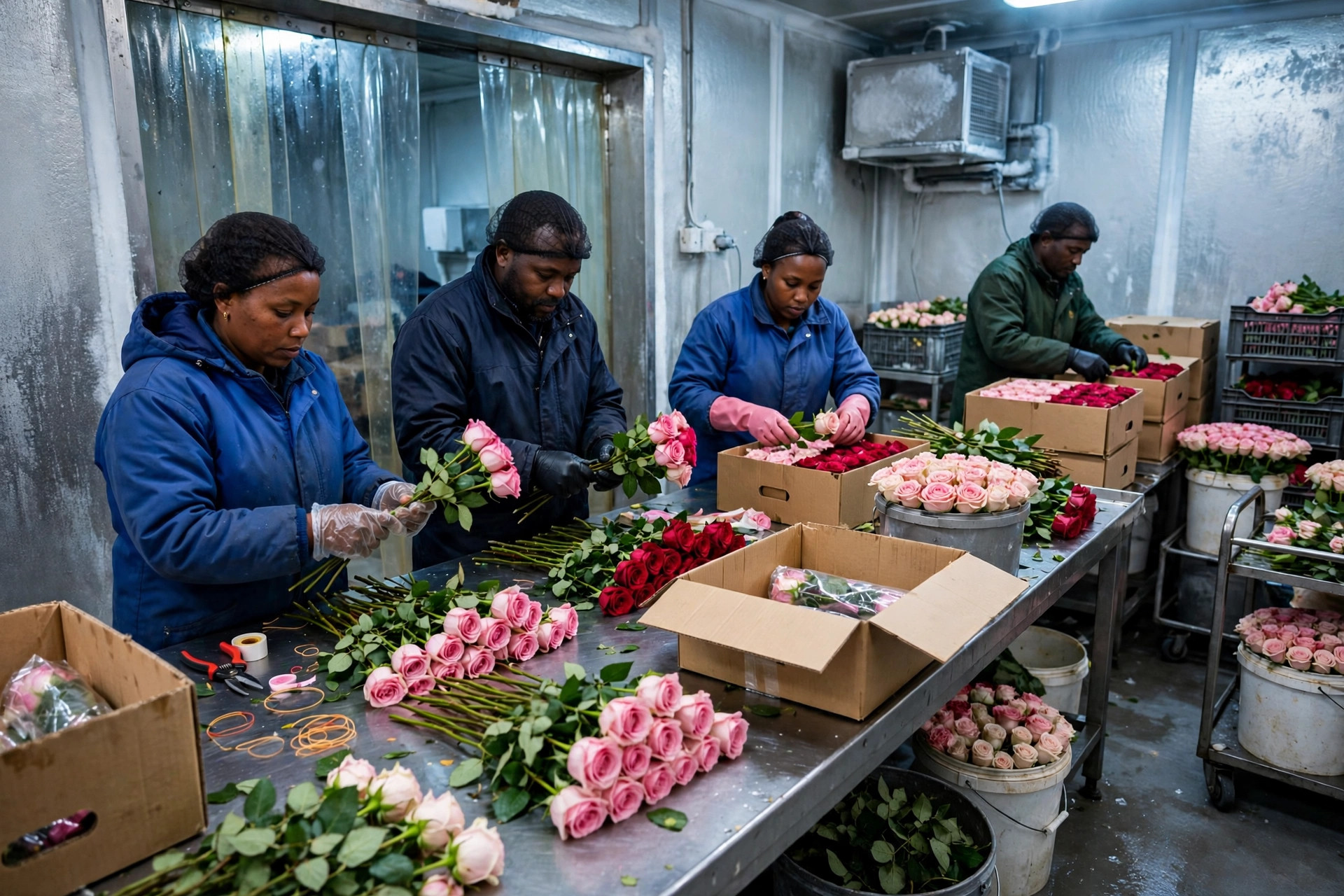
The Kenya flower cold chain is not a topic a small warehouse owner like me should be lecturing about. My warehouse is a few thousand square meters, my team fits around one lunch table, and my budget would make a big cold chain operator laugh. Then a friend who consolidates flower shipments asked me to handle a batch of roses coming out of Naivasha, and I learned something fast: the big players compete on equipment and airfreight contracts. Small players compete on not letting the flowers die halfway there.
Here is the uncomfortable truth up front: the most expensive part of flower cold chain is not the cold storage. It is the few hours when you thought the flowers were cold, but they were not.
How a shipment of roses actually goes limp
My friend's shipment is the cautionary tale I now tell anyone thinking about touching this business. The roses were picked at dawn near Naivasha, still dewy, looking perfect. The trouble started in the hours right after picking. Pre-cooling slots at the field were backed up, so the flowers went onto the truck before they were fully cooled. The road leg was fine. Then, near Nairobi, the shipment came off for consolidation and sat in an ambient shed for half a day waiting for another batch to catch up. By the time it reached the airport handover, the buyers opened the boxes to find soft, darkening petals. The whole lot got downgraded.
Notice what happened: the cold chain did not vanish. It broke twice, briefly, in two unglamorous places. Flowers do not negotiate. Once the temperature climbs, deterioration accelerates fast, and no amount of re-cooling later brings back the lost vase life. That is my first counterintuitive point: flowers suffer more from temperature swings than from steady warmth. A shipment kept at ambient temperature throughout is honestly low-grade cargo. A shipment that was chilled, warmed, then chilled again looks fine at handover and wilts in the customer's hands two days later, and the claim costs more than a downgrade ever would.
We are a small warehouse. We cannot afford that kind of loss. So after that incident, I made a stubborn rule for my own operation: I would rather turn down a shipment than gamble on its temperature.
Where the Kenya flower cold chain breaks most often
The journey from field to aircraft looks long but is really five steps: post-harvest pre-cooling, grading and packing, cold storage, refrigerated trucking to Nairobi, and airport handover. Ranked by how often I have seen each one go wrong:
The riskiest point is the wait before airport handover. Paperwork, security screening, cargo acceptance — any of these can stall. The truck can wait. The driver can wait. The flowers' remaining shelf life cannot. Plenty of small operators pour their budget into cold storage and then lose the shipment to two unplanned hours outside the airport.
Second is pre-cooling at the field. Freshly picked flowers carry field heat. If that heat is not pulled out quickly, every later step is just slowing down flowers that are already aging. Queues for pre-cooling, and pre-cooling done halfway, are the classic trap for small growers and small consolidators.
Third is the consolidation stop. Consolidation means waiting for other cargo. Warehousing means waiting for the truck. Waiting is when someone decides to "just put it in the shed for a bit." That word, "temporarily," is the most dangerous word in my warehouse. My rule now: once flowers are in the cold room, they do not come out until they are loaded on the truck.
Oddly, the refrigerated truck leg itself is the least likely to fail. The temperature is visible, the doors stay shut, and the driver knows the stakes. Breaks almost never happen dramatically. They happen quietly, in the gaps between the steps.
The shoestring playbook for small players
The big-company playbook is not available to us: their own cold storage networks, contracted belly capacity, end-to-end temperature monitoring systems. We have a smaller toolkit, but every item in it was paid for with a past loss.
First, make temperature visible. We put cheap temperature loggers in every consolidated shipment and read them before airport handover. If the numbers look bad, we say so on the spot instead of arguing after the buyer opens the boxes. These devices cost very little, but they turn "it felt cool enough" into a record, and that record kills most disputes before they start.
Second, refuse cargo that arrives un-pre-cooled, or say so openly. When we take a flower consolidation job now, the first question is whether field pre-cooling was done and done properly. If it was not, we either decline or we state plainly that we will pre-cool at our warehouse first and the schedule slips by half a day. Being blunt up front makes the business last longer.
Third, consolidate flowers with similar temperature needs. Roses and some tropical flowers do not want the same conditions. Cramming them into one truck means the temperature pleases nobody. We would rather ship a lighter load than force incompatible flowers to share a ride. It sounds wasteful until you see the return rate drop.
Fourth, build slack into the airport plan. We now schedule airport handover with several extra hours of buffer, preferring to arrive early and wait rather than rushing the documentation. Buffer time is temperature insurance. The extra waiting cost is trivial compared with the cost of a downgraded shipment.
I will not dress this up with percentages I cannot stand behind. Here is the plain result: after running this playbook for several months, we have not had a single flower consolidation downgraded at airport opening. For a small player, no incident is the best reputation there is.
Shoestring vs. big operator: an honest comparison
| Factor | Big operator setup | Our small-warehouse setup |
|---|---|---|
| Cold storage investment | Own large cold storage network, high capital cost | Rented cold storage slots plus a small in-house cold room, low capital cost |
| Temperature monitoring | Integrated system with automatic alerts | Data loggers plus manual checks on a schedule |
| Transport | Owned or long-term contracted reefer fleet | Shared loads plus third-party reefer trucks |
| Main risk | High fixed cost, idle capacity in slow seasons | More handoffs, compensated by process and people watching closely |
| Best for | Steady volume, long-term large contracts | Consolidations, trial orders, seasonal small batches |
The trade-off is simple: big operators buy certainty with money; small operators buy certainty with process and attention. Scaling up to big equipment before your volume justifies it is not ambition, it is burning cash. But clinging to shoestring methods after volume grows is equally dangerous, because people can only watch so many shipments at once. When to upgrade is decided by volume, not by pride.
One more counterintuitive point for anyone entering this business: flower cold chain is ultimately a time management problem, not a refrigeration problem. Temperature is the outcome; time is the cause. Behind every broken chain is some step that waited a few hours too long. Controlling the waiting time at each step does more than shaving another degree off the cold room.
Three suggestions for small players in the Kenya flower cold chain
First, do not accept a leg of the chain you cannot control. If field pre-cooling is outside your confidence zone, say you only handle warehouse-to-airport. A shorter chain with clear responsibility boundaries lasts longer.
Second, temperature data is your evidence. A cold chain without loggers settles every dispute by shouting. A cold chain with data pinpoints exactly which step failed. Small money, big difference.
Third, the Kenya flower cold chain is a fast-moving market: freight rates, capacity, and temperature requirements shift with seasons and local conditions, so treat any specific rate or schedule you read online as a starting point to verify, not gospel. I deliberately left out every number I could not verify while writing this. Saying one fewer thing beats saying one unverified thing.
Small warehouses have their own way of surviving. Big operators have their cold storage networks; we have our shoestring methods and our stubborn attention. The road from Naivasha to Nairobi airport is not long, but every step of it has to stay cold. Get that right, and a small player can earn a real place in the flower trade.
By Xiao Ma, Small Warehouse Owner