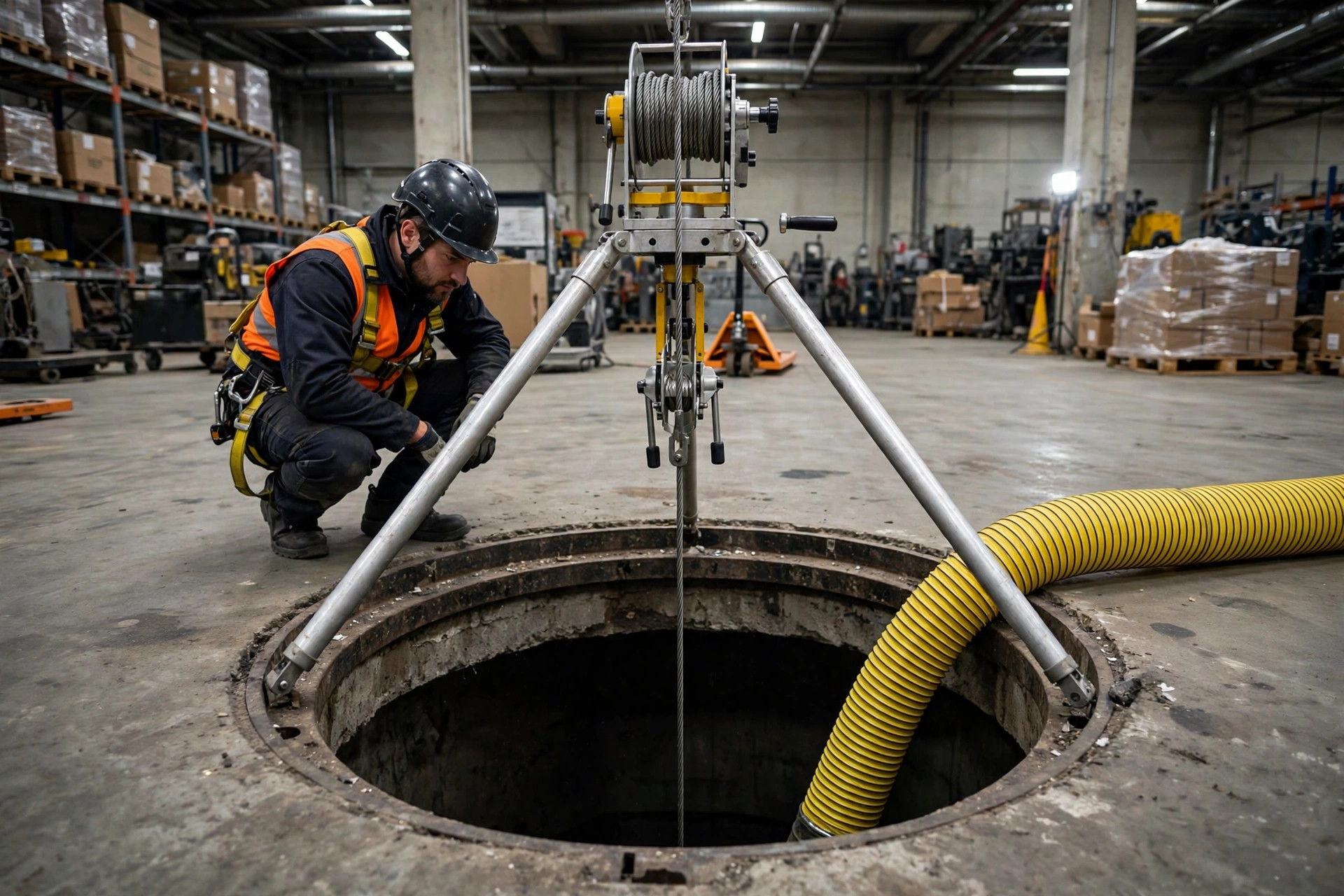
Here's my verdict up front: a warehouse that doesn't do JHA is managing safety with its eyes closed.
Strip away the jargon and a Job Hazard Analysis does exactly one thing: break a job into its steps, ask "what can go wrong here" at every step, and write down how you prevent it. OSHA published the whole method in a free booklet — Publication 3071. The complete job hazard analysis warehouse playbook, and it costs you nothing to download.
This cuts two ways. The upside: it's cheap. No equipment, no consultants — two veteran operators and a safety lead can tear through one job in an afternoon. The cost? Time. And the biggest trap, one I've seen too many times: the JHA gets printed, filed, and never opened again for the rest of its life.
Let me tell you about Ohio, 2019. A 3PL warehouse had forty-plus JHAs in a safety binder thick enough to use as a pillow. Then a three-week new hire got his foot crushed by a pallet at the dock. The investigation pulled the JHA — and there it was, plain as day: "steel-toe boots required for dock work." The new hire's answer: "Nobody ever told me." A JHA nobody reads is a JHA that doesn't exist. That's trap number one: the binder on the shelf.
Trap number two is the mirror image. I've seen a JHA that broke "forklift unloading" into 127 steps — "left hand grips steering wheel" got its own line. Nobody reads that either, and it ends up on the same shelf. Granularity is a trade-off: too coarse and it's fortune-cookie wisdom; too fine and it's a phone book. My rule of thumb: 8 to 15 steps per job. That's the sweet spot.
JHA vs. JSA: same thing, don't overthink it
JSA (Job Safety Analysis) is the old name; OSHA standardized on JHA (Job Hazard Analysis). Same content, same three columns: steps, hazards, controls. One more thing worth knowing: 3071 is a guidance publication, not a citable regulation — but when there's been an incident and an OSHA inspector walks in, "where's your JHA" is one of the first questions. Not having one sets the tone for the whole inspection.
Walkthrough: three warehouse jobs, step by step
Here's the worksheet format we use. Nothing fancy:
| Job | Step | Potential hazard | Existing controls | Additional measures | Owner | Due date |
|---|
Job 1: forklift unloading at the dock (our real version — the key steps out of twelve)
- Step: forklift enters the trailer. Hazard: dock-to-trailer height gap, trailer not restrained, driver pulling away early. Controls: dock lock engaged-light plus wheel chocks — both, belt and suspenders. The forklift operator checks the engaged light before entering, every time. Why? 2021, our own near miss: a driver started rolling before the light came on, forklift half inside the trailer, about a foot from tipping off the edge. That check became step one of the JHA the same week.
- Step: backing out with a pallet. Hazard: blind spots, pedestrians. Controls: physical pedestrian separation plus a 5 mph forklift speed limit. We tried painted lines first — pedestrians cut across anyway. Lines stop gentlemen; guardrails stop real people.
- The trade-off someone always raises: "checking the light wastes ten seconds." Twenty pallets a trailer, three extra minutes per trailer. One accident: shutdown, claims, and OSHA on site. I'll let you do that math.
Job 2: manual order picking
- Hazards: falling objects from high picks, back injuries from repeated bending, overloaded pick carts tipping.
- What we did: weight-zoned slotting — anything over 15 kg lives at waist height, no exceptions; load-limit decals on every cart handle. Back injuries are where the money is: we had two back-injury claims in 2020, moved the heavy SKUs down, and ran three years with zero. Every one of those numbers has a claims check behind it.
- The trade-off: heavy SKUs at waist height eat prime pick faces and cost you a little pick speed. But one back-injury claim buys how much pick speed?
Job 3: pallet stacking
- Hazards: stacks built too high tipping over, loose stretch wrap letting the load shift, top layers sliding during forklift handling.
- Our hard rules: finished pallets stack no more than two high — about 1.6 meters is the empirical line, past that the center of gravity gets adventurous. Minimum three wraps of stretch film per pallet, top sheet on. That "three wraps" isn't a guess: in 2022 we tested it after a two-wrap pallet shed its load in a turn. Zero shed loads since going to three.
- The trade-off: two-high versus three-high stacking costs you roughly 30% of floor utilization. But one collapsed pallet — product damage, rework, an angry customer — which is more expensive? Safety and efficiency sit on opposite ends of the same seesaw. A JHA forces you to think through every trade-off and write it down.
How often to review: four triggers
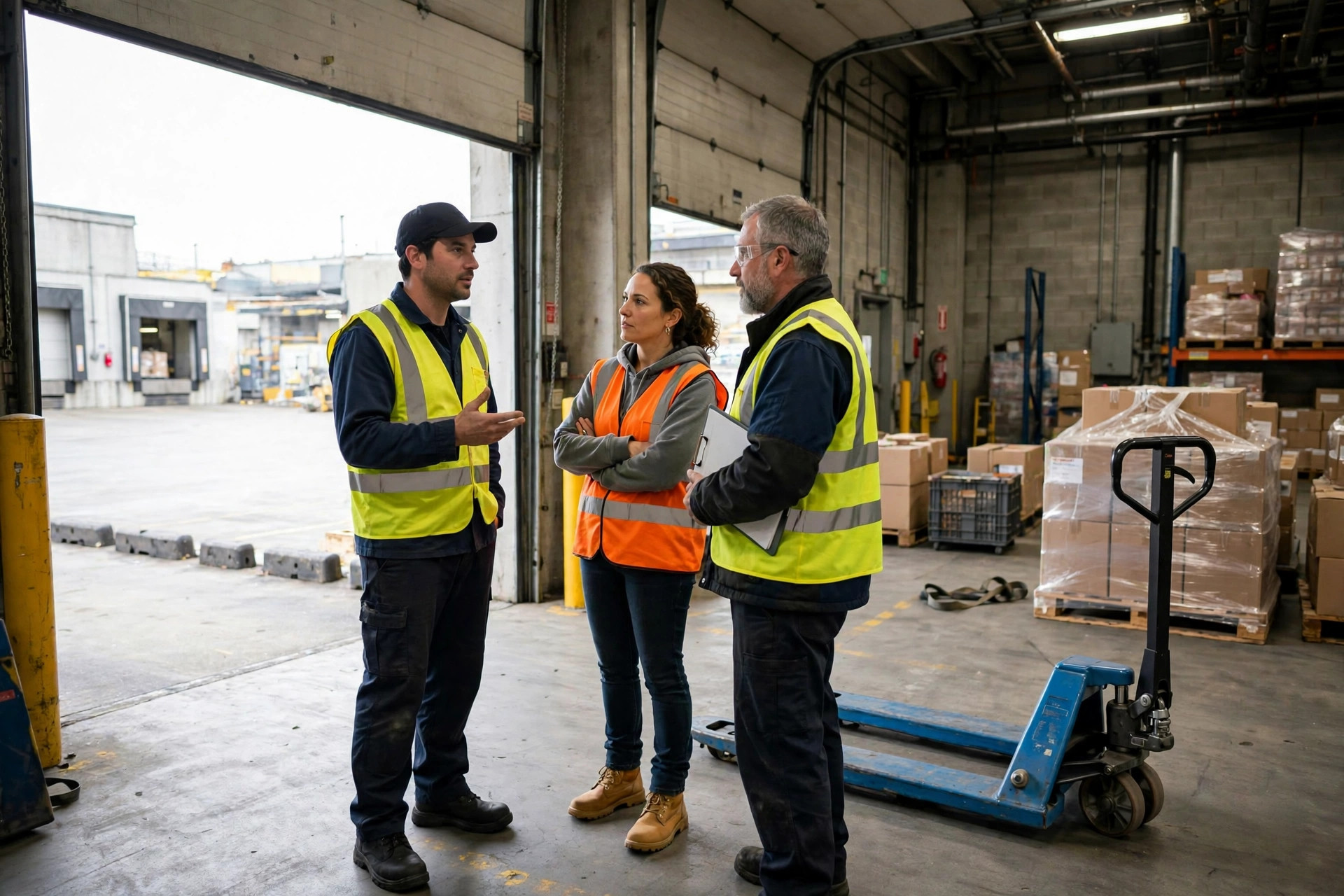
3071 says "periodically" — no fixed number. But it names the triggers plainly: review immediately if an illness or injury occurs on the job; sit down with everyone doing the job after a near miss; review whenever the process, equipment, or materials change. Our practice: run through every JHA each January, plus those three triggers on demand. And remember the part 3071 stresses: when a revision changes how the work is done, retrain everyone affected. A new procedure nobody was taught is just a rumor.
Don't let JHA be the safety department's solo act
I've seen too many JHAs written by a safety manager alone in an office — beautiful documents the floor never recognized. Do it the other way: bring the veteran who actually does the job into the step-breakdown session. He knows which step is the scary one better than you do. Read the finished draft to the shift, then tape it next to the workstation — plain A4 paper, replace it when it gets grimy. A JHA is a living document. The one in the binder is dead.
One piece of advice to close: go look at your warehouse's JHA binder and check the last review date. If nothing's moved in over a year — or the person who wrote it has already left — this weekend is the time to start. Don't wait for the problem to come find you.
By Lao Mi, Supply Chain Veteran (20 yrs)