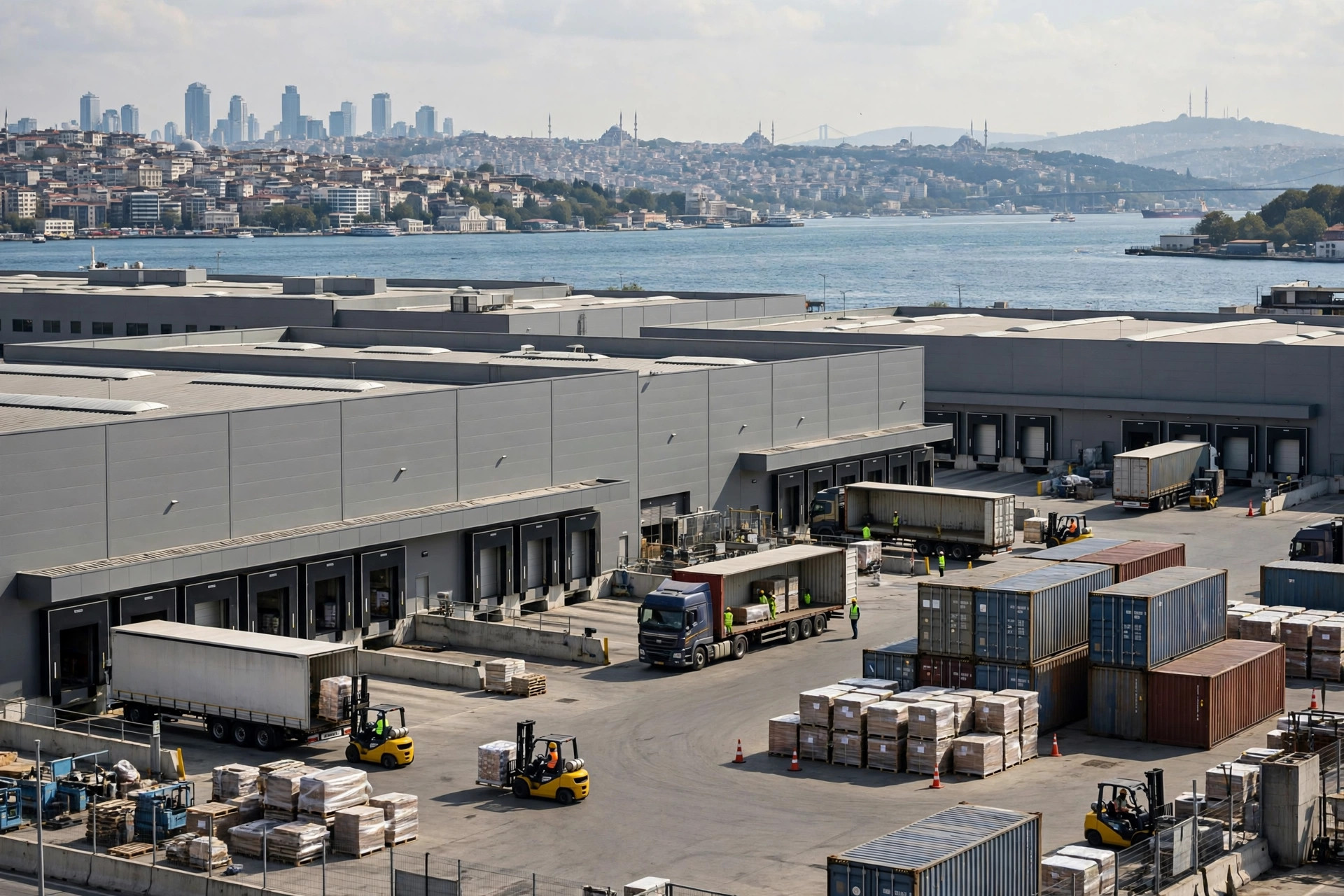
Start with the bill. In Istanbul warehouse market logistics, a seller moving 30 to 40 containers a month into Europe can save a visible sum on paper by shifting a warehouse from the European side to the Asian side, then watch more than half of that saving disappear once cross-strait trucking, waiting time, a second round of distribution, and last-mile delivery are added back in. Staying on the European side is not automatically smart either. The higher rent only pays for itself when order density is high enough and delivery radius short enough. In this city, the question is never which rent is lowest. It is which total bill is lowest.
The reason the bill is hard to get right is geography. A strait cuts the city into two logistics worlds. The European side sits close to the consumer market and the ports. The Asian side sits close to factories and industrial zones. Between them lie bridges, a tunnel, and a cross-strait corridor that congests badly in peak season. A rent quote shows none of this. What decides the real cost is everything around the warehouse: crossing time, peak-week queues, empty return running, and port handovers. People who negotiate rent hard and ignore transport usually pay the saving back twice over.
Istanbul Warehouse Market Logistics: Price the European and Asian Sides on the Same Bill
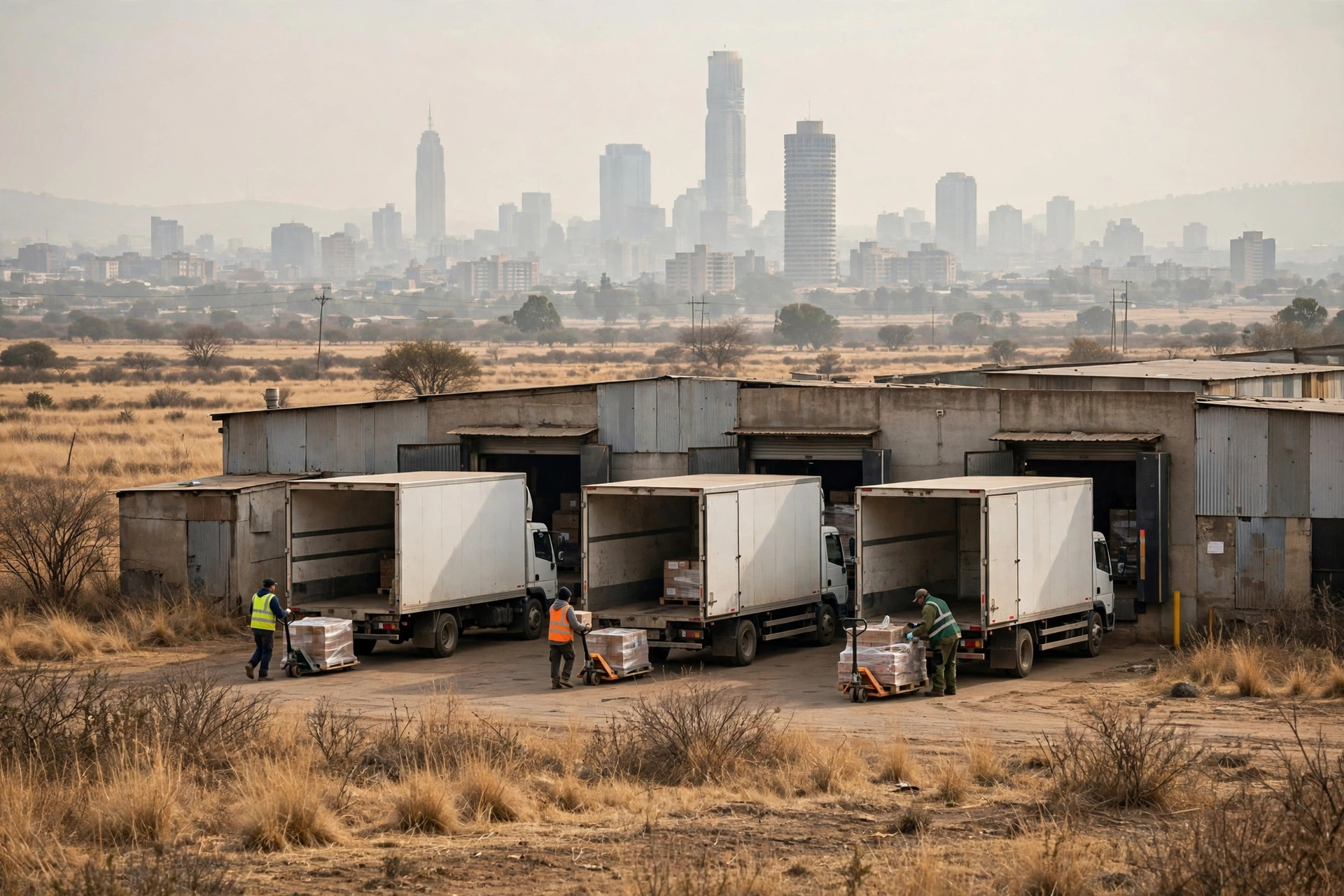
Early in 2025, a home-appliance parts seller from Ningbo asked me to run the numbers. His goods sold mainly in Germany, Poland, and Romania, more than 30 containers a month, arriving by sea near Istanbul and then distributing onward. He had two options on the table: an established warehousing district around Hadımköy on the European side, close to the port and the motorway; and a newer industrial zone around Tuzla and Gebze on the Asian side, with newer buildings and a clearly lower rent quote. On rent alone, the Asian side won by a wide margin, and his first instinct was to sign there.
I asked him to hold off and put both sides on one sheet. On the European side, rent was high, but a container could be unloaded, stored, and dispatched the same day. On the Asian side, rent was low, but every container first had to cross the strait. In peak weeks, that crossing could add a day or two of waiting and detouring, and distribution toward the Balkans needed another transfer. Returns made it worse. A European customer return landing on the Asian side had to cross the strait again before it could be resold into Europe. Once those legs were priced in, the Asian side's rent advantage shrank to a small fraction of its original size, and the time loss had not even been converted into money yet.
He ended up splitting the stock instead. A smaller core warehouse on the European side held fast-moving models and anything with a high return rate. The Asian side held slow-moving backup stock and bulky items. Running two warehouses took more management attention, but the total bill came out steadier. When European orders surged in peak season, the core warehouse protected delivery times; in quiet months, the backup warehouse kept rent from sitting idle. The lesson is blunt: location is not about cheapness. It is about distance to your orders.
Istanbul Warehouse Market Logistics and Cross-Border Distribution: The Road Between Warehouses Is the Real Cost
In autumn 2024, a different seller, in auto parts and hand tools, asked me to review a mess. His markets covered Turkey itself, the Balkans, and the Middle East. He had started by stacking everything in one warehouse to keep things simple, and the result was that domestic orders and cross-border orders fought over the same space and the same people. Domestic orders shipped on time. Cross-border orders slipped again and again in peak season. He first blamed headcount; the problem was structure, not staff. Local delivery and cross-border distribution run at different rhythms, and mixing them in one building meant picking, labelling, and paperwork kept tripping over each other.
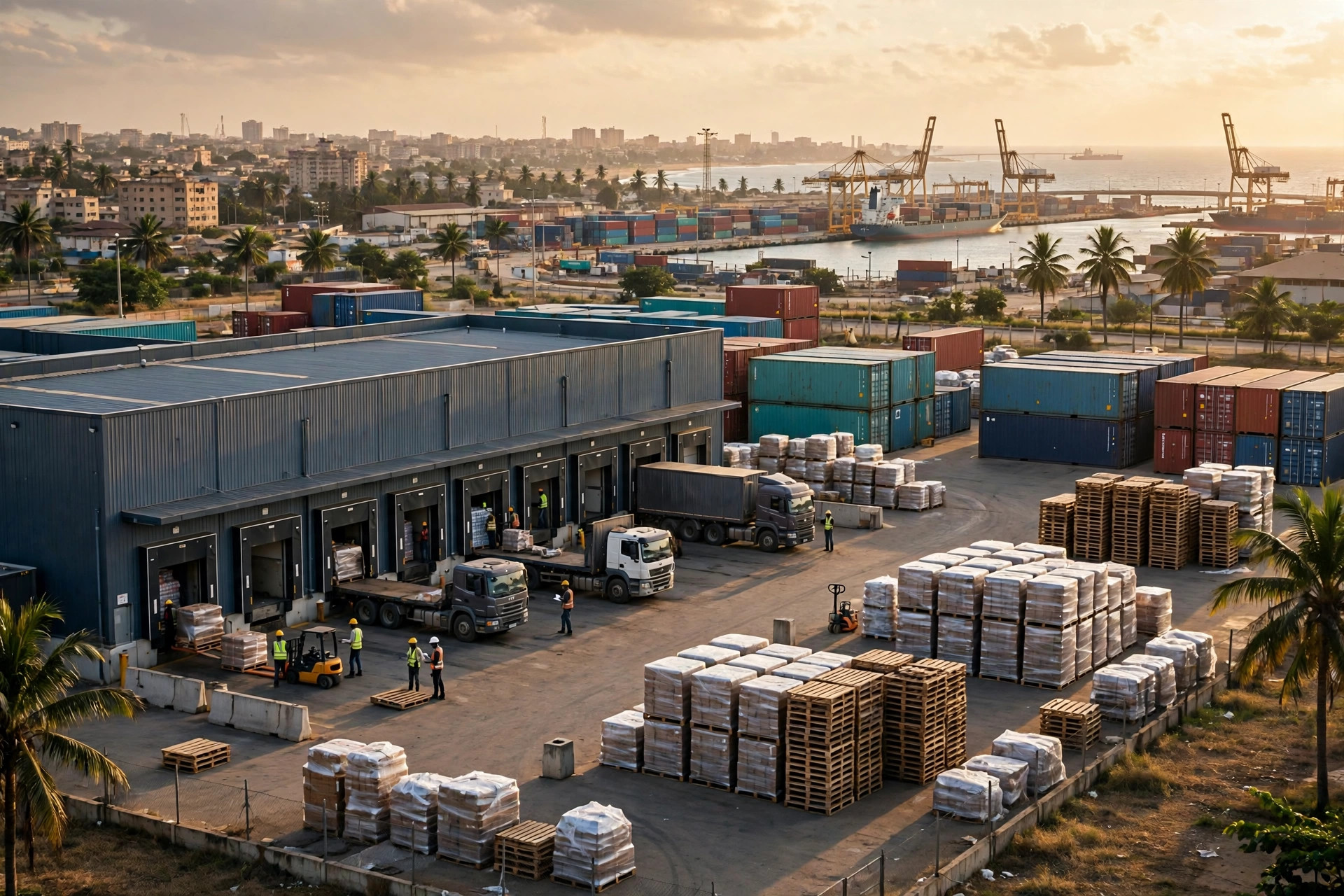
The fix was to split by flow. Domestic Turkish stock stayed near Istanbul's urban demand; cross-border stock moved near the port and motorway, linked only by fixed-schedule shuttles, no ad-hoc spot bookings. Cross-border dispatch times became predictable, and customers could be given delivery promises with confidence. Total warehouse spending rose slightly, but late-delivery compensation and lost orders fell enough that the total bill improved. That is the part of Istanbul distribution most people miss: cost does not live only inside the warehouse. It lives in every handover between warehouse and warehouse, and between warehouse and port.
The table below is the comparison I use with clients at site-selection stage. The index figures are illustrative only, for comparing relative levels, not market quotes. Check current local market reports for actual rents and rates.
| Site option | Relative rent level (illustrative index) | Best suited for | Cross-border distribution cost | Biggest risk |
|---|---|---|---|---|
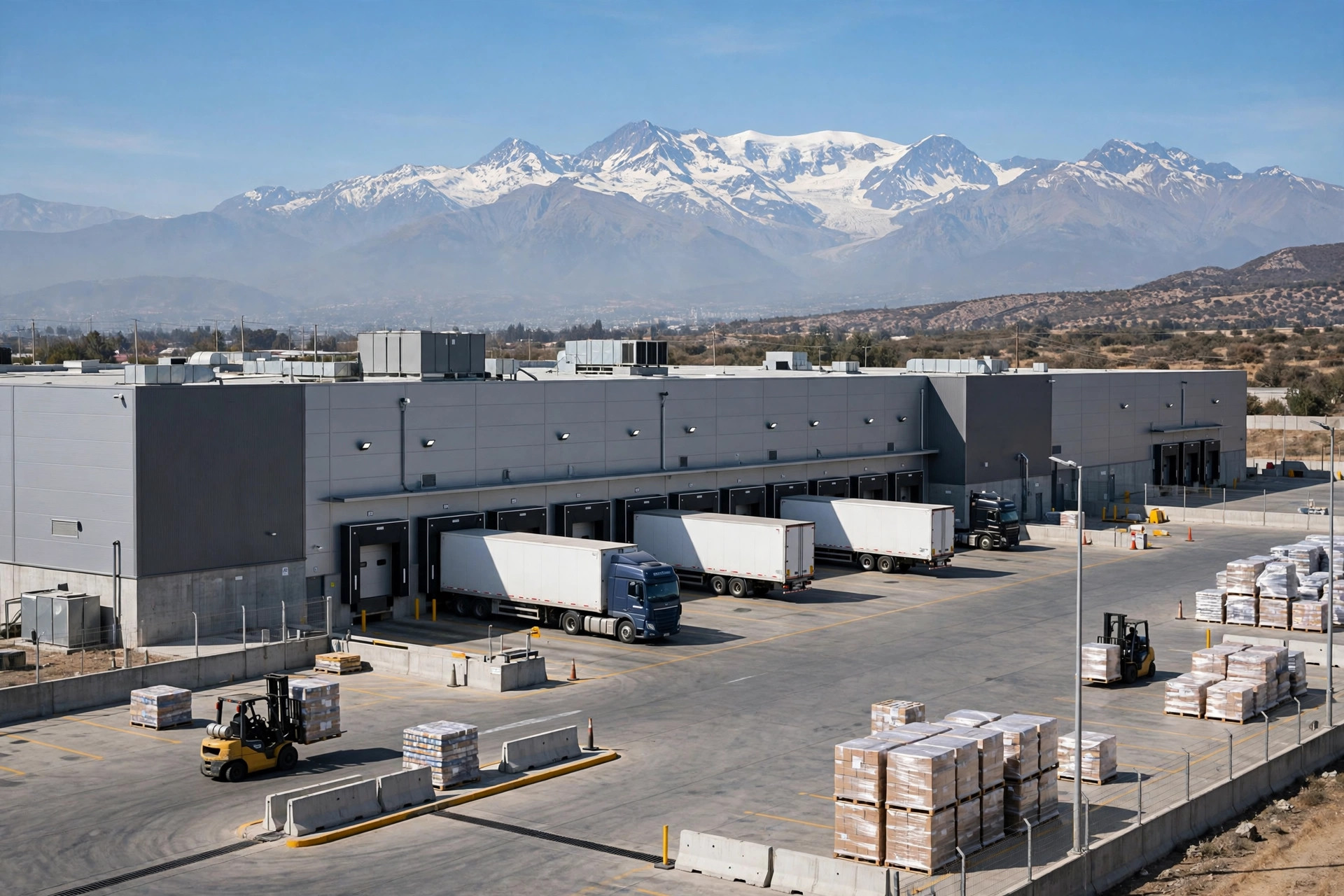
| European-side core district | 100 | Fast-moving goods, high returns, Europe-led orders | Low, near port and linehaul | High rent hurts in quiet months |
| European-side airport area | Around 95 | High-value goods, air replenishment, time-sensitive stock | Fairly low, fast air connection | Tight supply, little room to flex |
| Asian-side industrial zone | Around 70 to 80 | Slow-moving backup, bulky goods, factory-direct stock | High, strait crossing plus second distribution | Volatile lead times, peak-season queues |
| Third-party shared distribution warehouse | Pay per use, no fixed rent | Testing a new market, unstable order volume | Medium, depends on the provider's routes | High per-order cost, weak peak-season bargaining |
Read that table with one counter-intuitive warning in mind: the cheapest rent does not mean the cheapest total cost. Low rent on the Asian side comes with higher cross-strait transport, longer inventory in transit, and larger delivery risk. One extra day in transit is one extra day of capital tied up. One lost order from a delay can wipe out a month of rent saving. The higher European-side rent, by contrast, buys something that looks unimpressive on a quote and matters enormously on a profit statement: certainty. Trucks leave on time, goods arrive on time, and customers place repeat orders.
Istanbul Warehouse Market Logistics: Only Three Levers Actually Save Money
The first lever sits in the contract. Term length, space flexibility, and expansion clauses are often worth more than anything you can squeeze out of the rent rate itself. A seller with seasonal orders should accept a slightly higher rate in exchange for room to expand in peak season and shrink in quiet months. A three-year lock-in at a fixed size means paying for empty space every quiet month. That money is wasted, and it is wasted by your own signature.
The second lever sits in the distribution structure. Do not cram every flow into one warehouse, and do not let domestic and cross-border orders share one process out of convenience. Split by flow, run shuttles on a fixed schedule, and transport cost often falls, because trucks stop running empty and stop being booked at emergency rates. Many sellers save on rent and lose on ad-hoc trucking. Run that calculation the other way round.
The third lever sits in the stock itself. The finer your fast-versus-slow split, the less space you need. Move models that have not sold in three months to a low-cost backup area, keep high-frequency models near the outbound dock, and picking and handling labour falls with it. Space saved is rent saved, and it requires no negotiation with a landlord.
One cost is easy to miss entirely: peak-season surcharges. A linehaul rate agreed in a quiet month may not hold when capacity tightens, and emergency trucks and overtime quietly push the per-order cost up. Pull the three peak months' ad-hoc costs out separately before signing anything. Many schemes that look cheap in an average month stop looking cheap once that peak-season line is added.
Close with a formula you can run today: monthly total cost equals rent plus in-warehouse handling, plus linehaul and cross-strait transport, plus the capital cost of inventory in transit, plus the cost of delays and lost orders. Run all four site options through that formula and pick the smallest number, not the smallest first line. Run the two sellers above through it and the answers line up: Europe-led orders with heavy returns belong on the European side; backup-heavy stock with tolerant lead times belongs on the Asian side; unstable volume should start in a third-party shared warehouse for three months and only sign a long lease once volume holds steady. Choose the warehouse right, and what you save is not just rent. It is certainty across the whole chain.
By Lao Zhou, Logistics Cost Analyst