People keep asking me about the Addis Ababa warehouse market lately. A friend in auto parts, another in household goods, and one trying to move cargo from the Middle East into East Africa. They all ask the same thing: does it pay to set up a warehouse there? My answer starts with a question back: how big are you? If you run a small warehouse like mine, a few thousand square meters, and you try to copy the big companies' playbook, you can burn through your cash flow in the first month.
Let me be upfront: I have never run a warehouse in Addis Ababa myself. What follows is a small warehouse owner's costing notebook, built over two years of helping two friends run the numbers and walk sites, plus long conversations with local freight forwarders and customs brokers. It is not a guidebook. If I get something wrong, fellow small operators are welcome to tell me so.
The Addis Ababa Warehouse Market: Follow the Cargo First
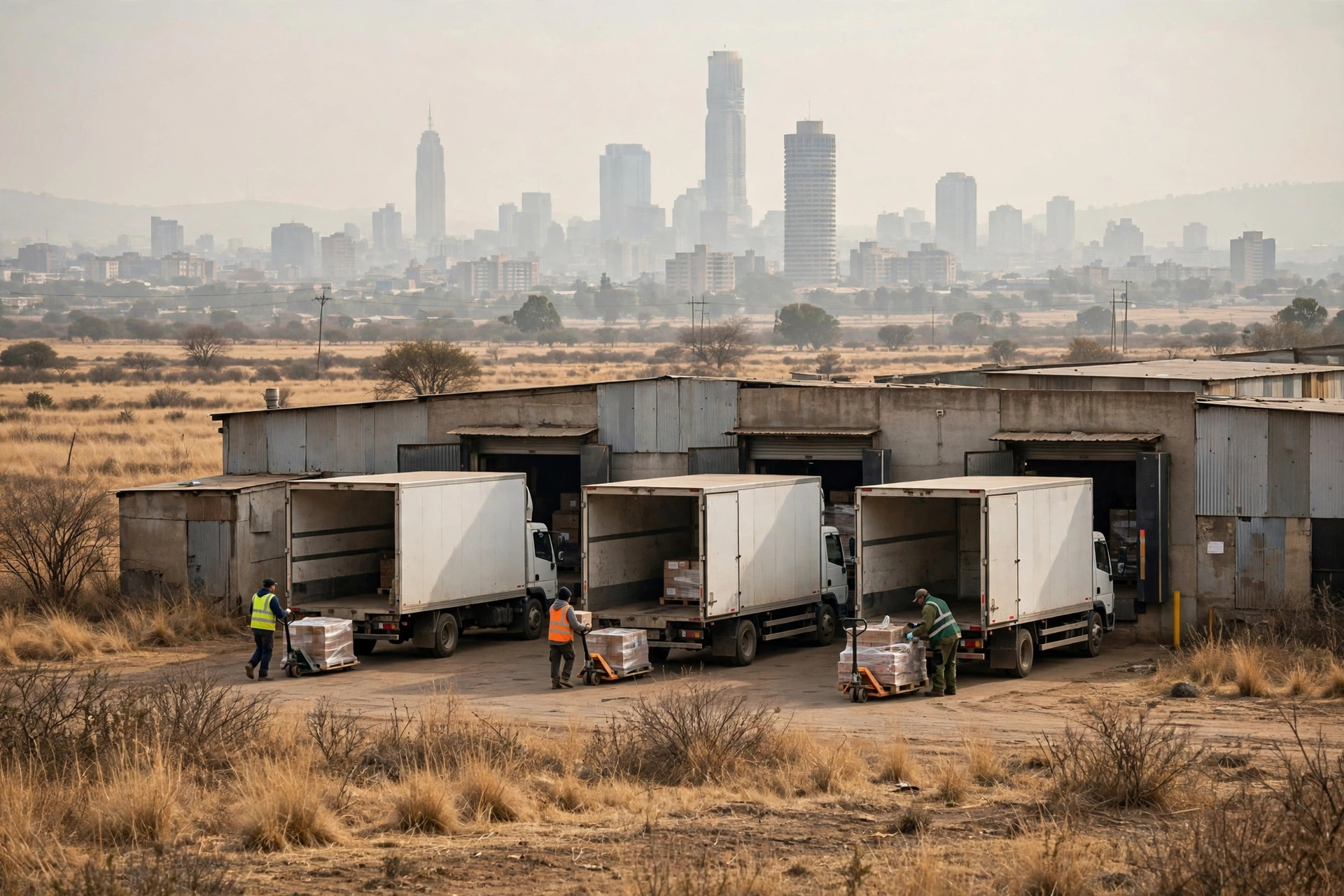
Addis Ababa sits on a highland plateau, more than two thousand meters up, an inland capital with no seaport of its own. The vast majority of Ethiopia's imports and exports come ashore at the port of Djibouti and ride the Addis Ababa-Djibouti railway inland, a journey of more than seven hundred kilometers. That rail line is the lifeline of the whole Addis Ababa warehouse market: where cargo gets unloaded, where it gets stored, and where it gets split for delivery decides your rent and your freight bill. If you do not understand that line, picking a site is guesswork.
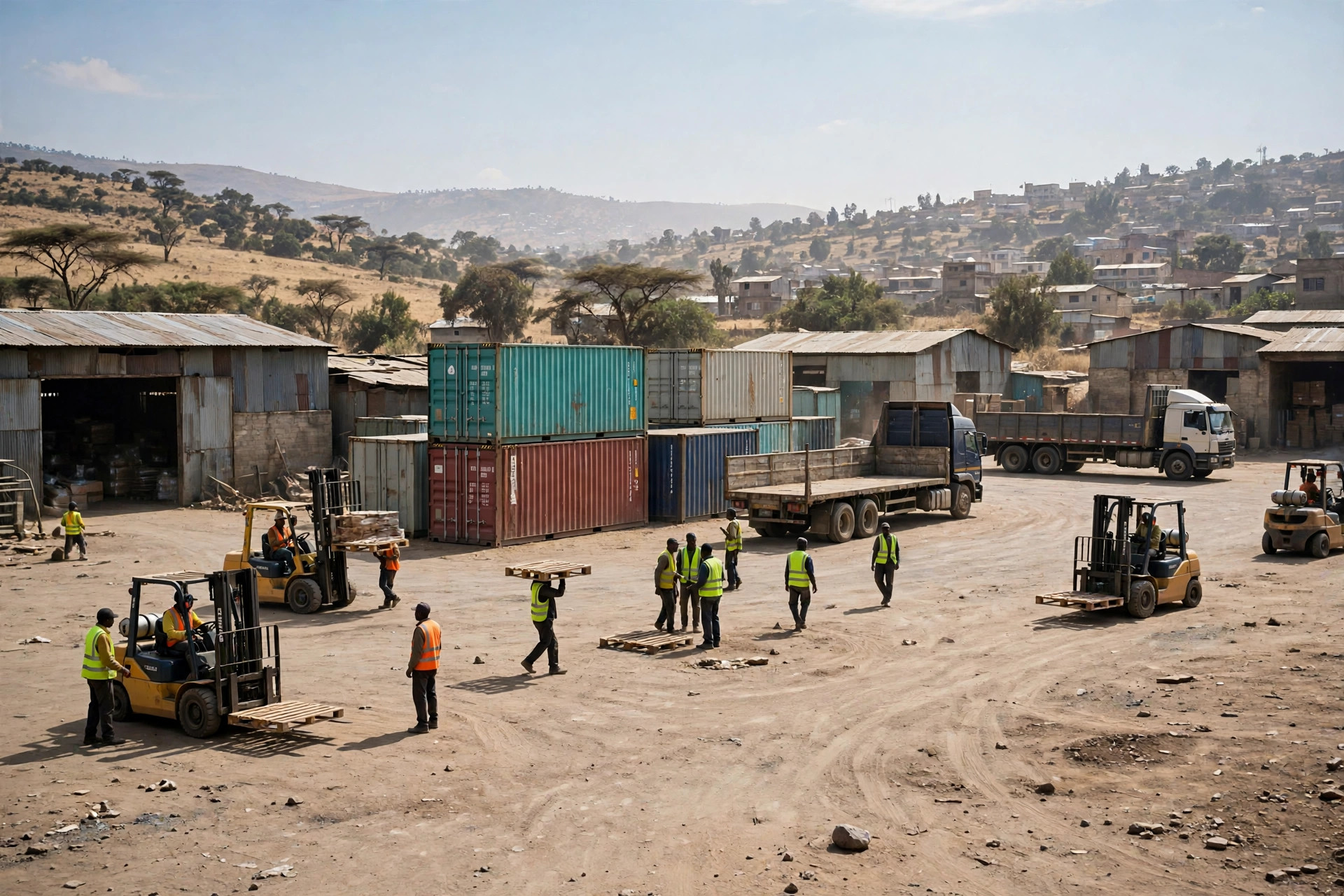
Roughly speaking, warehouse supply in the city falls into three buckets. Yards near the rail freight terminals sit closest to the cargo and offer the fastest pickup. Industrial zones come with better supporting infrastructure and suit goods that need light assembly or processing. Suburban warehouse clusters offer space and easy truck access, good for stockholding and distribution. Downtown, by contrast, has little proper warehouse supply; what remains tends to be old, expensive, and hard for trucks to reach. Renting there because it is close to customers is usually a losing trade.
Here is the counterintuitive part: close to the customer does not mean close to the money. Downtown customers are near, but truck access windows, unloading queues, and high rents add up, and small-batch deliveries can end up costing more, not less. A small warehouse cannot afford to burn money like that. The first rule of site selection is not proximity to the customer; it is proximity to the cargo's route.
Addis Ababa Rail Corridor Warehouses: Close to Cargo, Close to Cash
The big advantage of a warehouse near the rail corridor is speed. Cargo arrives at the rail terminal, and you can pick it up and put it away the same day, cutting out one transfer leg and the risk of damage or delay along the way. For auto parts, where you carry many SKUs and restock in a hurry, that one-day difference can mean an extra sales cycle in peak season.
But the corridor has its traps. Space near the terminals is tight, and rents are pushed up by big shippers, so a small operator negotiating alone rarely gets a good price. When rail schedules or customs clearance slip, cargo can sit at the terminal for extra days, and storage and demurrage charges climb with it. A friend in auto parts learned this the hard way in reverse: he originally wanted a site near downtown to be close to customers, ran the numbers, and walked away. He ended up in a converted old factory unit near the rail terminal, small but able to receive cargo the day it arrived. In peak season, the transfer fees he saved paid for an extra batch of stock, which roughly covered the rent premium.
Then there is the scrappy option: sharing a warehouse. Another friend, who distributes household goods, teamed up with two small peers in early 2025 to share one rail-side unit, splitting rent and the cost of a watchman, keeping each company's goods on separate racks and staggering inbound and outbound shifts. It looks unimpressive. The books look great. The one rule: write the sharing terms down before you start, who pays when someone's goods block the aisle, who eats a damage claim. A written agreement is far cheaper than a quarrel later.
Addis Ababa Suburban Warehouse Clusters: The Small Operator's Value Pick
If your goods do not need same-day pickup, suburban warehouse clusters are often the small operator's value pick. Rents there run roughly twenty to thirty percent below rail-side levels, space is generous, and trucks get in and out easily. For household goods and fast-moving consumer products, where volume matters more than urgency, suburban space brings the per-square-meter cost down and the numbers immediately look healthier. Treat that range as approximate and check current local listings before budgeting.
The cost shows up on the other side: distance from customers pushes up last-mile delivery costs for small city orders. My fix is to consolidate delivery routes, running fixed city routes a few days a week and batching scattered orders into full truckloads before dispatch. It sounds old-fashioned. It works, and the per-order delivery cost drops a long way. One more thing: in suburban sites, security, night watch, and guarding are usually your own problem, not the landlord's. Nail down who is responsible for each item before signing, line by line.
Here is the comparison table I sketched when helping a friend choose a site. All figures are rough ranges; check current local listings for real quotes:
| Location | Best for | Upside | Risk | Advice for small operators |
|---|---|---|---|---|
| Near rail terminal | Urgent restock, many SKUs | Fast pickup, no transfer leg | High rent, tight supply, cargo dwell risk | Share the unit, never negotiate alone |
| Industrial zone | Goods needing processing or assembly | Good supporting infrastructure | Site fit depends on cargo type | Only if you truly need processing |
| Suburban cluster | High volume, low urgency goods | Rents roughly 20-30% lower, big space | Higher delivery cost, security is on you | Consolidate routes to cut per-order cost |
| City-edge cross-dock | Frequent small city deliveries | Close to customers | Expensive rent, truck access limits | Use as a small forward stock point, not your main warehouse |
Inland Distribution: Do Not Cast the Net Too Far, Too Fast
Many people setting up in Addis Ababa already have their eyes on pushing goods out to inland cities. My advice is to win the capital region first. The trap in inland distribution is not distance, it is management radius: road conditions, backhaul availability, and local rhythms all differ, and the further your network stretches, the thinner a small team gets spread. Goods go out, accounts stop reconciling, and people drift off. I have seen that loss more than once.
Before signing any lease, run through this checklist with the landlord and your forwarder:
- How many days does cargo take from Djibouti port to your warehouse, and does peak season stretch that?
- Does terminal pickup need an appointment, and after how many days do dwell charges start?
- Are there truck access time windows on the approach roads, and can you work at night?
- Beyond rent, what other charges exist, and who pays for loading, security, and management?
- Can you sign short, and can you exit or sublet if market conditions change?
- How easy is it to hire local staff and watchmen, and what do wages roughly run?
These questions look trivial. Every one of them is attached to money. Asking them before signing is ten times cheaper than arguing after. Rates, rents, and regulations should always be confirmed against current local listings and official sources, never budgeted from last year's numbers.
So the Addis Ababa warehouse market is not without opportunity. The opportunity just does not belong to people who copy the big-company playbook. The small warehouse playbook is simple: stay close to the cargo's route, keep fixed costs low, count the money carefully, and expand the network slowly. A small warehouse has its own way of surviving, and surviving longer matters more than expanding bigger.
By Xiao Ma, Small Warehouse Owner