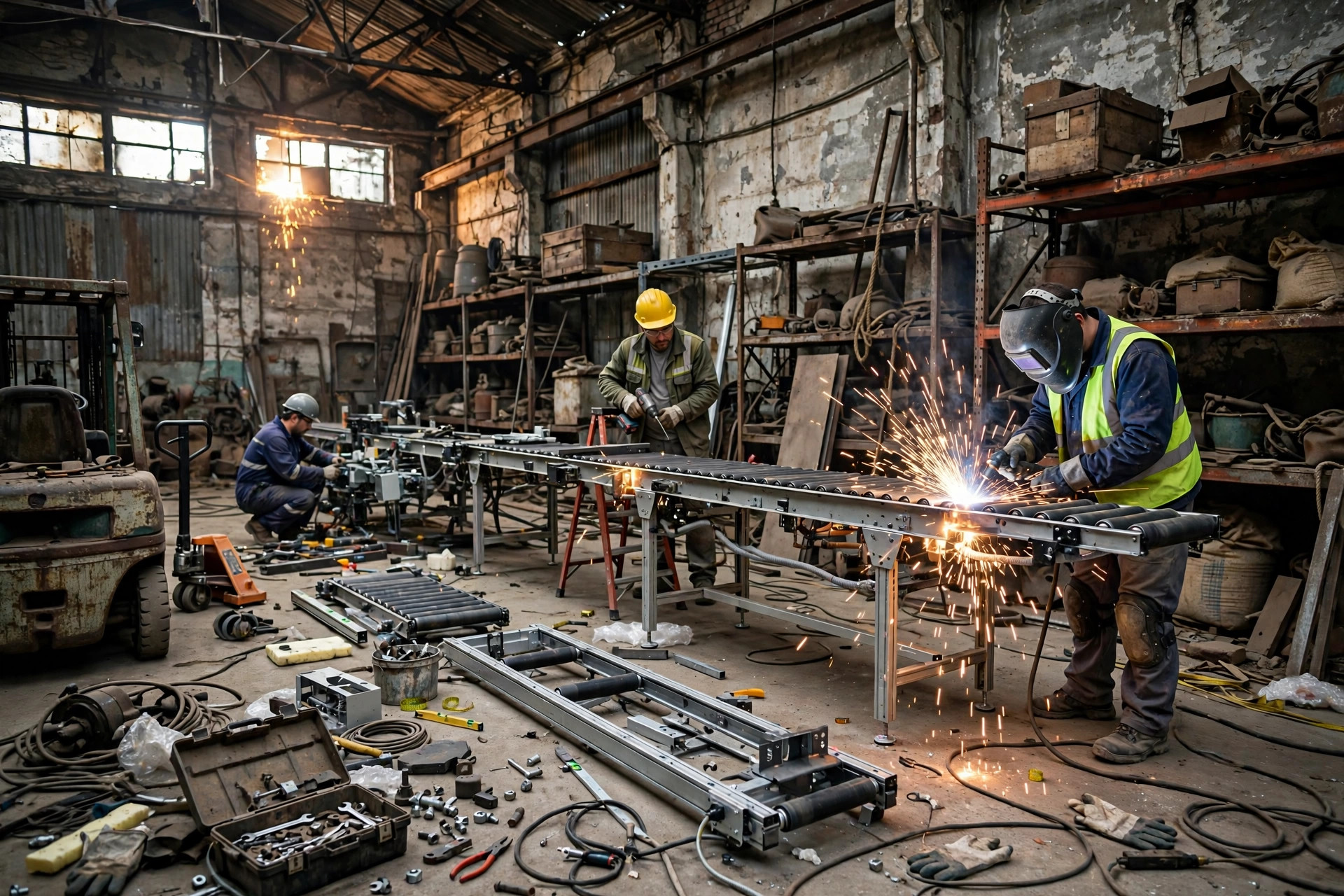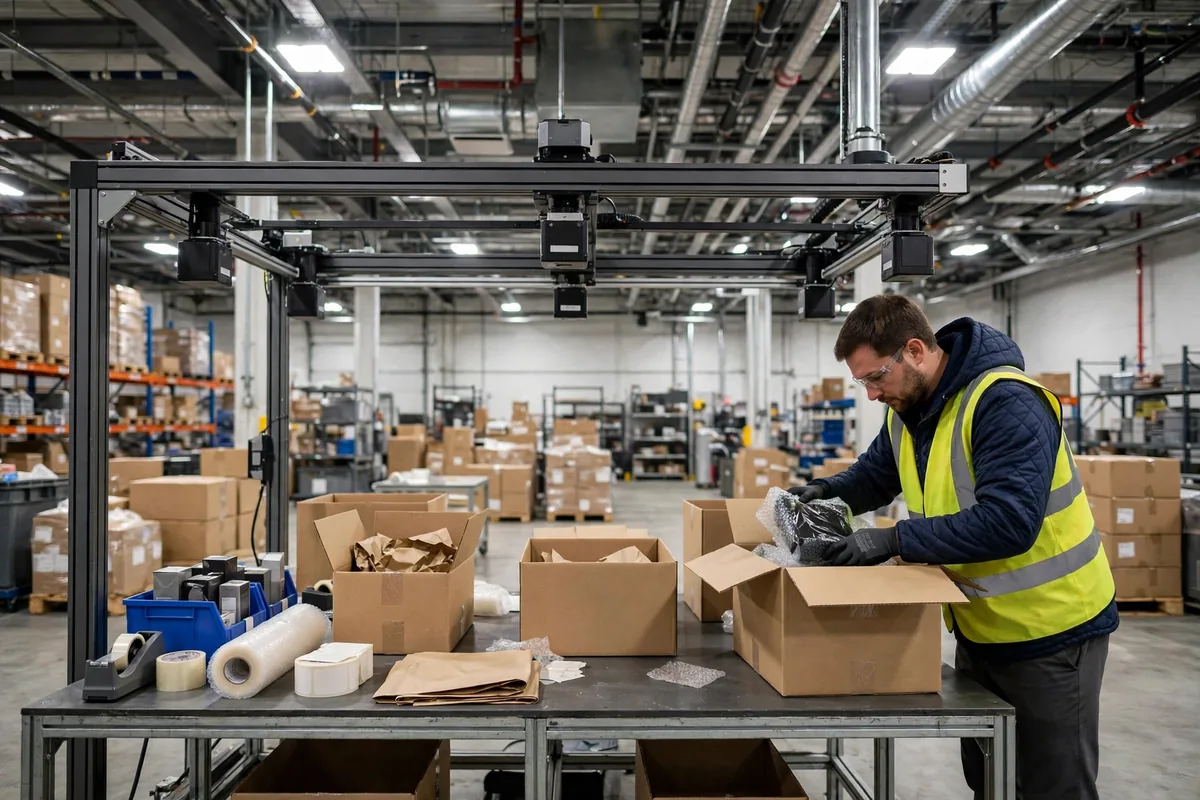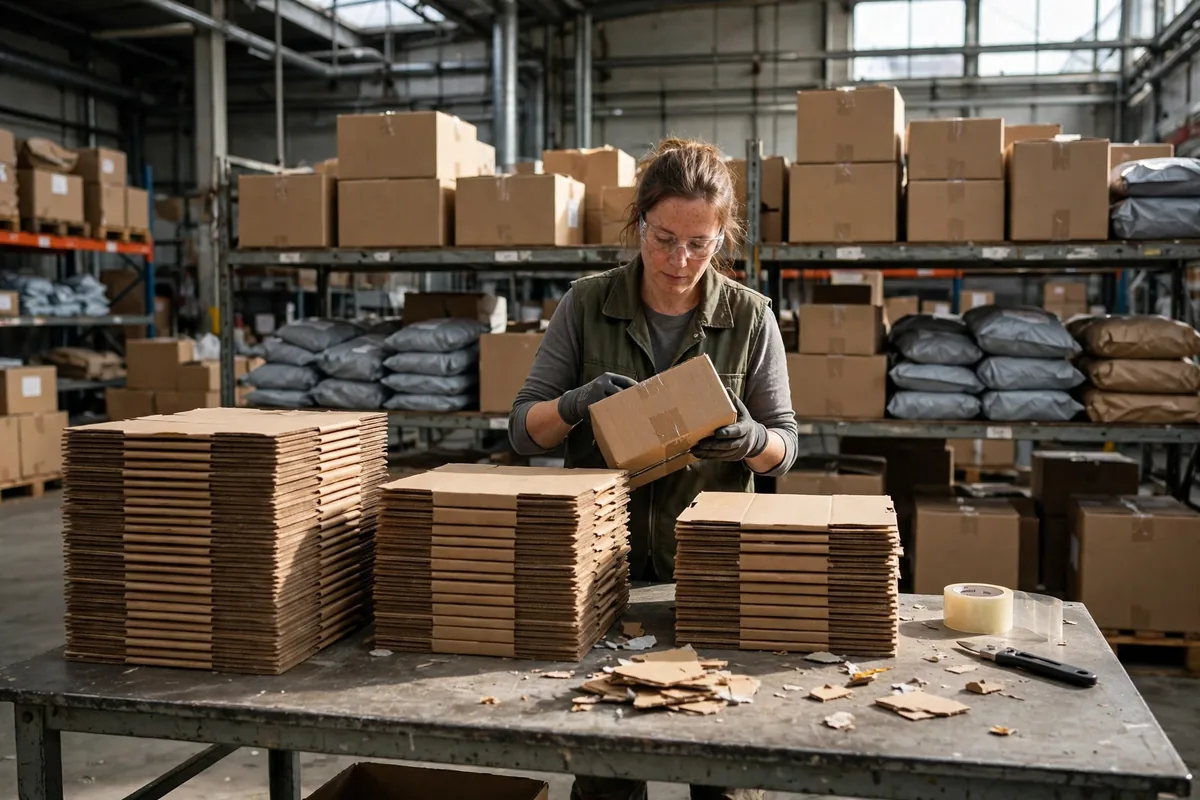
Last autumn I spent half a day at the packing benches of an auto-parts export warehouse in Ningbo. The job on the line was drive shafts, a little over a metre long, with a flange at one end and a slim shaft in the middle. The crew used a standard 1.2-metre long carton. Each shaft went in with ten-plus centimetres of empty space at both ends, two wads of bubble wrap were stuffed in, and the box was taped shut. More than two hundred units shipped that day. Within a week of delivery, over forty complaints came back: dented flanges, scratched shafts, cartons punctured from the inside. The warehouse's first instinct was to add more filler, from two wads of bubble wrap to five. Damage fell slightly. Freight cost rose noticeably. That is the classic opening of an irregular item packaging problem: the box looks big enough, but the product inside is not actually held in place.
Odd shapes are hard not because they look strange, but because they break two assumptions a standard carton is built on: that the centre of gravity sits in the middle, and that all six faces can take a load. A long item's weight sits off-centre. A fragile assembly's weak point is often not on its outer surface. An odd-shaped part may touch the box at only two or three protruding points. Pack it like a standard product and you are measuring a bent pipe with a straight ruler. Every reading comes out wrong.
Irregular Item Packaging Starts With Measuring the Shape
My rule is to make a shape card for the product before anyone talks about boxes. Four numbers are enough: the longest side, the widest point, the thickest point, and where the heaviest section sits. The method is crude but it works: lay the item on a flat table and measure against a square, never by eye. In the Ningbo case, measuring showed the real problem was not length. The flange diameter was a full step wider than the shaft, and the carton width had been sized to the shaft. The flange sat diagonally against the carton wall, and every bump in transit turned it into a chisel.
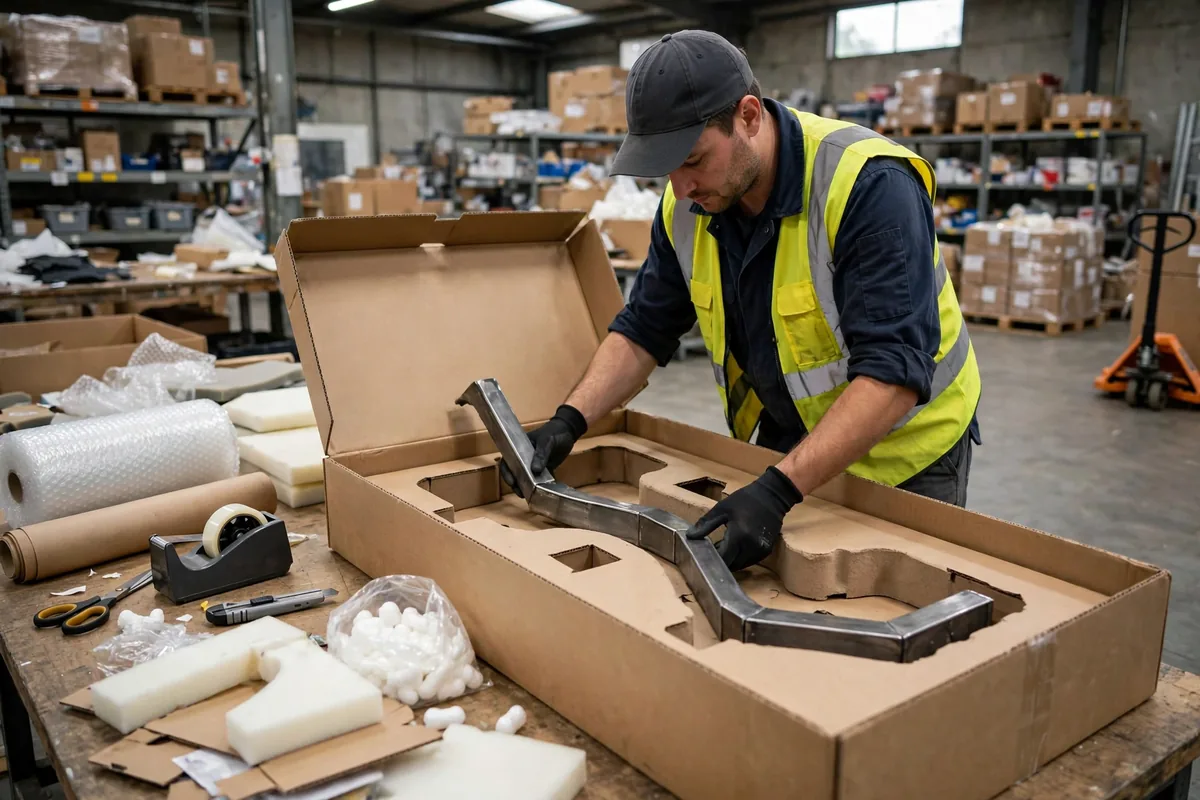
Think of it like buying shoes. Getting the size right is not enough; someone with a high instep also needs the right upper. The first dividing line in box selection is here: can the product's protruding points find a supporting surface inside the box? If a protrusion hangs in the air, extra filler only makes the product wobble more slowly, not stop wobbling. When that happens, the fix is not more filler but a different box: a tube with end caps for long items, or an insert with cut slots that the protrusions lock into. For a flanged shaft, a corrugated cradle at each end costs pennies and can cut damage by an order of magnitude.
A lighting factory in Dongguan proved the same point in spring 2025. Its combination lamps shipped as arm, shade, and base packed in one carton. The original method wrapped each piece in bubble wrap and combined them. Damage ran around five percent for months. We switched to a single die-cut insert: a slot for the arm, a nest for the shade, a pocket for the base. Packing material per carton rose by less than the equivalent of a couple of yuan. Within three months, damage fell below one percent. The extra insert cost was trivial next to one replacement shipment, one reshipment, and the customer-service hours a damaged unit consumes.
The Filler Math in Irregular Item Packaging
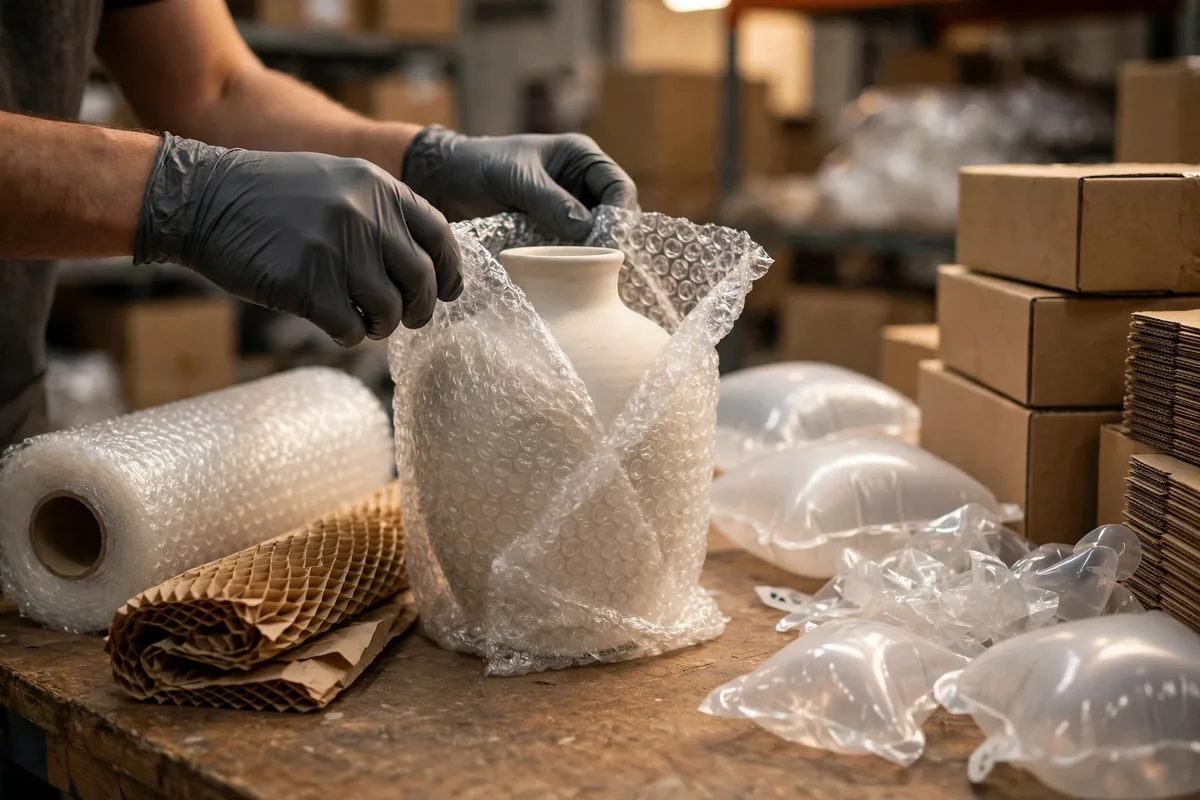
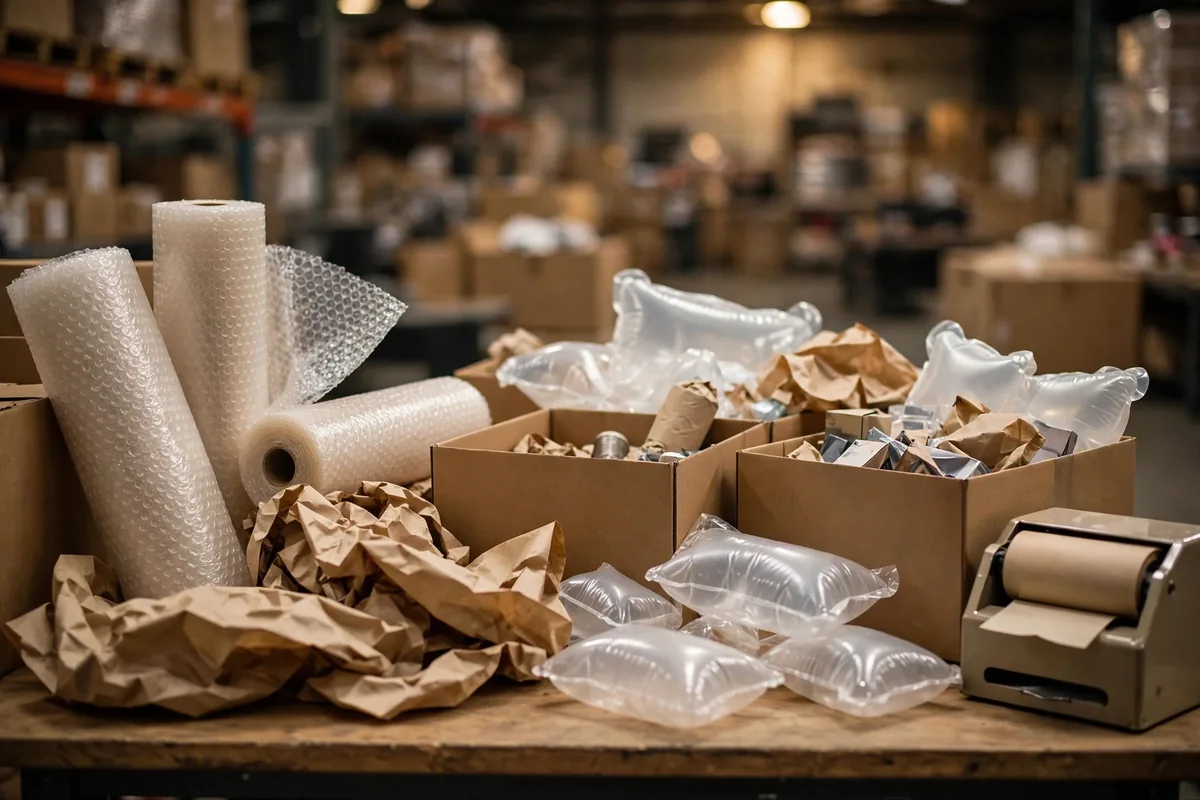
The most common filler mistake is treating a full box as a protected box. Bubble wrap, foam peanuts, and crumpled paper each have a temperament, and mixing them carelessly often works against you. Bubble wrap cushions well against a surface but does not resist stacking pressure, so a loaded carton can still collapse. Foam peanuts flow into odd gaps, but a heavy item sinks through them and leaves the top empty. Crumpled paper supports well, but its edges are hard, and against painted or plated surfaces that means scratches.
Price filler on three counts: cushioning, support, and unboxing. Cushioning is about the drop face. Whichever face the product fears most needs a real cushion layer of two to three centimetres, not just a full box. Support is about movement: the product should not shift more than a centimetre or two inside the carton, because that travel is where damage starts. Unboxing is the count most teams skip. Filler wound so tight that the customer needs scissors to free the product risks scratching the goods and ruins the opening experience.
There is a crude test I still use. Before sealing, tilt the carton to forty-five degrees and shake it gently. If the product stays silent and still, it passes. If you hear sliding, the fixing has failed, and adding filler will not save it; the holding geometry has to change. After Ningbo switched to cradles, the same drive shafts shipped another two hundred units with damage down to single digits.
Choosing a Box Type for Irregular Item Packaging
For irregular item packaging I sort box options into three tiers by cost and damage risk. Take the lowest tier that does the job; do not reach higher out of caution.
| Box type | Suits | Material cost per carton | Damage risk | Note | | Standard carton plus insert cradle | Long items, single-protrusion odd shapes | Low, pennies to a few yuan over bare packing | Low | The smallest change; this is where most long items stop | | Die-cut insert carton | Multi-piece assemblies, fragile combinations | Medium, several to low-double-digit yuan over standard | Very low | Best when monthly volume is steady and styles are few | | Custom-shaped carton | Extra-long, heavy, or high-volume dedicated products | High, tooling cost spread over volume | Lowest | Avoid for small runs; tooling that cannot be spread thin is a loss |
The decision point in this table is not unit price but total cost. A die-cut insert looks expensive, but if a product ships two thousand units a month and damage drops from five percent to one percent, the avoided replacements and freight cover the insert cost within a month. The reverse is also true. For a niche odd shape shipping a few dozen units a month, a custom carton spreads its tooling cost to tens of yuan per unit while damage barely moves. That is self-inflicted cost. There is also a false demand worth naming plainly: some products should not share a carton at all. Two fragile pieces forced into one box, however thick the divider, collide in transit more often than the same pieces shipped separately. Paying for a second carton is sometimes the cheaper solution.
Here is the counterintuitive part most teams resist: a bigger box with more filler is often the least safe option, not the safest. Extra void space gives the product room to build speed before it hits a wall, and filler that is not shaped to the product becomes a loose cushion the product slides across. Protection comes from contact at the right points, not from volume of material. A snug carton with a shaped insert regularly beats a large carton stuffed full, on damage and on freight, because dimensional weight charges you for the air you shipped.
So judge the spend on one number: per-unit material cost, plus damage rate multiplied by product value plus after-sales labour, plus the extra freight from dimensional weight. Add the three together. Whichever option gives the lowest total is the right one. Whether the box looks good or the filler looks generous does not appear in that formula, and that is exactly why the formula is useful.
By Da Liu, Automation Engineer