Start with the principle, because everything else is noise without it. A cartonization algorithm does one job: from the carton sizes you actually stock, it finds a combination that fits this order without wasting space or money. Think of it like Tetris, except the blocks are products that can be crushed, and the box itself costs money to buy and money to ship. The system has to solve three problems at once: does it fit geometrically, is the stacking order safe for weight and fragility, and what will the resulting box cost to ship? Plenty of warehouses forget the third problem entirely. Their logic only checks fit, and the pack bench ships air every single day.
I saw the consequences in a small-appliance warehouse in Shenzhen in 2024, running about 2,000 orders a day. More than half of its item dimensions were estimates typed in by purchasing, padded by two or three centimeters in every direction on the theory that bigger is safer. The software dutifully selected cartons for those inflated dimensions, so almost every order went out one box size too large, with staff stuffing the voids with filler. When the warehouse reconciled its own bills, both consumables and freight were heavier than they should have been, and the freight part had a specific mechanism: carriers charge on the greater of actual weight and dimensional weight, so one box size up pushed the billable weight into the next tier. The goods had not gotten heavier. The box had. Do not blame the math for that outcome. Feed a system false dimensions and it will produce a very precise, very consistent wrong answer.
The cartonization algorithm is only as good as its dimension data
Item dimensions generally come from three sources, and their reliability is not remotely equal. Sort this out before you compare any software.
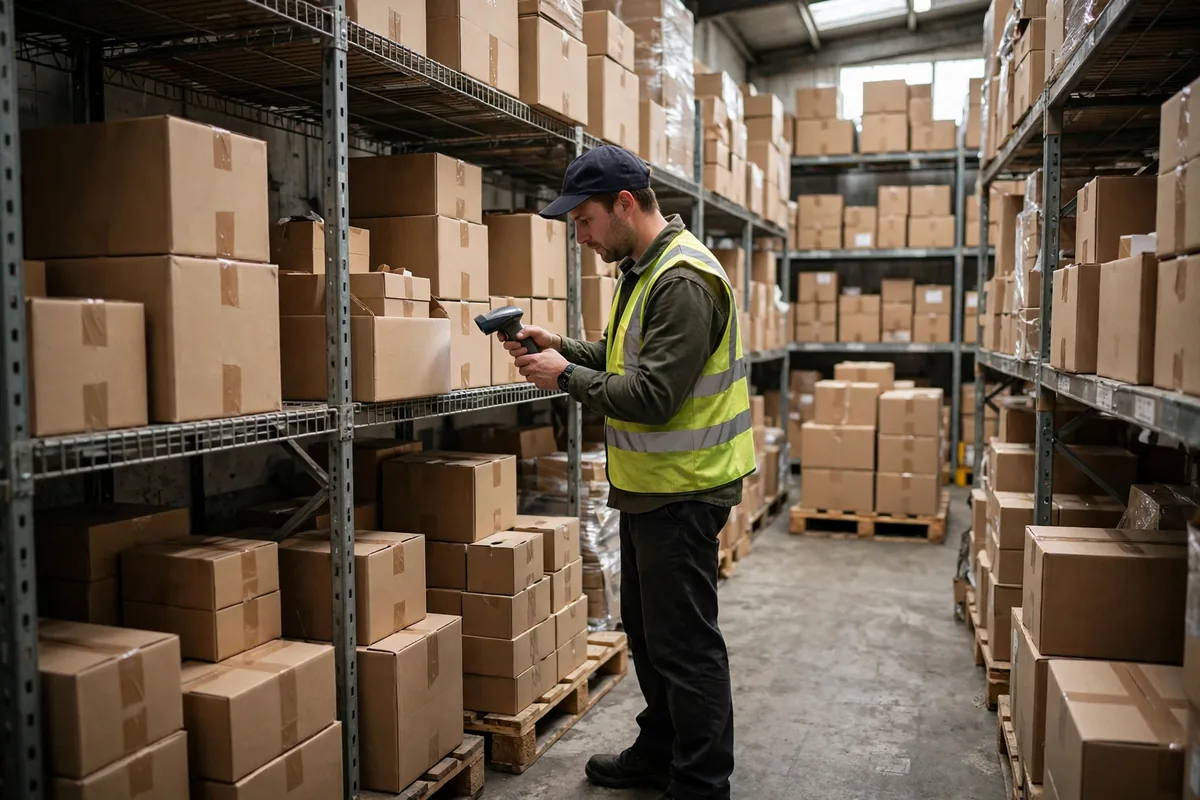
The first source is measured data from a dimensioner: each item passes a static cubing station at receiving, or gets scanned with a handheld unit, and length, width, height, and weight land in the database in one pass. This is like issuing every product an ID card; every later calculation has something real to stand on. The cost is equipment plus one extra step at inbound, and high-SKU, fast-turn operations have to do the throughput math honestly. The second source is maintained master data, supplied by vendors or measured manually item by item. Its accuracy depends entirely on discipline, and it decays predictably: new items arrive unmeasured, packaging changes go unrecorded, and within a year the database is quietly rotting. The third source is estimation, a default size per category or a borrowed size from a similar item. This is where the deepest trap sits, and it is exactly where that Shenzhen warehouse fell in.
Here is the selection line that small operators usually get backwards. The first question is not what the software costs. It is whether your dimension coverage and accuracy have reached the line where any calculation is meaningful. If only half your SKUs are measured or carefully maintained and the rest are guesses, no premium engine will save you; it will simply find the optimal answer among fake inputs. If, on the other hand, your top movers, the items that drive most of your order volume, are all measured and cover the large majority of orders, even a modest engine will hold up in production. Fix the data first and buy the engine second. Reverse that order and you are donating money to an integrator.
Then do the fill-rate and freight math, because it is simple and vendors love to blur it.
| Packing outcome | What it looks like | What you actually pay |
|---|---|---|
| One size too large | Easy to pack, no thinking required | Higher dimensional-weight tier, more filler, more in-transit movement and damage risk |
| Extremely tight fit | Impressive fill-rate screenshot | Crushed soft packs, slower packing, more disputes on arrival condition |
| Split into two small cartons | Both boxes look perfectly full | Extra base freight, extra label, extra handoff; not always cheaper than one larger box |
Fill rate is not a number to maximize, and that is the first piece of vendor theater I will call out. Demos brag about fill rates above ninety percent, but e-commerce assortments include soft packs, odd shapes, and sharp corners. Force those into a near-solid block and packers spend longer rotating items, the carton leaves with no cushioning, and the first compression event in transit becomes your damage claim. Pilot operations commonly land in a range that looks neither empty nor strained, with room left for protection, and the right point in that range differs by category; apparel and glassware do not share a target. Anyone who quotes you one warehouse-wide fill target has never stood at a pack bench for a full shift.
How the cartonization algorithm splits multi-carton orders
Once orders get large, the problem stops being which box and becomes how many boxes, and the logic gets harder. A cartonization algorithm splitting an order has to weigh volume, weight, and product attributes at the same time. Should fragile items travel alone, can heavy goods share a carton with light bulky goods, do battery products need isolation? Leave those constraints out of the rules and the engine will happily produce combinations that are geometrically perfect and operationally wrong. A Hangzhou apparel warehouse learned this in peak season in 2025, when its logic combined winter clothing with promotional glass tumblers to fill cartons beautifully. The fill numbers were excellent. So were the breakage and complaint numbers. The fix was a hard rule that fragile promotional items ship in their own carton, which lowered the reported fill rate and lowered total cost at the same time. It is like carpooling: a full car is not a cheap car if the passengers spend the ride damaging each other's luggage.
A wrong carton never costs just the price difference between two boxes. It costs three things at once. The first is materials: bigger cartons cost more, more void fill costs more, and at volume a small per-order excess becomes a monthly figure nobody can ignore. The second is freight, specifically the billable weight that dimensional pricing adds on top of your goods; that portion is the most wasteful money in the building because you are paying to transport air. The third is the quietest: damage and unboxing experience. An oversized carton lets products rattle and arrive dented, an undersized one arrives visibly strained, and both shape what the customer thinks of you before they touch the product. Manage all three together. Squeezing your carton supplier on unit price while ignoring the other two is saving pennies in the most expensive way possible.
Now the maintenance traps, the part nobody puts in the sales deck. Your carton library needs an owner: when a new carton size is stocked or an old one discontinued, the system has to change the same day, or the bench gets recommendations for boxes that do not exist on the shelf. When a supplier changes product packaging, dimensions change with it, and unrecorded changes resurrect every old problem instantly. When promotions add gifts and samples, rules written for normal orders stop describing reality. Assign a named person, even part-time, to spot-check recommendations against actual cartons used every week, and when they diverge, check the data before blaming the software.
If a small warehouse is not buying a system yet, experienced packers' rules of thumb still work when you write them down. Measure your top movers and post the real dimensions at the bench so selection starts from data, not eyesight. Keep the stocked carton range deliberately small, because every extra size multiplies both hesitation and consumables inventory. When in doubt, protect fragile and soft items from compression even if the fill looks worse. And every week, pull a few dozen orders and compare billable weight against actual weight on the carrier invoice; that gap is literally what you paid to ship air, and three months of watching it teaches most teams that their first need is not software but discipline on dimensions and carton range.
So here is the only verdict that matters, and it fits the rule I use for every automation purchase. Whether this money is worth spending comes down to one number: the average gap per order between billable weight and actual weight, and whether it genuinely falls after you fix your data and switch the logic on. If it falls, the investment earned its keep. If it does not, no demo, however polished, changes the answer.
By Da Liu, Automation Engineer