Here is the conclusion up front: in Indonesia palm oil export warehouse storage, money spent keeping water out is never wasted, and money saved on consolidation can be smart, but save it in the wrong place and the whole shipment pays for it. Indonesia exported 29.535 million tonnes of palm oil in 2024, worth 27.76 billion dollars, according to the Indonesian Palm Oil Association. At that scale, a small storage mistake multiplies into real money on a single container.
Put simply, palm oil storage is not dry-goods storage. Dry cargo worries about crushing, damp, and pests. Oil worries about sneakier things: water, oxygen, and whatever the tank held last. I have seen too many operators run an oil tank farm with a dry warehouse mindset, and every one of them ended up paying tuition on the lab report.
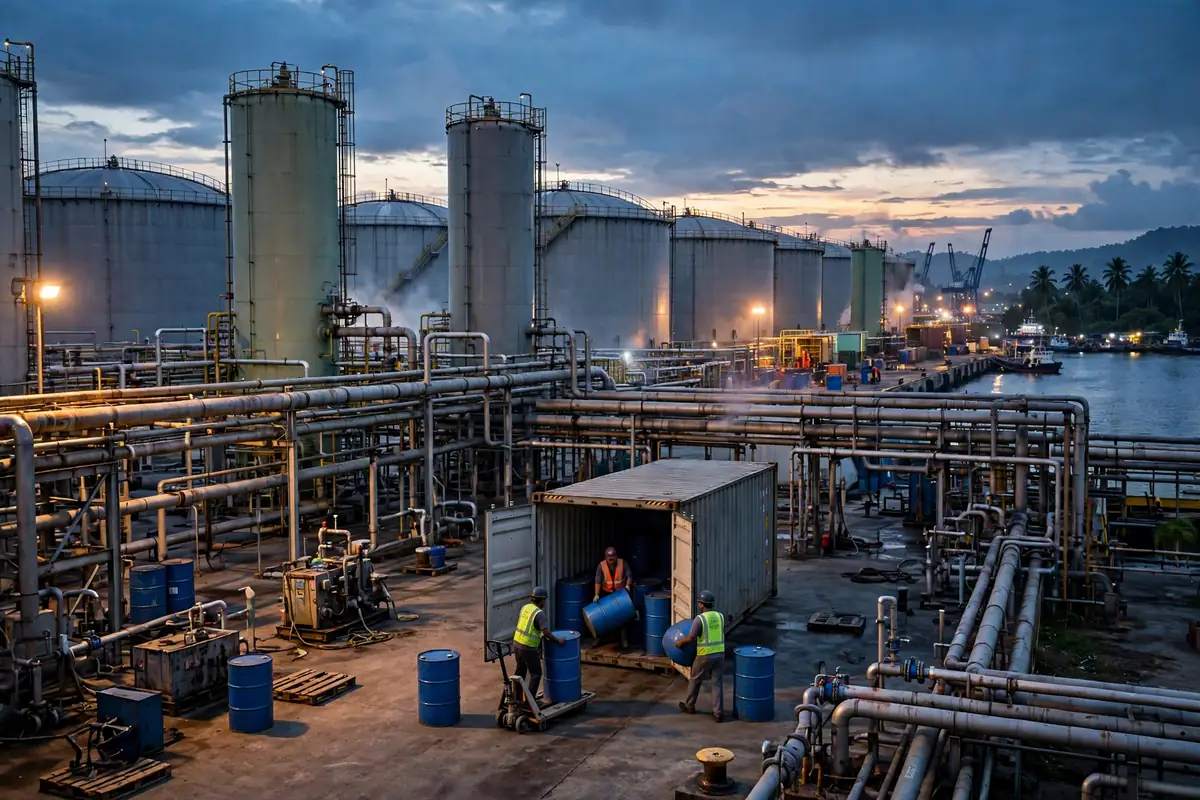
During the rainy season of 2024, a tank farm near Dumai Port learned this the hard way. It took in about 1,200 tonnes of crude palm oil from inland mills in Riau, split across three tanks. The intake lab report showed free fatty acids at 3.1 percent and moisture and impurities at 0.2 percent, both inside the contract limits. Then it rained for ten days straight. Condensation ran down the tank walls from the roof vents, water pooled at the bottom valves, and nobody drained it. Eighteen days later, at loading, free fatty acids had climbed past 5 percent, above the usual 5.0 percent ceiling for crude palm oil, and the buyer discounted the whole lot. The farm saved a few hours of drainage labor and lost tens of thousands of dollars in grade. This case is an illustrative scenario, with figures drawn from published industry ranges.
Water, Not Heat, Is the First Problem in Indonesia Palm Oil Export Warehouse Storage
This is the first hurdle in Indonesia palm oil export warehouse storage, and the most underestimated one. Crude palm oil leaves the mill at around 90 degrees Celsius, cools naturally in the tank, and stays pumpable at 32 to 40 degrees. Plenty of people assume oil must be kept hot to stay safe. They are wrong. Short-term storage can hold temperature, but for longer storage the heating should be switched off and the oil left at ambient temperature. Overheating speeds up oxidation, and temperature swings make condensation form on tank walls, which is how water gets in.
Once water is in, the trouble compounds. Hydrolysis pushes free fatty acids up, standing water at the tank bottom breeds microbes and off-odors. The usual specification limits tell the story: free fatty acids max 5.0 percent, moisture and impurities max 0.25 percent for crude palm oil. Break them and the cargo gets downgraded, discounted, or rejected. Waterproofing has no magic to it, just four habits: lab-test every intake and keep the report, drain tank bottoms on a schedule, fit roof vents properly and use nitrogen blanketing to keep oxygen out, and inspect more often in the rainy season. Small tank farms often skip nitrogen blanketing to save money, which is small-account thinking when a single tank holds that much value.
One detail gets missed constantly: copper and copper alloys catalyze oxidation, so pipelines, valves, and heating coils must avoid them. A tank is not good because it is new. It is good because of what it held last and whether it was cleaned. Switch grades without cleaning and inspecting, and you are pouring the last cargo's residue straight into the next one.
Consolidation in Indonesia Palm Oil Export Warehouse Storage: Saving Freight, Gambling on Cleanliness
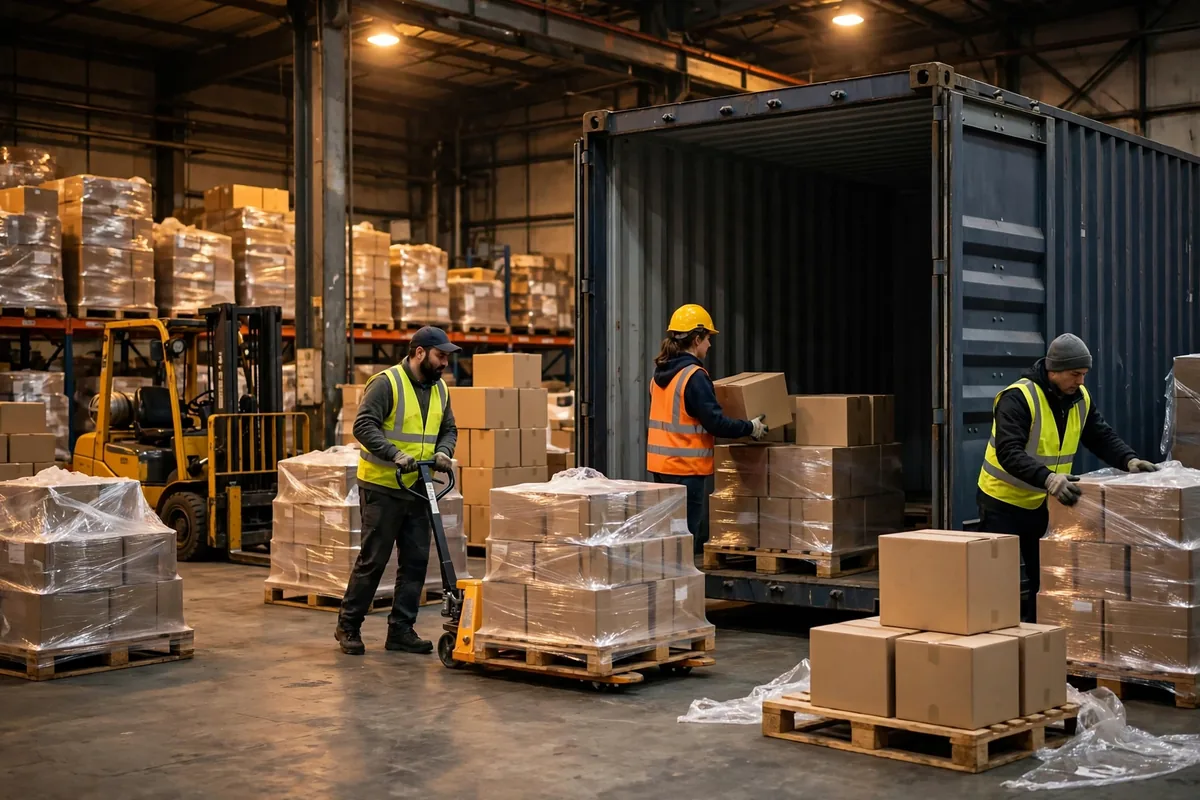
Small mills and small traders cannot fill a bulk vessel, so consolidation is the norm. There are three usual routes for crude palm oil: shared space on a bulk carrier, a flexitank inside a container, or drums and intermediate bulk containers sharing a box. Which route pays cannot be judged on freight rate alone. The damage risk has to sit in the same calculation.
| Shipping method | Suitable volume | Indicative cost per tonne in this hypothetical example | Biggest risk |
|---|---|---|---|
| Shared bulk vessel space | Hundreds of tonnes and up | Lowest | Waiting for the sailing extends tank time |
| Flexitank in a container | Around 20 tonnes per box | Mid-range | A torn bag leaks, the whole box is lost |
| Drummed shared container | A few tonnes to a dozen | Highest | Odor transfer and residue from the last cargo |
This table is a hypothetical example, with costs shown only as orders of magnitude, not as any real quotation. The pattern is clear: bulk is cheapest, but the sailing will not wait for you, and every extra week in the tank pushes free fatty acids higher. Drummed cargo costs most but moves in small lots. The truly expensive outcome is a fourth one: sharing a container with strong-smelling cargo, or a box whose last load was chemicals with a vague cleaning record. Food-grade oil has zero tolerance for odor transfer, and one off-odor line on a lab report can devalue the whole container.
So before consolidating, ask three questions: what did this container hold last, is there a cleaning record, and what is sharing the box with my cargo? If nobody can answer, the freight saved will come back as a discount on the claim sheet. There are two sides to this: consolidation itself is not the problem. Consolidating on price alone, without checking cleanliness, is.
From Plantation to Dumai, the Schedule Matters More Than the Warehouse
The storage bill for palm oil cannot be calculated inside the warehouse alone. It starts at the plantation. Fresh fruit bunches should reach the mill the same day they are harvested, because the longer they wait, the higher the free fatty acids climb and the worse the oil starts out. From the mill to the port tank farm, the inland roads of Sumatra in the rainy season jam regularly, and half a day stuck on a truck means another round of temperature swings for the oil.
That is why Dumai matters. It sits on the east coast of Sumatra, guarding the Strait of Malacca, the closest export gateway for Riau's palm oil, with dedicated palm oil berths and tank farms. Oil moves by road from inland mills, enters tanks at Dumai, passes lab tests, and loads onto the vessel. The shorter that chain, the less time the oil spends sitting in a tank and the steadier its quality. Store it inland until the tanks are full and then move it to the port, and you have added one more handling step and one more chance for water and oxygen to get in.
There is one more bill most people forget to add: Indonesia raised its biodiesel blending mandate to 40 percent in 2025, so more oil stays home and less is left for export. Export buyers will only get pickier about quality, not more forgiving. The old game of winning on volume alone does not work when buyers discount with ever finer precision.
Next time someone quotes you a storage price that looks too cheap, ask one question first: how do you keep the water out, and how do you clean the tanks? If they cannot answer, the money you save will come back on the discount sheet.
By Lao Mi, Supply Chain Veteran (20 yrs)