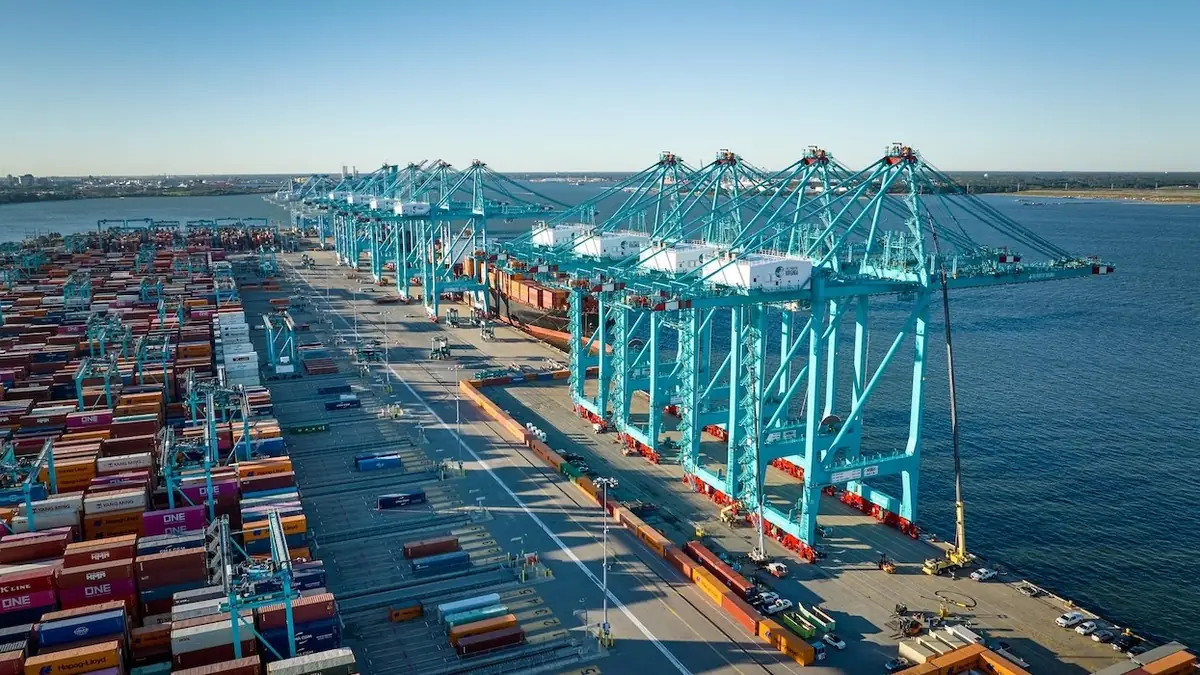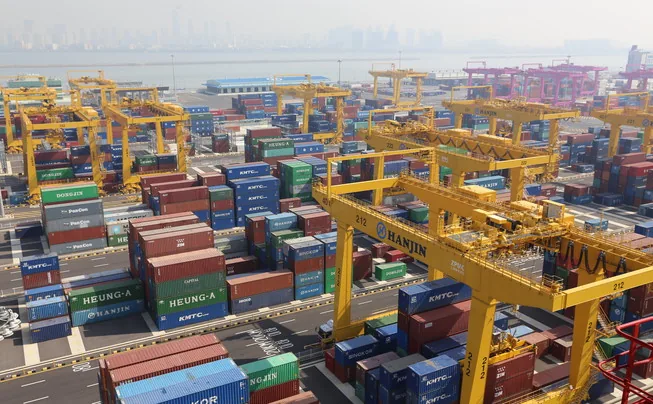
Here is my verdict up front on Incheon port warehouse logistics: if your cargo moves between China and Korea, Incheon is not a smaller Busan. It is a different route entirely. Busan wins on scale and deep-sea connections. Incheon port warehouse logistics wins on two things: it is close to Seoul, and it is close to China. In 2024 Incheon handled 3.56 million TEU, a record, up 2.7% year on year. Against Korea's national total of 31.73 million TEU, that is barely more than a tenth. But if you judge this port by that number alone, you are missing the point.
I have seen too many shippers pick a port by its ranking. Rankings are fine for a press release. What decides your cost is where your cargo comes from, where it is going, and which warehouse opens the box.
Whose cargo fills Incheon's 3.56 million boxes
Most of Incheon's cargo has something to do with China. Korea's Ministry of Oceans and Fisheries said it plainly in its 2024 announcement: the national record came from recovering US demand and rising transshipment volume originating from China. Incheon sits an overnight sailing from Shandong and Jiangsu. On that lane, what matters is sailing frequency and how fast customs clears.
A few years ago I worked with a client selling small home goods. His cargo sailed from Qingdao, sold through Korean online channels, and part of it went onward to the US. He started in Busan for the obvious reason: bigger port, more ships. Two months in, he saw the problem. After discharge in Busan, the overland leg to Seoul ate back everything the ocean freight had saved. He switched to Incheon, picked up the box the same day the ship berthed, and had it in a Seoul-area warehouse the next day. His words: the sailing schedule differed by one day, but the cash flow differed by a month.
That said, this story has two sides. Incheon's weakness is just as clear: smaller volume, thinner deep-sea coverage than Busan. If your cargo is bound for Europe or the US East Coast, Incheon may not have a direct sailing, and you will need a feeder connection. Every feeder leg is another rollover risk and another cost. So before choosing a port, ask yourself one question: where is my cargo actually going? For Korea-domestic sales and China-Korea round trips, Incheon is usually the smoother road. For global deep-sea routes, Busan is still hard to avoid.
One more thing most people miss: Incheon handled 3.46 million TEU in 2023 and 3.56 million in 2024, records two years running. That tells you the growth is real, not one lucky year. In this business, the ports to fear are the ones that boom for a year and go quiet the next, because warehouses suffer either way.
Incheon port warehouse logistics: where to put your warehouse
Warehouse space near a port comes in three rough tiers, and the trade-offs are not subtle. Inside the port area, you pick up boxes fastest, which suits high-turnover cargo that cannot afford to sit. Just outside the port, rent drops a notch, and the space suits deconsolidation, sorting, and light processing. Further out around Seoul, rent is lowest, but every trip adds an overland leg, which suits slow-moving buffer stock.
I have seen too many people compare rent per square meter and stop there. Rent per square meter means nothing on its own. It only makes sense next to your dwell time. A shipment that clears a port-area warehouse in 7 days can easily cost less overall than the same cargo sitting 30 days in a cheap warehouse further out. The cheap rent is real, but so is the capital tied up in the goods, the extra handling from repeated moves, and the sales you miss while the stock sits.
Here is the costing framework I use with clients. The figures are an illustrative example to show the method, not quoted rates; actual rates are subject to the latest official policies:
| Option | Rent | Overland leg | Dwell time | Best for | | Port-area warehouse | High | Short | Under 7 days | High turnover, demurrage-sensitive cargo | | Near-port warehouse | Medium | Medium | 7–21 days | Deconsolidation and sorting | | Outer Seoul-area warehouse | Low | Long | Over 21 days | Slow buffer stock |
All figures above are illustrative examples to demonstrate the costing method; actual rates are subject to the latest official policies. Before signing anything, get three charges in writing: rent, handling, and demurrage or storage beyond the free period. Storage charges are invisible on a quiet week and double when congestion hits. That is the line item that catches people out.
Here is a counterintuitive call: the more Incheon expands, the less you should rush into a long lease. Incheon New Port phases 1–2 come online in the second half of 2028 with 1.38 million TEU of annual capacity, lifting the whole port to 4.08 million TEU, and the 2030 target is 5 million TEU. When capacity rises, warehouse supply around the port will follow. A three-to-five-year lease signed today sounds safe, but if new warehouses flood the market and rents soften, you are locked in at the top. A short lease with a renewal priority is sometimes the cheaper move.
What transshipment business Incheon port warehouse logistics can actually win
Transshipment is not won by port size. It is won by fewer links in the chain. Incheon's real competitor in transshipment is not Busan; it is time. A box sailing from a Chinese port and relaying through Incheon to a third country might save a single day. If you run transshipment, you know exactly what a day is worth.
In 2024 a client in auto parts came to me with a classic problem. He manufactured in China, assembled in Korea, sold part of the output locally and shipped the rest overseas. His parts came in many batches and models, and they had to be sorted before they reached the production line. At first he rented in Seoul, close to his customer, but every delivery waited three times: customs, pickup, and delivery to the warehouse. The line kept running short. He moved sorting forward into a warehouse near the port, so boxes were opened and sorted the day the ship arrived and sent straight to the line as needed. Shortages dropped sharply. That is the real value of a port warehouse: it is not cheaper, it moves the waiting from the production line to the port.
Of course, transshipment goes wrong too. I watched a cross-border e-commerce seller treat Incheon as a universal relay point, only to find the destination country's customs paperwork was wrong after the cargo had already arrived. The boxes sat in the port warehouse for nearly a month. Storage fees plus re-documentation ate the whole margin on the order. The lesson is simple: before relaying anything, check the destination country's clearance requirements. A week late is better than a month stuck in the port.
So here is my judgment on Incheon port warehouse logistics. It will not replace Busan, and it does not need to. Its location makes it the smoothest line between China and Korea. If your cargo runs that lane every day, Incheon deserves a serious costing exercise. If your cargo visits Korea twice a year, do not overthink it: follow the big ships through Busan and save yourself the trouble.
One question to leave you with: is your cargo still taking the long way around?
By Lao Mi, Supply Chain Veteran (20 yrs)