Here is the short version: a factory audit is not a tour. It is an evidence hunt. If you fly to China, walk the showroom, eat a nice lunch, take a few photos of the shop floor and fly home, you have learned almost nothing. The things that decide whether your equipment will actually work live in the document cabinet, on the test bench, and in the reject area — not under the showroom lights.
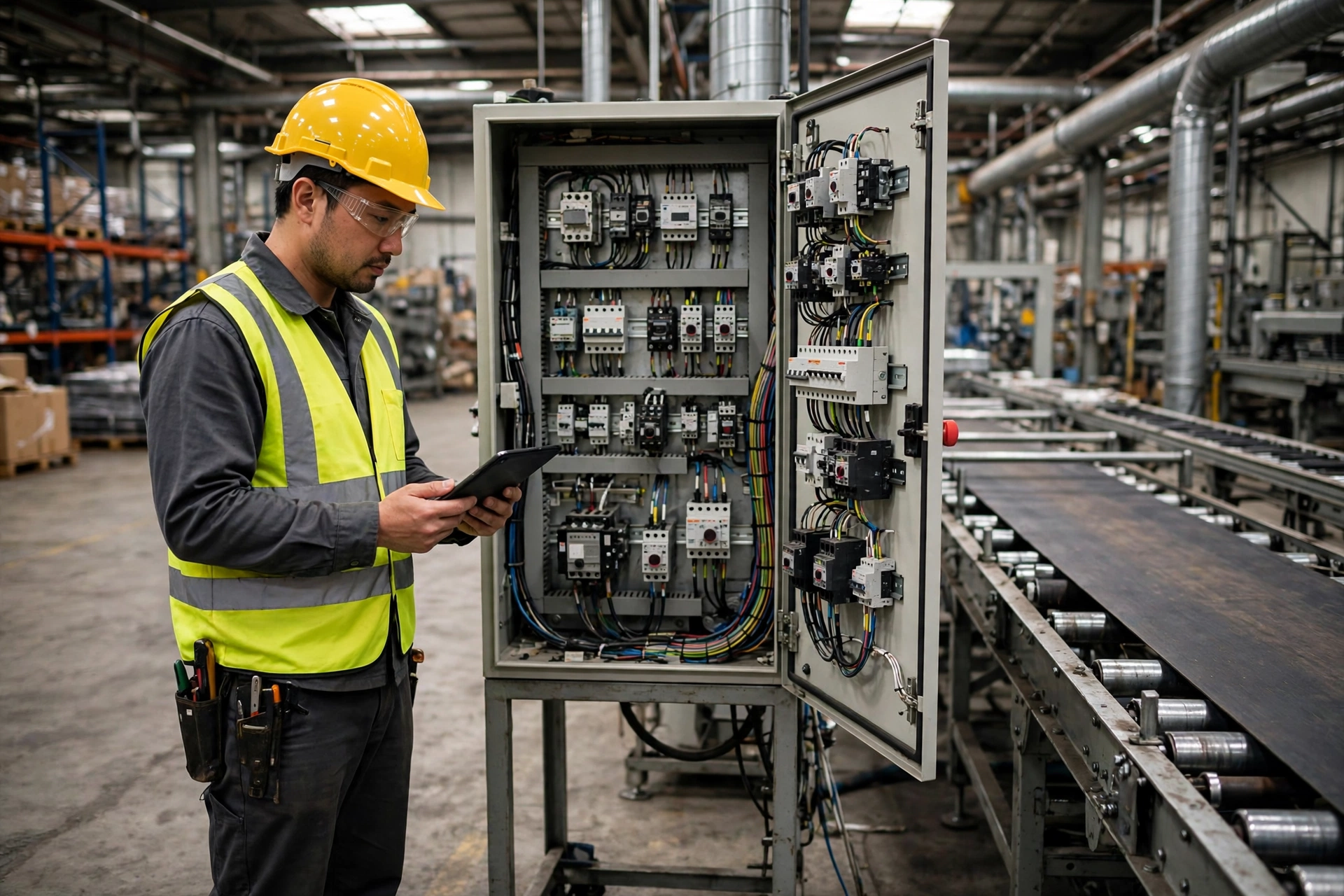
I have watched too many importers treat the audit as a formality. A few years back, a California importer — the cases in this article are illustrative, and the figures are example estimates — ordered a batch of conveyors from China, sent two people to audit, and came back with a glowing report: big plant, lots of workers, a wall full of certificates. Three months after the equipment landed, two motors burned out, and the wiring inside the control cabinet did not match the drawings. When they asked the factory for support, the answer was, "But you saw all of this during the audit." There was no good reply to that. They had seen it. They just had not looked at the right things.
There are two sides to this. On one side, factories genuinely range from excellent to awful. On the other, most importers simply do not know what to look for. You can find dozens of generic audit checklists online, but ticking boxes on a generic form is the same as not auditing at all. Warehouse equipment has its own way of being checked. Conveyors, stacker cranes, forklifts, sorters — once this stuff is installed in your warehouse, pulling it out and reinstalling it costs more than the equipment itself. So this step is the wrong place to save money.
Factory Audit Step 1: Start With the Paperwork, Not the Shop Floor
Put simply, a shop floor can be tidied up overnight. Faking a paper trail costs a lot more. When I walk into a plant, the first thing I do is sit down and ask for documents: the business license, the ISO 9001 certificate, product test reports, and a list of similar equipment they have already exported. If any of the four is missing, I start with a question mark in my head.
You have to know how to read an ISO 9001 certificate. The certificate itself is not hard to get. The hard part is whether its scope and validity actually cover what you are buying. Certificates are generally valid for three years with annual surveillance audits, so check the expiry date, check that the scope names your product category, and check that the issuing body can be found. Certificates issued in China can be verified in the public database of the Certification and Accreditation Administration (CNCA), and internationally you can check the certification body through IAF CertSearch. All of this can be done online before you even book the flight.
There is one more document most buyers never ask for: the EU conformity paperwork. If your equipment is heading to Europe, the Machinery Directive 2006/42/EC applies, and from 20 January 2027 it is replaced by Regulation (EU) 2023/1230. Compliance is not a sticker on the machine. Behind it there has to be a risk assessment, a technical file, and a declaration of conformity. As the importer, your job is to verify those documents exist and match the product — otherwise the problem lands on you at the European border. I am not exaggerating. I have seen cargo held at Rotterdam over exactly this.
One more detail at this stage: ask for past outgoing inspection records, pick a batch at random, and look at the data. Real production records always show variation — some rework, some accepted deviations. A file where every single test comes back a perfect pass is the suspicious one.
Five Things Worth Your Time on the Shop Floor
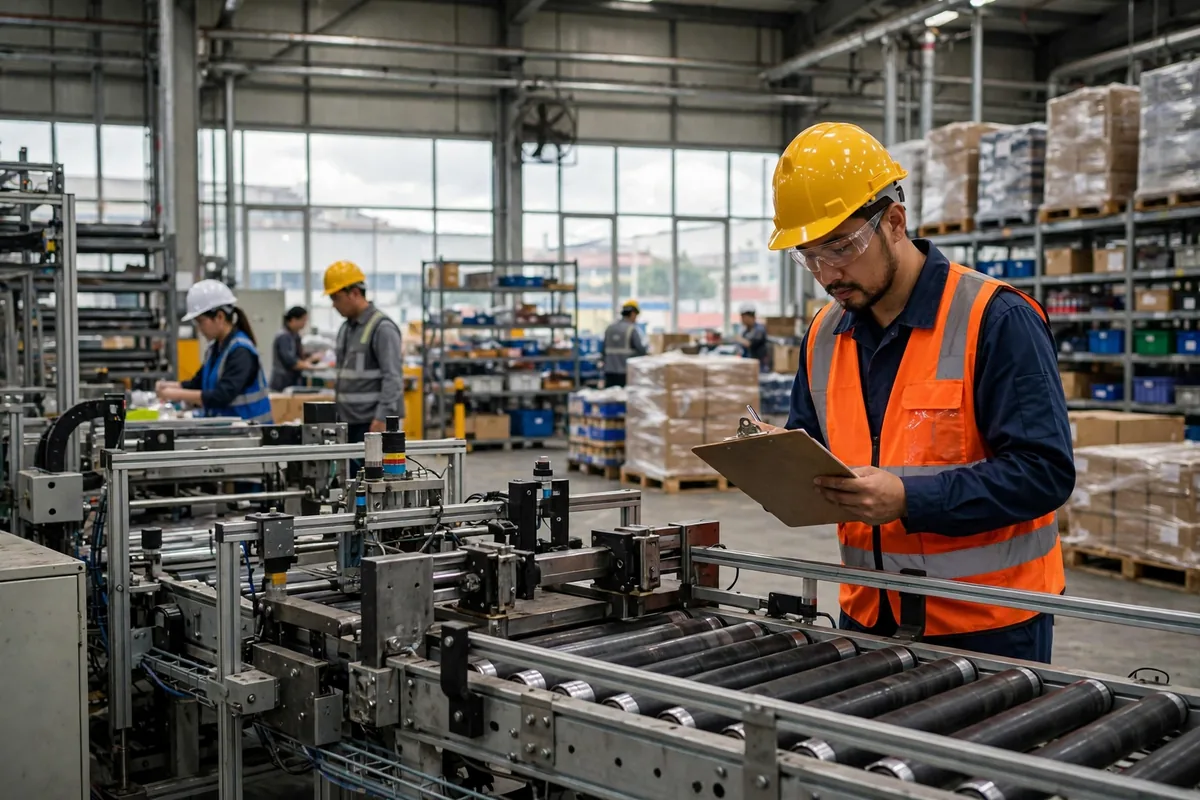
Once the paperwork holds up, go to the floor. I only look at five things, and they tell me most of what I need to know. A factory audit is won or lost on this walk: the paperwork tells you what they claim, the floor tells you what they actually do.
First, the reject area. Every serious factory has a place for nonconforming parts and rework, clearly marked and physically separated. If you walk the whole floor and cannot find a single rejected part, either this factory is impossibly good or it does not inspect anything. In my experience, it is usually the second one.
Second, changeover and first-article inspection records. Equipment is built to order, and every model change means resetting the line. Ask for the first-article inspection sheet from the most recent changeover — who signed it, when, and whether the data is complete. A blank sheet that just says "pass" is no inspection at all.
Third, pick one work-in-progress unit at random and trace it backward. Which supplier delivered the raw material, on what date, where is the inspection report, who welded it, what were the welder settings. A factory whose traceability works can follow the thread all the way back. One where the thread snaps halfway is running a quality system that exists mostly on the wall.
Fourth, the test bench. A conveyor has to run to be tested — motors, gearboxes, and control cabinets powered up and run in at the factory. Looking at static equipment is like looking at furniture. I ask to see the factory acceptance test records for the same model, including how long it ran and under what load. Equipment that has never been run has no business being trusted to run 16 hours a day in your warehouse.
Fifth, the spares and raw material stores. A factory with empty spares shelves will not respond fast when you need support. A factory with raw material piled up in chaos cannot do batch traceability when something goes wrong.
Do the Math: What an Audit Costs Versus What It Saves
I run this calculation for clients every time. The figures below are example estimates — your route and headcount will differ.
| Item | Example estimate | Note |
|---|---|---|
| Flights and hotel | About $2,500–$4,000 | One person, three days |
| Third-party audit firm | About $800–$1,500 per day | An alternative to flying yourself |
| Rework after delivery | One motor plus air freight, from about $3,000 | Before counting downtime |
| A full line down for a day | Example estimate: several thousand dollars | Higher in peak season |
Put simply, the audit is the cheapest money in the whole deal. The expensive part is discovering the problem after delivery: return freight is on you, repairs may not fix it, and peak season is staring you in the face. One day of a third-party auditor costs less than one burned-out motor. I tell clients the audit is not a cost. It is insurance. Best case, you never need it. But you cannot afford to skip it.
Here is the counterintuitive part: the factory with the most certificates on the wall is not necessarily the most reliable one. Certificates can be bought. Order on the shop floor cannot. Whether operators follow written procedures, whether calibration labels on measuring tools are expired, whether welds are ground evenly — those details are the real evidence. And if the day you visit, everyone is in brand-new uniforms, the floor was just mopped, and even the restroom smells of air freshener, be a little more suspicious, not less. What a factory looks like on an ordinary day matters far more than what it looks like on audit day.
What to Bring Home From a Factory Audit Before You Board the Plane
Before you leave, get these in hand: the signed audit report and corrective-action list, copies of the test records, the list of key component suppliers, and written confirmation of the after-sales contact and response commitment. Verbal promises do not count. If it is not written into the contract as an attachment, it does not exist.
One more thing: the audit report should state clearly what you saw and what you did not see. What you did not see gets a follow-up visit or a third-party check. Never tell yourself "it is probably fine." In warehouse equipment, "probably fine" is the most expensive phrase I know.
One last piece of advice: the point of an importer factory audit checklist for china warehouse equipment is not a pretty report. It is whether you are willing to write that factory's name into a purchase contract. If you are not, go look at another one.
By Lao Mi, Supply Chain Veteran (20 yrs)