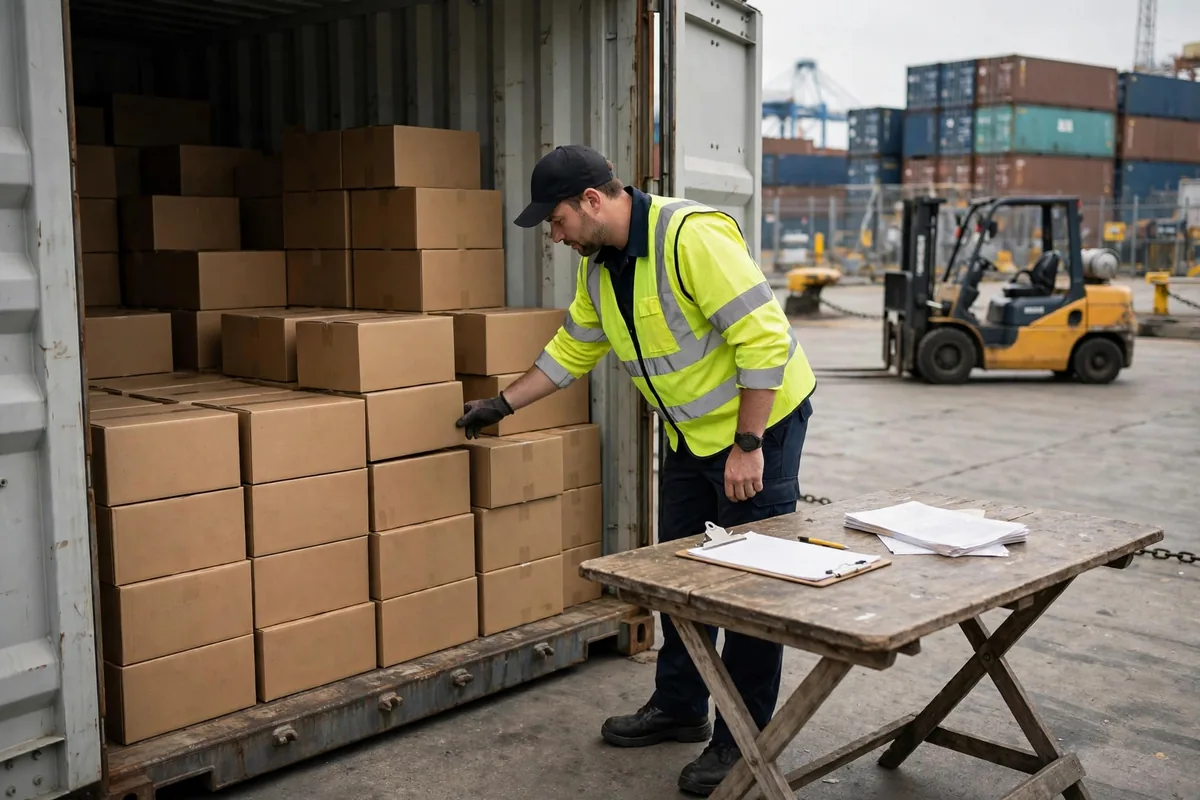
Transshipment to evade tariffs is a road you cannot take anymore. It is not that the risk got a little bigger — the rules of the game have changed. Executive Order 14326, signed July 31, 2025, says it plainly: goods that U.S. Customs and Border Protection determines were transshipped to evade tariffs face an additional 40% ad valorem duty, under HTS 9903.02.01, effective August 7, 2025. That is not a rumor. That is the law on the books.
I've seen too many sellers and shippers get burned on this. Some figured the goods could go through a third country, get a new box and a new certificate of origin, and slide into the U.S. — who would ever check? Yes, people did it before and made money. But the enforcement tools and the penalties today are nothing like they were back then. Here's how Customs spots it, and how heavy the penalties really are.
How Customs Spots Transshipment
Let me tell you about a pitfall I watched up close. A few years ago, a friend who sells home goods told me his shipment had been held at U.S. customs. The goods came from a Southeast Asian country, and the certificate of origin said the same country. Everything looked fine on paper. So why did Customs flag it? Customs doesn't just read the entry form. It looks at where the goods were actually made, where the raw materials came from, how deep the processing really went, whether the shipping route makes any sense, and whether the price lines up with comparable goods. All of that is in view.
Customs has seen every version of the evasion playbook. The usual patterns: goods get a quick repack or a new label in a third country and are claimed as made there; the certificate of origin doesn't match the actual production; the shipping route takes a detour that makes no commercial sense; the price is so low it doesn't even cover raw-material costs. Customs now has the data and the systems to match these signals up — once they line up, an inspection is only a matter of time.
Lawful rerouting through a third country is not a crime. If the goods are genuinely produced in a third country, with substantial processing, and the origin determination is sound, then whichever route they take is your business. But if the goods merely pass through a third country while still being, in substance, products of the origin country — and get declared at the third country's duty rate — that crosses the line. The dividing line is not the route. It is the substance.
A lot of people assume Customs only goes after big shipments and big companies, and that small volumes keep them safe. Customs enforcement combines random checks with risk profiling — and small, frequent, oddly priced shipments are exactly the kind that stand out. Small volume is not a shield. Compliance is.
How Heavy Are the Transshipment Penalties? One Table Tells the Story
On penalties, here is the hard data. Under the civil penalty provisions of 19 U.S.C. §1592, Customs grades penalties by the level of fault:
| Level of fault | Maximum penalty |
|---|---|
| Fraud | Up to the domestic value of the goods |
| Gross negligence | The lower of the domestic value or four times the loss of revenue |
| Negligence | The lower of the domestic value or two times the loss of revenue |
In a fraud case, the penalty can reach the full value of the entire shipment — the goods are gone, and the fine still has to be paid. Worse, the goods themselves can be seized and forfeited under 18 U.S.C. §1595a, and in serious cases there is criminal liability: under 18 U.S.C. §542 and §545, up to 20 years in prison. This is not scare talk. Those numbers are written into the statutes.
The true cost of getting caught goes beyond the fine. The shipment is held, so the delivery date is blown and the customer wants compensation. Back duties have to be paid, plus the 40% additional duty. Then there are lawyers' fees, the time spent dealing with it, and the impact on your store and accounts — all of it real money. Do the math in full: the duty you saved is nowhere near the cost of getting caught once. Saving a little money while taking a huge risk is a losing trade.
One more point: voluntary disclosure can reduce the penalty. If you discover a problem in your past declarations and come forward before Customs comes to you — disclosing, paying the back duties, cooperating — the penalty can be reduced substantially. Voluntary disclosure costs money up front, and it stings; but compared with getting caught, coming forward costs far less. Get a customs attorney and a licensed broker involved before you write anything yourself.
What Happens Once Customs Flags You
A lot of people ask me: what does the process actually look like once Customs moves? Here's the shape of it as I've seen it, so you know what to expect instead of panicking.
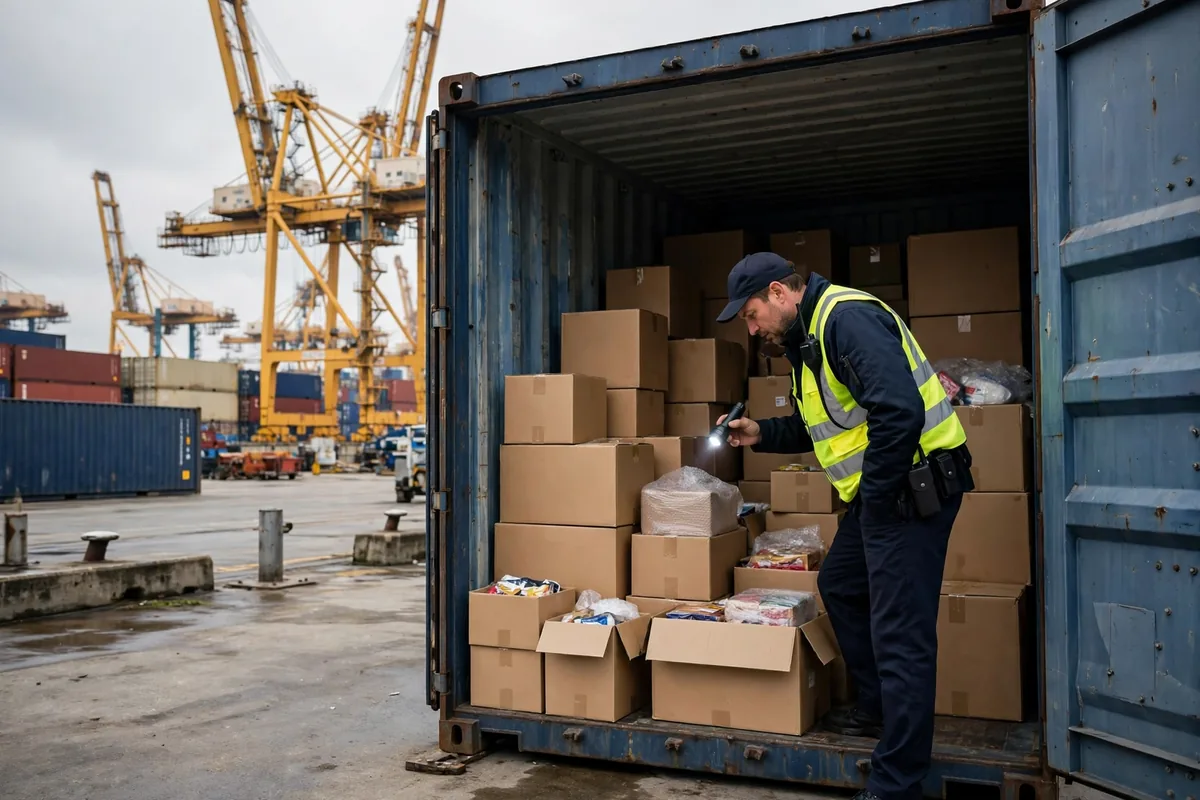
The first step is usually an inspection or an inquiry. The goods get held at the port and opened up, or Customs sends a letter asking for production records, purchase invoices, shipping documents, and origin certificates. Don't panic — but don't stall. The documents must be complete, genuine, and consistent; contradictory documents are worse than missing ones.
The second step is the determination. Customs decides whether the shipment counts as transshipment evasion. Once that determination lands, back duties and penalties follow: the 40% additional duty, the graded fines. You can challenge it through formal channels, but a challenge needs evidence behind it — protest alone buys nothing.
The third step is the aftermath. An importer flagged once will see a higher inspection rate on later shipments — the system keeps a record. And it can reach your partners too: the forwarder, the broker, the supplier. They will all get questions. This was never a one-person matter; it is a chain matter.
I've seen too many sellers make basic mistakes at the very first step: incomplete paperwork, an invoice that doesn't match the entry, an origin certificate that doesn't match where the goods were actually made. Frankly, either way, the liability lands on the importer. If the broker filed it wrong, you are still the one fined. So review the documents yourself — never hand the whole thing off blind.
If You Genuinely Want to Cut Costs, Here Are the Legitimate Roads
Evasion by rerouting is off the table. So what do you do when duties are high? There are still roads — and they are all above board.
First, take a fresh look at origin. Where are your goods actually made, how deep is the processing, and could a change in your production footprint support a more favorable origin determination? That takes a professional origin analysis. Duty saved through a legitimate origin determination is clean money.
Second, look at trade agreements and tariff classification. The U.S. has trade arrangements with a range of countries and regions, and classification matters: the same product under a different classification can carry a very different duty rate. Classification has to be done carefully and with a basis — you cannot force goods into a low-duty code, because that is another trap waiting to happen.
Third, cut costs in the supply chain itself. If the duty won't come down, find the savings elsewhere: better logistics routing, warehouse efficiency, inventory turns, lighter packaging. The money saved there is every bit as real as the duty you might have dodged — and you can sleep at night.
Fourth, give your own business a compliance checkup. Ask your broker and your attorney to go through the last couple of years of entries — origin determinations, classifications, declared values — and look for weak spots. Finding a problem early and fixing it is far cheaper than having Customs find it for you. That checkup is money well spent.
One last piece of advice: the bottom line is cost, but cost cannot be calculated on the wrong side of a red line. People got away with this before. That does not mean it still works now. The rules, the penalties, and the enforcement tools are all out in the open: a 40% additional duty, fines up to the value of the goods, and up to 20 years in prison. Weigh those numbers — and ask yourself whether the gamble is worth it.
By Lao Mi, Supply Chain Veteran (20 yrs)